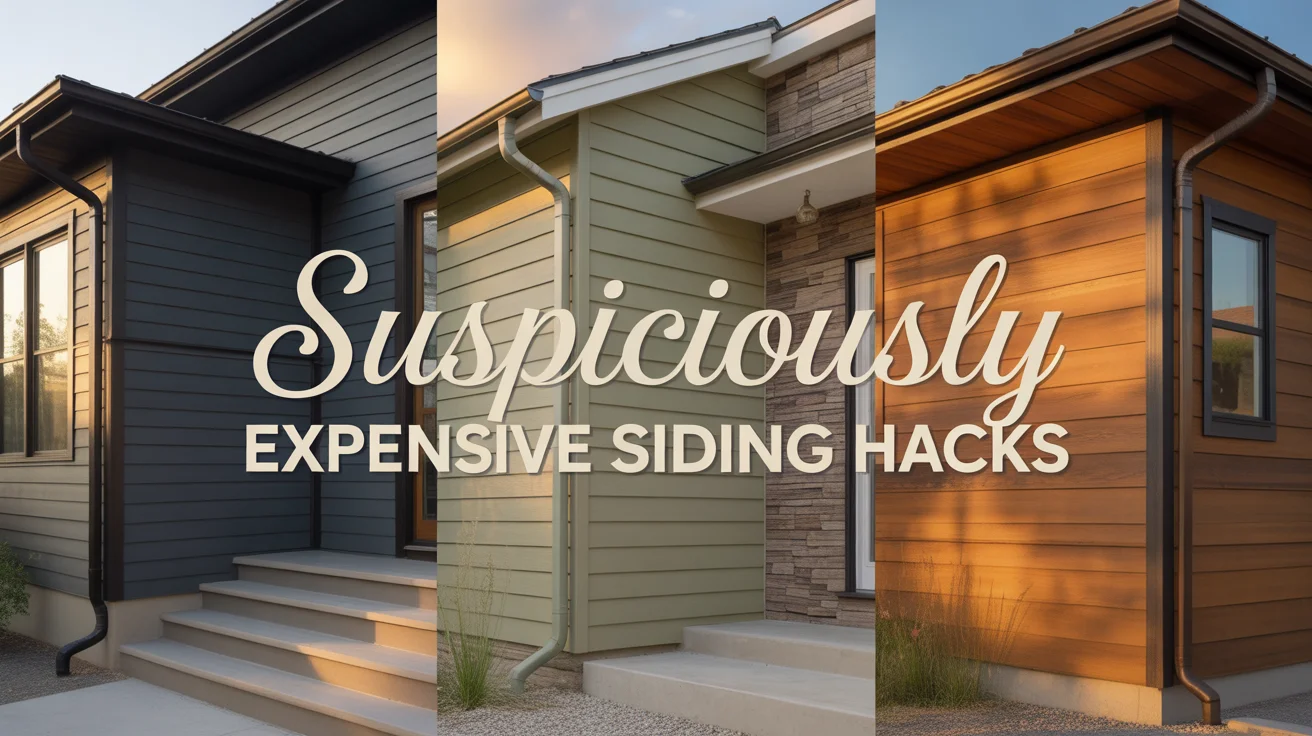
Vinyl siding can look just as sharp as custom wood or fiber cement when you pair it with the right colors, trim, and details. I’ve styled dozens of exteriors using budget-friendly vinyl from brands like CertainTeed and Alside, and the results genuinely turn heads.
The secret is never the siding alone. It’s the full picture: trim color, door style, and landscaping working together. Get that combination right, and nobody will ever guess what you spent.
Deep Iron Ore With Natural Wood Pillars
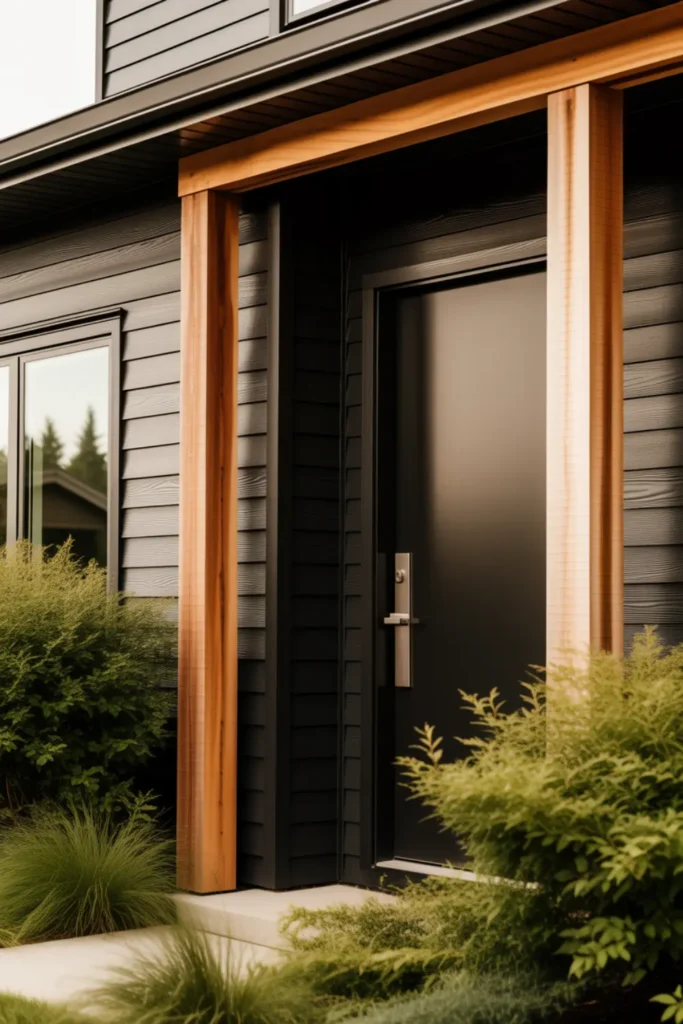
Dark charcoal exteriors are having a major moment in 2026, and Iron Ore is leading the trend. The first time I used an Iron Ore palette, the neighbors thought we spent double the budget. Pairing that deep, moody siding with raw cedar wood pillars adds warmth that stops the look from feeling cold or industrial. Check out the CertainTeed color visualizer to see how Iron Ore translates on your home before committing.
Board and Batten Farmhouse White
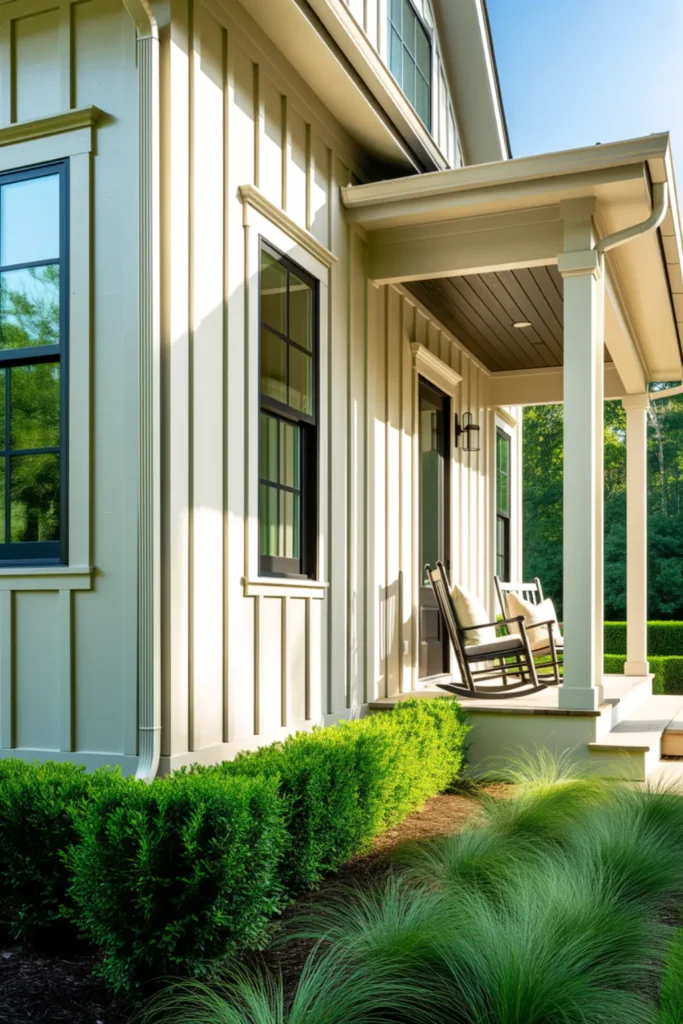
I always recommend vertical board and batten panels for single-story homes. That vertical line tricks the eye into reading the house as taller and more substantial. Vinyl board and batten gives you that clean farmhouse look without the rot, warping, or yearly repainting that real wood demands. Add matte black window frames and you’ve got a Editorial-worthy modern farmhouse exterior that looks custom-built, not budget-friendly.
Matte Black Modern Panels
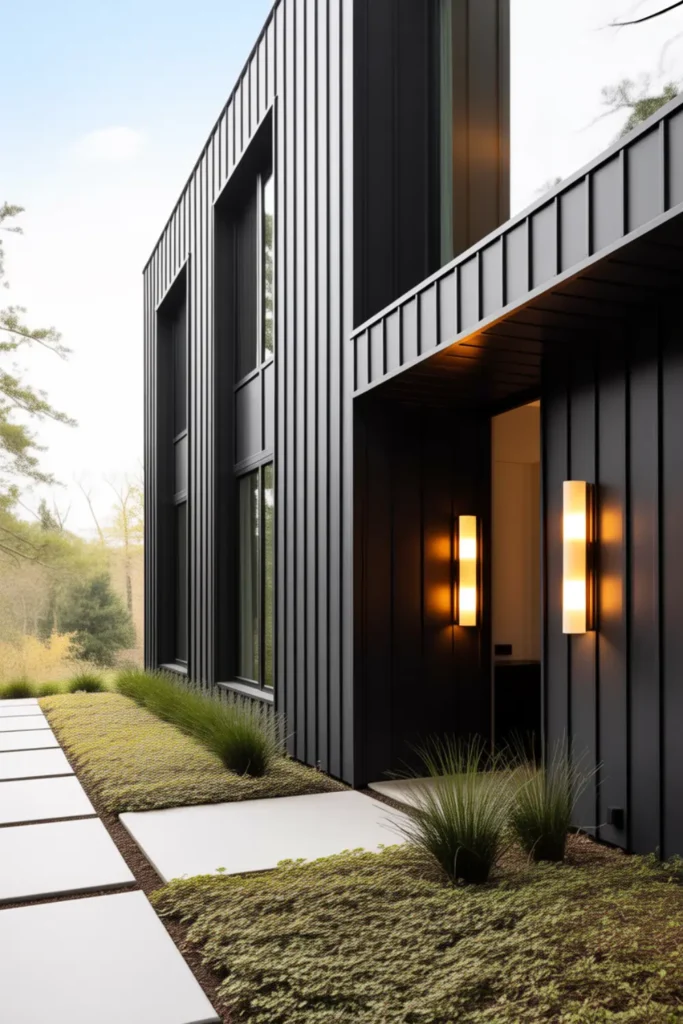
Black siding scares a lot of homeowners, and I get it. The old fear was fading and heat warping. But 2026 vinyl technology has changed the game completely. UV-resistant black panels from quality manufacturers now hold their color for years without buckling. I’ve installed matte black exteriors on three projects in the last two years, and every single one still looks freshly painted. Bold, sleek, and surprisingly low maintenance.
Coastal Slate Blue With Crisp White Trim
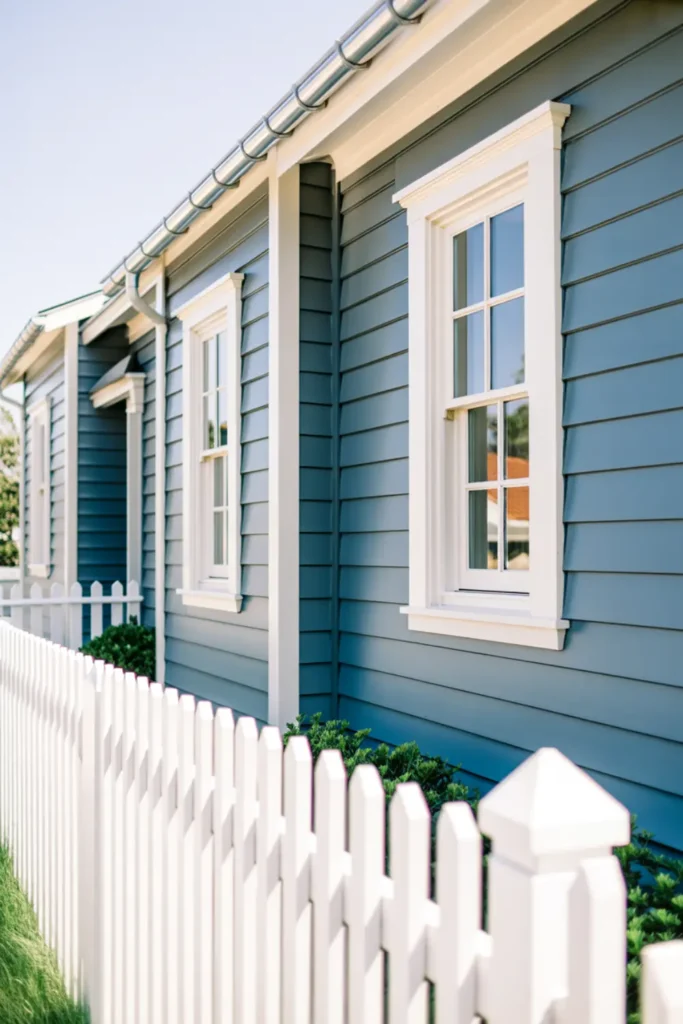
Whenever I design a lakeside or coastal property, slate blue is my fail-safe color choice. It reads as calm, elevated, and timeless all at once. Traditional lap siding in slate blue paired with crisp white trim gives you that Hamptons look without the Hamptons price tag. The horizontal lines of lap siding also reinforce that relaxed, beachy flow. Finish it with a white front door and simple black house numbers for a clean, classic result.
Faux Cedar Shake in Warm Chestnut
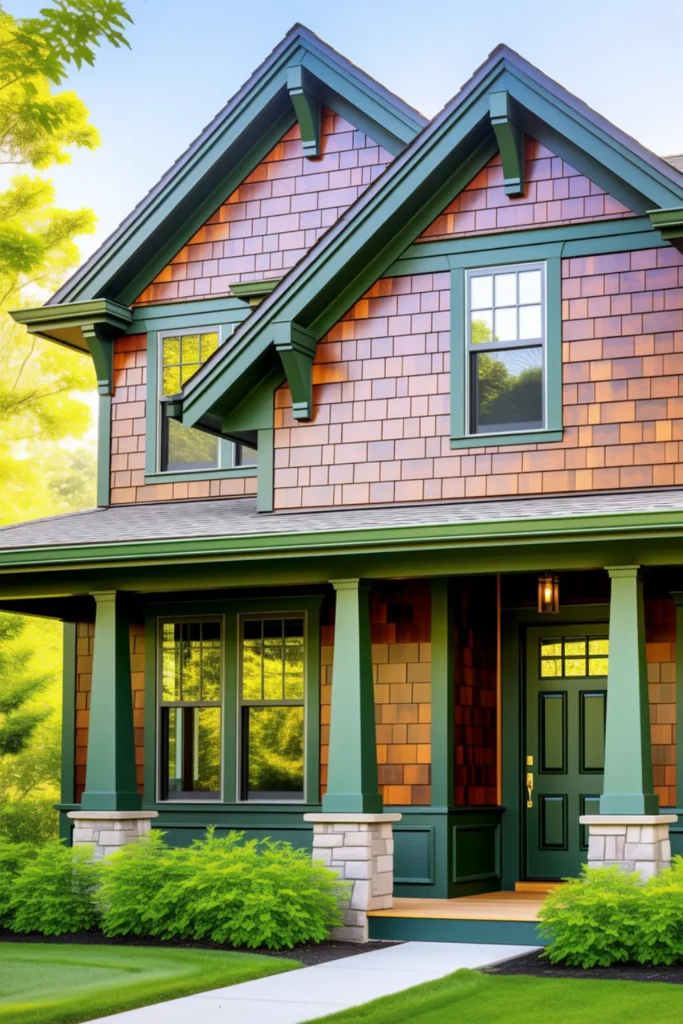
Real cedar shake looks gorgeous but costs a fortune and demands constant upkeep. Vinyl shake siding in warm chestnut gives you that same craftsman texture on your gables at a fraction of the price. I’ve used this on several projects where the budget was tight but the style goals were high. Pair it with dark green trim accents and you’ve got a rich, layered exterior that genuinely looks like a custom-built home.
Muted Sage Green With Stone Skirting
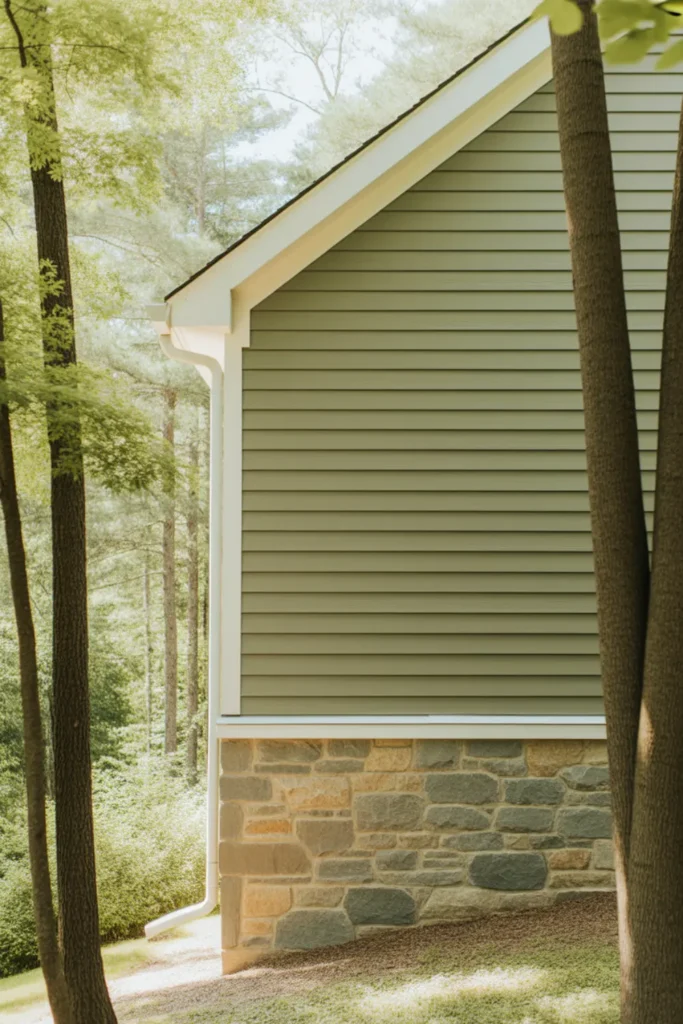
I’ve noticed homeowners shifting away from gray and asking me for this calming sage green instead. It makes complete sense. Sage pulls from nature, feels grounded, and photographs beautifully in every season. I love pairing it with manufactured stone veneer at the foundation. That stone skirting anchors the whole house visually, like it grew right out of the landscape. It’s one of those combinations that looks intentional, expensive, and deeply personal all at once.
Seamless Minimalist Ash Gray
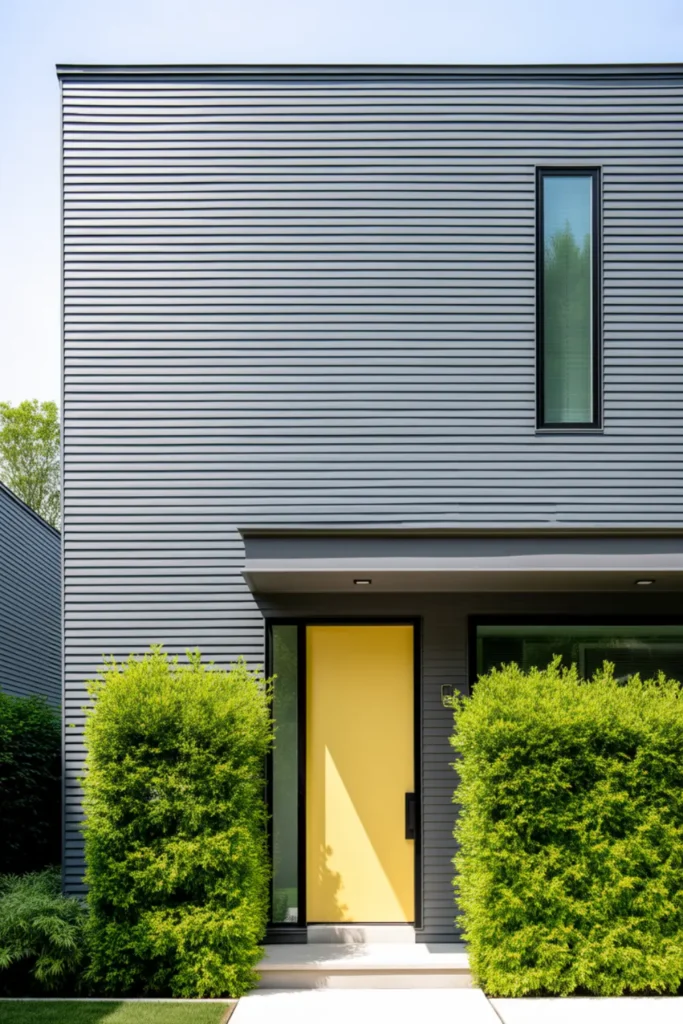
The biggest giveaway of cheap vinyl is the seams. When panels overlap too visibly, the whole exterior reads as budget material no matter the color. My trick is specifying extended-length panels or seamless profiles that keep those lines tight and subtle. Ash gray is my go-to for this look because the neutral tone lets the clean lines do all the talking. Pop in a bright yellow front door and suddenly the whole facade feels curated.
Two-Tone: White Top, Dark Gray Bottom
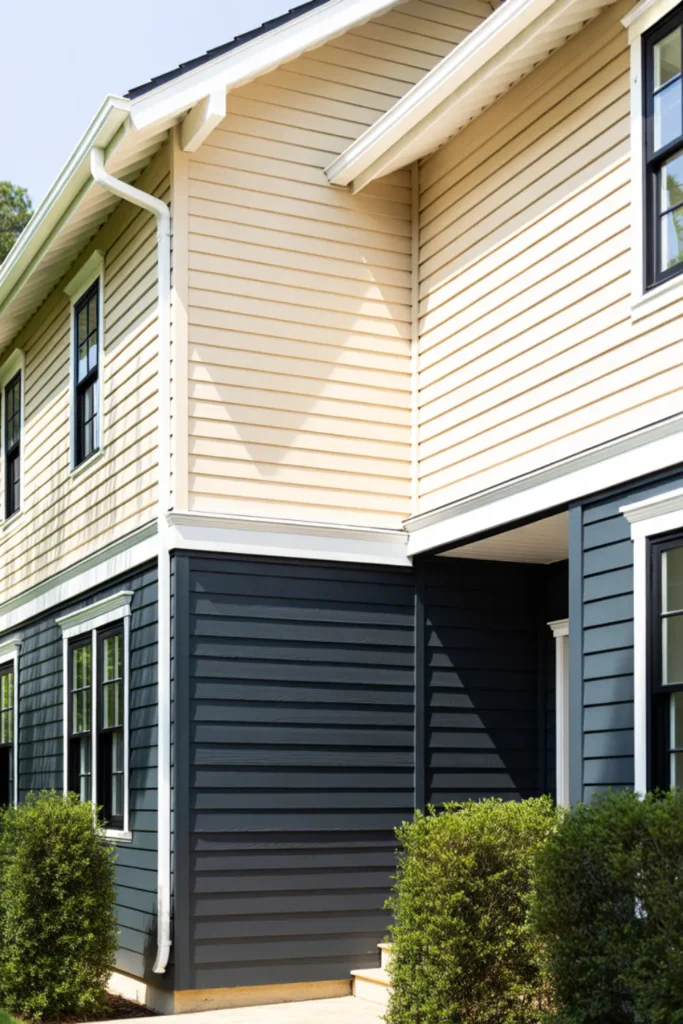
When a house lacks structural depth, I use the two-tone trick every time. Splitting the exterior into a white upper half and a dark charcoal lower half creates instant visual weight and dimension. The dark bottom anchors the house to the ground while the white top keeps it feeling light and open. It’s one of the easiest ways to add architectural interest to a flat, boxy facade without touching the actual structure.
Navy Blue With Brushed Brass Sconces
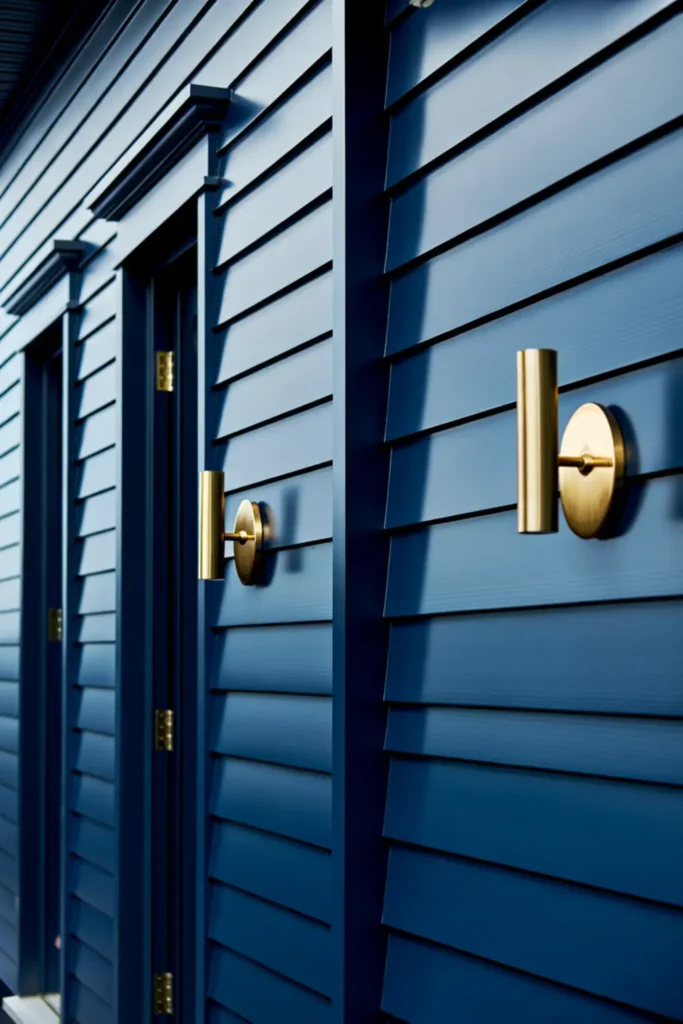
Navy siding already looks sharp and polished on its own. But the real upgrade comes from the hardware. Swapping standard porch lights for brushed brass sconces takes a dark exterior from moody to genuinely elegant. I’ve done this on three projects now and the transformation is dramatic every single time. The warm gold tones in brass pull heat out of the cool navy and create a contrast that feels rich, intentional, and high-end. Your new exterior cladding will look even more premium if paired with luxurious entryway paint choices.
Warm Greige With Black Window Frames
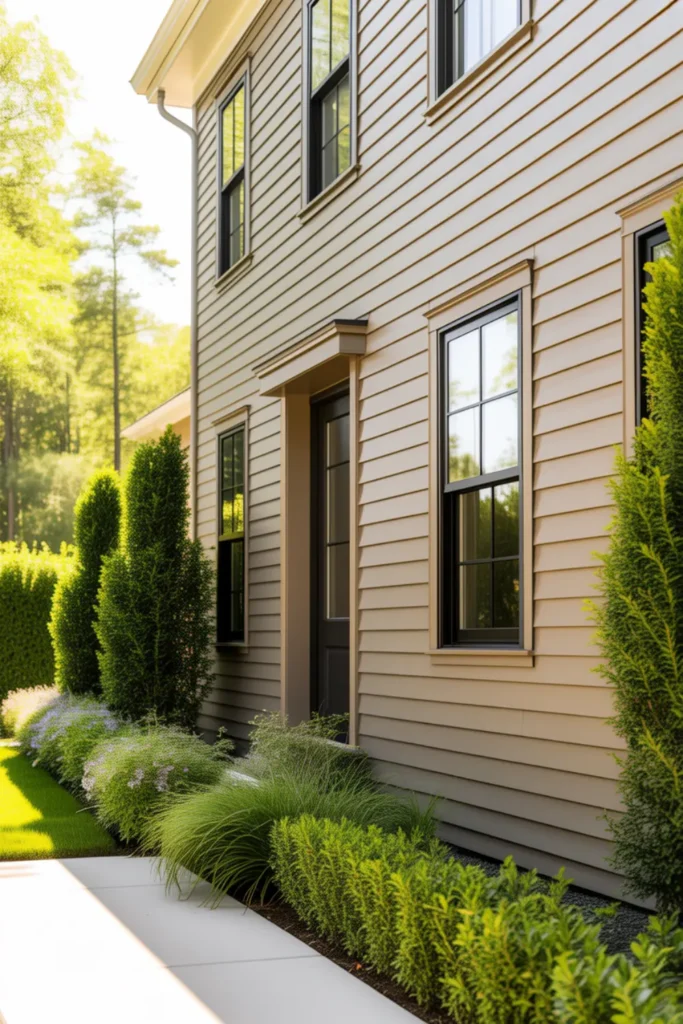
Pure white siding is beautiful but unforgiving. After following up on projects a year later, greige is always the smarter call. That warm beige-gray blend hides road dust, pollen, and water marks far better than white ever will. Pair it with bold black window frames and you get a crisp, modern contrast that feels very 2026. It’s the practical upgrade that also happens to look like a designer made every single decision.
Creamy Off-White With Red Brick Accents
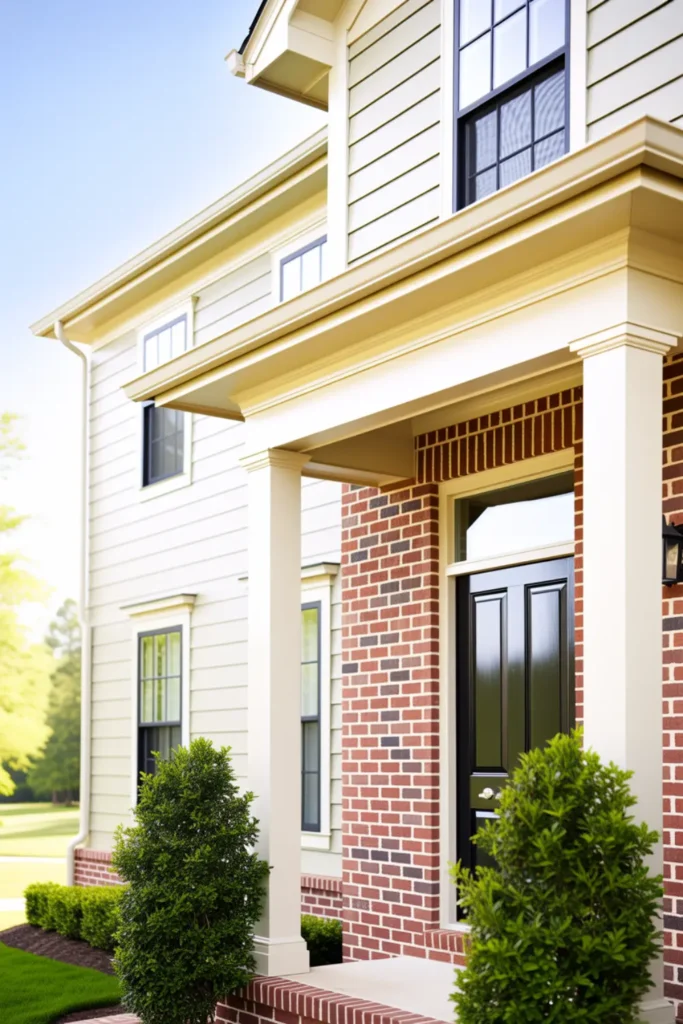
I frequently use creamy off-white to modernize dated 90s brick homes. Harsh red brick on its own can feel heavy and stuck in time. But the moment you pair it with a soft, warm vinyl tone, the whole exterior relaxes. The cream pulls warmth from the brick without competing with it. It bridges that gap between classic and current beautifully. For homeowners who love their brick but want a fresher look, this combination is always my first recommendation.
Rich Espresso Brown Wood-Look
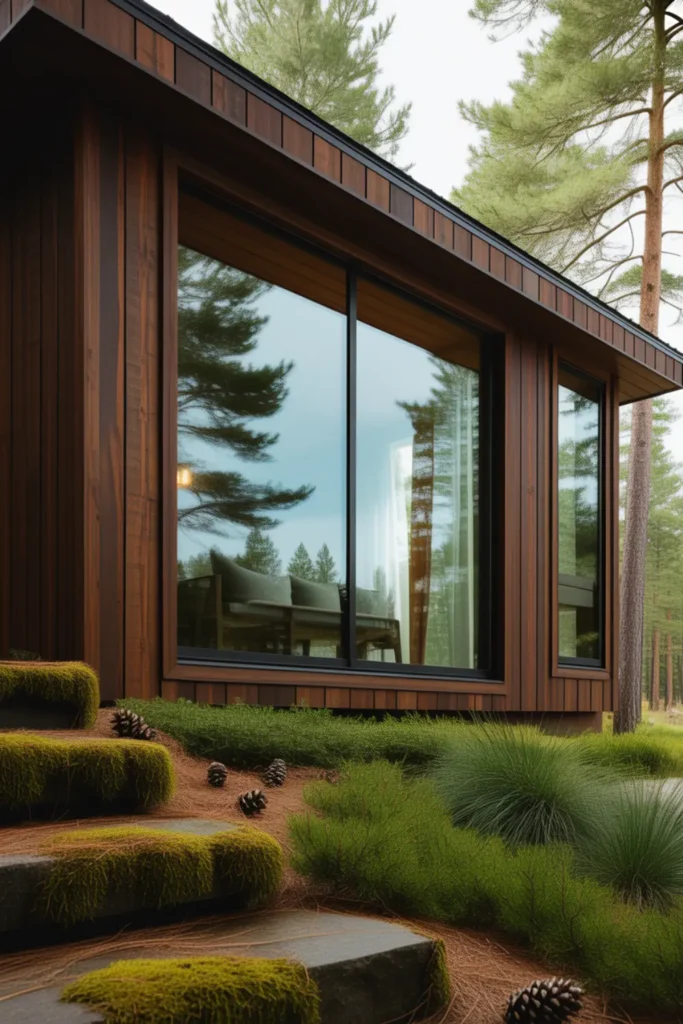
Every single time I install espresso brown wood-look vinyl, clients are shocked when they get close and realize it isn’t real timber. That’s the power of variegated color technology. Modern vinyl now mimics actual wood grain patterns with subtle color shifts that fool even trained eyes. On a rustic cabin or craftsman home, this siding creates that cozy, luxury lodge feeling. You get the warmth of real wood with none of the staining, sealing, or rotting.
Dusty Blue With Natural Stone Pathways
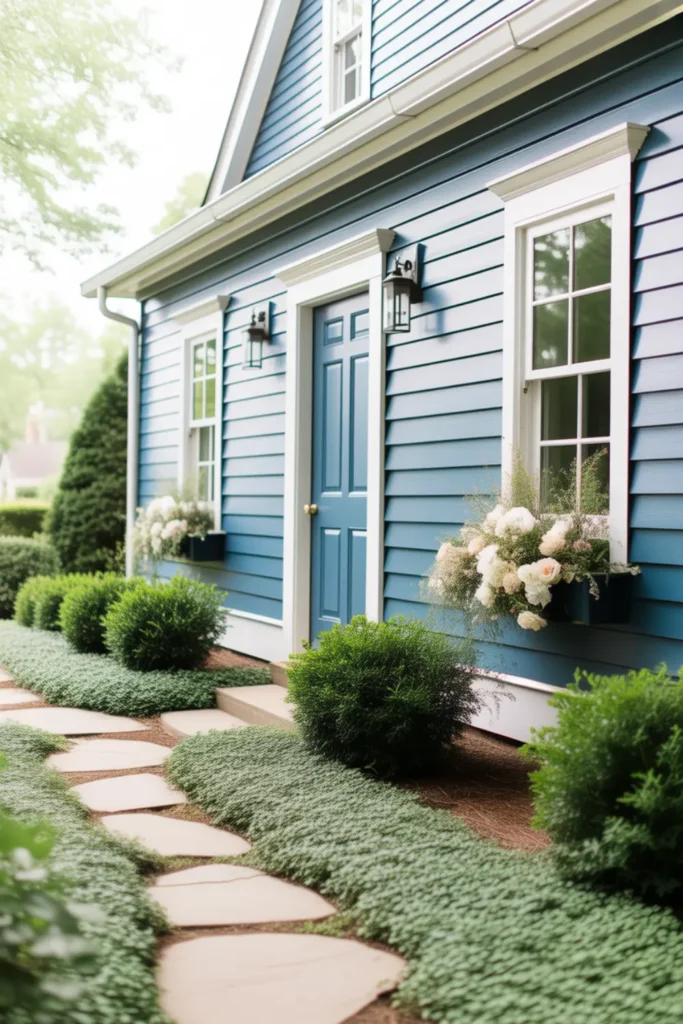
Siding and landscaping should always be planned together, not separately. Dusty blue vinyl has that cool, dreamy tone that pairs perfectly with the warm amber and tan hues in natural flagstone. When a stone pathway leads up to a dusty blue cottage, the whole entrance feels like something out of a storybook. I always tell clients to pull stone samples before finalizing their siding color. That harmony between cool walls and warm ground materials makes the difference between pretty and unforgettable.
Desert Sand For Southwestern Charm
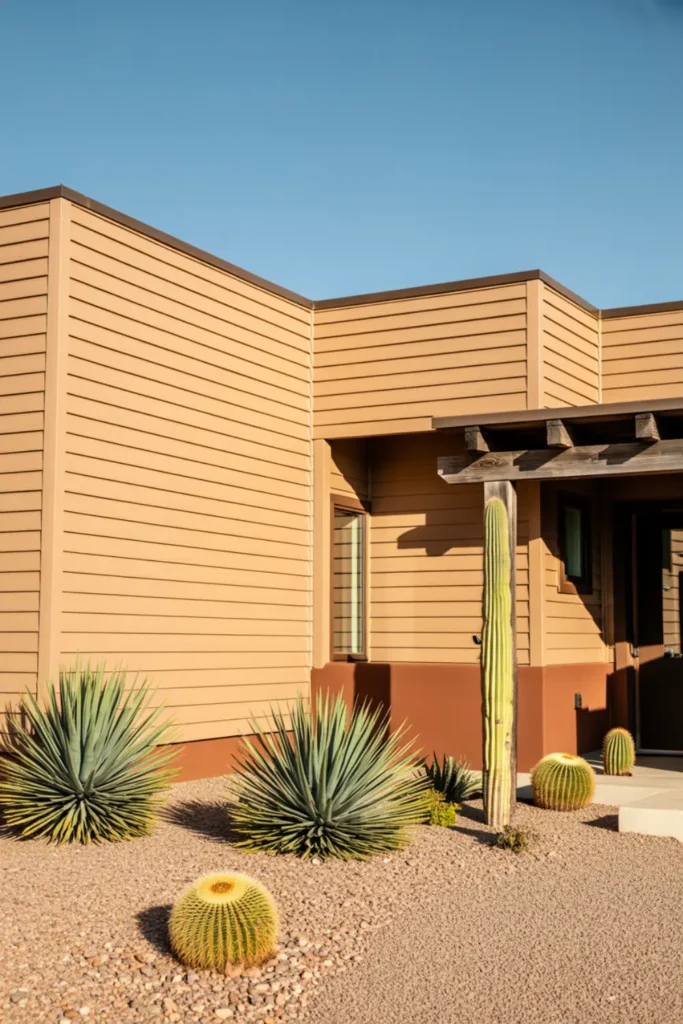
Color should always respond to its environment. Traveling through the Southwest taught me that the best exteriors don’t fight the landscape, they echo it. Desert sand vinyl siding blends naturally with dry grasses, agave plants, and terracotta pots in a way that feels completely intentional. It’s a warm, dusty neutral that absorbs sunlight beautifully and never looks out of place. Pair it with a turquoise front door and rough-hewn wood beams for that authentic regional character.
Pale Yellow For Vintage Cottage Appeal
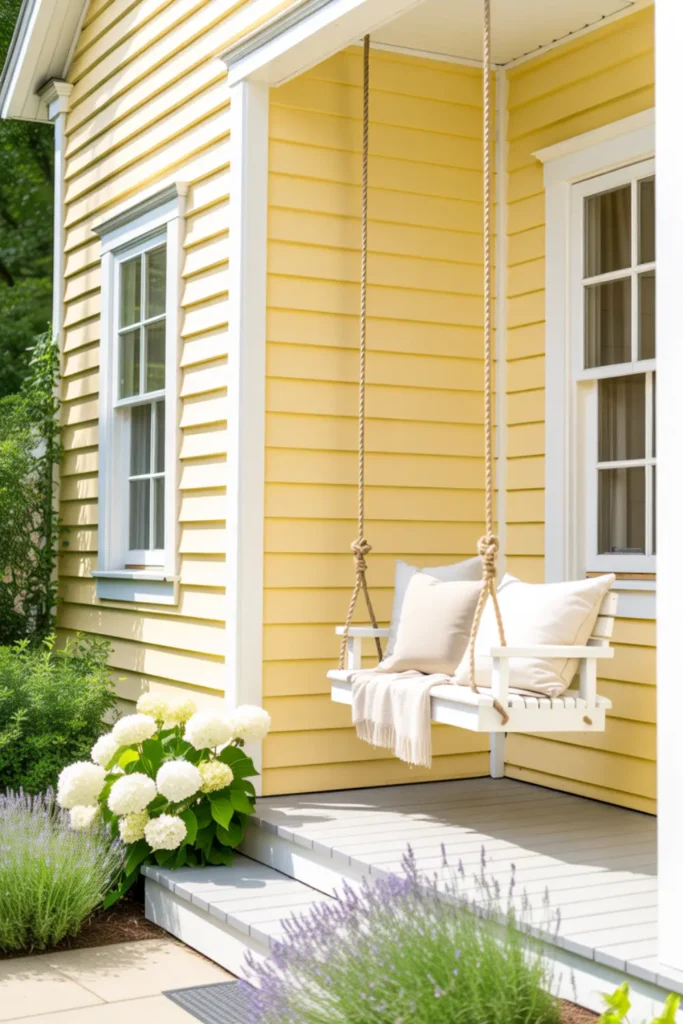
Yellow can be tricky, but my golden rule is keeping the trim ultra-bright white. Without that crisp contrast, yellow siding can read as faded or tired rather than cheerful and intentional. The right pale yellow, think buttery and soft rather than bold, gives a vintage cottage warmth and personality that neutral colors simply cannot. Add a porch swing, some window boxes with white flowers, and you’ve created an exterior that feels genuinely lived-in and loved. Pair it with Sherwin-Williams Alabaster trim for a perfectly balanced finish.
Midnight Blue With A Wraparound Porch
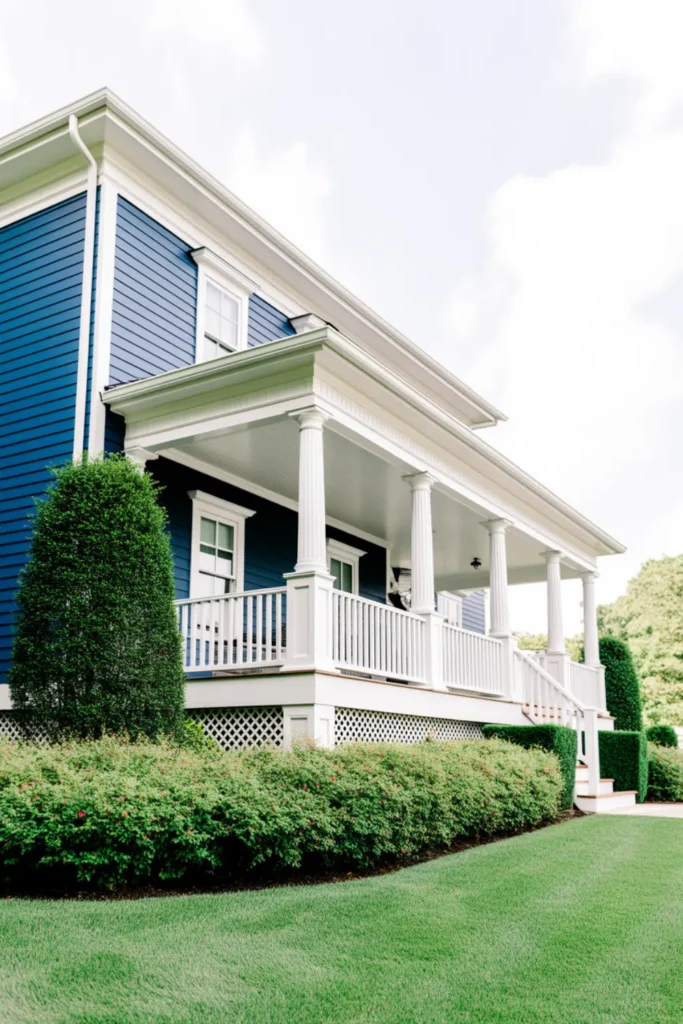
Dark siding on a large home does something unexpected — it makes the house feel cozier and more grounded rather than overwhelming. Midnight blue is my favorite choice for traditional two-story homes with wraparound porches because the contrast against white porch columns is genuinely stunning. Those bright columns pop forward while the dark siding recedes beautifully behind them. The result feels grand and welcoming at the same time, which is a surprisingly rare combination to pull off.
Terracotta Tones For Mediterranean Vibes
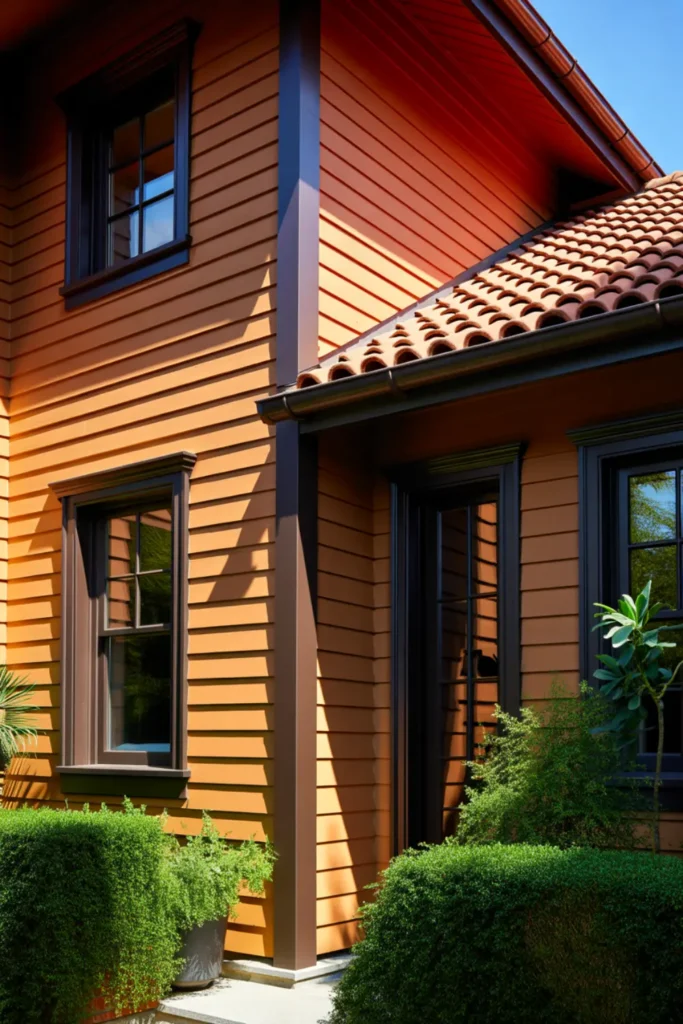
Most people assume a Mediterranean look requires stucco, but terracotta vinyl siding delivers that same warmth without the cracking and repainting that stucco demands. I love using this in cookie-cutter suburban neighborhoods specifically because it breaks the sea of beige completely. Pair it with dark bronze window frames and a clay-look roof detail and the whole house transforms. It stops traffic. Neighbors always ask what was done, and the answer is simpler than they ever expect.
Sleek Silver Gray For Urban Modern
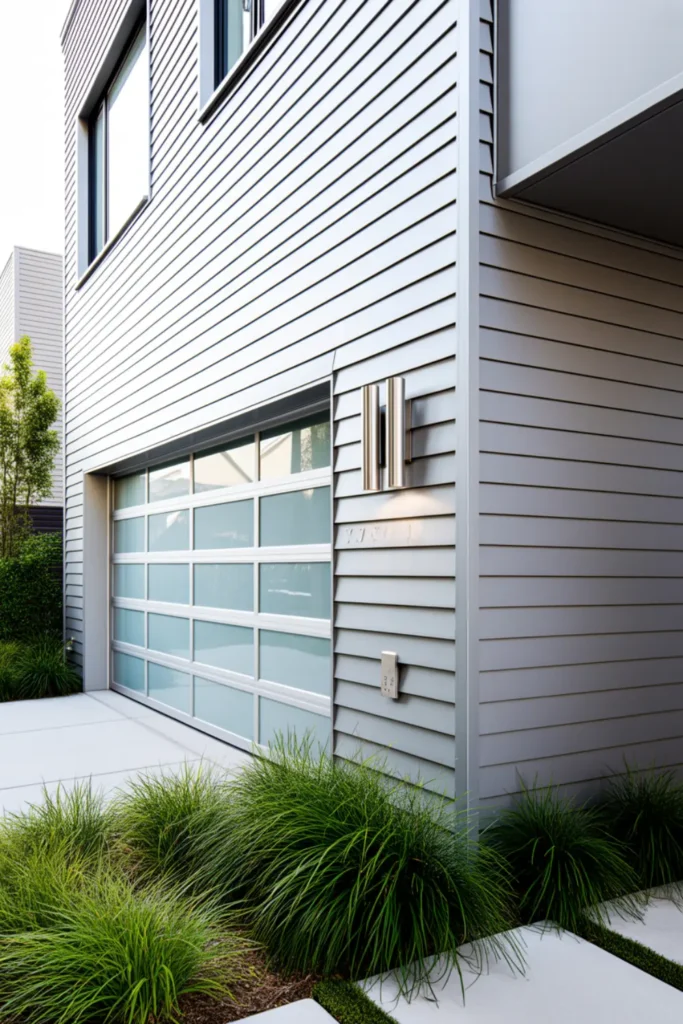
I’ve transformed more than one basic split-level into something that looks like an urban loft using nothing but silver gray vinyl and a frosted glass garage door. The garage door swap is the real secret. That combination of light gray siding with an aluminum or glass door reads as intentional, architectural, and expensive. Add brushed metal house numbers and a single pendant light above the entrance and the whole facade shifts from dated to distinctly modern.
Rustic Red Barn-Style Vinyl
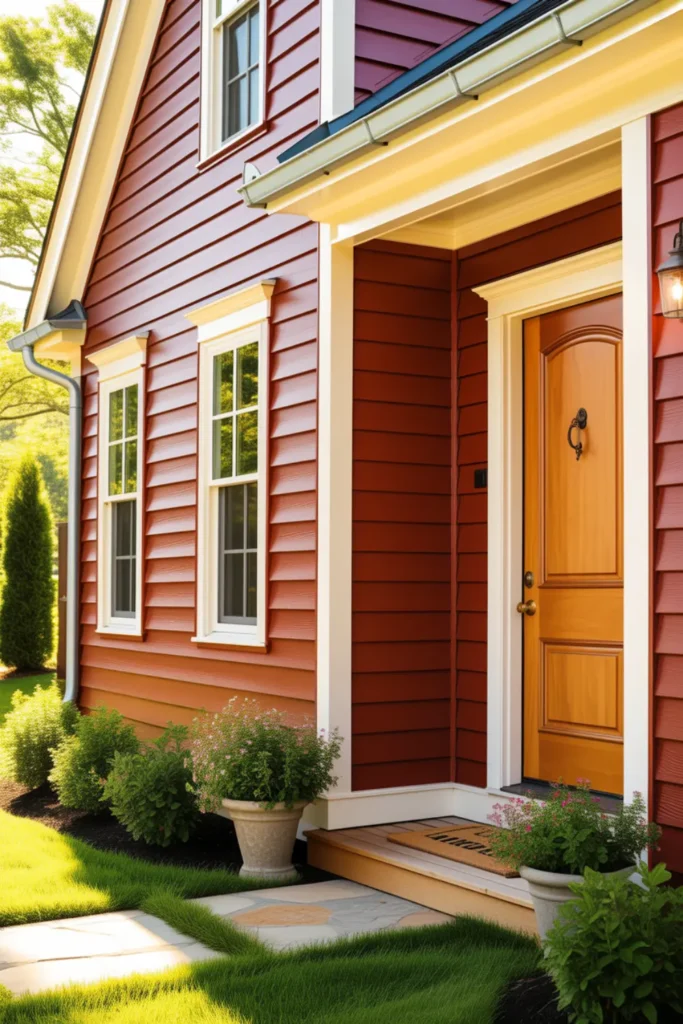
Clients always smile when I reveal a red barn-style transformation. There’s something deeply nostalgic about a crisp red exterior with white trim that resonates with almost everyone. Using vertical vinyl panels in a rustic red with classic white X-trim accents captures that timeless Americana character without any of the wood maintenance. It works beautifully on rural properties, lake houses, and even suburban homes with larger lots. Bold, cheerful, and completely unforgettable from the road.
Soft Lavender-Gray Coastal Cottage
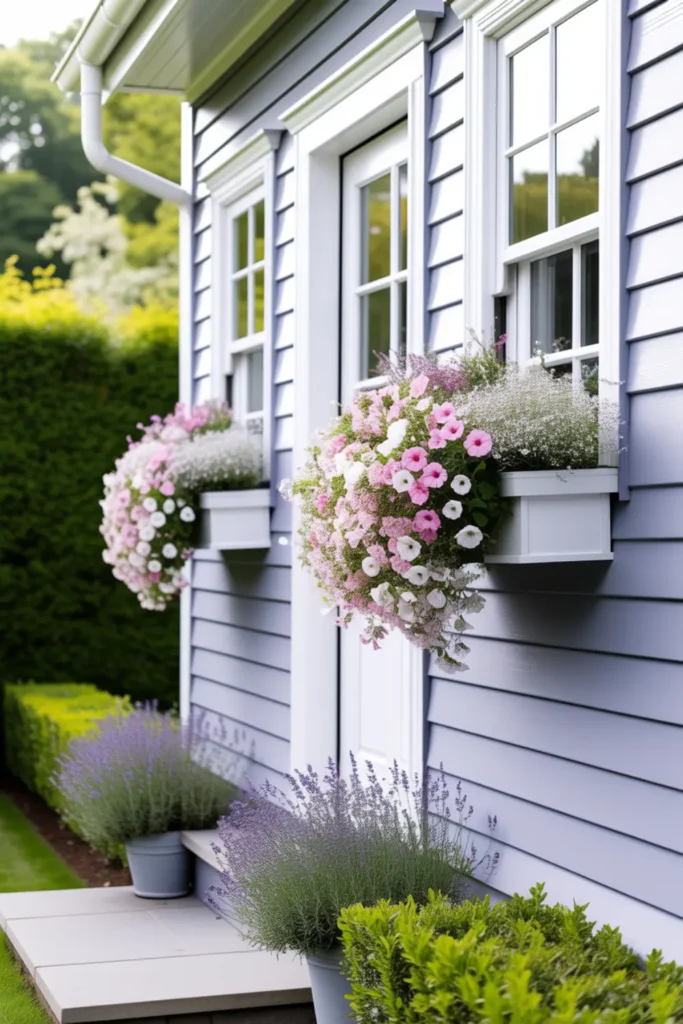
Beige is safe but forgettable. Lavender-gray is the color I recommend when homeowners tell me they want something different but aren’t ready to go fully bold. In morning light it reads almost silver. By afternoon it shifts into a genuine soft purple. That color-shifting quality makes it endlessly interesting and highly photogenic. Pair it with white window boxes overflowing with flowers and the whole cottage feels like something from a coastal village. Gentle, dreamy, and completely original on any street.
Forest Green With Copper Gutters
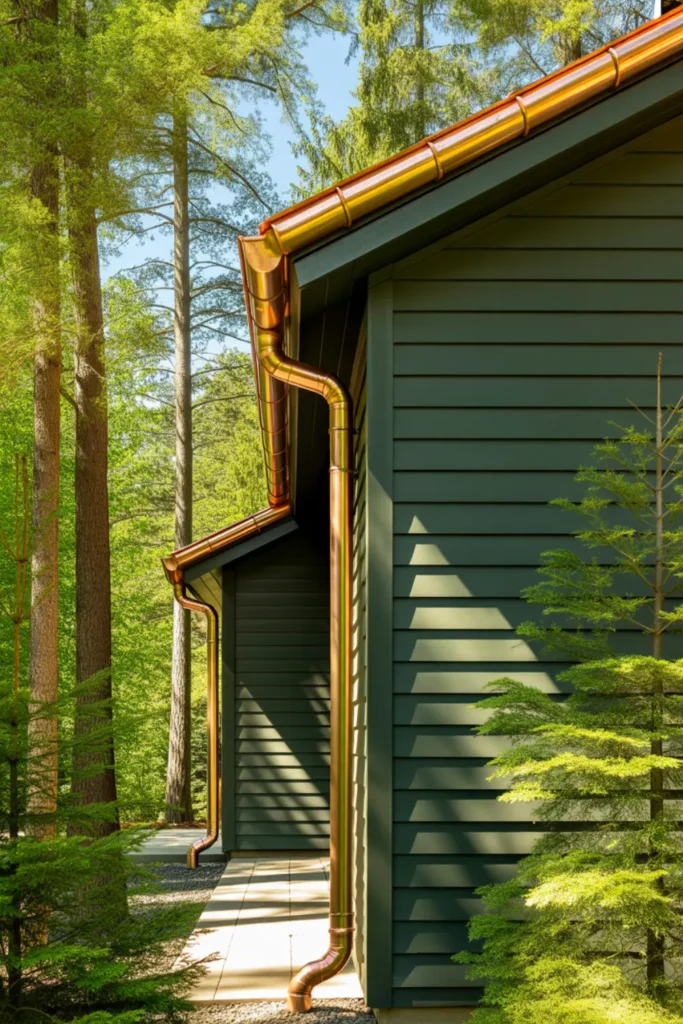
The pairing of deep green and copper is my absolute favorite luxury hack in exterior design. It costs very little extra but reads as completely custom. Copper gutters and downspouts develop a natural patina over time that only makes the combination richer and more beautiful. Against deep forest green vinyl, that warm metallic tone glows in afternoon light. It’s one of those pairings that photographs so well it almost doesn’t look real. Genuinely one of my most-saved project combinations.
Weathered Barnwood Look-Alike
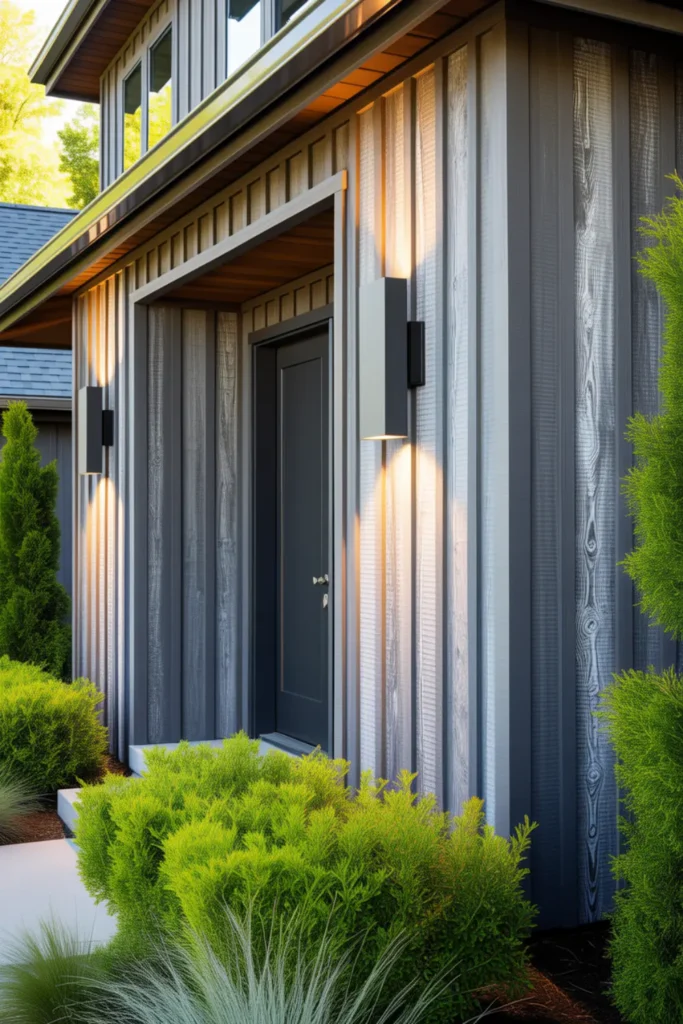
Reclaimed barnwood is beautiful but brutally high maintenance. Printed vinyl technology has gotten so advanced that I’ve had contractors on job sites stop and touch the siding to confirm it wasn’t real aged wood. That texture and color variation built into modern vinyl panels is remarkable. Pair weathered gray barnwood-look siding with sleek black exterior light fixtures and you get that perfect tension between rustic and refined. All the character of a reclaimed aesthetic with zero rot, zero sealing, zero headaches.
High-Contrast Monochromatic (Black and White)
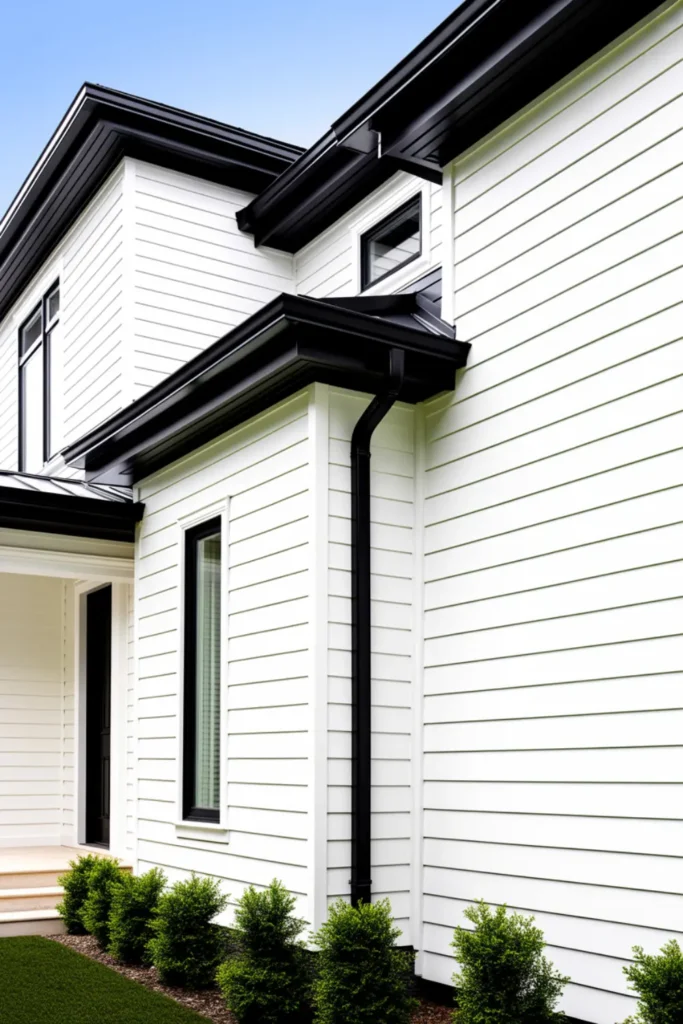
This is the most requested combination in my portfolio for 2026 by a wide margin. Crisp white vinyl siding paired with stark black fascia, gutters, and trim creates a graphic, punchy look that photographs beautifully from every angle. The key is committing fully. Half-measures ruin it. Every trim detail, every roofline, every downspout needs to be that same bold black. When it’s executed cleanly, the result looks like a magazine cover every single time.
Warm Taupe With Limestone Accents
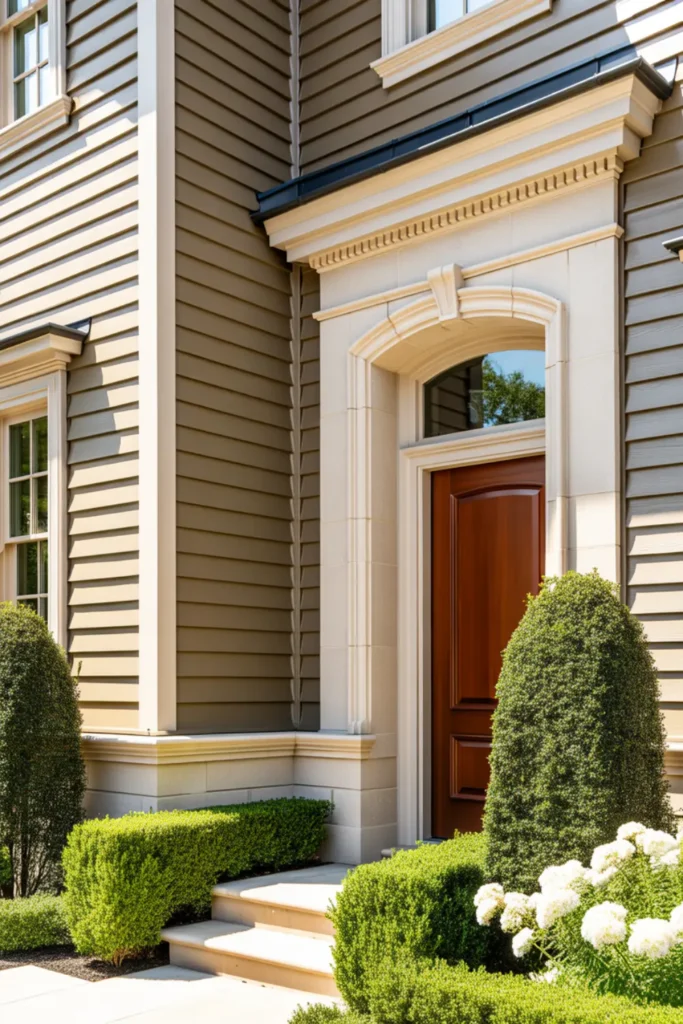
Taupe gets underestimated constantly, and I’ll never understand why. A warm, slightly golden taupe vinyl paired with light limestone accents around the entryway creates one of the most quietly wealthy-looking facades you can achieve on a budget. The stone detail at the entry does the heavy lifting visually. It signals craftsmanship and permanence. Everything around it can be straightforward vinyl and the whole package still reads as thoughtful, elevated, and expensive without a single flashy move.
Horizontal Dutch Lap In Classic Almond
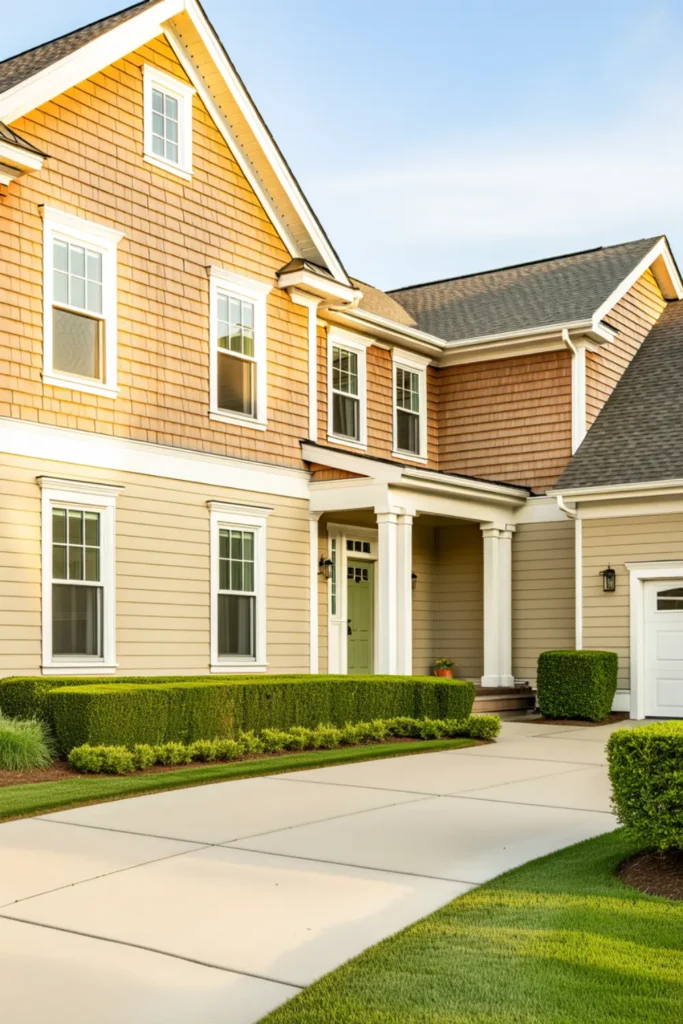
I love Dutch lap profiles because the deep shadow line each panel creates makes the material look significantly thicker and more substantial than flat lap ever could. That shadow detail tricks the eye into reading genuine depth and dimension across the wall. Classic almond is the ideal color for this profile because its warmth enhances those shadows without darkening the facade. For traditional suburban homes, this is the refinement upgrade that costs almost nothing extra but changes everything about how the house reads from the street.
26. Beaded Vinyl In Heritage Blue
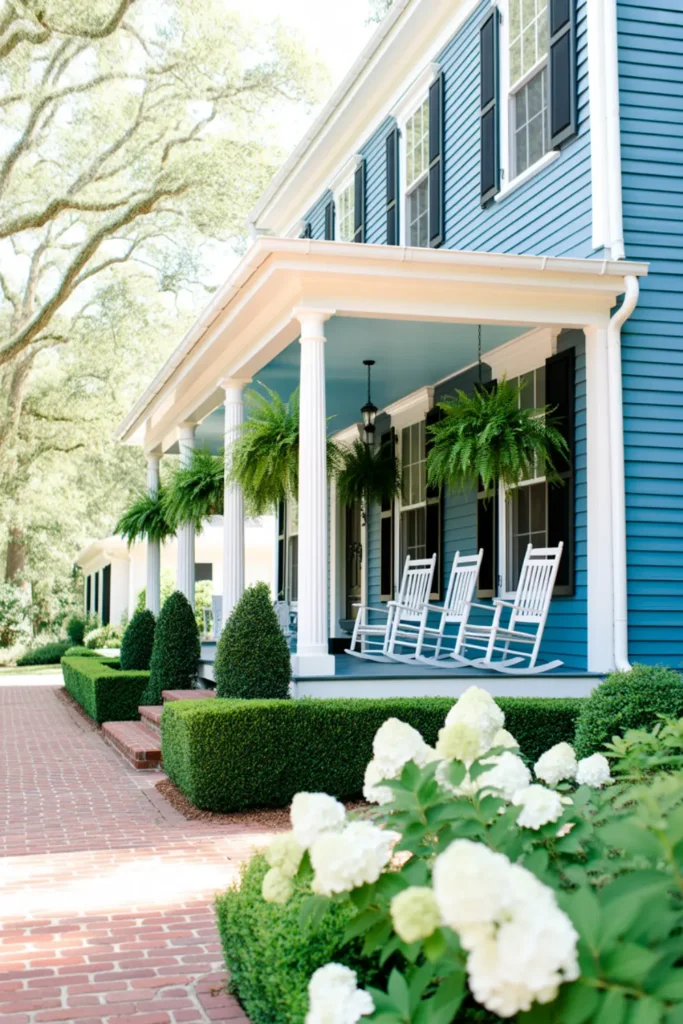
Beaded siding has a distinct, refined profile that flat lap simply cannot replicate. That subtle rounded bead along the bottom edge of each panel catches light differently, creating a soft, layered texture across the entire wall. Heritage blue is the perfect color to honor that Southern historical character while keeping the palette feeling fresh and current. Wide front porches with white rocking chairs complete the picture. It’s classic American architecture executed with modern, rot-proof, zero-maintenance materials that will last decades.
27. Mixed Textures: Scallop And Lap In Soft Mint
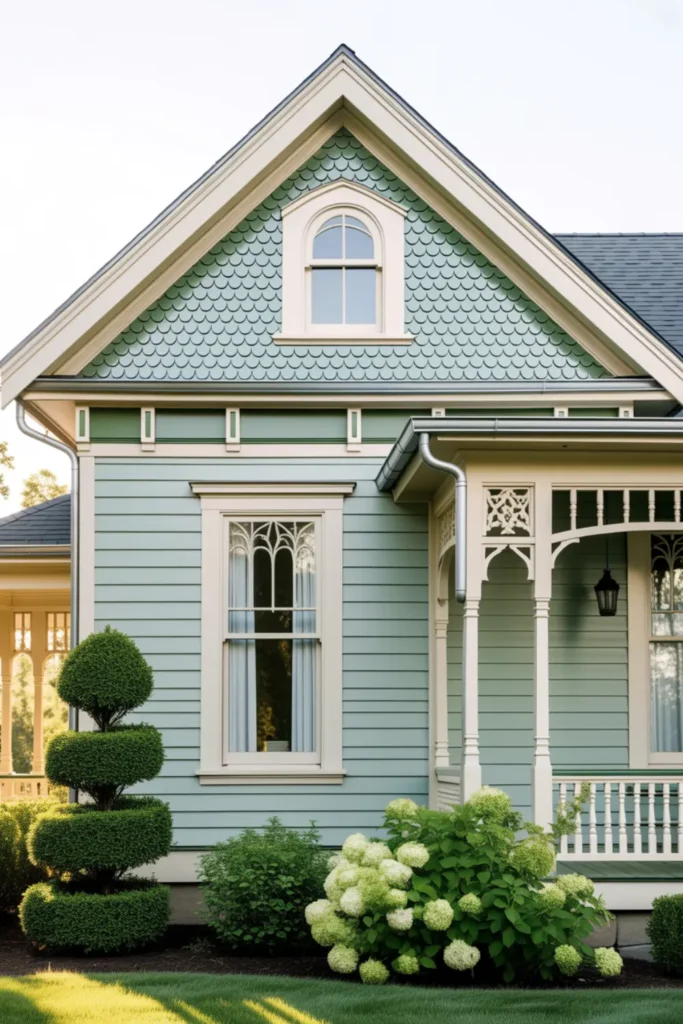
Mixing siding profiles is my favorite way to give a completely flat home genuine architectural character. Horizontal lap panels on the main walls keep things clean and structured. Then scalloped half-round vinyl on the upper gables adds that Victorian detail that makes people stop and look twice. Soft mint ties both profiles together without competing with either texture. The color is light enough to let the shapes do the work. It’s a layered, handcrafted look achieved entirely with modern vinyl panels.
28. Modern Color-Blocking With Stucco
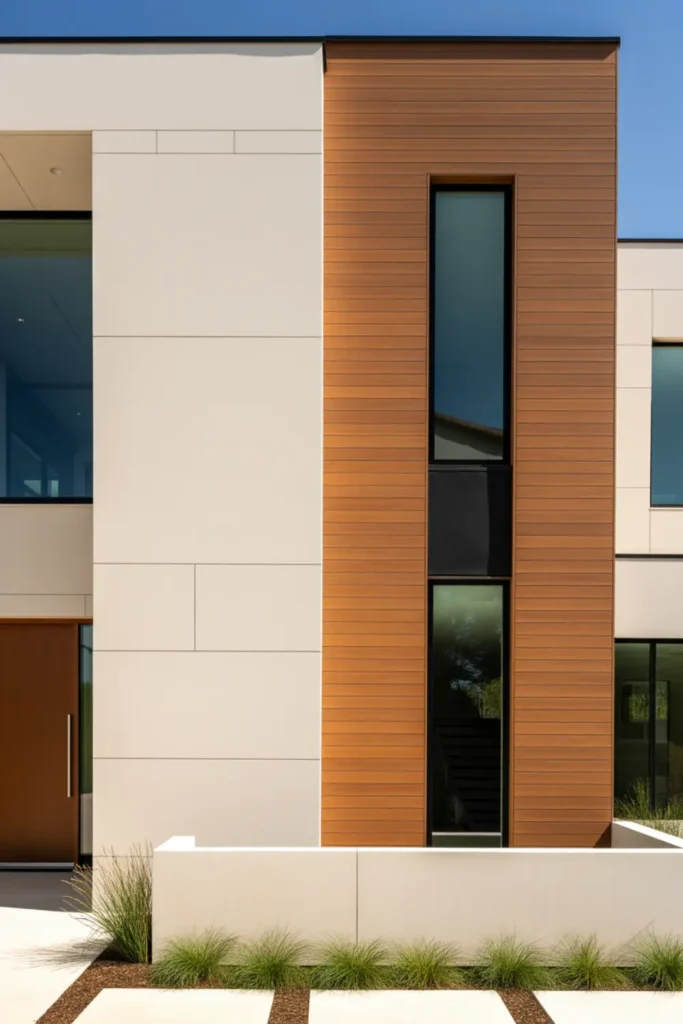
A boring single-material facade becomes immediately more interesting when you introduce deliberate contrast between materials. Pairing smooth white stucco sections with warm wood-look vertical vinyl creates graphic, architectural color-blocking that reads as genuinely custom designed. I use this approach on homes where the architecture lacks natural definition. The material shift itself becomes the design feature. No additional trim or detailing needed. The contrast between textures carries the entire visual weight of the exterior on its own.
29. Rich Burgundy With White Corner Posts
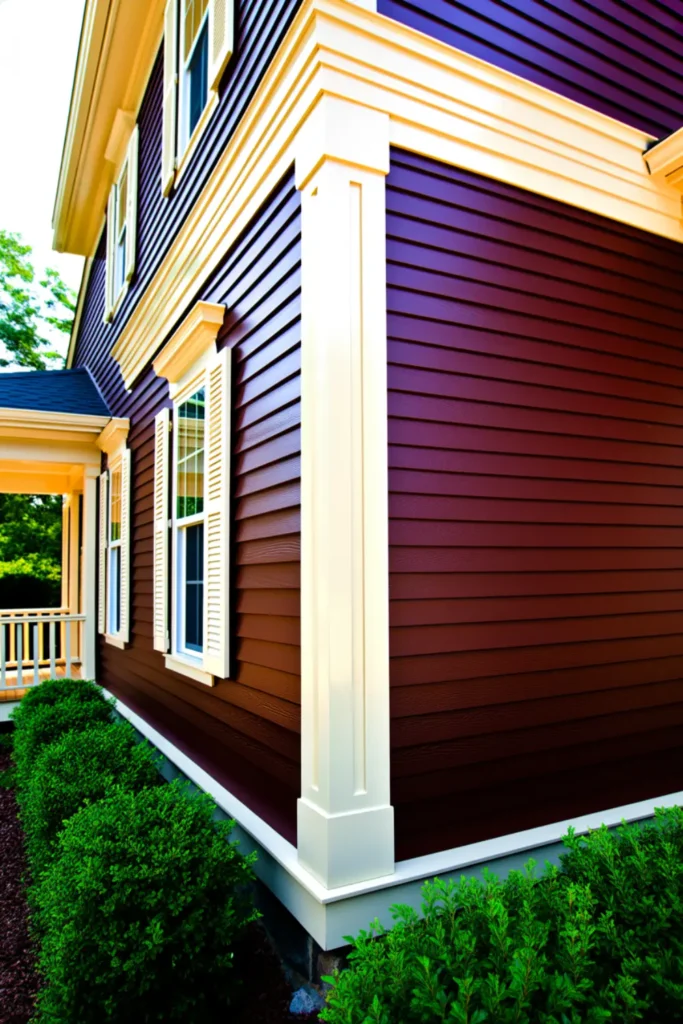
Framing a house with wide, thick white corner trim makes it look instantly more expensive regardless of what siding color fills the space between. With a bold choice like rich burgundy, that framing becomes even more critical. The white posts contain the color, give the eye a place to rest, and add the appearance of real structural depth. Without those corner details, dark bold colors can feel heavy. With them, the whole facade feels deliberate, commanding, and classically well-proportioned.
30. Faux Stone Foundation With Pearl Gray Siding
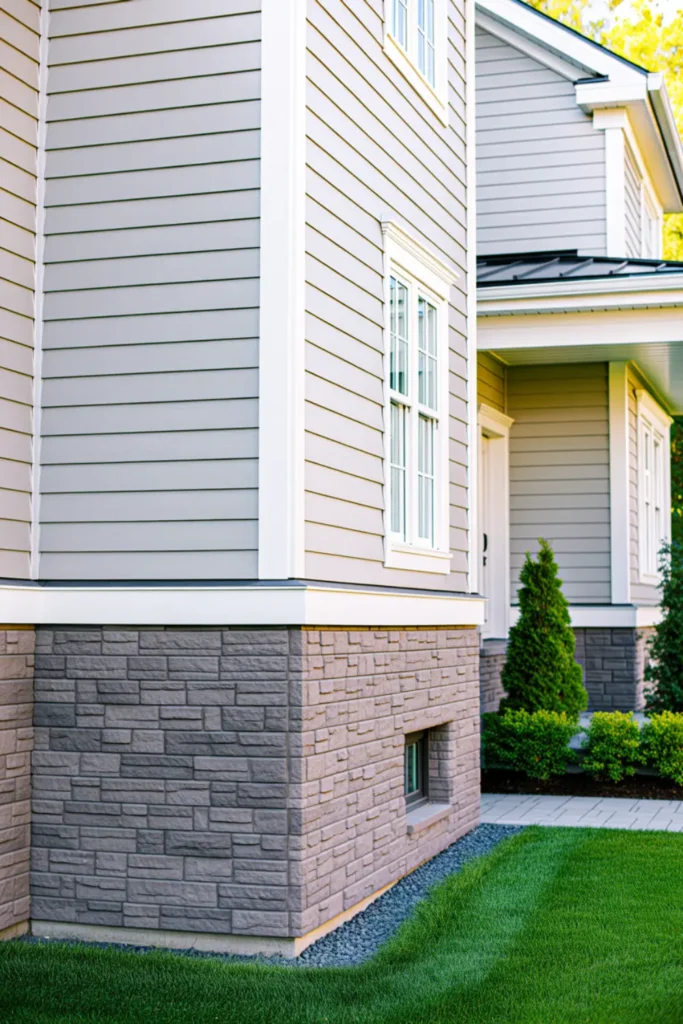
This is my most reliable formula for maximum curb appeal and the strongest return on investment. Pearl gray is subtle enough to step back and let a textured faux stone foundation command full attention at street level. That stone veneer at the base signals permanence and quality before anyone even reaches the front door. The gray siding above keeps everything calm, cohesive, and timeless. Together they create an exterior that looks like it belongs in a luxury neighborhood regardless of the actual budget behind it. Brands like Royal Building Products offer excellent stone veneer options that pair beautifully with neutral vinyl tones.
Final Thoughts
Vinyl siding has come a long way from the thin, plasticky panels of the past. The 30 ideas in this guide prove that the right color, profile, and material pairings can make any home exterior look genuinely custom and carefully designed. Budget does not have to mean basic. Whether you’re drawn to the moody drama of Iron Ore, the cheerful charm of pale yellow, or the timeless elegance of pearl gray with stone, the key is always the same: treat every detail as part of one cohesive vision. Siding, trim, doors, hardware, and landscaping all work together. Get that harmony right and the results will speak for themselves.
Frequently Asked Questions
What is the most popular vinyl siding color in 2026?
Dark, moody tones like Iron Ore charcoal and deep navy blue are the most requested colors in 2026. Warm neutrals like greige and taupe remain strong for homeowners who prefer a timeless, resale-friendly choice.
Does vinyl siding look cheap compared to wood or fiber cement?
Modern vinyl siding does not look cheap when installed correctly with the right trim details, corner posts, and complementary colors. Advanced printing technology now mimics wood grain, cedar shake, and barnwood textures so convincingly that even contractors get surprised up close.
How long does vinyl siding last on a home?
Quality vinyl siding typically lasts between 20 and 40 years depending on the manufacturer, climate, and installation quality. Premium profiles from brands like CertainTeed are engineered to resist UV fading, moisture, and impact for decades with minimal upkeep.
Can I paint vinyl siding to change the color?
Vinyl siding can be painted but it requires specific exterior primers and paints formulated for flexible surfaces. Many homeowners choose to replace siding instead since modern vinyl colors are baked in and far more durable than any painted finish applied over the top.
What vinyl siding profile looks the most high-end?
Dutch lap, beaded, and board and batten profiles consistently read as the most high-end because they create stronger shadow lines and more visible texture depth than standard flat lap. Mixing profiles, such as lap on walls with scallop on gables, adds even more architectural character.
Does dark vinyl siding fade or warp in hot climates?
Earlier generations of dark vinyl did fade and warp in intense heat. Modern UV-resistant vinyl formulations available in 2026 are specifically engineered to hold deep colors and maintain structural integrity even in high-temperature climates, making bold dark choices far more practical than they used to be.