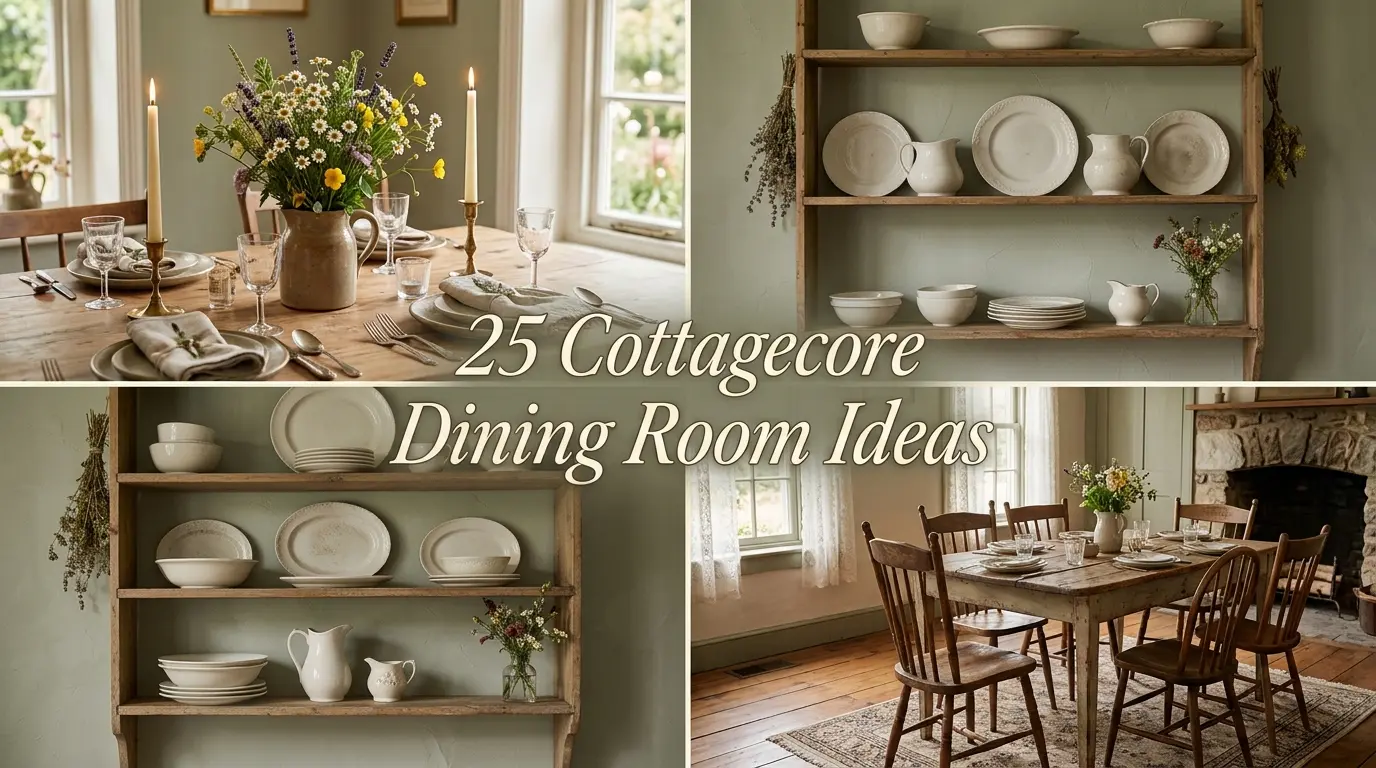
A cottagecore dining room is where raw linen napkins, mismatched vintage china, wildflower centerpieces, and warm candlelight come together to create a space that feels pulled from a storybook garden. It’s soft, it’s lived-in, and it’s deeply intentional about bringing the outdoors in.
I’ve spent years styling interiors and hunting through thrift stores for the exact kind of pieces that make a room breathe. The cottagecore aesthetic rewards slow living, and no room in the house captures that better than the dining room.
Whether you’re starting from scratch or just want to layer in more charm, these 25 ideas cover everything from furniture choices to lighting to table styling. Each one is something I’ve either tried myself or styled for someone who fell completely in love with the result.
Vintage Mismatched Wooden Chairs
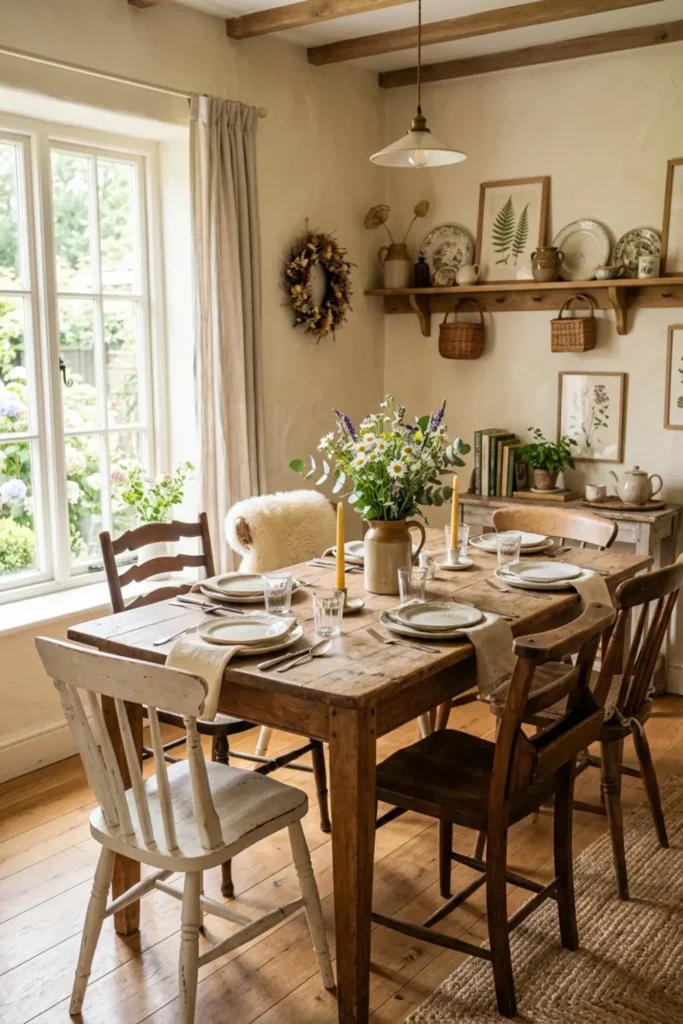
I never set out to collect mismatched chairs. It just happened organically over years of thrifting, and honestly, it’s the best accident I ever made in a dining room.
The key is finding chairs that share a similar wood tone even if their shapes are completely different. A ladder-back next to a spindle-back next to a Windsor all work together when the wood is in the same warm amber or walnut family.
If the tones are slightly off, a matching set of linen seat cushions in oatmeal or sage pulls everything into harmony instantly.
Botanical Print Gallery Wall
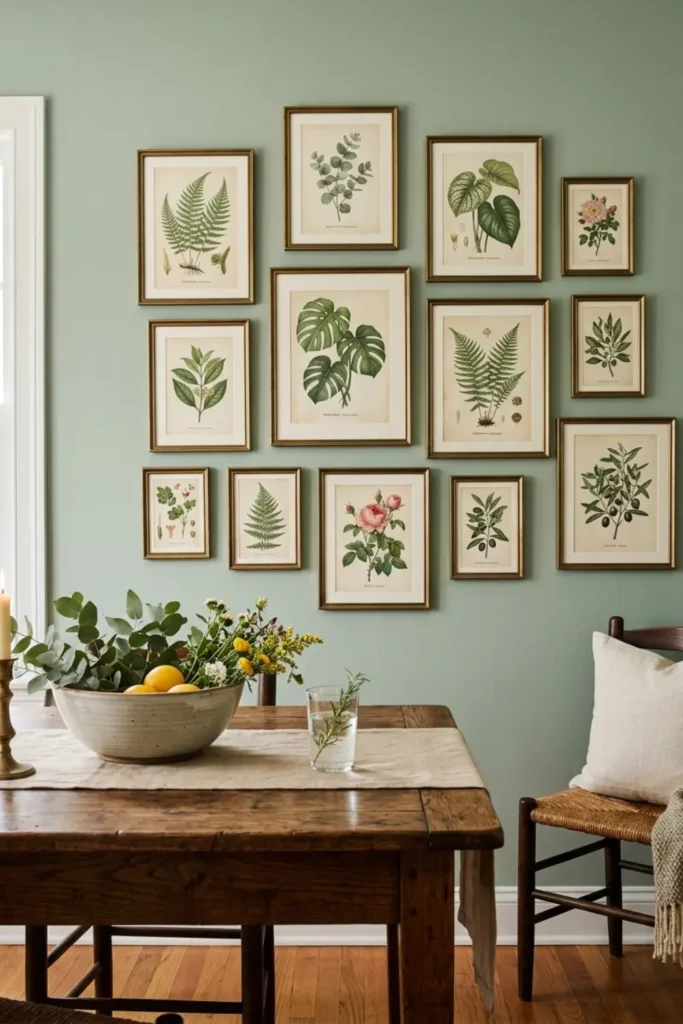
A botanical gallery wall does something no single piece of art can do on its own. It turns an entire wall into a mood.
I source vintage plant illustrations from thrift stores and estate sales, then frame them in antique brass frames of slightly different sizes. The mismatched frames actually add to the charm rather than taking away from it.
Start from the center and work outward, leaving about two to three inches between each frame. Keep the top edges roughly aligned and let the bottoms vary naturally.
Flowing Natural Linen Curtains
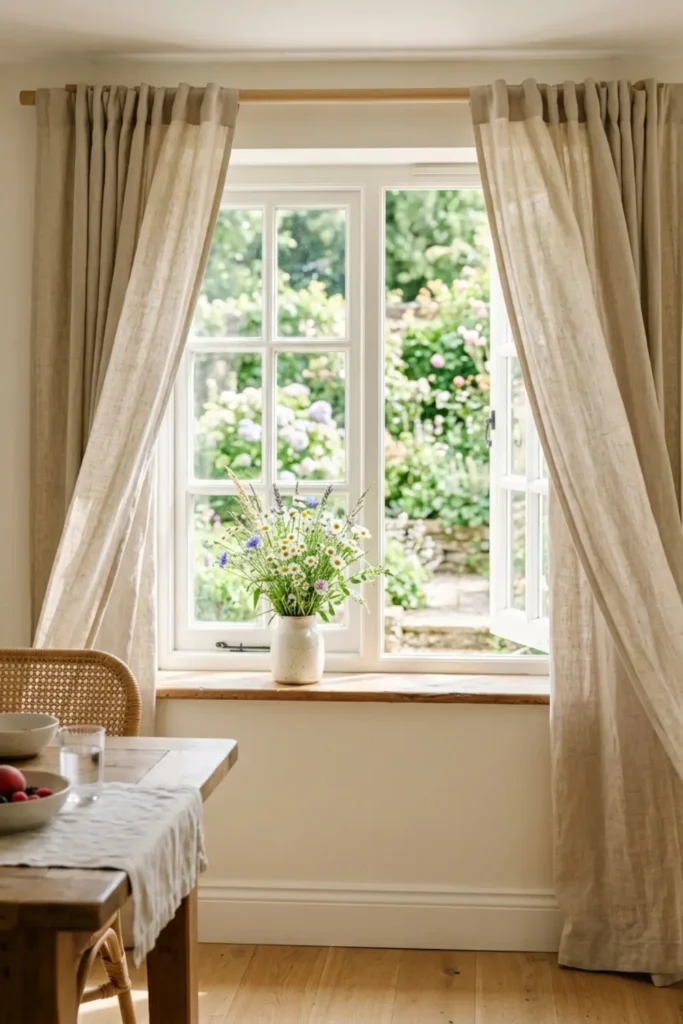
Linen is the only fabric I reach for in a cottagecore dining room. It wrinkles, it moves, it softens in sunlight, and every single one of those qualities works in your favor.
Hang the rod as close to the ceiling as possible and extend it well past the window frame on both sides. This makes even a small window look generous and grand.
In the morning light, natural linen curtains give the room that hazy, golden hour glow that no manufactured fabric can replicate.
Open Shelving for Ironstone Pottery
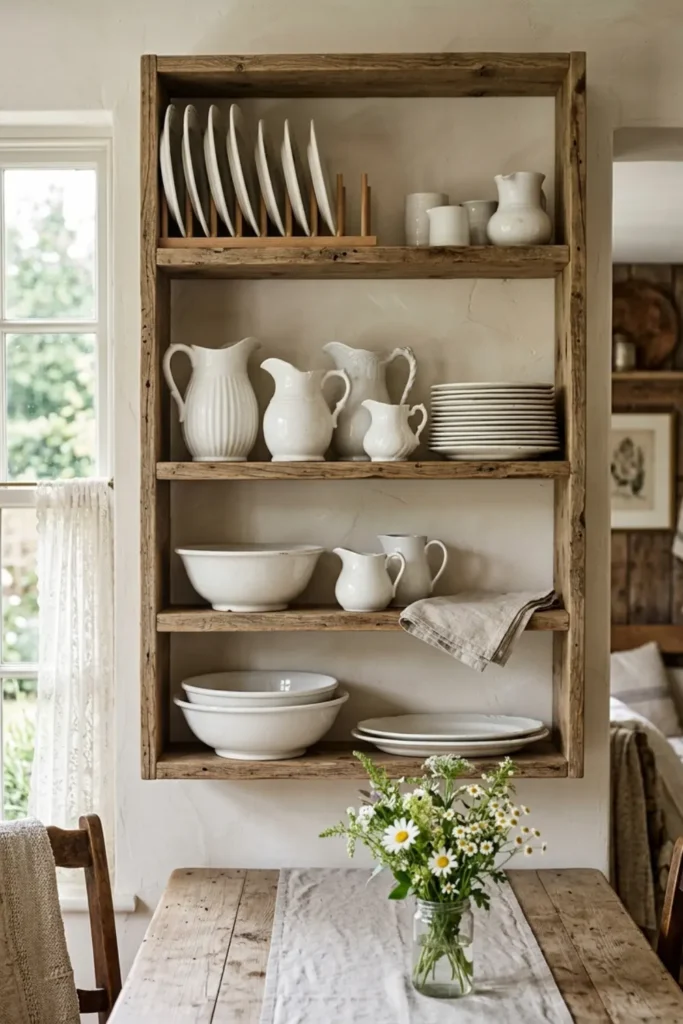
Open shelves only look cluttered when there’s no intention behind the arrangement. With ironstone, the collection does the work for you.
I group pitchers by height at one end, stack plates in the middle, and leave small breathing gaps between groupings. That white space is what keeps it feeling styled rather than crowded.
Ironstone’s creamy, imperfect glaze has a natural warmth that looks beautiful against raw wood shelving. It photographs beautifully too, which matters when you want a room that feels as good in pictures as it does in person.
Wildflower Centerpiece Arrangements
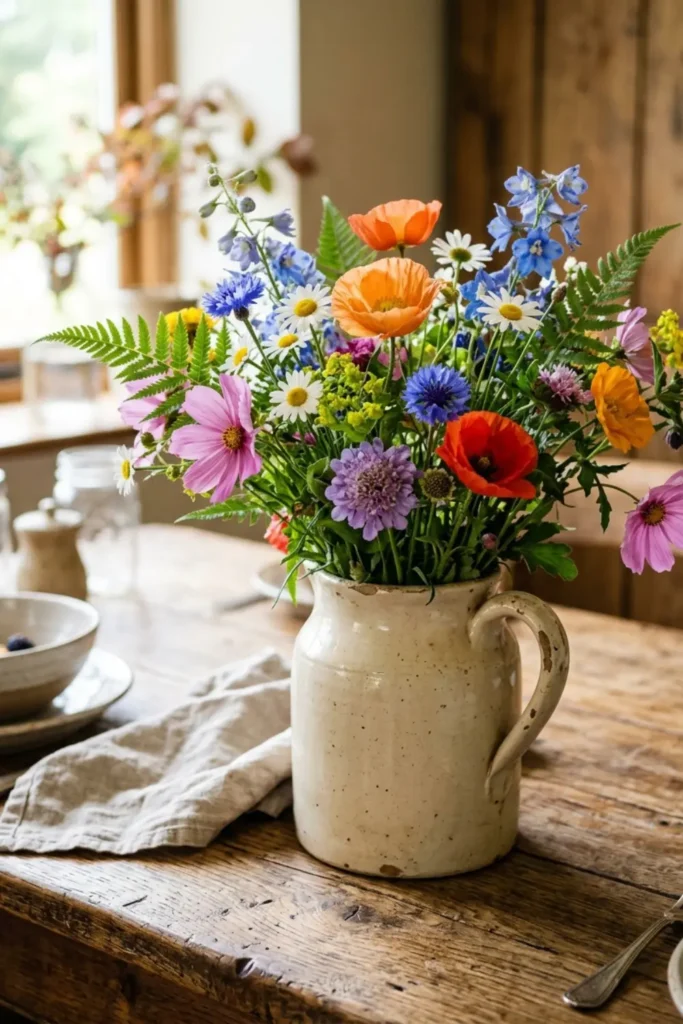
The most beautiful centerpiece I ever put on a dining table cost me nothing. A handful of whatever was blooming along the back fence, loosely dropped into an old ceramic pitcher.
That’s exactly the cottagecore approach. You’re not arranging, you’re gathering. Let the stems fall where they naturally want to go and resist the urge to fuss with it.
If you’re not foraging, a mixed grocery store bunch works just as well. Pull out anything too stiff or formal, keep the soft and wild-looking stems, and add a few sprigs of fresh herbs for texture.
Antique Brass Chandelier Lighting
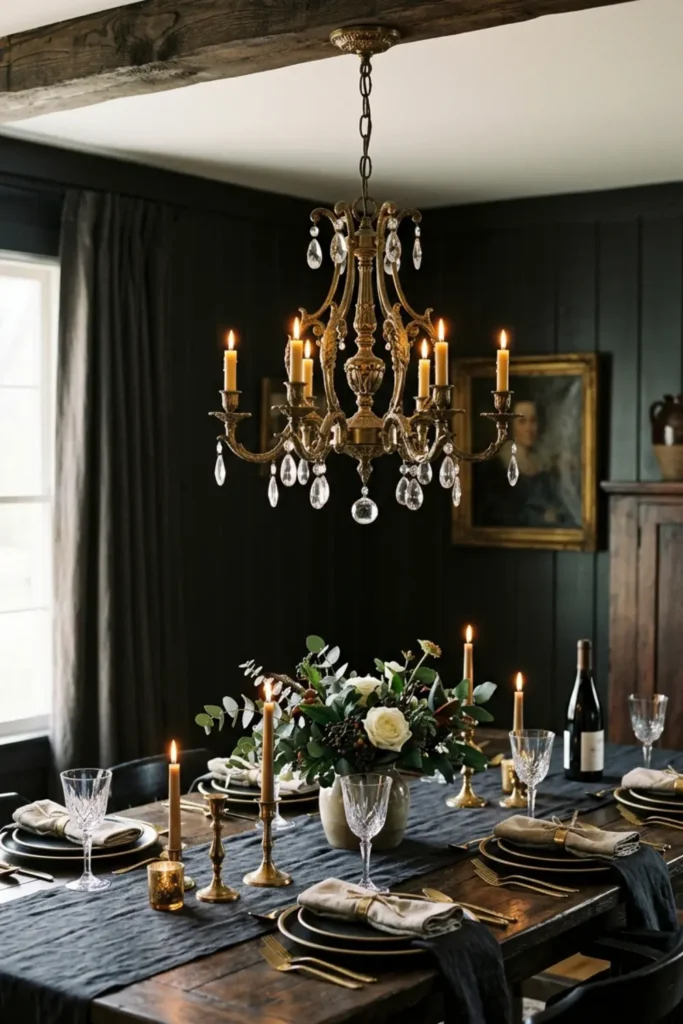
Lighting is the single detail that transforms a dining room from just a place to eat into somewhere you actually want to linger.
I always choose fixtures with a genuine patina finish rather than polished brass. That aged, slightly uneven tone is what reads as cottagecore rather than traditional. Pair it with candle-style Edison bulbs at the lowest warm color temperature you can find.
The goal is a glow that makes everyone at the table look like they’re lit by firelight. No overhead harshness, just warmth.
Sage Green Wainscoting Walls
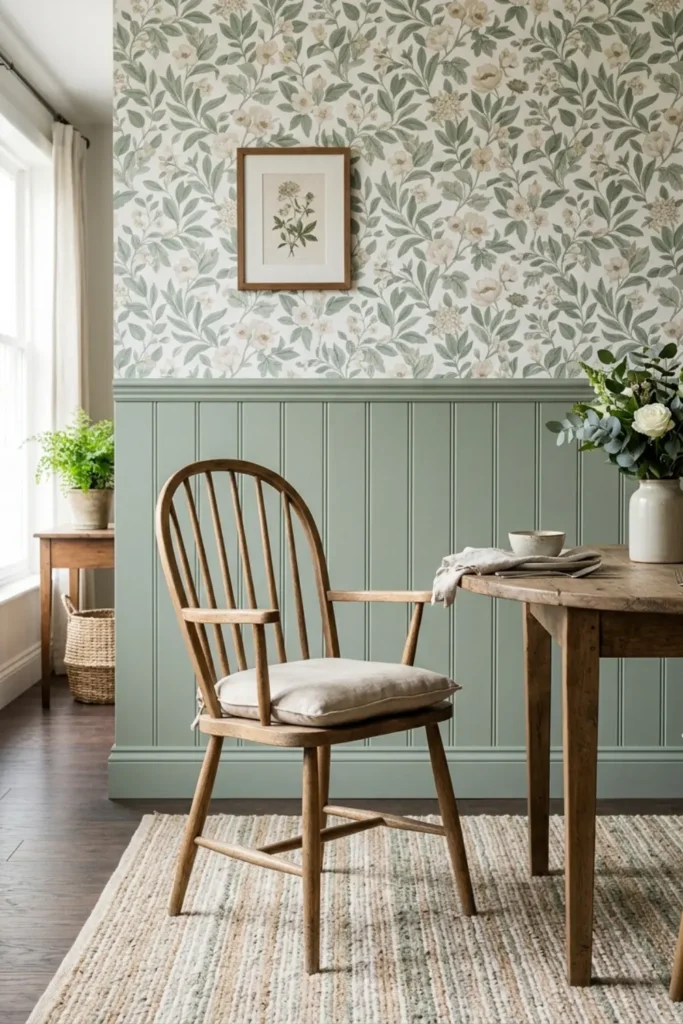
Sage green is the cottagecore neutral that no one talks about enough. It does everything that white does but with ten times more soul.
Painting wainscoting or beadboard in a soft, grey-leaning sage grounds the room beautifully. It connects the interior to the garden outside without feeling themed or overdone.
Above the wainscoting, I love a faded floral wallpaper in cream and blush. That combination of structured paneling below and soft pattern above gives the room a layered, collected-over-time quality that feels genuinely old.
Heavy Farmhouse Harvest Table
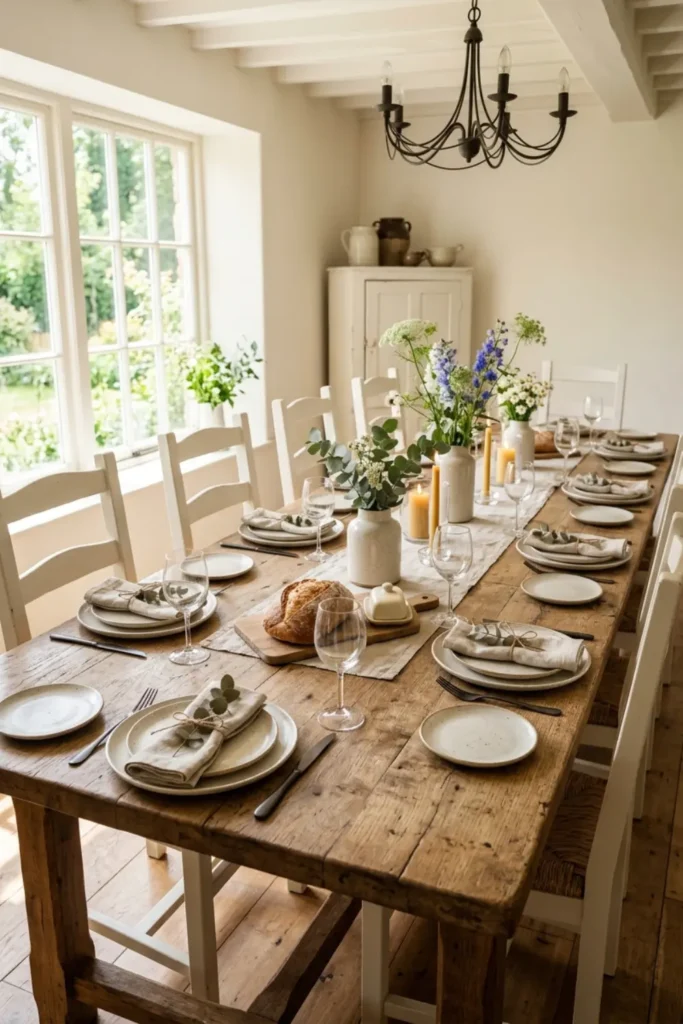
There’s a kind of confidence a heavy harvest table brings to a room that no lightweight alternative can fake.
The worn spots, the ring marks, the slight unevenness in the surface, those aren’t flaws. They’re the whole story. I actively look for tables with visible history when I’m sourcing because that character cannot be manufactured.
A solid reclaimed wood harvest table is worth every penny as a long-term investment. Style it simply with ceramic plates and linen napkins and it carries the entire room on its own.
Woven Wicker and Rattan Accents
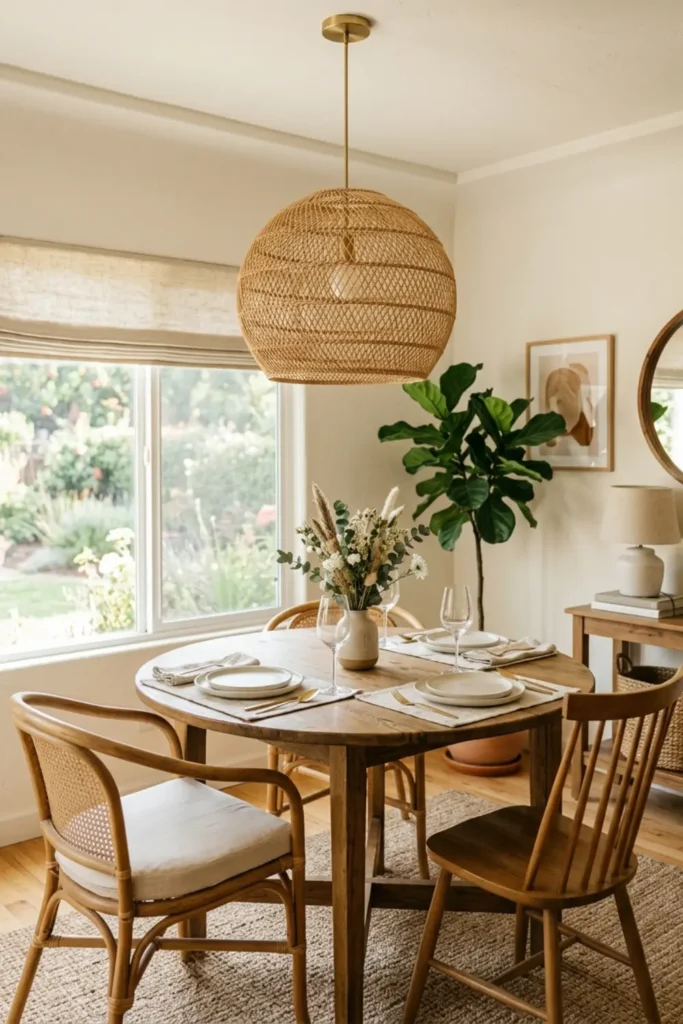
A room without texture reads as flat no matter how beautiful the colors are. Wicker and rattan solve that problem immediately.
A large woven rattan pendant light above a round table is one of the most effective single additions you can make. It adds visual warmth, natural material interest, and a slightly bohemian softness that fits perfectly within cottagecore.
I also love slipping a wicker side chair or two into a set of wooden dining chairs. That variation in material keeps the eye moving around the table in the best possible way.
Taper Candles in Brass Holders
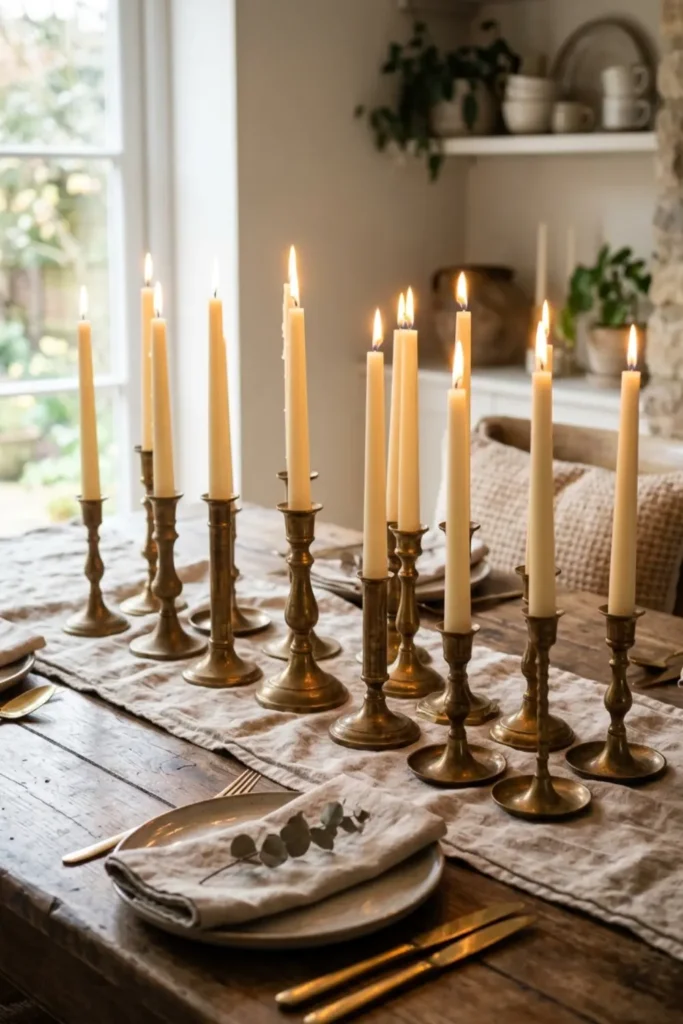
Nothing sets a cottagecore dinner table faster than a grouping of mismatched taper candles in vintage brass holders.
I collect brass candlesticks in every height I can find. Grouped together in threes or fives down the center of the table, they create a rhythm that feels both intentional and effortless.
Always choose beeswax tapers over paraffin. The natural honey color, the subtle scent, and the way they drip slightly all add to the authenticity. It’s a small detail that people notice without knowing exactly why the table feels so right.
Classic Floral Wallpaper
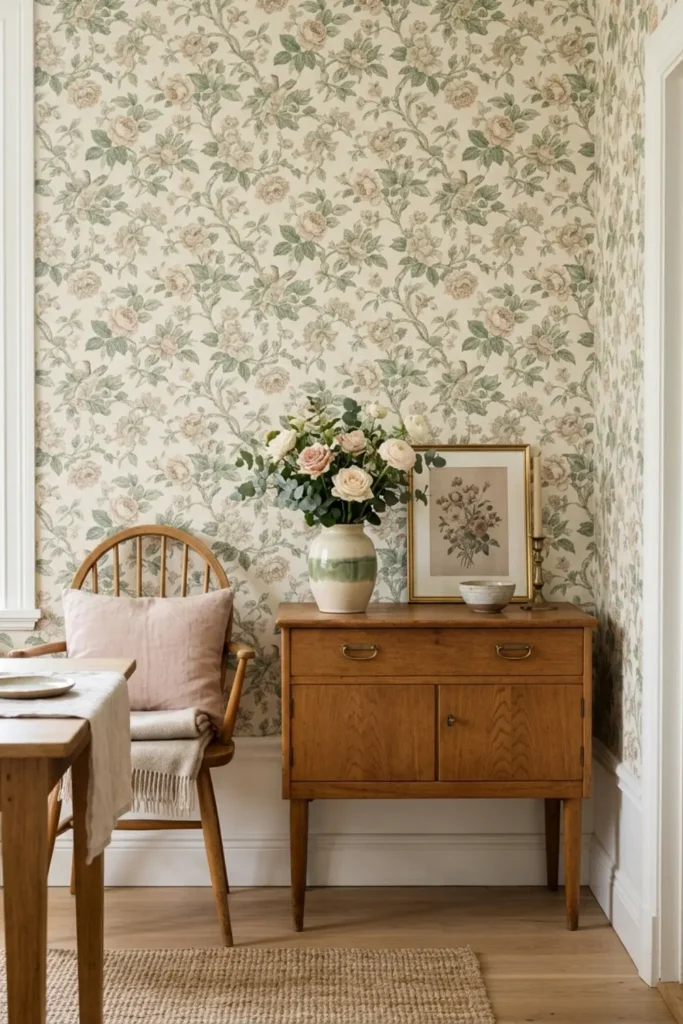
Floral wallpaper is the single fastest way to commit fully to the cottagecore aesthetic, and I will never apologize for it.
The prints I reach for are intricate, slightly faded, and rooted in botanical illustration. William Morris-style repeats or small ditsy florals in muted blush, sage, and cream work far better than anything bright or contemporary.
The trick to balancing a busy pattern is keeping everything else in the room solid and simple. A plain wooden sideboard, cream linen curtains, and unfussy furniture let the wallpaper be exactly what it wants to be.
Cozy Corner Banquette Seating
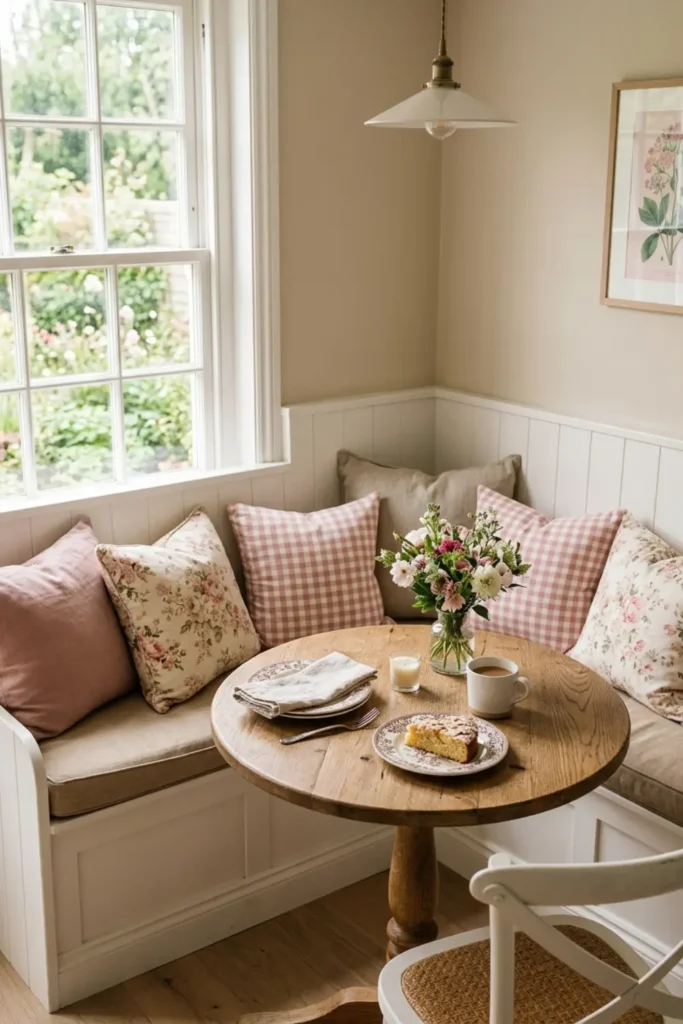
A corner banquette turns a dining room into the kind of space people genuinely don’t want to leave after the meal is over.
I love building that nook feeling even in larger rooms by tucking a wooden bench into a corner and loading it with plump cushions in gingham, floral, and solid linen. The layered cushion mix is what gives it that gathered, homey quality.
A small round table in front keeps the footprint tight and the atmosphere intimate. It stops the space from feeling formal and instead makes every meal feel like a slow weekend breakfast.
Repurposed Vintage China Cabinet
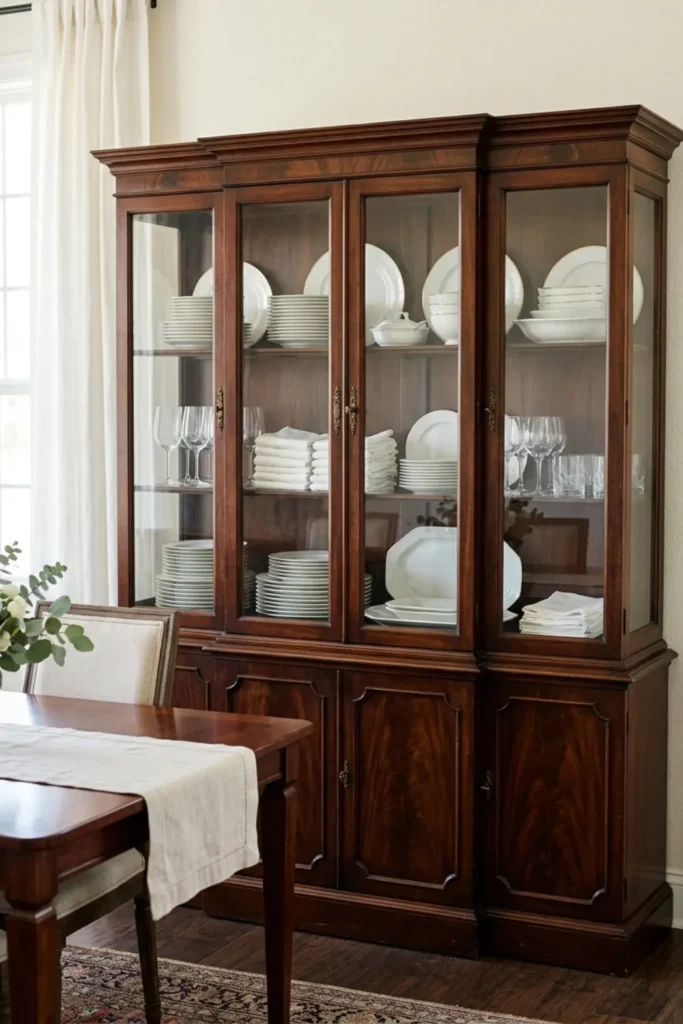
Some of my favorite pieces in any dining room came from an estate sale with a cracked hinge and peeling paint.
A tall vintage china cabinet or hutch is one of the most versatile thrift finds you can bring into a cottagecore dining room. Strip it back, touch up the wood, and suddenly you have display storage that no flat-pack alternative comes close to matching.
I style the interior with stacked ironstone plates, folded linen napkins, and a few small ceramic pieces. Intentional but never precious.
Crocheted and Lace Table Runners
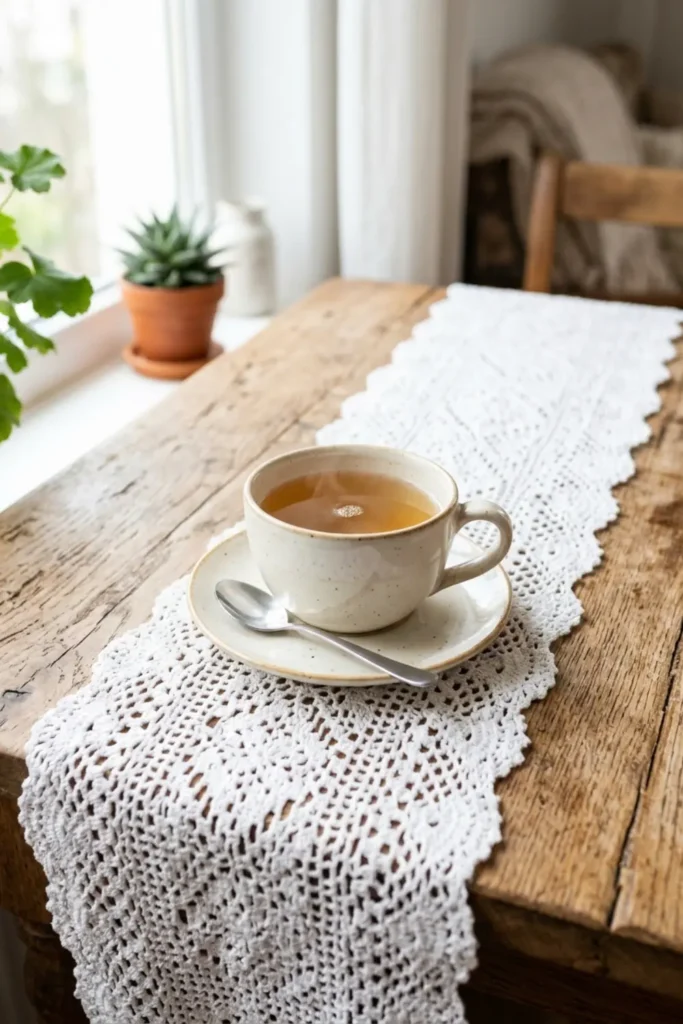
Heavy farmhouse furniture needs something soft and delicate to balance it, and a crocheted lace runner does exactly that.
Draped over bare wood, a white lace runner adds a layer of intricacy and lightness that keeps the table from feeling too rugged. The contrast between rough grain and fine thread is genuinely beautiful and very cottagecore in its sensibility.
I look for handmade pieces at thrift stores and antique markets. Machine-made lace has a uniformity that gives it away. The charm is in the slight irregularities that only come from something made by hand.
Fresh Herb Windowsill Garden
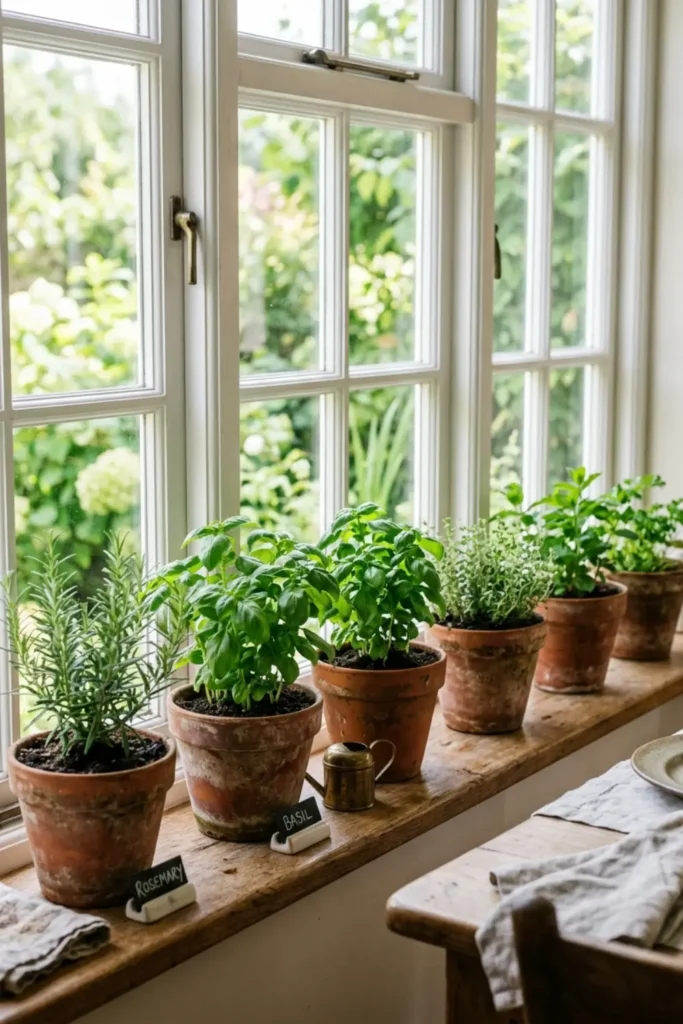
The dining room that smells faintly of rosemary and thyme while you eat is the dining room I want to be in every single day.
Lining the windowsill with small weathered terracotta pots of fresh herbs brings the garden directly into the eating experience. It’s functional, it’s fragrant, and it photographs beautifully in natural light.
I keep mine simple with rosemary, thyme, and a little pot of basil. The terracotta ages naturally over time and only gets more beautiful, which is very much the point of everything in a cottagecore home.
Rustic Breadboard Wall Display
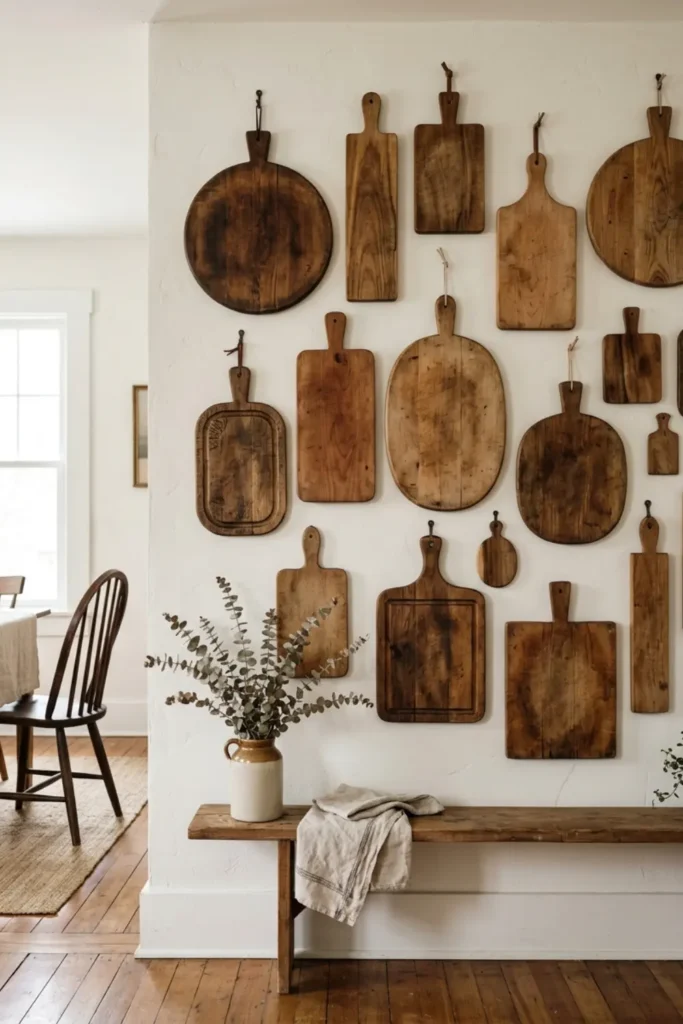
Vintage wooden cutting boards are one of the most underrated wall art options in a cottagecore dining room, and thrift stores are full of them.
I hang them in groupings of three or five because odd numbers always create more visual interest than even ones. Mix the shapes too, round next to rectangular next to paddle-style, and stagger the heights slightly so the arrangement has movement rather than sitting in a rigid line.
The varying wood tones and grain patterns do all the decorative work. No frames, no backing, just beautiful aged wood against a white wall.
Butter Yellow Accents
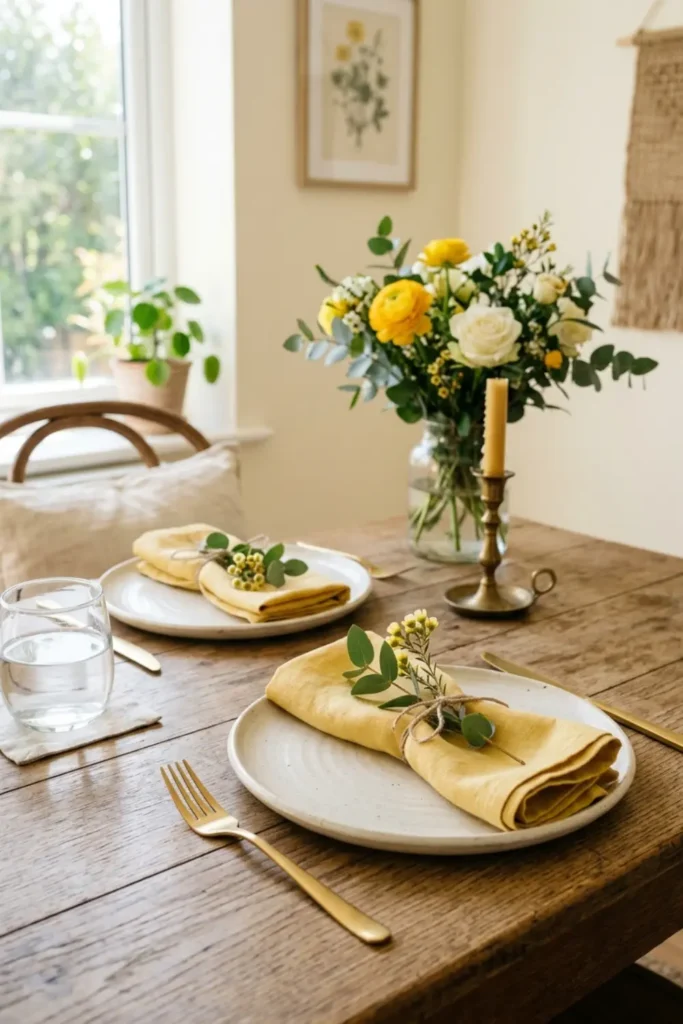
Butter yellow does something in a dining room that no other color quite manages. It mimics sunlight even when the actual light outside isn’t cooperating.
I bring it in through linen napkins first because that’s the lowest-commitment way to test a color. Folded on a ceramic plate, a soft yellow napkin immediately warms the entire table setting without overpowering anything around it.
From there, a painted accent chair or a mustard-toned seat cushion carries the color off the table and into the room. Keep everything else in cream and natural wood and the yellow sings.
Faded Vintage Persian Rugs
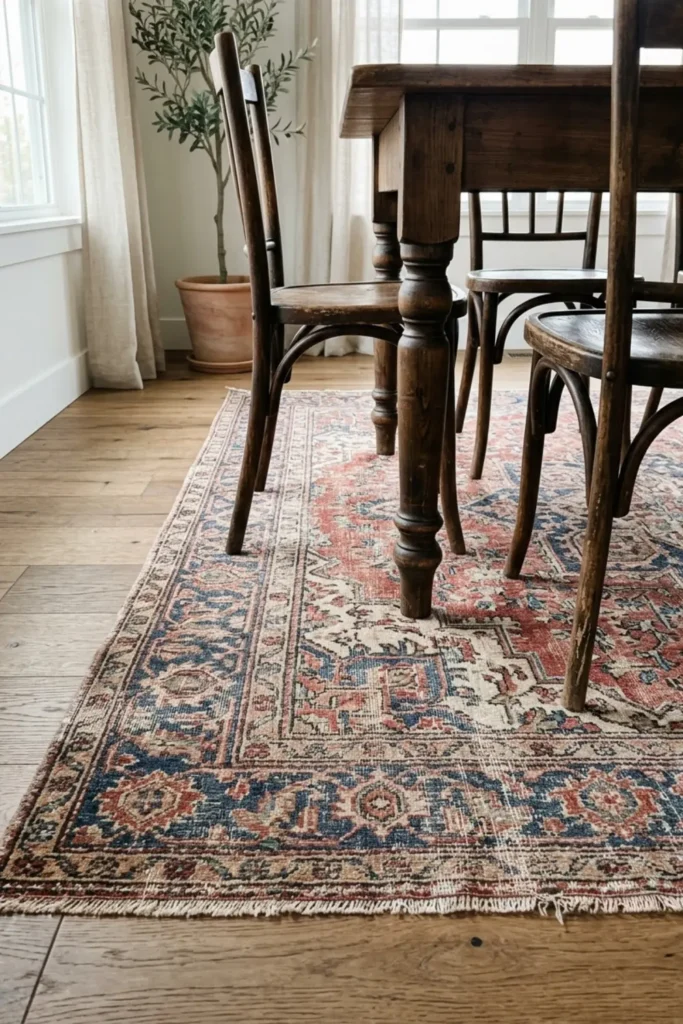
A distressed vintage rug under the dining table is one of those additions that makes a room feel like it’s been curated over decades rather than decorated last spring.
The fading is the feature. Those worn patches of dusty red and muted blue tell a story that a new rug simply cannot.
For practicality, I always recommend a flatweave or low-pile option under dining tables. Chairs slide in and out without catching, and cleaning up after meals stays manageable. Beauty should never come at the cost of daily function.
Hand-Painted Ceramic Tableware
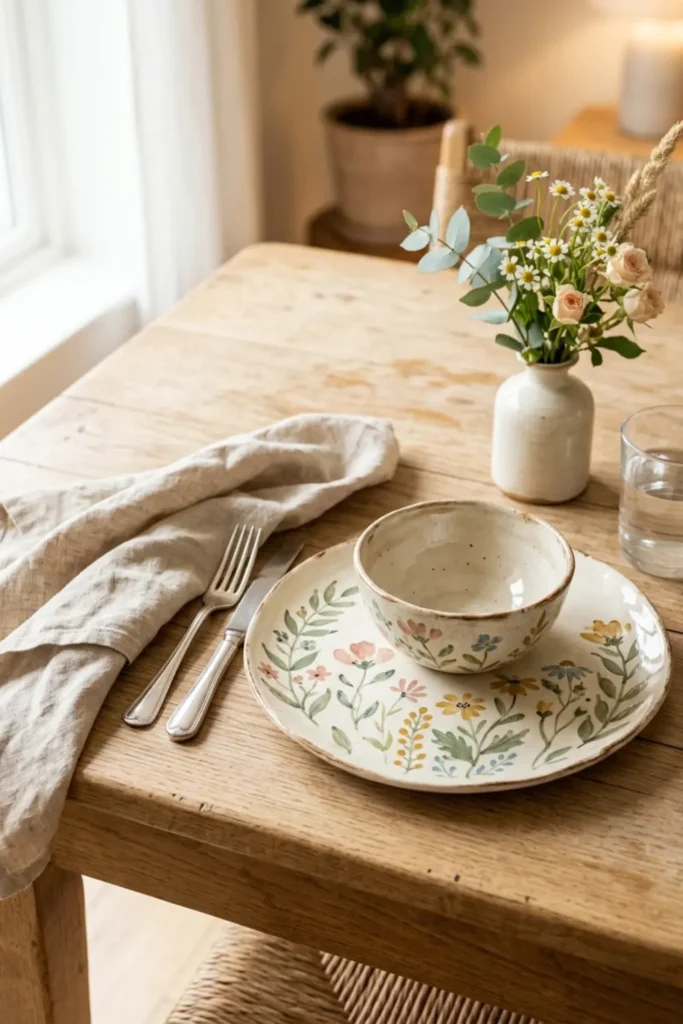
There is something quietly radical about setting a table with imperfect, handcrafted ceramics in a world that defaults to matching dinnerware sets.
Hand-painted ceramic plates and bowls with slightly uneven rims, visible brush strokes, and imperfect glaze are exactly what cottagecore philosophy is built on. That wabi-sabi quality, finding beauty in imperfection, feels deeply intentional at a dining table.
I collect pieces slowly from markets and small ceramic artists. They don’t need to match. They just need to share a similar earthy, hand-touched quality that makes the table feel genuinely alive.
Seasonal Fruit Bowl Centerpieces
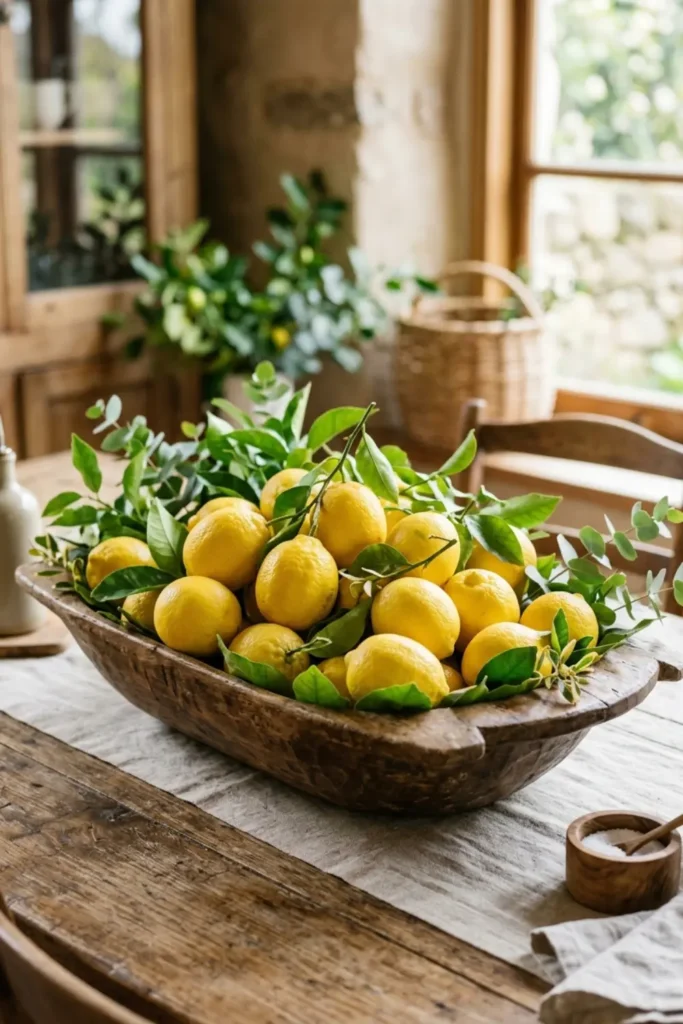
When fresh flowers aren’t in season or the budget is tight, a wooden bowl overflowing with seasonal fruit is just as beautiful and far more practical.
A carved antique dough bowl is my favorite vessel for this. Fill it with lemons and eucalyptus branches in summer, apples and rosehips in autumn, and citrus with bay leaves through winter. The centerpiece evolves with the calendar without any extra effort.
It’s edible, it’s fragrant, and guests always comment on it. That’s everything a good centerpiece should be.
Dusty Blue Painted Trim
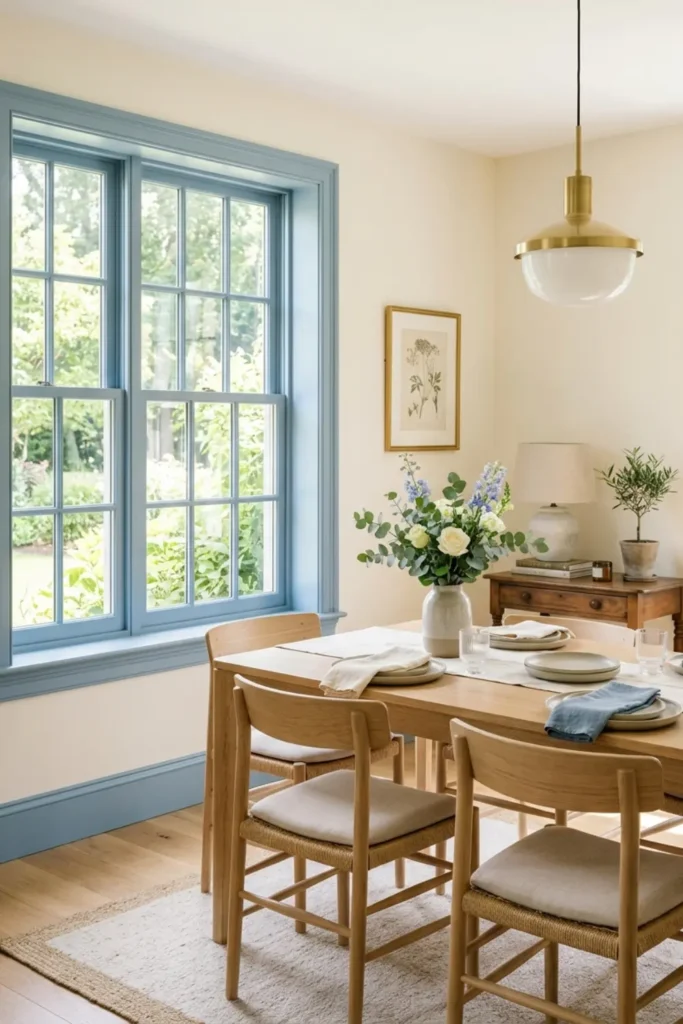
Most people default to white trim without ever questioning it, and that’s exactly where dusty blue gets to do something genuinely unexpected.
Painting window frames, baseboards, or interior door frames in a soft, grey-leaning blue creates a heritage quality that white trim simply never achieves. It reads as old, considered, and slightly European in the best possible way.
Against cream walls and natural wood furniture, dusty blue trim makes a room feel like it was decorated by someone with real intention and a very good eye for color history.
Dark Wood Accent Pieces
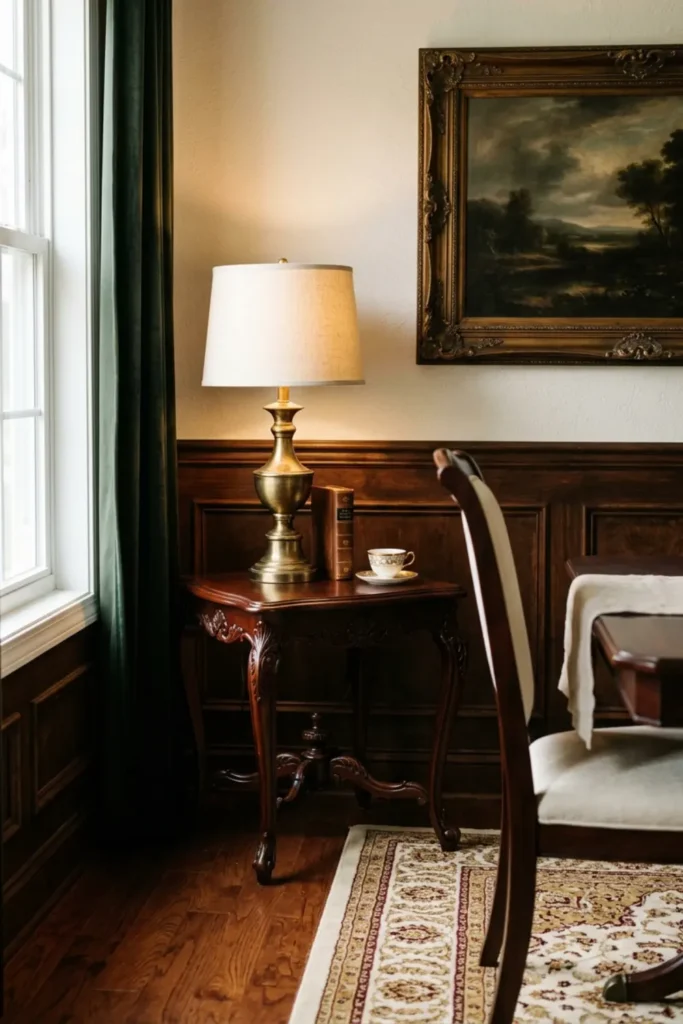
An all-light, all-airy cottagecore dining room can start to feel a little one-dimensional without something to ground it. Dark wood is the answer.
A single ornate mahogany side table or a heavy antique mirror with a dark wood frame adds depth and a slightly moody quality that keeps the space from feeling too sweet. It’s the visual equivalent of a minor chord in an otherwise major-key room.
I never go overboard with it. One or two dark pieces are an accent. More than that and you’ve shifted the whole atmosphere somewhere else entirely.
Woven Storage Baskets
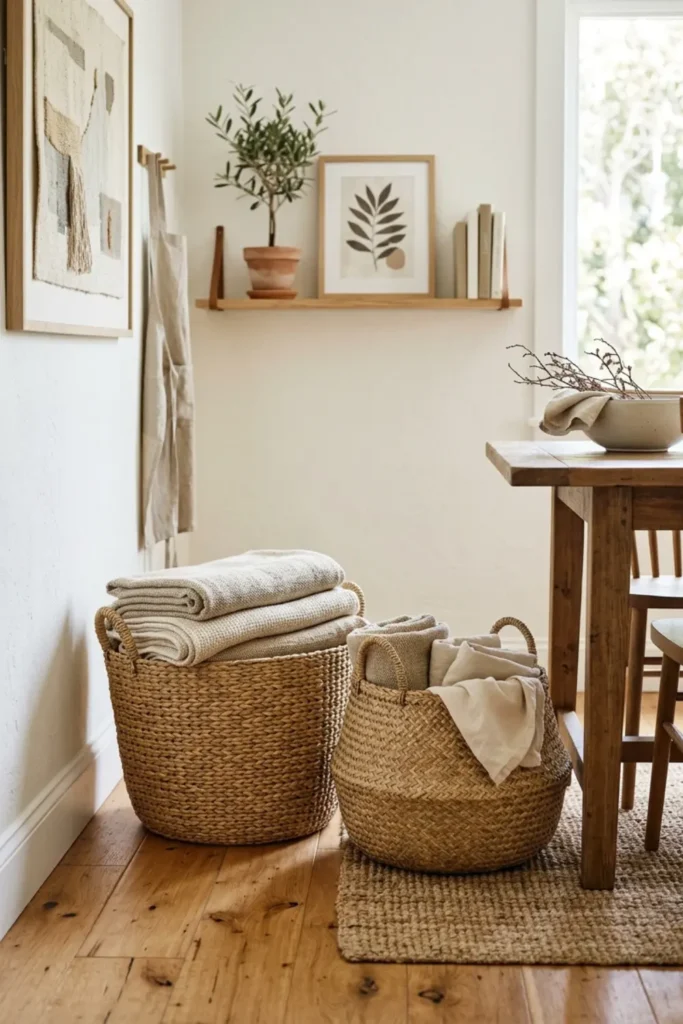
Storage in a cottagecore dining room should never look like storage. It should look like it belongs.
Large seagrass or wicker baskets tucked into a corner hold extra table linens, throw blankets, or seasonal decor without introducing a single piece of plastic or laminate into the space. The natural fiber disappears into the room’s texture palette rather than standing out as a functional object.
I stack two different sizes together for visual interest. A large basket with a smaller one resting against it reads as a styled moment rather than a practical solution.
Plump Floral Seat Cushions
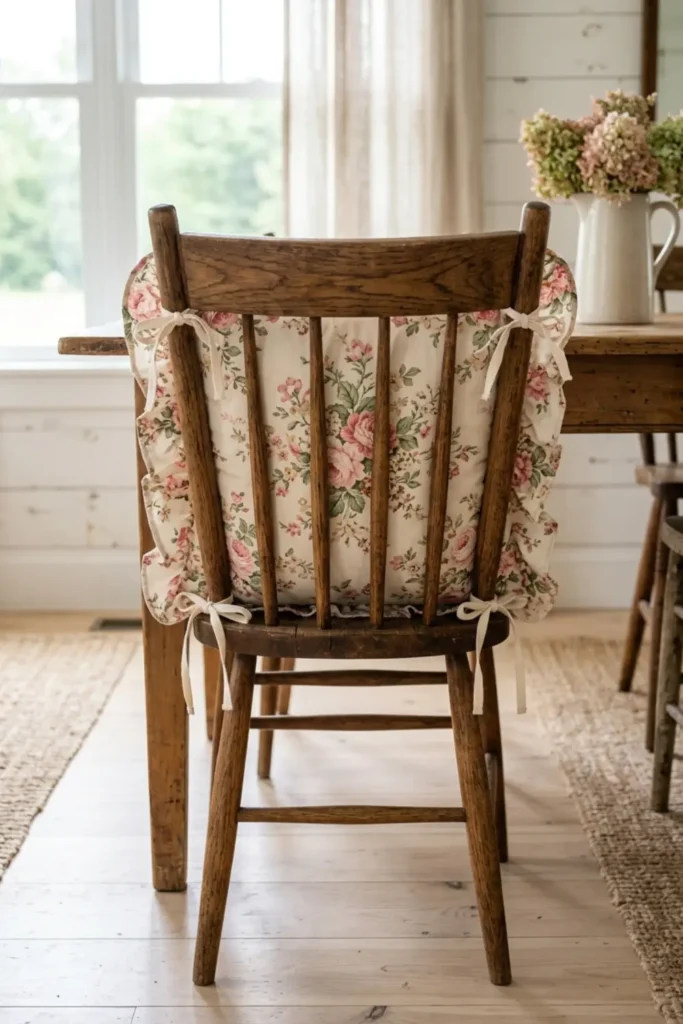
Tied seat cushions are one of the easiest and most reversible ways to bring a full cottagecore moment to a dining room without committing to anything permanent.
I look for cushions with a ruffled edge and a vintage floral print in faded pinks, sage, and cream. That combination on a plain wooden chair transforms it completely and costs almost nothing compared to reupholstering.
The tied ribbon detail at the back of the chair is doing more work than people realize. It adds a soft, handmade quality that makes even a basic chair look like it came from a curated farmhouse collection.
Exposed Ceiling Beams
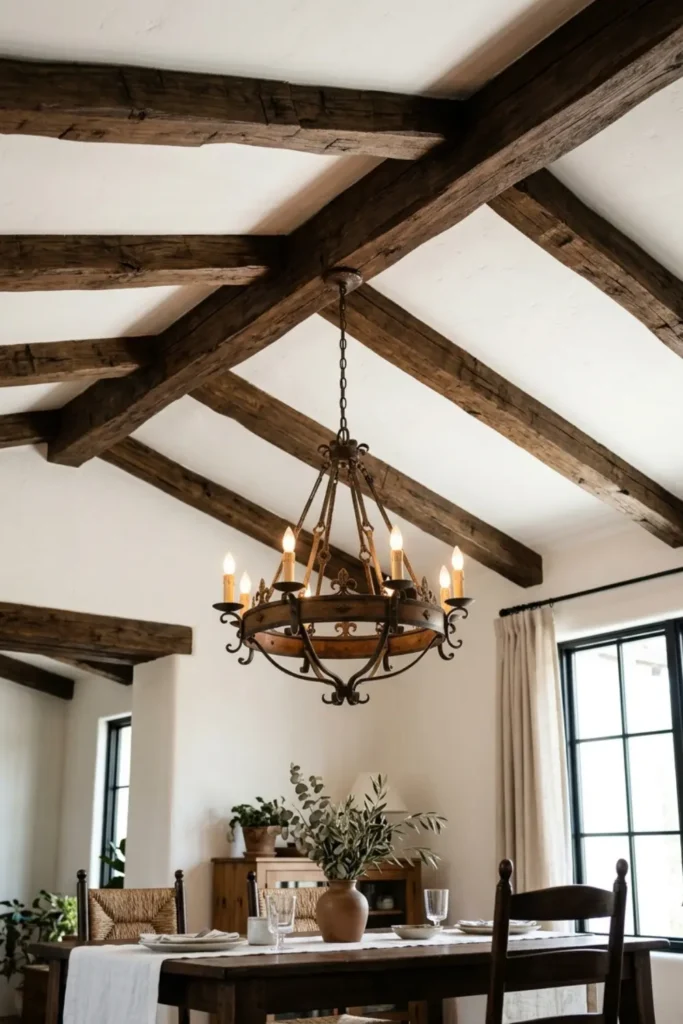
Exposed wooden ceiling beams are the architectural feature that ties every other cottagecore element in the dining room together.
They draw the eye upward, make the ceiling feel purposeful rather than forgotten, and add a structural warmth that no wall decor or furniture piece can replicate. A vintage chandelier dropping down from a dark wood beam is one of the most satisfying visual combinations in this entire aesthetic.
If your home doesn’t have original beams, faux wood beams have become convincingly realistic. Installed well, they bring the same grounded, historic quality and nobody will ever think to question them.
Final Thoughts
Cottagecore dining rooms are built slowly, intentionally, and almost always on a budget that favors thrift stores over retail shelves.
Not a single idea on this list requires a complete renovation or a large investment. Most of them start with one good thrift find, one pot of paint, or one bunch of wildflowers picked on the way home. That’s the whole philosophy really. Small, considered choices layered over time create something that feels genuinely lived-in and deeply personal.
My best advice is to start with what draws you in most and let the room grow from there. A cottagecore dining room is never finished and that’s exactly what makes it so beautiful to come back to every single day.
What is a cottagecore dining room?
A cottagecore dining room is a space styled around natural materials, vintage finds, soft organic textures, and botanical elements. It prioritizes warmth, imperfection, and a connection to nature over polished, matching aesthetics.
How do I start decorating a cottagecore dining room on a budget?
Start with thrift stores and estate sales. Mismatched wooden chairs, vintage china, and old linen tablecloths are almost always available secondhand at very low cost. Add fresh or dried wildflowers and you already have the foundation of the look.
What colors work best in a cottagecore dining room?
Sage green, dusty blue, butter yellow, cream, and warm natural wood tones are the core cottagecore palette. Muted, earthy shades that reference the garden and countryside always work better than anything bright or saturated.
What kind of lighting suits a cottagecore dining room?
Warm, ambient lighting is essential. An antique brass chandelier with candle-style bulbs or a collection of taper candles in mismatched brass holders both create the soft, golden glow that defines the aesthetic after dark.
Do cottagecore dining rooms have to look old?
Not at all. The aesthetic is about feeling, not strict vintage accuracy. New pieces in natural materials like linen, ceramic, rattan, and solid wood fit perfectly as long as they carry that organic, unhurried quality that cottagecore is really about.