
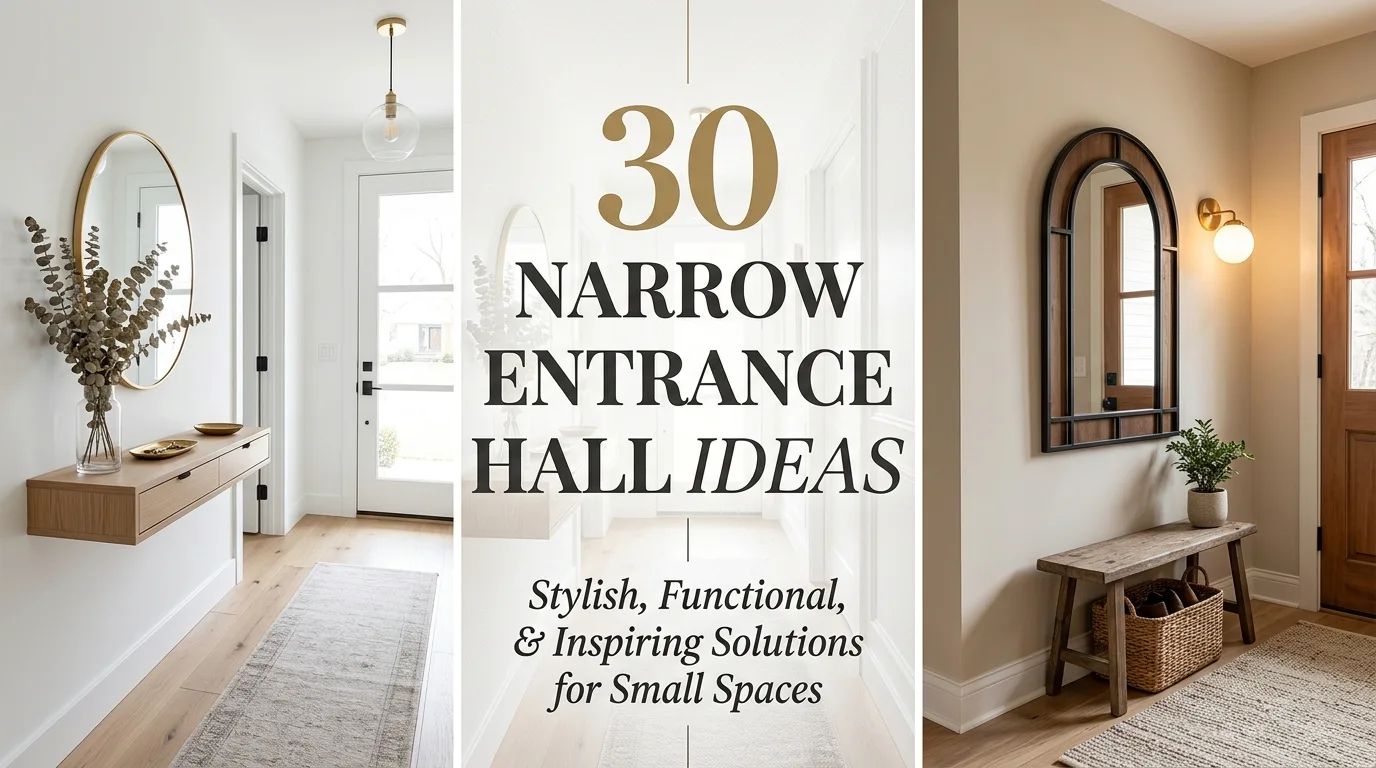
A narrow entrance hall can feel welcoming and open with just a few smart moves. Keep a clear 36-inch walkway, bounce light with mirrors, and swap bulky furniture for slim, floating pieces.
Most narrow hallways feel cramped for one simple reason: too much stuff packed into too little space. When furniture blocks the path or walls stay dark and dull, the whole entry feels like a squeeze. But a few well-placed changes can completely flip that feeling.
The 36-inch minimum clearance standard exists for a reason. It gives your body room to move comfortably without the walls closing in. Go below that, and even a stylish hallway will feel tight.
Here is what actually works in a narrow entryway:
- Floating shelves free up floor space and keep the eye moving upward
- Tall arch mirrors reflect light and create the illusion of depth
- Light neutral paint bounces brightness from one wall to the other
For more ideas on working with tight spaces, our small space decorating guide walks you through room-by-room solutions that actually fit.
Mount a Wall-Hung Floating Console Table
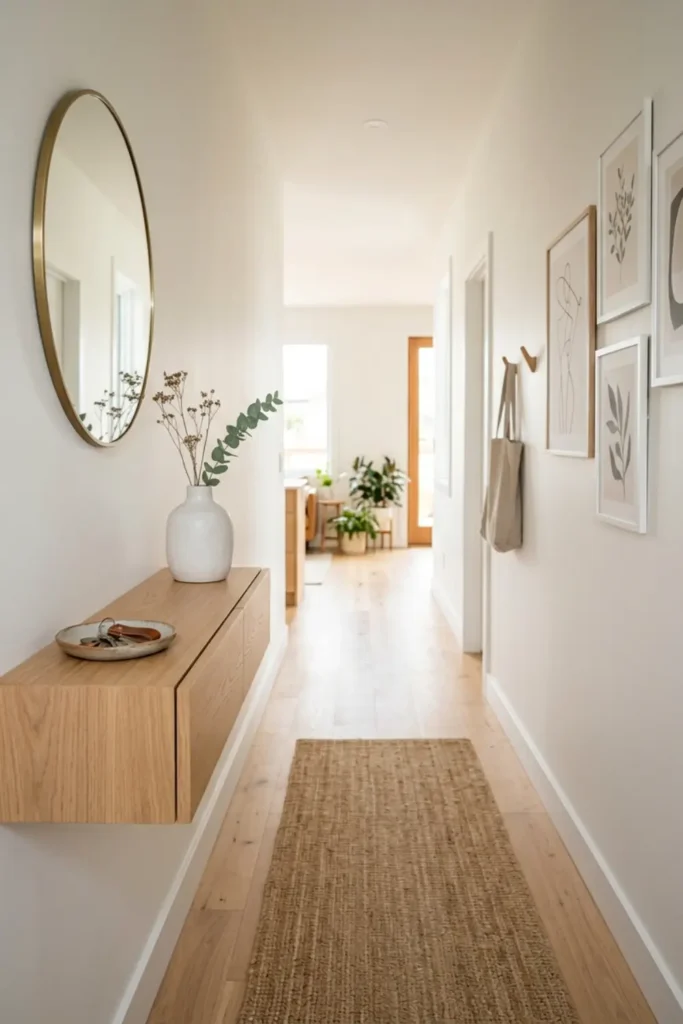
Floating console tables are one of the fastest ways to reclaim visual floor space in a tight hallway. Mount yours between 30 and 34 inches from the floor. Keep the surface clean with just a small dish and a single vase. That open space underneath the table is what does the heavy lifting. It makes the floor feel continuous and the hall feel longer.
Bounce Natural Light with an Oversized Arched Mirror
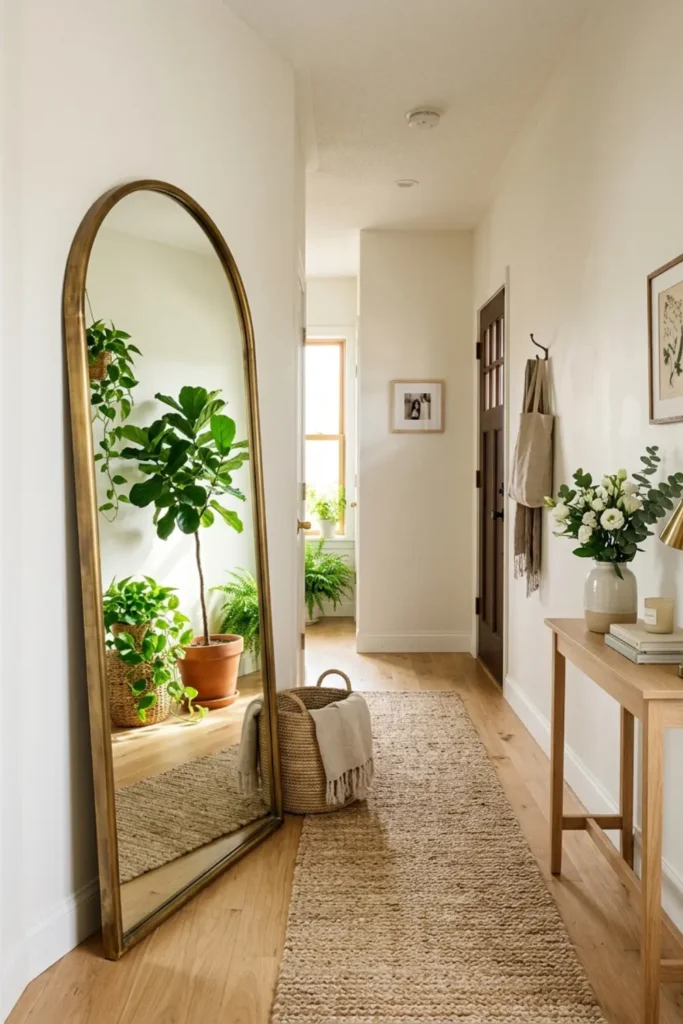
A large arched mirror placed opposite a doorway or window can visually double your hallway’s width. The reflection pulls more light into the space and makes the far wall feel farther away. Choose a thin metal frame to keep the look light. If you are using a lean-to style, anchor it with a furniture strap for safety. Bigger is genuinely better here.
Draw the Eye Upward with Vertical Board and Batten
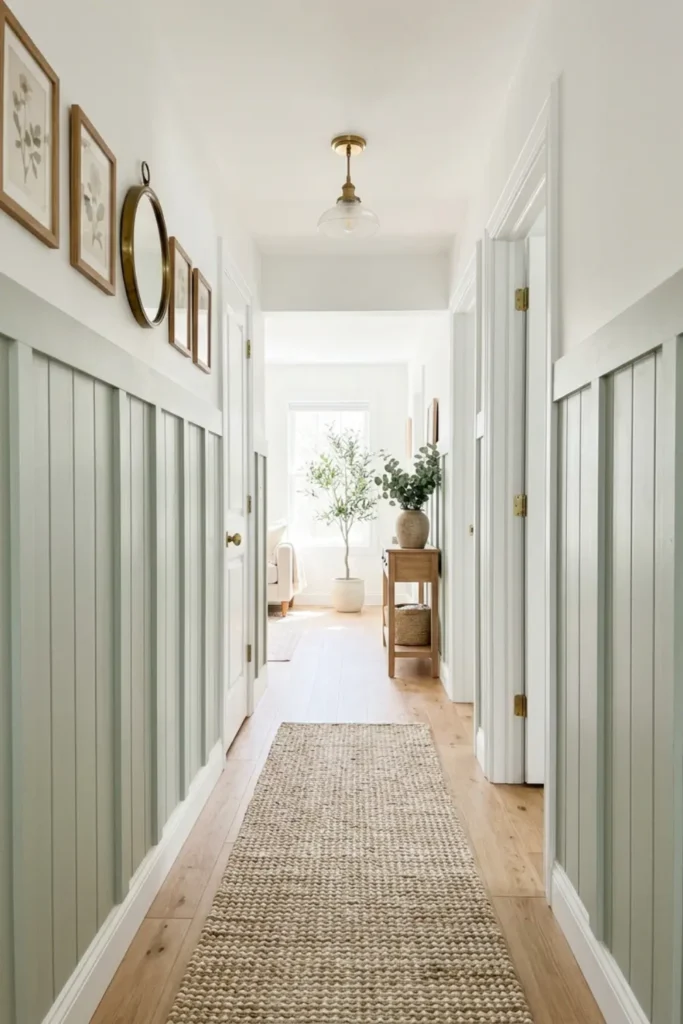
Vertical board and batten paneling is a clever architectural trick that naturally pulls the eye upward, making ceilings feel taller. Space your boards 6 to 8 inches apart for a classic look. A two-tone treatment works beautifully here. Try a soft sage green on the lower panels with crisp white above the chair rail. The contrast adds character without closing the space in.
Paint the Ceiling a Shade Lighter Than the Walls
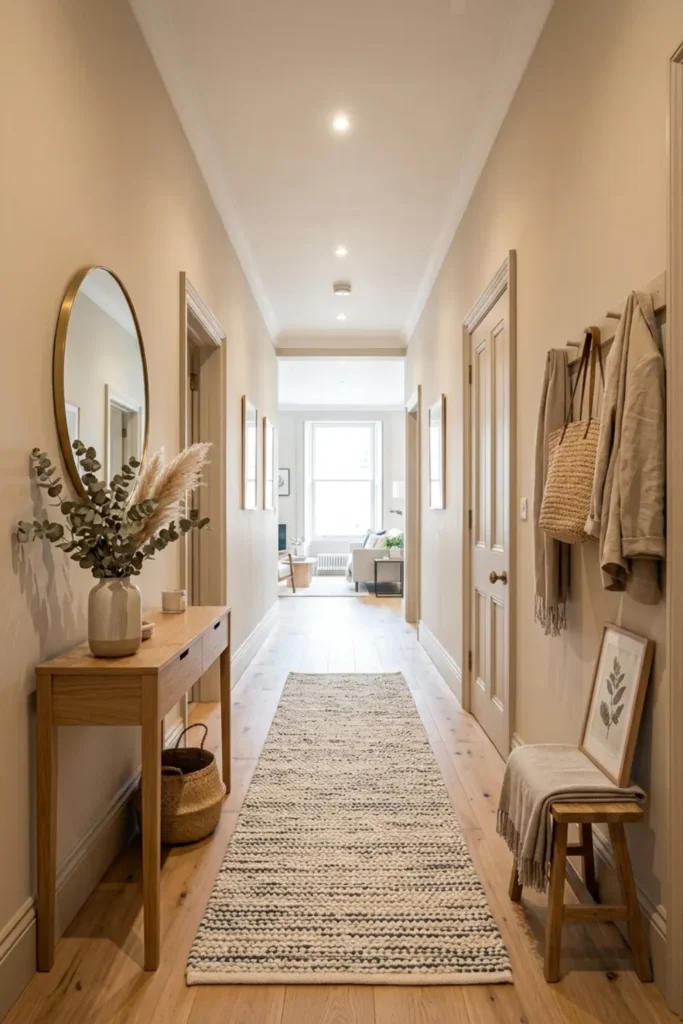
Dark or flat white ceilings in a narrow hall can feel like a lid pressing down. Painting the ceiling a shade lighter than your walls creates a seamless upward flow that lifts the whole space. Soft off-whites and warm creams work best. They reflect ambient light back down into the hallway throughout the day without creating harsh contrast that breaks the visual rhythm of the room.
Install Hardwired or Plug-In Wall Sconces
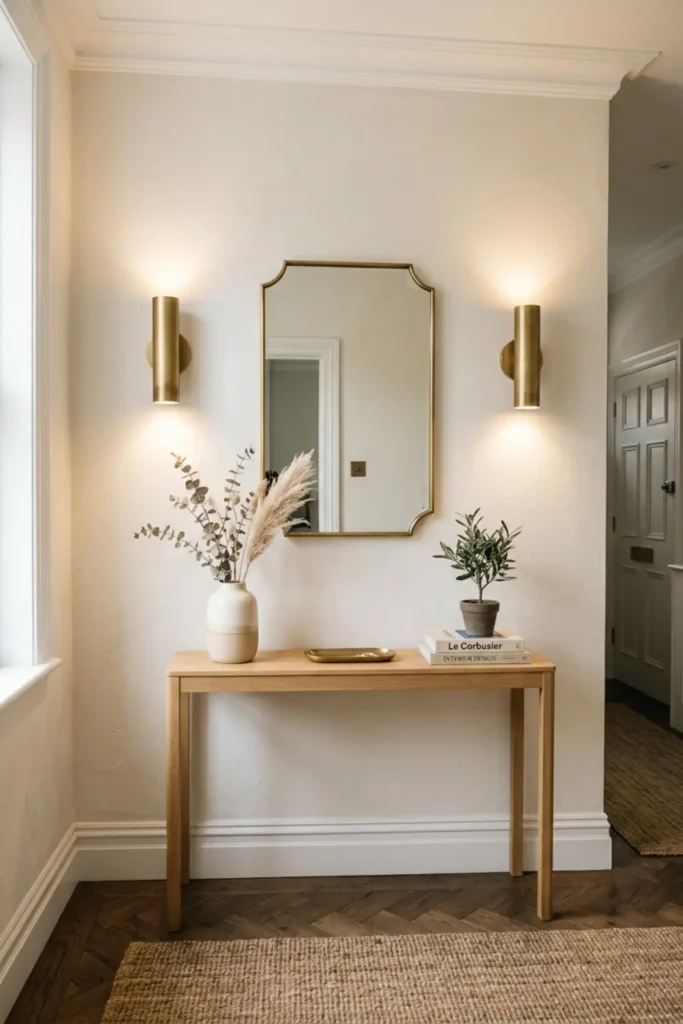
Wall sconces free up every inch of your console surface by moving lighting off the table and onto the wall. Mount them at eye level, around 60 to 66 inches from the floor, for the most flattering light spread. Brushed brass finishes add warmth without feeling heavy. If hardwiring is not an option, plug-in or battery-powered wireless puck sconces give you the same look with zero electrician needed.
Run Flooring Planks Parallel to the Long Wall
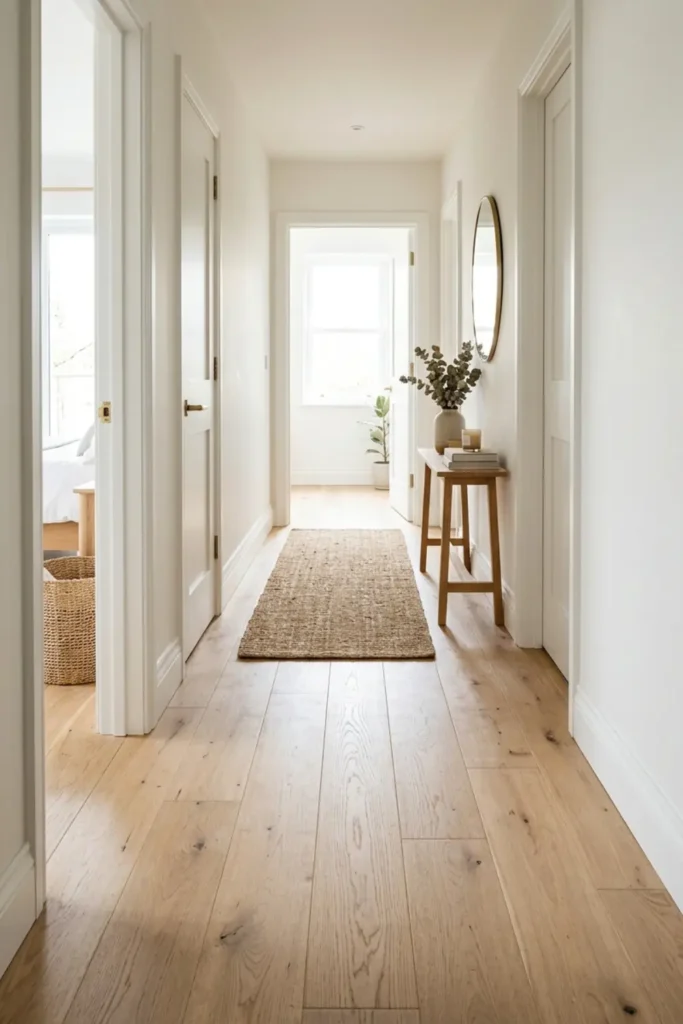
The direction your floor planks run changes everything in a narrow hall. Lay them lengthwise, parallel to the longest wall, and the eye naturally follows them all the way to the far end. This creates an instant sense of depth and length. Skip busy patterned tiles in tight spaces. Keep thresholds seamless between rooms so the floor reads as one continuous, uninterrupted stretch.
Use Tilt-Out Ultra-Slim Shoe Storage Cabinets
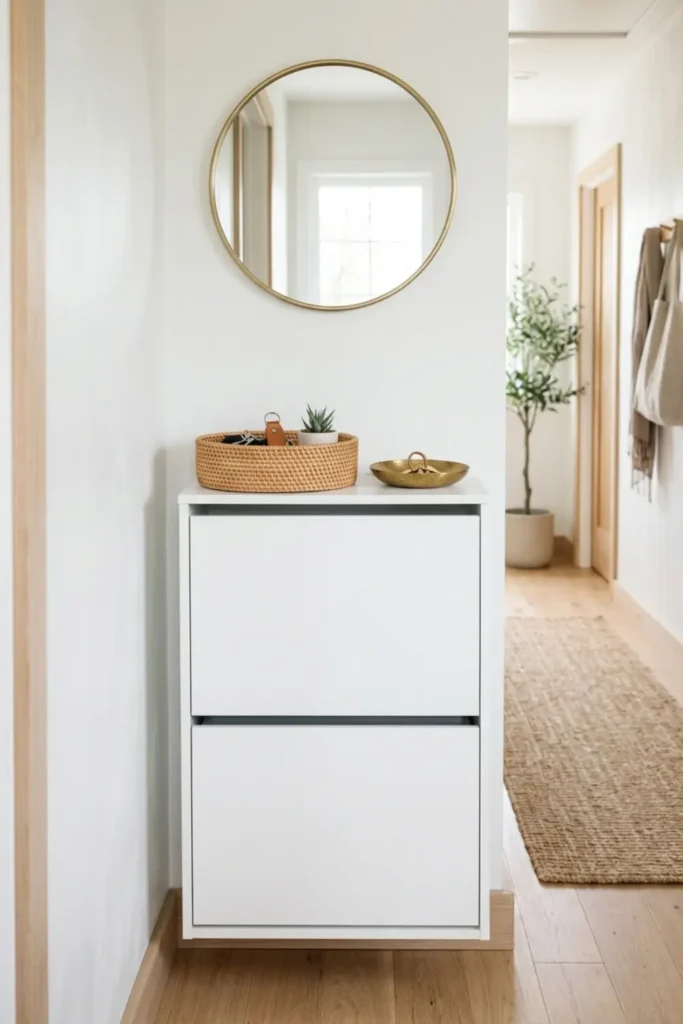
Tilt-out shoe cabinets are a game changer for narrow entries. The best ones stick out less than 7 inches from the wall, leaving your walkway completely clear. The tilt-drawer mechanism hides shoes behind a clean flat front. Style the top surface with a small basket and a brass dish to keep it feeling intentional. Always anchor the unit into wall studs so it stays secure.
Run a Shaker-Style Wooden Peg Rail Along the Wall
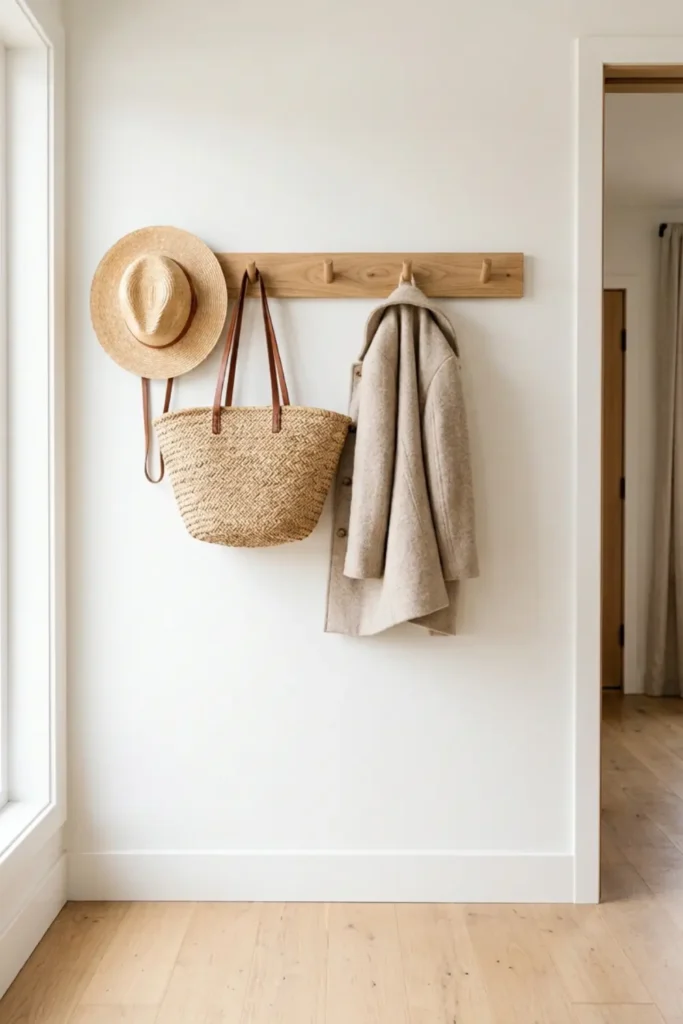
A Shaker peg rail gives you continuous hanging storage without taking up a single inch of floor space. Space your pegs about 6 inches apart for a balanced, classic look. Paint the rail to match your wall color if you want it to blend quietly into the background. Hang a coat, a woven tote, and a straw hat for a lived-in but curated feel that photographs beautifully.
Carve Out Storage with Recessed Wall Shelving
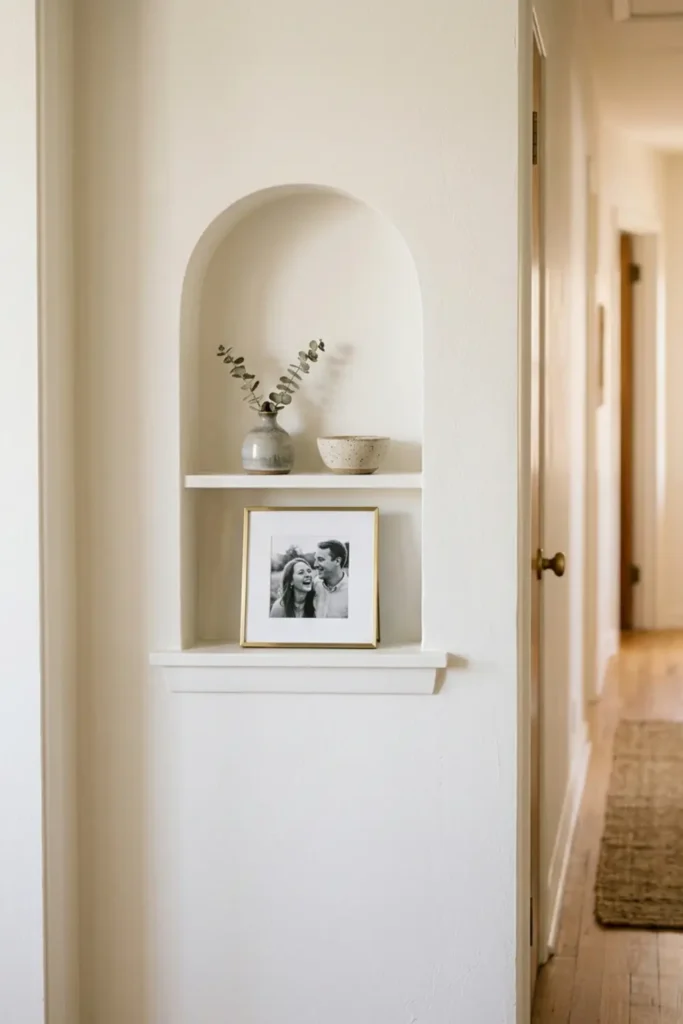
Recessed wall niches are one of the smartest moves you can make in a hallway because they add storage without adding depth. The shelf lives inside the stud bay, flush with the wall surface. A standard stud bay gives you about 3.5 inches of depth, which is just right for small ceramics, a tiny framed photo, or a candle. Dry-wall the inside, paint it a contrast color, and it becomes a proper design moment.
Pair a Narrow Bench with Woven Storage Baskets
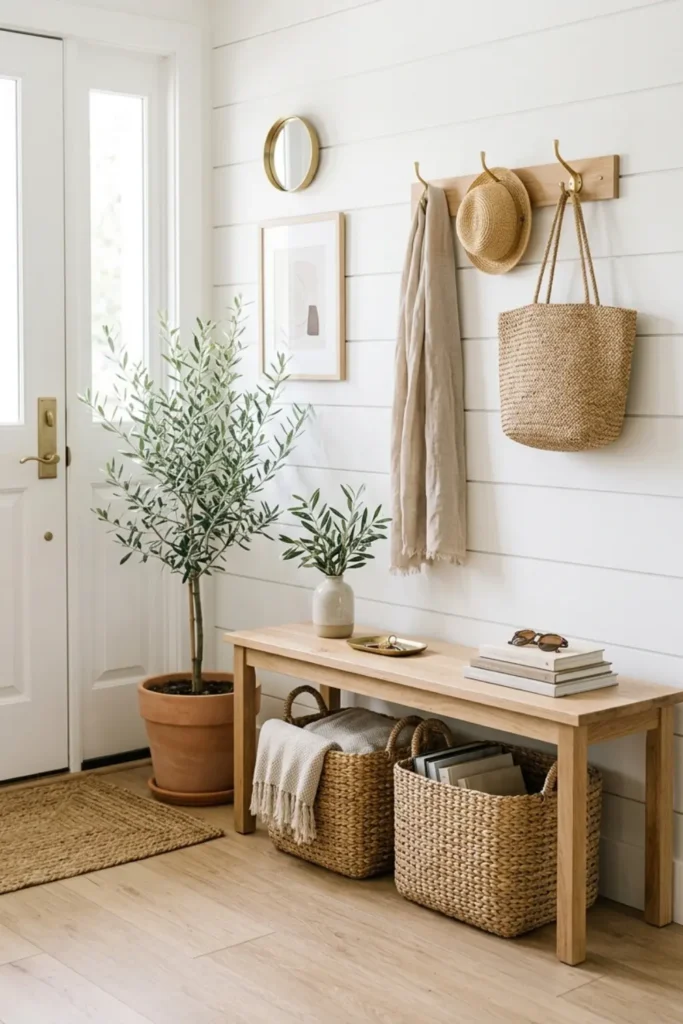
A bench with open storage underneath is one of the hardest-working pieces you can put in a hallway. Keep the bench depth under 12 inches so it does not eat into your walkway clearance. Slide two seagrass or woven baskets underneath for shoes, scarves, and dog leads. Add a simple cushion on top for a soft, welcoming touch that makes the entry feel like a real room.
Utilize Awkward Dead Corners with Vertical Floating Corner Shelves
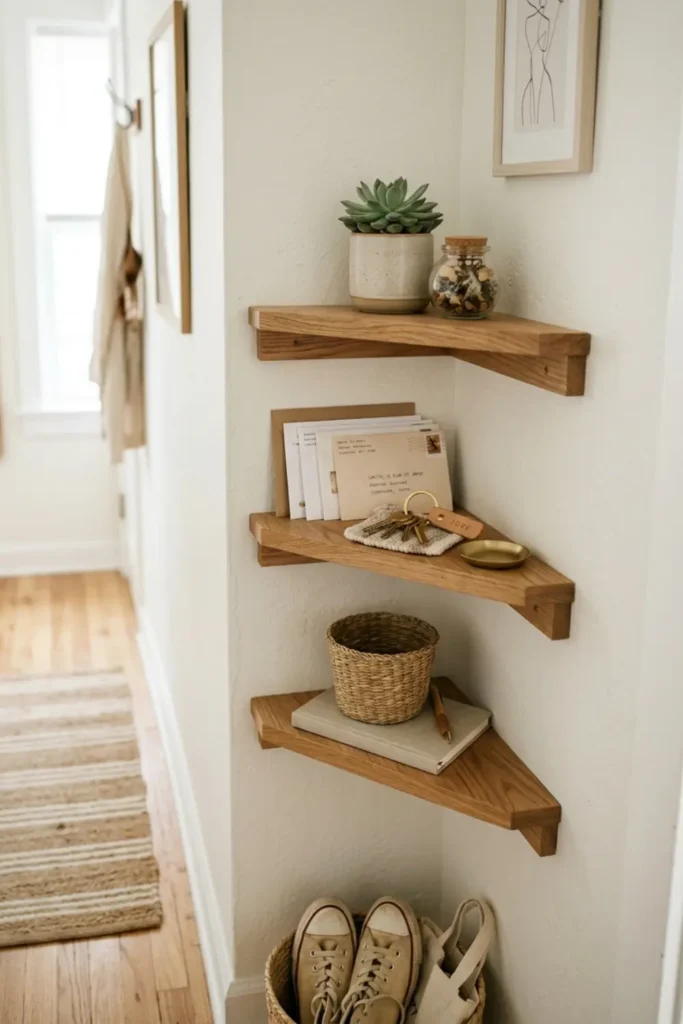
The small corner pocket beside your front door is some of the most wasted space in a narrow hallway. Tiered floating corner shelves turn that dead zone into a functional drop spot. Use the top tier for a small key bowl, the middle for a mail organizer, and the bottom for a tiny plant or candle. Because they tuck into the corner, they add zero bulk to your walkway.
Mount an Overhead Storage Shelf Above Eye Level
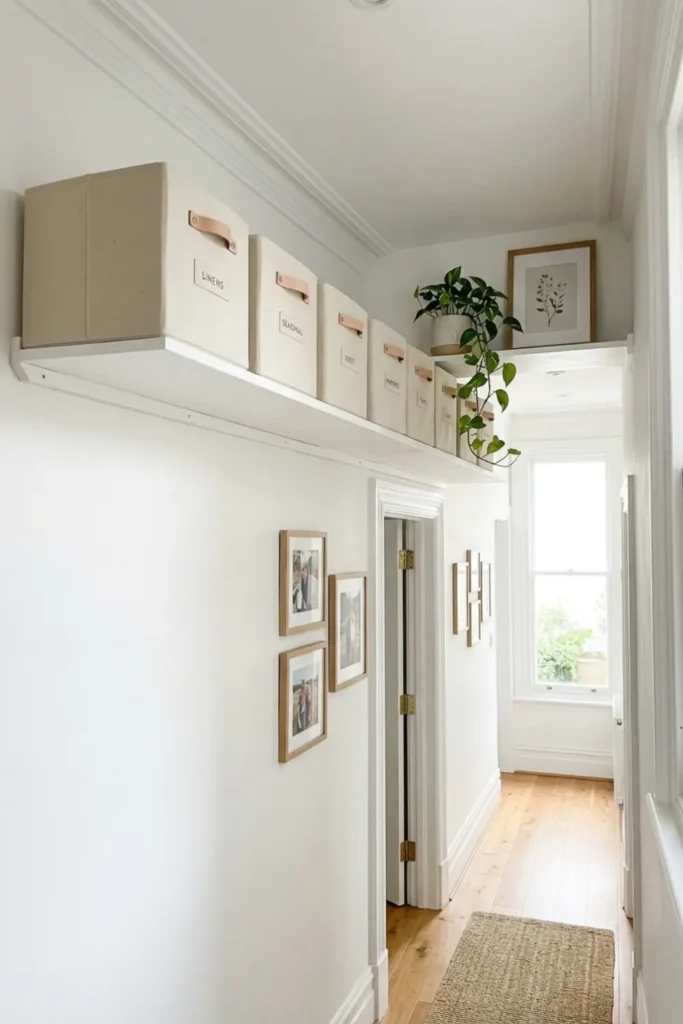
The wall space between your door frame and the ceiling is almost always ignored, and that is a real missed opportunity. A sturdy shelf mounted 7 to 8 feet up keeps seasonal items, canvas storage boxes, and spare bags completely out of the way. Use heavy-duty brackets anchored into studs to handle the weight. Keep items in matching boxes so the high shelf looks intentional rather than like a cluttered overflow zone.
Anchor the Corridor with a Low-Pile Vintage Runner
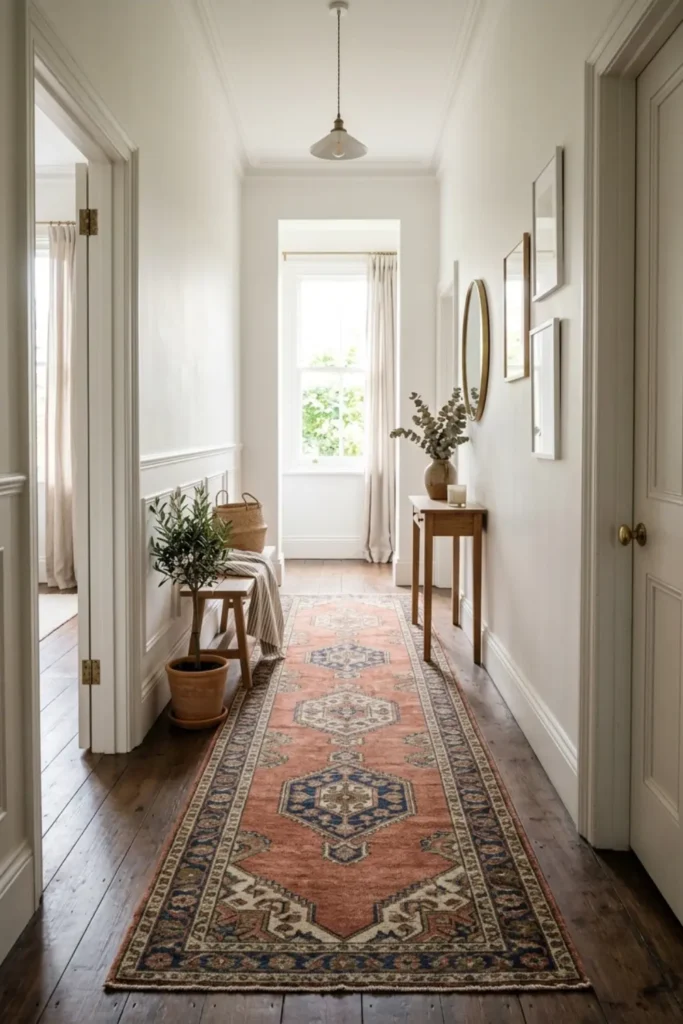
A long runner rug does two things at once in a narrow hallway. It draws the eye forward along the length of the space, making the corridor feel longer and more intentional. It also adds warmth and texture to what can often feel like a cold, blank stretch of wall and floor. Leave 4 to 6 inches of bare floor exposed on each side. Always use a non-slip pad underneath, and choose a low-pile weave that holds up well under daily foot traffic.
Choose Acrylic or Glass Consoles for Zero Visual Weight
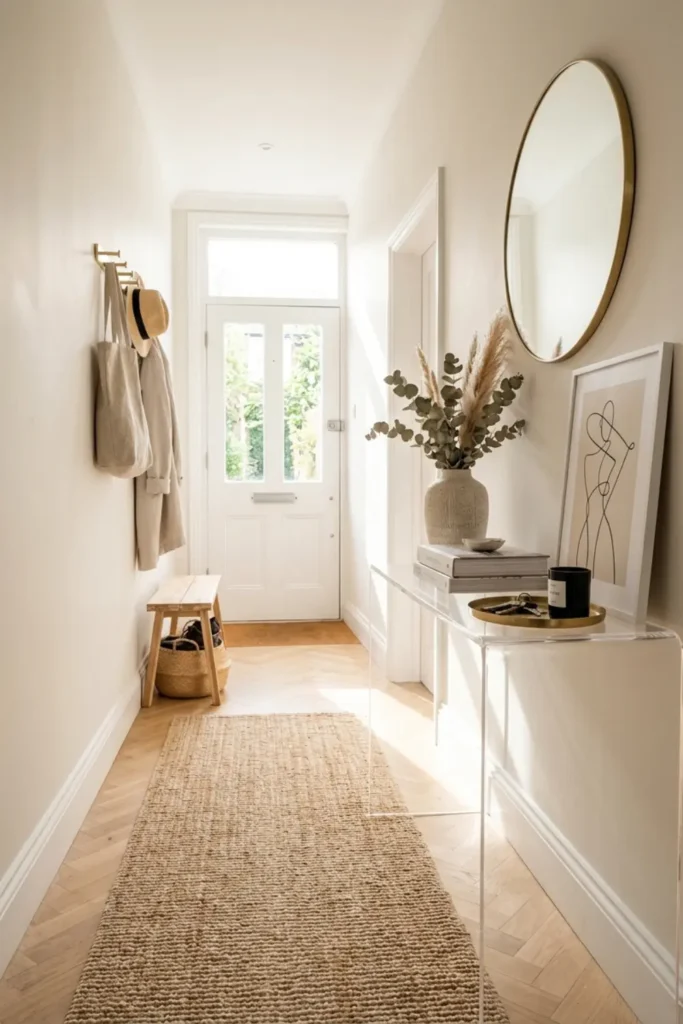
A solid wood or dark console table in a narrow hallway can feel like a wall you have to squeeze past. A clear acrylic or glass-top console completely removes that problem. Light passes straight through it, the floor stays visible, and the hall feels open even with a full-size console in place. Style it with a few solid wood or brass objects so the arrangement still feels grounded and warm rather than cold and clinical.
Curate a Tight Grid Gallery Wall with Matching Slim Frames
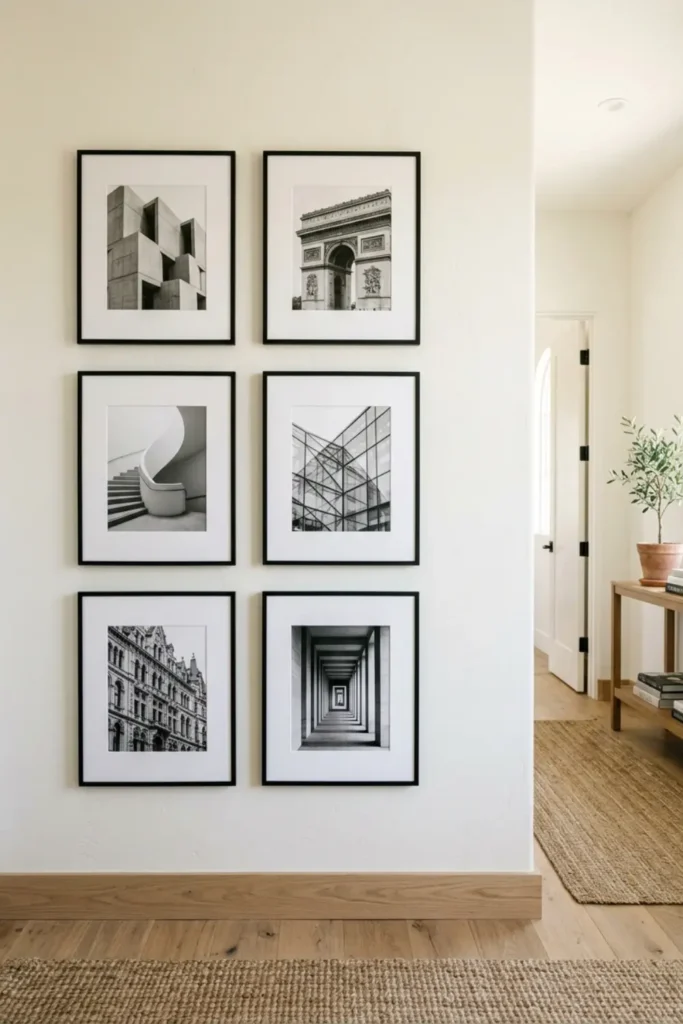
A grid gallery wall works beautifully in a hallway because the uniform structure keeps things looking intentional rather than chaotic. Stick to one frame size and one finish throughout, thin black or natural wood frames both work well. Black-and-white prints with a generous matte border inside each frame give the whole wall a clean, editorial feel. Space your frames evenly with about 2 inches between each one for a tight, polished grid.
Apply Two-Tone Paint Split Horizontally Along the Wall
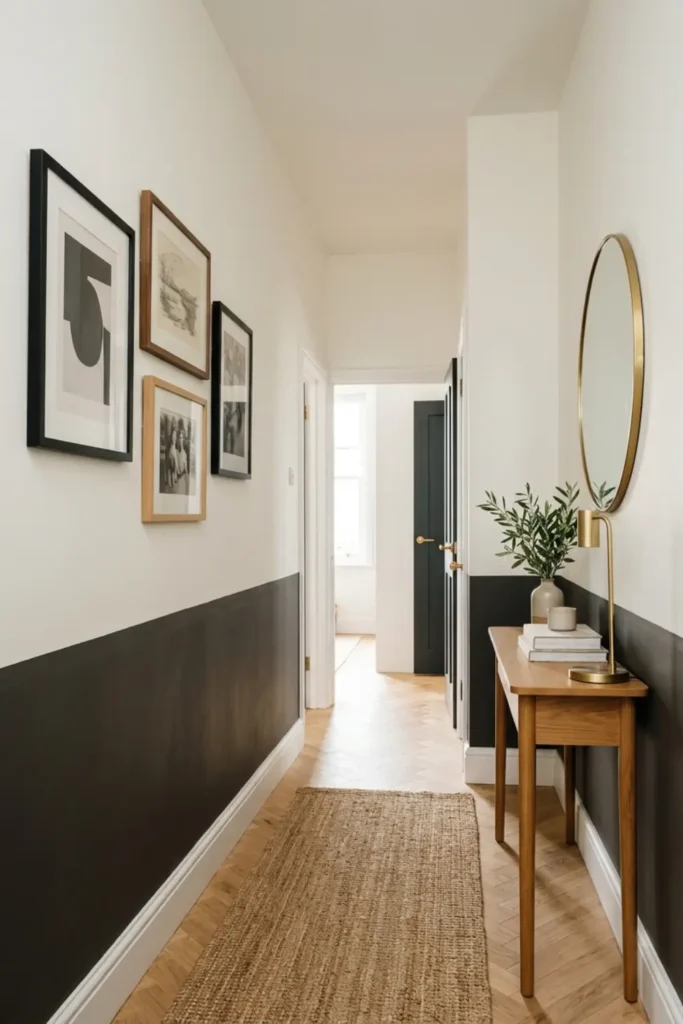
A horizontal paint split is one of the most effective ways to give a hallway visual structure without making it feel smaller. Paint the bottom third of the wall in a deeper, grounding shade like warm charcoal, dusty clay, or forest green. Keep the upper two thirds crisp and light. Use a clean chair-rail line as your boundary to keep the split sharp. The contrast grounds the space while keeping the upper wall open and airy.
Paint a Focal Archway at the End of the Hallway
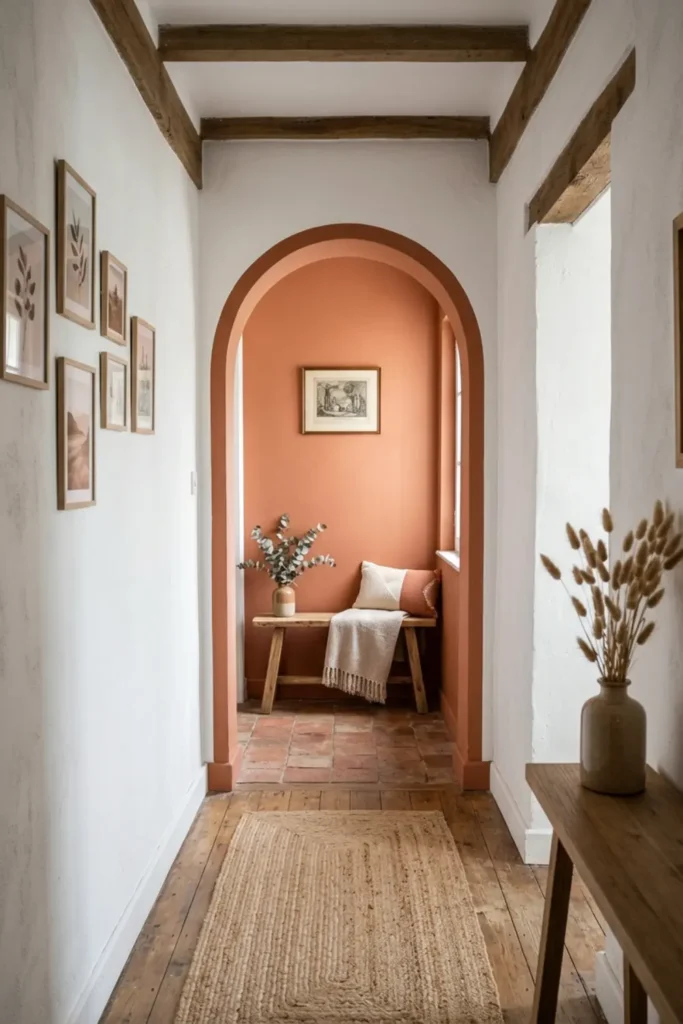
When your eye has a clear destination at the end of a corridor, the whole hallway suddenly feels more purposeful and less like a squeeze. Painting a soft arch shape in a contrasting color on the far wall creates exactly that pull. Use a warm terracotta, deep sage, or dusty blue. Place a small bench, a mirror, or a piece of art inside the arch to complete the illusion of an actual architectural feature.
Hang a Large Circular Mirror to Break Straight Lines
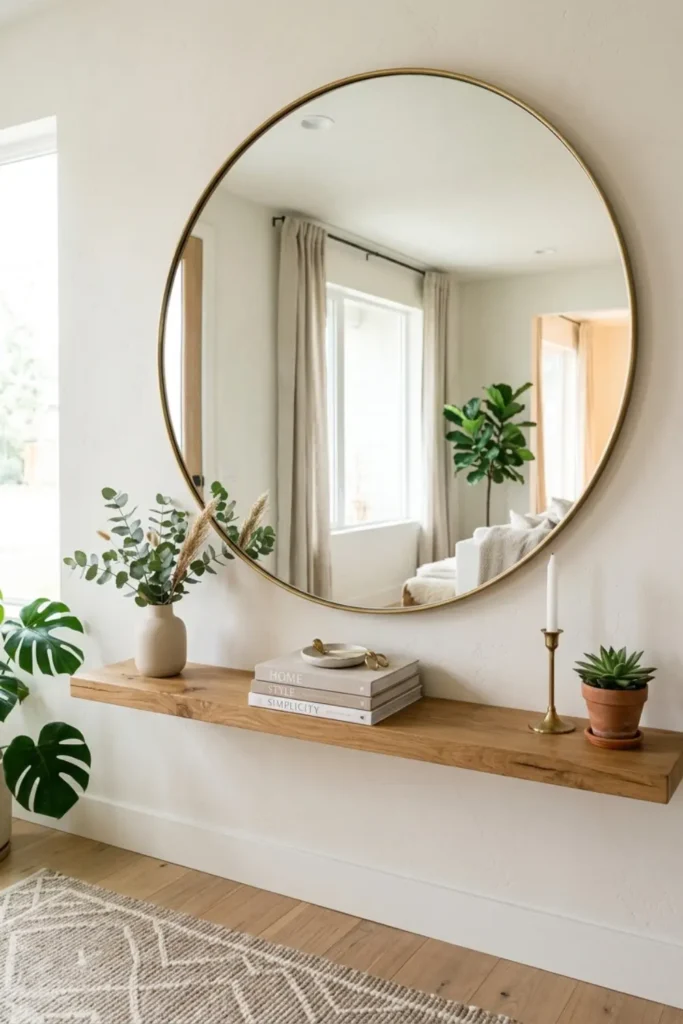
Narrow hallways are full of harsh parallel lines, two long walls, a flat ceiling, and a straight floor. A large circular mirror interrupts all of that in the best possible way. Aim for a diameter between 24 and 36 inches depending on your wall width. Mount it at eye level, roughly 57 to 60 inches to the center. A thin brass or natural wood frame keeps the look light while still giving the mirror a finished, considered edge.
Upgrade to Clear Glass Semi-Flush Mount Light Fixtures
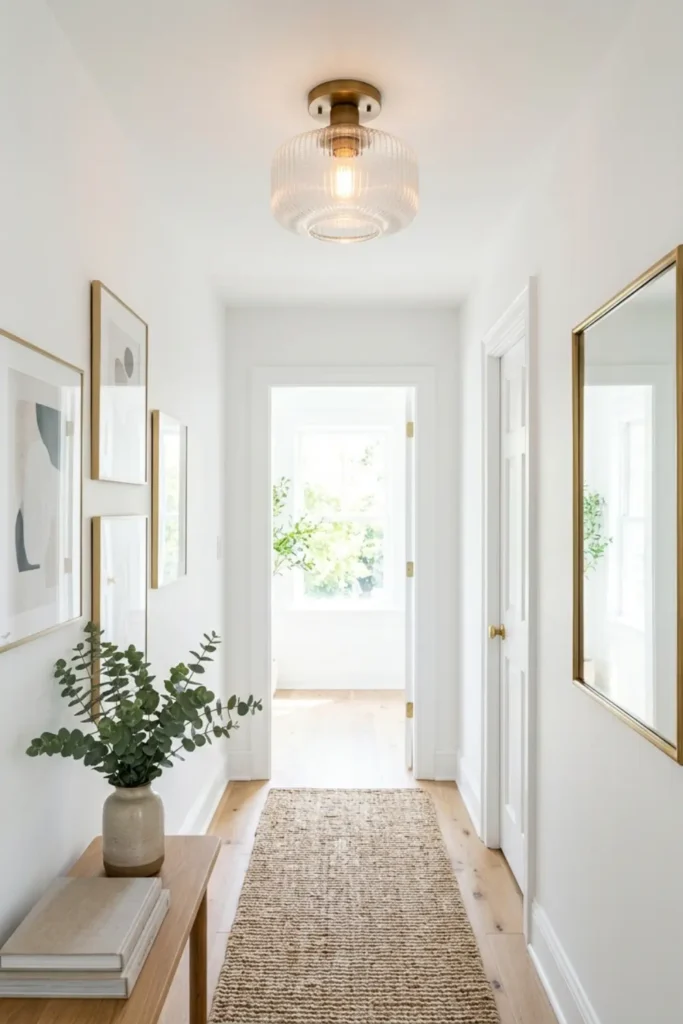
A clear glass semi-flush ceiling light is one of the highest-impact swaps you can make in a narrow hallway for relatively little money. The transparent shade lets the bulb shine in all directions, filling the corridor with even, warm light. Choose a warm white bulb around 2700K to avoid that cold, clinical feel. Keep the fixture profile tight to the ceiling so you preserve every inch of headroom in a space where it really matters.
Replace Solid Doors with Glazed Glass Internal Doors
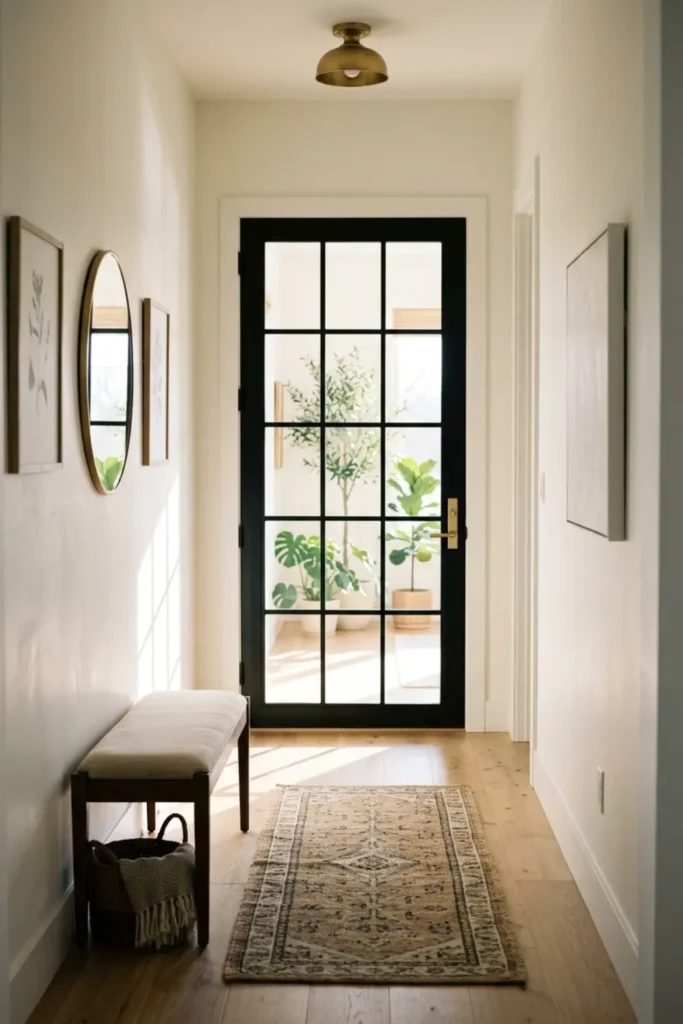
Many narrow hallways feel dark because they have no window of their own. Replacing a solid internal door with a glazed or paned glass version fixes that problem completely. Light from the adjacent room spills straight through into the hall, making it feel connected and bright throughout the day. If privacy is a concern, choose a lightly frosted glass panel that diffuses light beautifully while still keeping the room behind it visually separate.
Install Warm LED Strip Lighting Beneath Floating Shelves
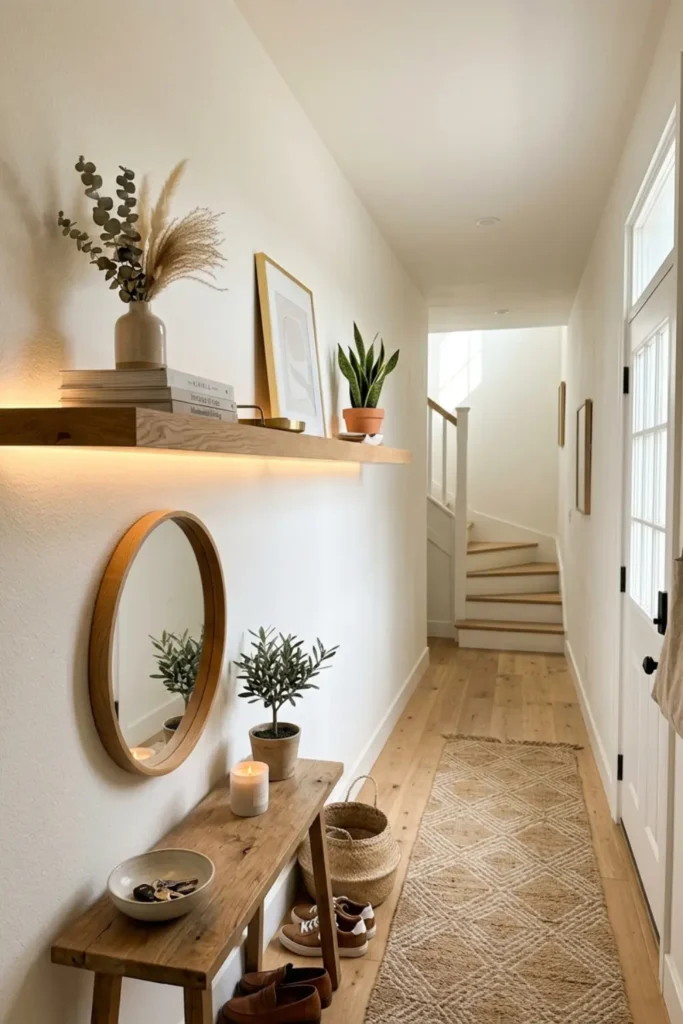
LED strip lights tucked underneath a floating shelf add a layer of warmth and depth that overhead lighting simply cannot replicate. Choose strips with a warm color temperature around 2700K to keep the glow cozy rather than harsh. Motion sensor rechargeable versions are perfect for narrow hallways because they switch on automatically when you walk through at night. Hide the strip inside an aluminum channel for a clean, seamless look.
Enclose Bulky Radiators with Custom Ultra-Slim Covers
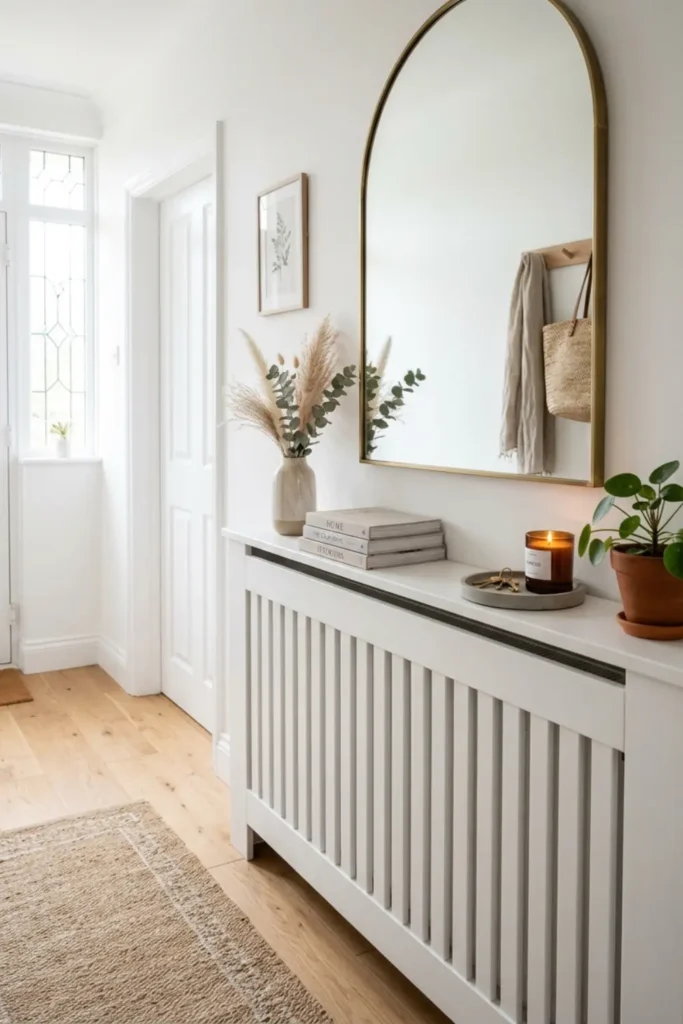
A bare radiator in a narrow hallway is both an eyesore and a wasted surface. A slatted wooden radiator cover solves both problems at once. Keep the depth as shallow as possible, ideally matching or sitting just slightly proud of the radiator itself. The slatted front allows heat to circulate freely while looking like a proper piece of furniture. The flat top immediately becomes a usable surface for a tray, a plant, or a small lamp.
Layer Shallow Picture Ledges for Flexible Art Displays
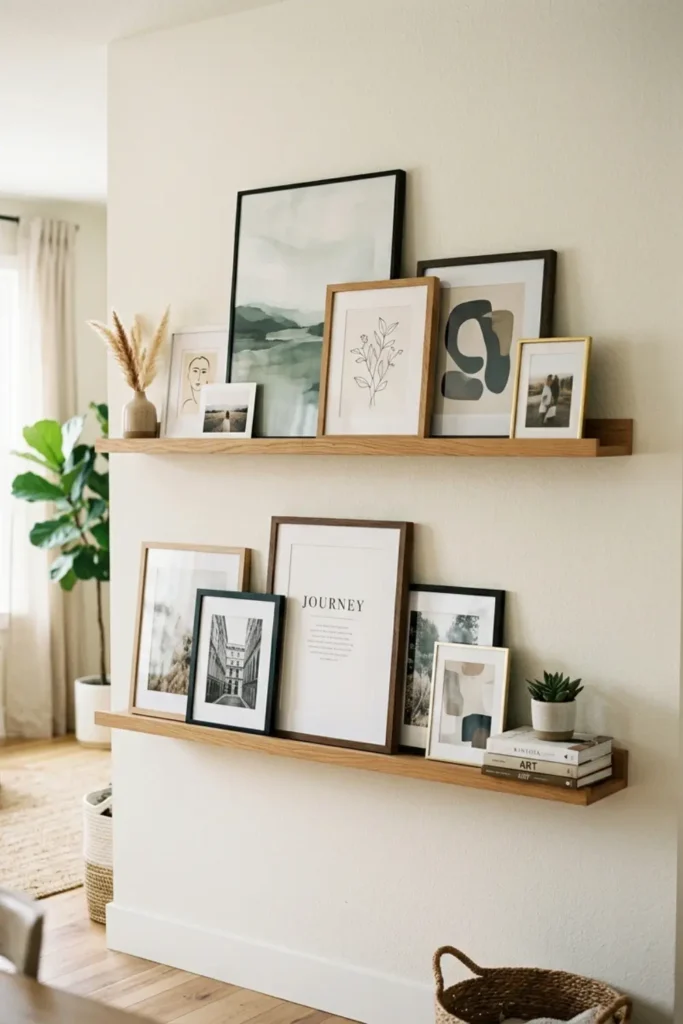
Picture ledges are one of the most renter-friendly solutions for hallway walls. At just 3 inches deep, they barely touch the walkway space but give you a fully rotating art display that you can refresh any time without drilling new holes. Stack two ledges at different heights and layer frames of varying sizes in front of each other. The overlapping effect adds depth and makes the display feel curated rather than flat.
Install Acoustic Wood Slat Wall Panels for Texture
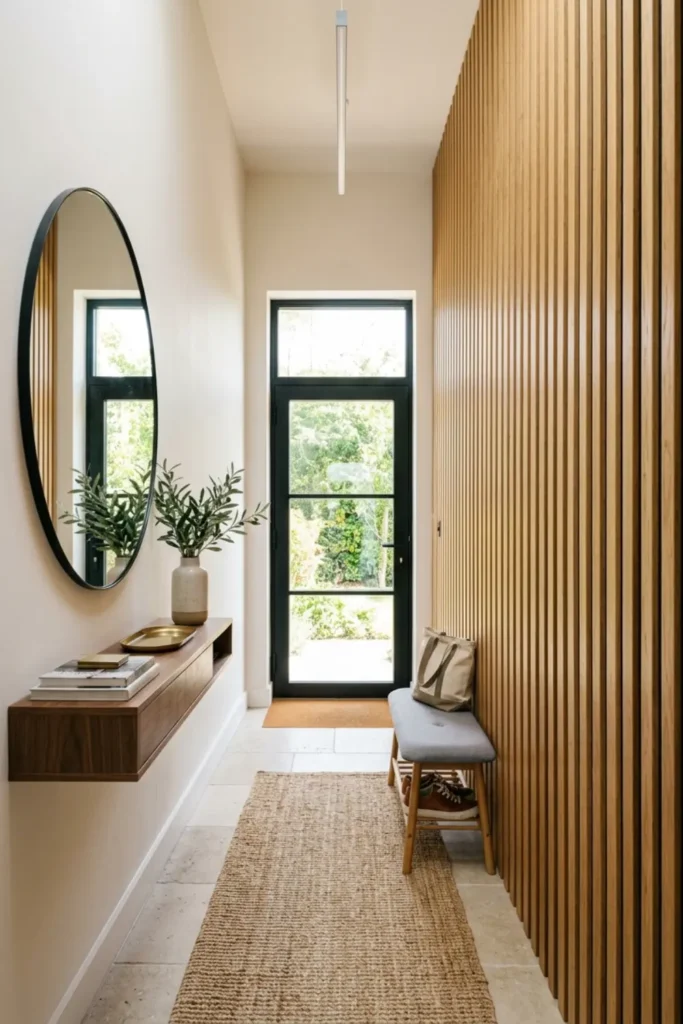
Acoustic wood slat panels are having a real moment in interior design and narrow hallways are one of the best places to use them. The vertical lines reinforce that upward eye movement that makes ceilings feel taller. Oak-faced felt-backed panels are the most common option and they are genuinely easy to install yourself. As a bonus, the felt backing softly dampens the echo that often makes long, hard-surfaced hallways feel cold and loud.
Bring Greenery In with Wall-Hung Glass Propagation Vases
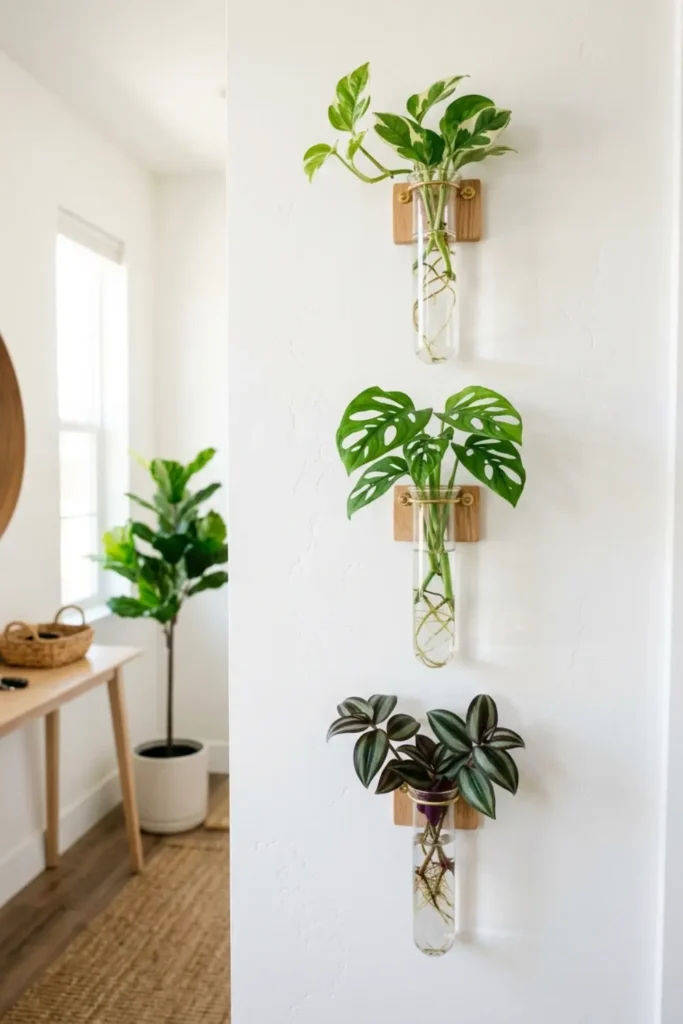
Wall-mounted propagation tubes are one of the most beautiful ways to bring plant life into a hallway without using any shelf or floor space at all. Mount a cluster of three to five glass tubes at varying heights on one wall. Pothos and Philodendron cuttings are ideal choices because they trail beautifully and genuinely thrive in lower light conditions. Top up the water every week or two and you have living wall decor that costs almost nothing to maintain.
Tuck a Semi-Circular Slim Umbrella Stand Against the Door
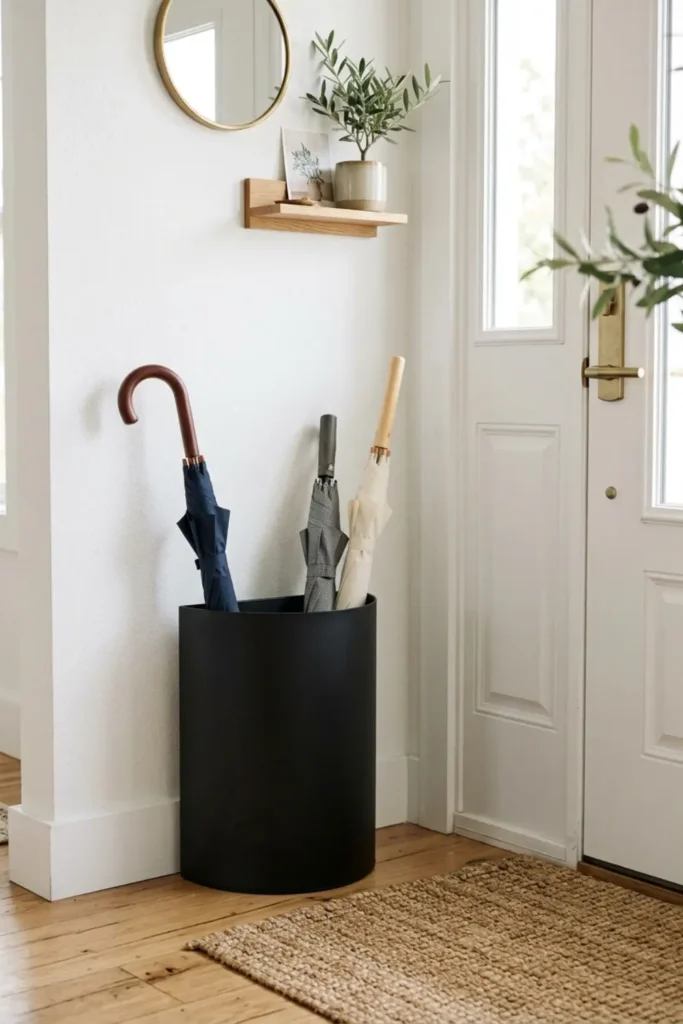
A flat-backed or semi-circular umbrella stand is the smartest shape for a narrow hallway because it presses flush against the wall and stays completely out of the door swing path. Look for one with a removable drip tray at the base so wet umbrellas do not leave puddles on your floor. Tuck it right beside the door frame where it is immediately useful but never in the way of your 36-inch walkway clearance.
Utilize Over-the-Door Storage for Hidden Utility
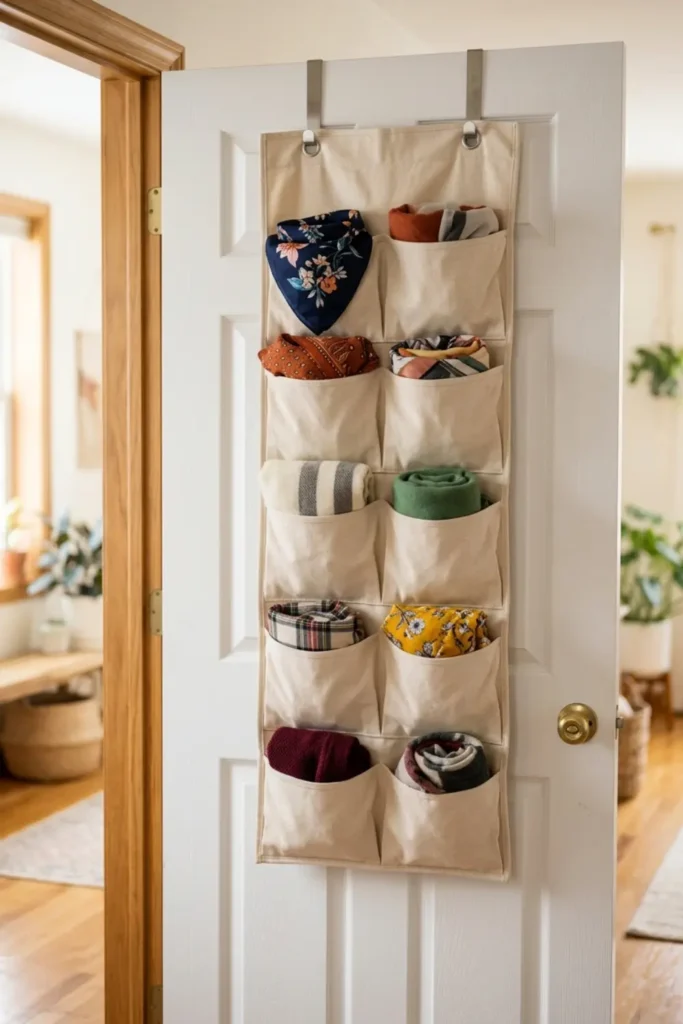
The back of your entry door or coat closet door is a completely untapped storage surface in most homes. A slim canvas pocket organizer or a row of flat metal hooks mounted there can hold scarves, gloves, dog leads, reusable bags, and small accessories without using a single inch of wall or floor space. Because it is hidden when the door is open, the hallway still looks completely clean and uncluttered to anyone walking through.
Define the Entrance Threshold with an Inset Coir Mat
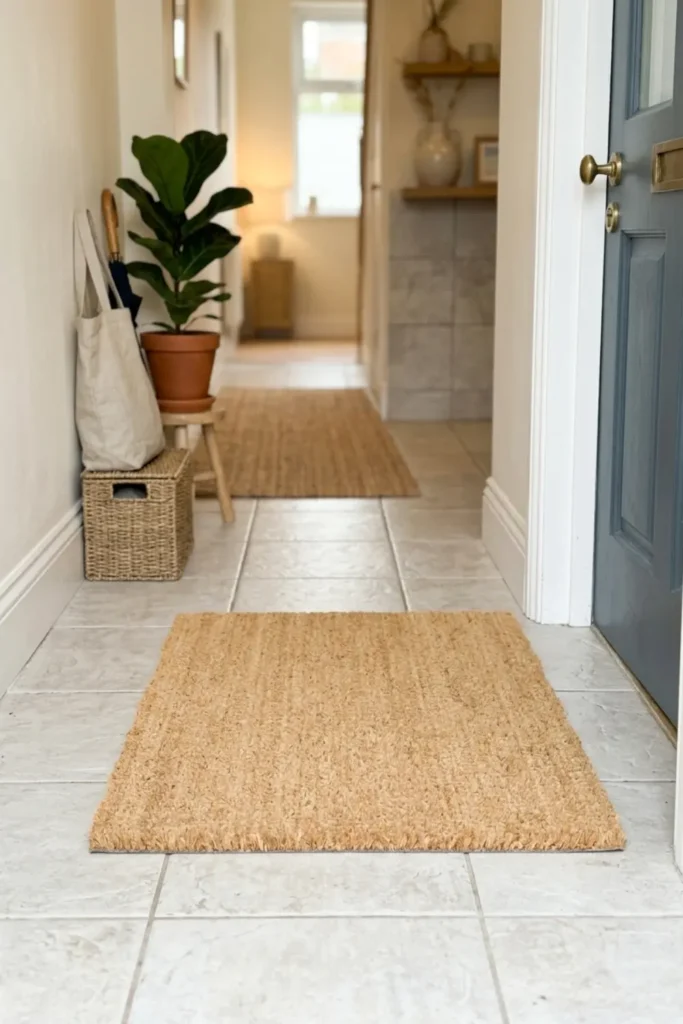
A good doormat does more than catch mud. It visually defines where the entrance begins and signals a clear transition between outside and inside. Natural coir fiber is the most durable and practical choice for a front threshold because it scrapes shoes effectively and holds up to heavy daily use. Keep the edges flush with the floor where possible to eliminate any tripping hazard, and choose a simple natural finish that works with almost any hallway color scheme.
Paint Door Frames in a Bold Contrasting Shade
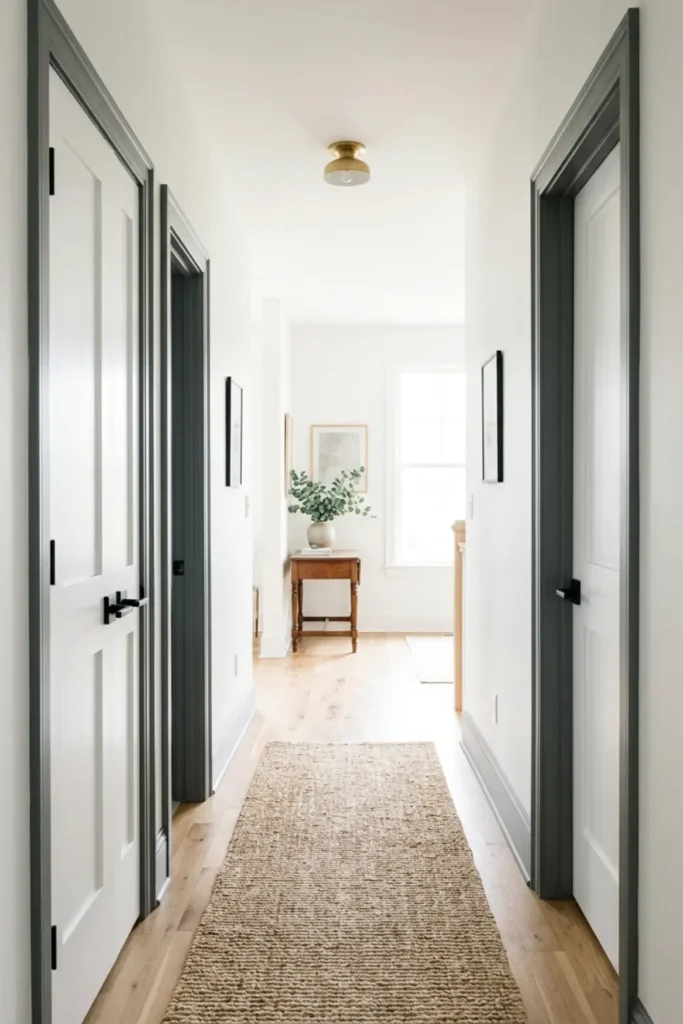
Plain white door trim disappears into white walls and adds nothing to the visual story of a hallway. Painting your door frames in a bold contrasting shade like soft charcoal, deep olive, or dusty navy immediately creates architectural definition. It frames each doorway like a picture frame, drawing the eye through the corridor from one opening to the next. Keep surrounding walls crisp and light so the contrast does the talking without the space feeling heavy or closed in.
Style a Minimalist Seasonal Greenery Loop on Wall Hooks
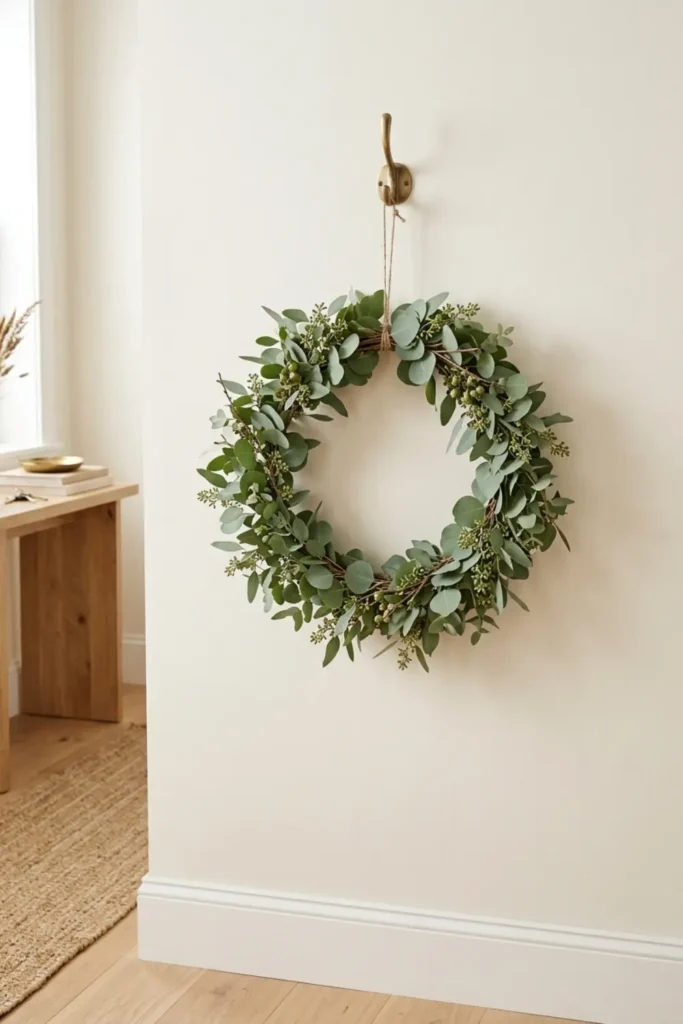
A simple eucalyptus or dried botanical wreath hung from a single brass hook is one of the easiest ways to bring seasonal warmth into a hallway without creating any clutter. Because it sits flat against the wall, it takes up zero floor and shelf space. Swap it out with the seasons using dried pampas in autumn, a simple pine ring in winter, and fresh eucalyptus in spring and summer. One hook, one loop, and the whole entry feels considered and alive.
Common Narrow Hallway Mistakes & Frequently Asked Questions
Mistake 1: Placing oversized furniture in the walkway. Any piece that reduces your clear path below 36 inches will make even a beautifully decorated hallway feel uncomfortable to move through. Always measure before you buy.
Mistake 2: Using dark paint without compensating with light. Dark walls in a hallway can look stunning, but only when layered lighting does the heavy lifting. Without wall sconces, ceiling fixtures, and mirror reflections working together, dark paint simply swallows the space.
Mistake 3: Overloading every surface. A narrow hallway only needs a few well-chosen objects. When every shelf, hook, and corner is filled, the eye has nowhere to rest and the space feels chaotic rather than curated.
How wide should a walkway be in a narrow entrance hall?
The minimum comfortable clearance is 36 inches. This is the standard recommended for residential corridors and gives two people enough room to pass each other without turning sideways.
What paint finish is best for narrow entry corridors?
Satin or eggshell finishes are the best choices. Both are easy to wipe clean after daily door traffic and reflect just enough light to keep the walls feeling fresh without the high shine of a full gloss finish.
Can I use dark paint in a small hallway?
Yes, absolutely. Dark paint works beautifully in narrow hallways when you pair it with strong layered artificial lighting, at least one large mirror, and light-colored flooring or ceiling. The key is reflection and contrast, not avoidance.
Transform Your Entrance Hall Today
A narrow entrance hall does not need a renovation to feel completely different. Start by protecting your 36-inch walkway, add vertical storage to free up your floor, and bring in light with mirrors and warm-toned bulbs. Even two or three of these 30 ideas applied together will completely change how your hallway feels the moment you walk through the door. Save this post to your Home Decor board on Pinterest so you have it ready for your next weekend project!


