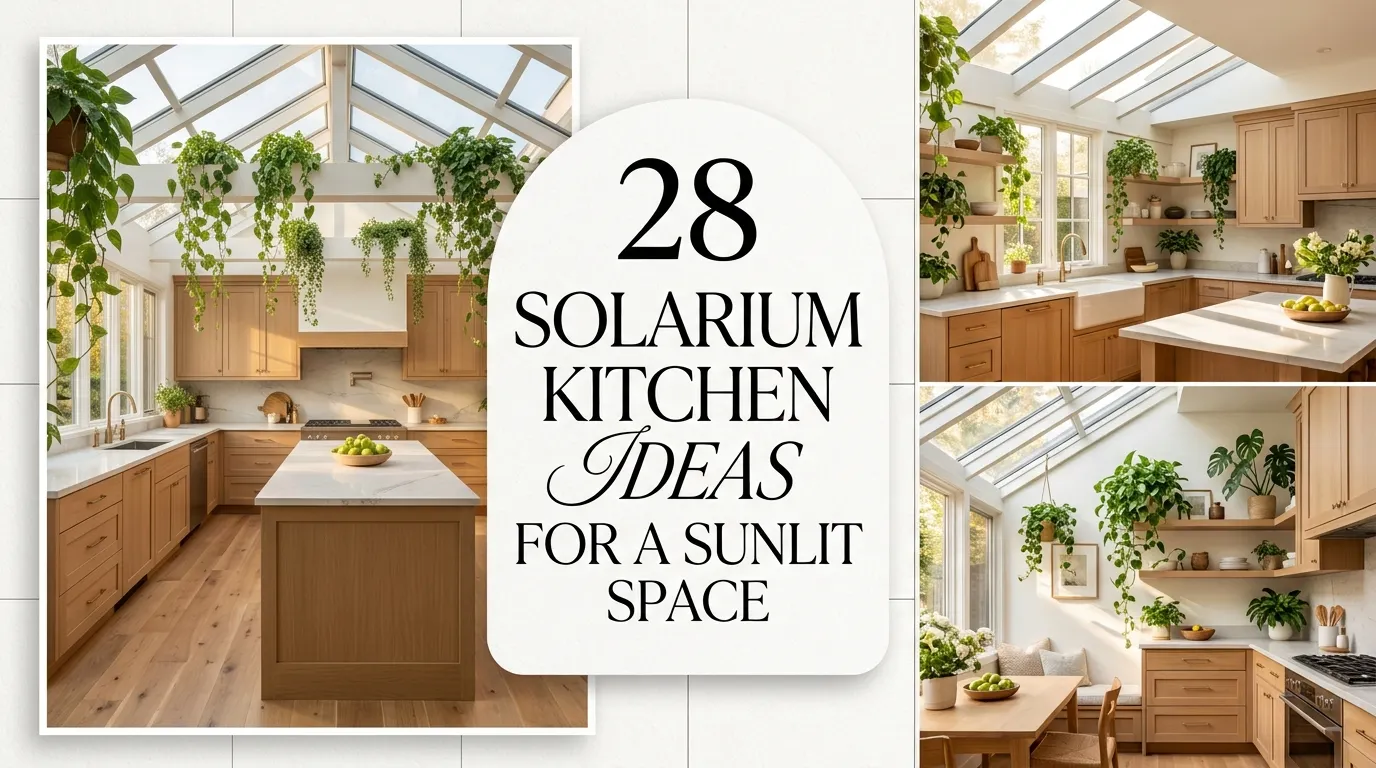
Your morning coffee tastes different in a kitchen flooded with sunlight. A solarium kitchen blends the warmth of the outdoors with the function of a real cooking space, giving you natural light, views, and a connection to the outside world without stepping outside.
A solarium kitchen uses glass walls, skylights, or large window panels to flood the cooking space with daylight. It combines indoor comfort with an open, garden-like atmosphere. I have pulled together 28 real, liveable ideas to help you design one that works beautifully all year long.
The Classic Glass Conservatory Extension
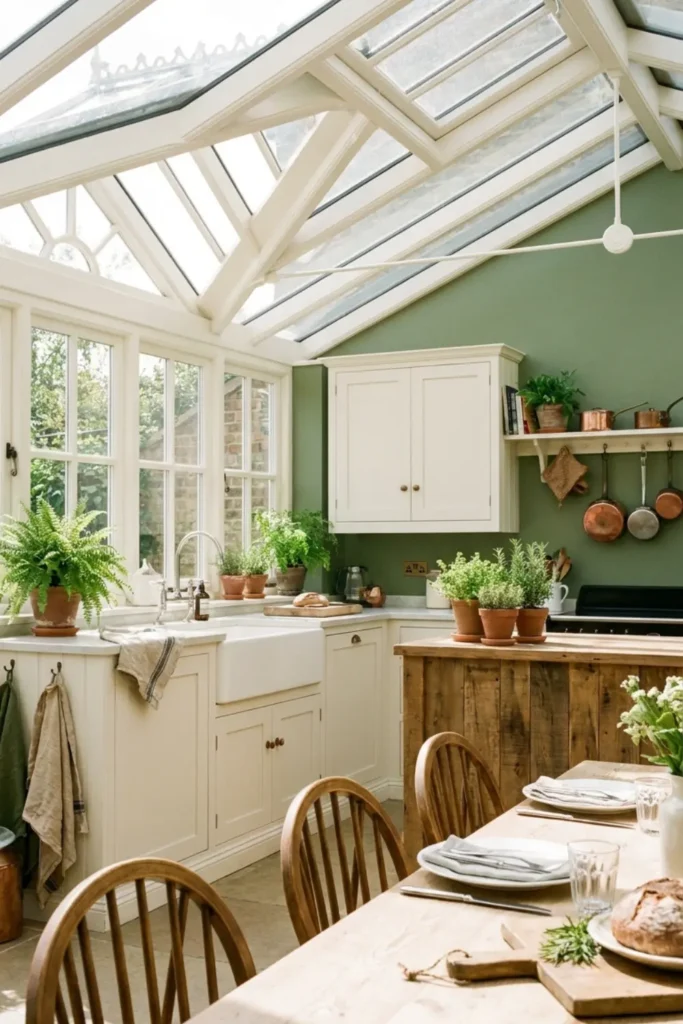
There is something timeless about a glass conservatory kitchen. I have always loved how it creates a seamless bridge between an older home and the garden outside. Traditional white framing, a deep farmhouse sink, and a glass roof that lets the sky become your ceiling. This is the kind of space that makes everyday cooking feel like a ritual worth slowing down for.
Wraparound Floor-to-Ceiling Windows
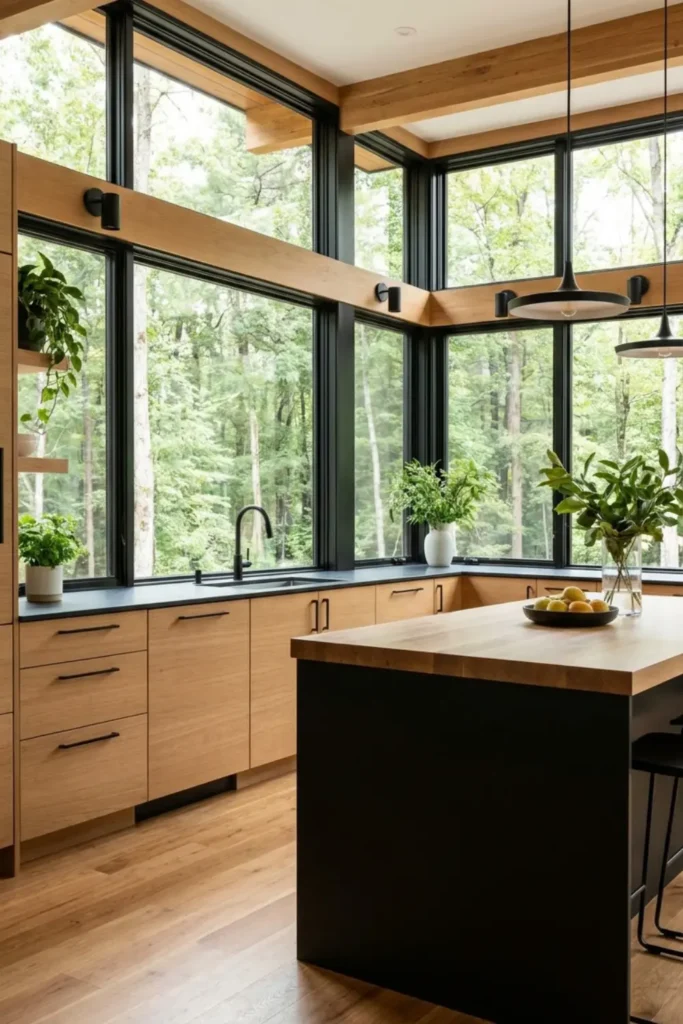
Not everyone can change their roofline, and honestly, you may not need to. Wraparound floor-to-ceiling windows deliver dramatic light and sweeping views without touching the structure above. I recommend this approach for modern homes where the landscape outside is the real star. Sleek wooden cabinets and a clean island let the windows do all the talking.
The Greenhouse Window Over the Sink
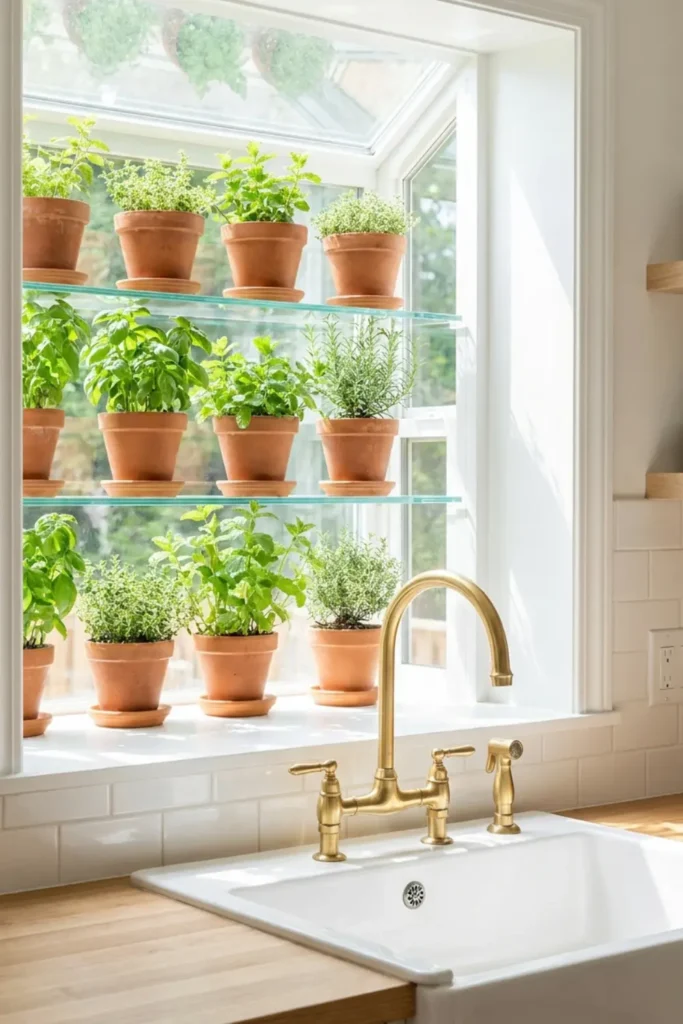
This is my favorite tip for smaller kitchens that want a solarium feel without a full renovation. A protruding greenhouse window over the sink gives you a pocket of sunlight, a home for trailing herbs, and that garden-adjacent feeling. It costs a fraction of a full extension and transforms the most-used spot in your kitchen into something genuinely beautiful.
Matte Stone Countertops to Reduce Glare
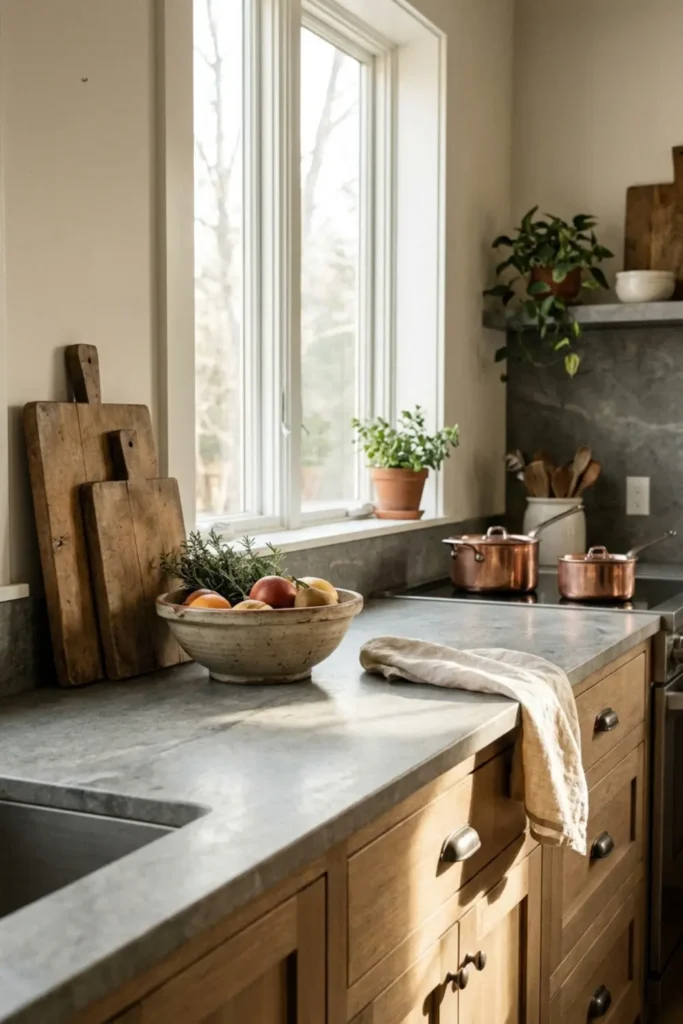
Here is something I learned the hard way. Polished marble in a sunlit kitchen will blind you by 10 AM. Honed or matte stone absorbs light instead of bouncing it back at your eyes, making the space feel warm rather than harsh. Matte finishes on countertops in solarium kitchens are a quiet designer move that makes a massive difference in daily comfort.
Warm White Oak Cabinets in Sunlit Spaces
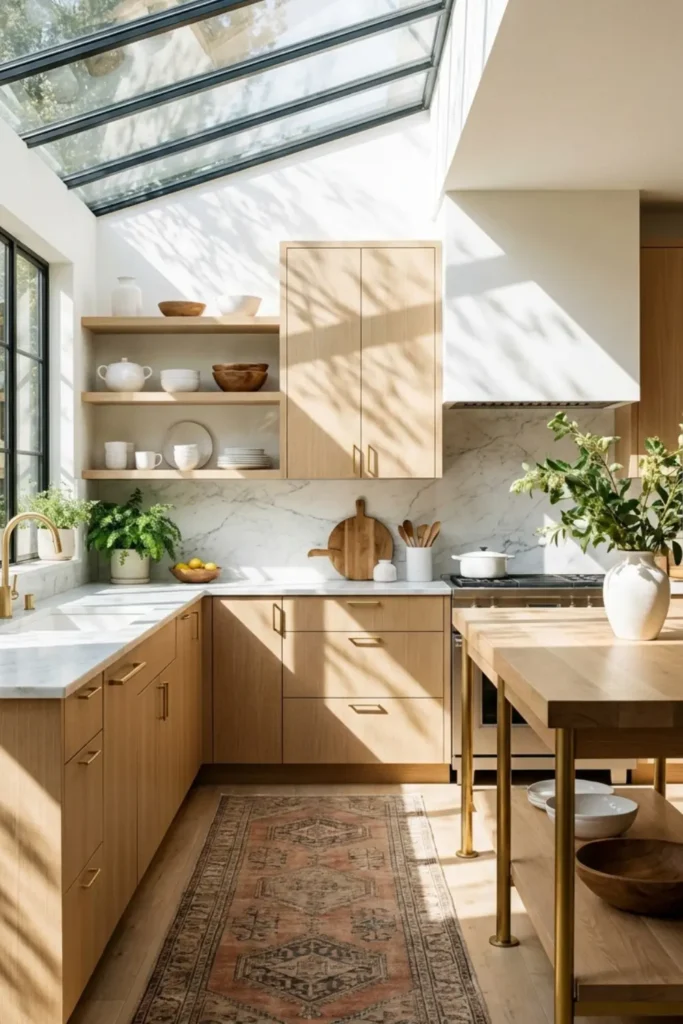
Stark white cabinets can feel cold and flat in heavy sunlight. White oak is different. The grain catches the light and adds warmth without darkening the room. I always steer clients toward flat-panel oak doors with subtle brass hardware when designing a solarium kitchen. The result feels Scandinavian, organic, and deeply liveable all at once.
Skylight Grid Over the Kitchen Island
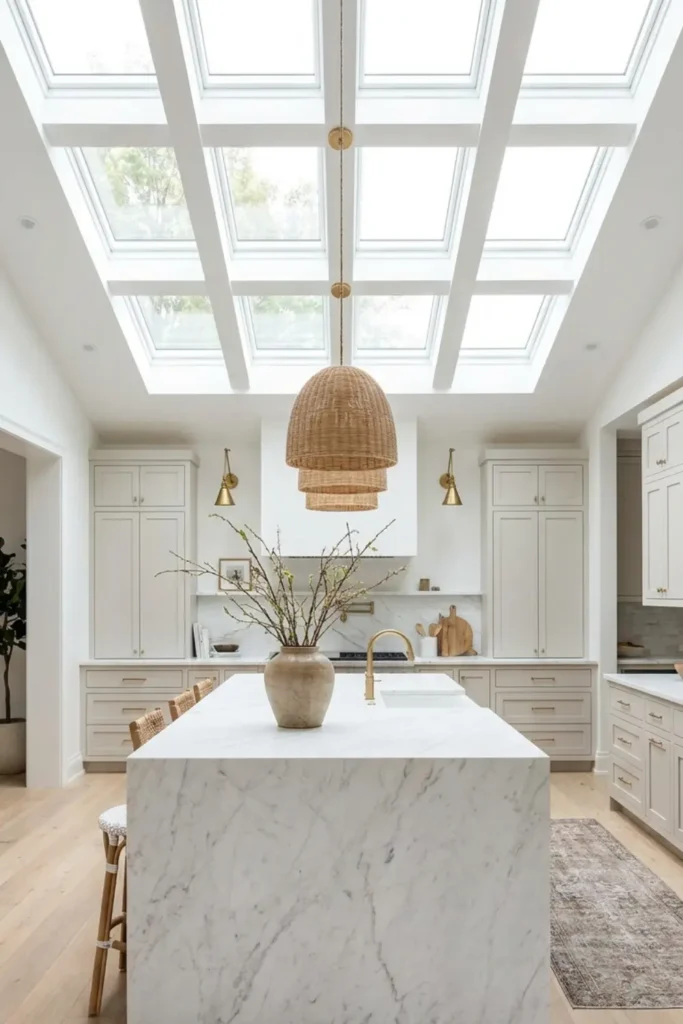
A grid of skylights directly overhead is one of my favorite ways to anchor a kitchen’s whole design around one architectural moment. It pulls the eye upward and floods your main workspace with clean, even daylight. I love pairing this layout with a large stone island below so the light has a beautiful surface to land on. Visually, it is deeply satisfying and impossible to ignore.
Modern Black Steel Frame Solarium
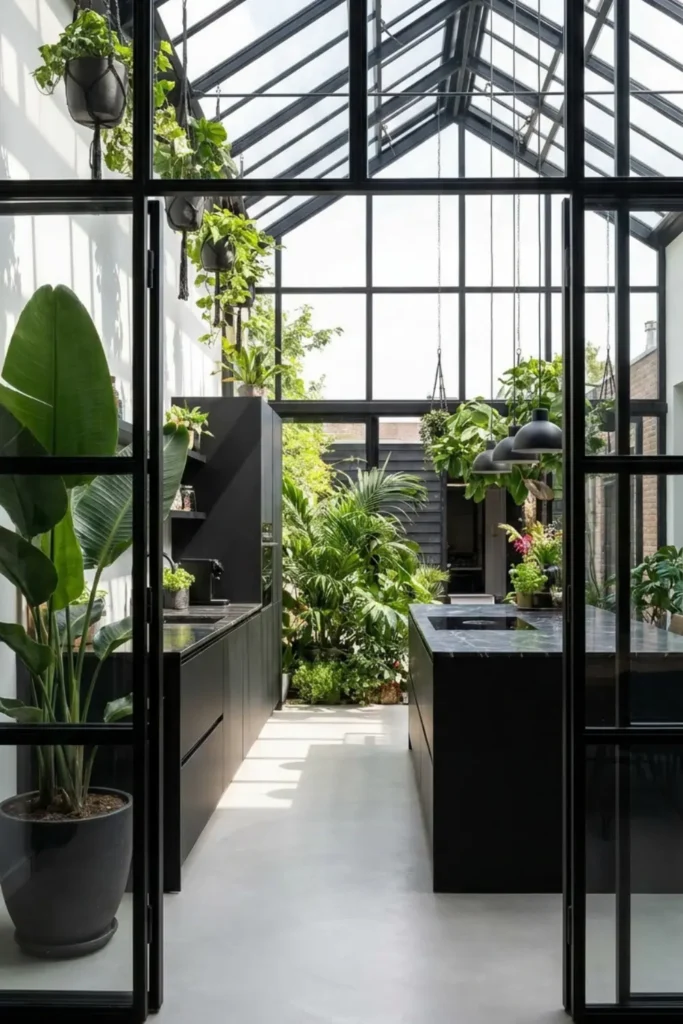
Black steel frames do something that white frames simply cannot. They turn every glass panel into a deliberate border around the view outside, almost like a living painting on your wall. I use this approach when a client wants their kitchen to feel bold and editorial. Pair it with deep green plants and minimal dark cabinetry, and the whole space feels curated rather than constructed.
Indoor Olive Trees and Potted Citrus
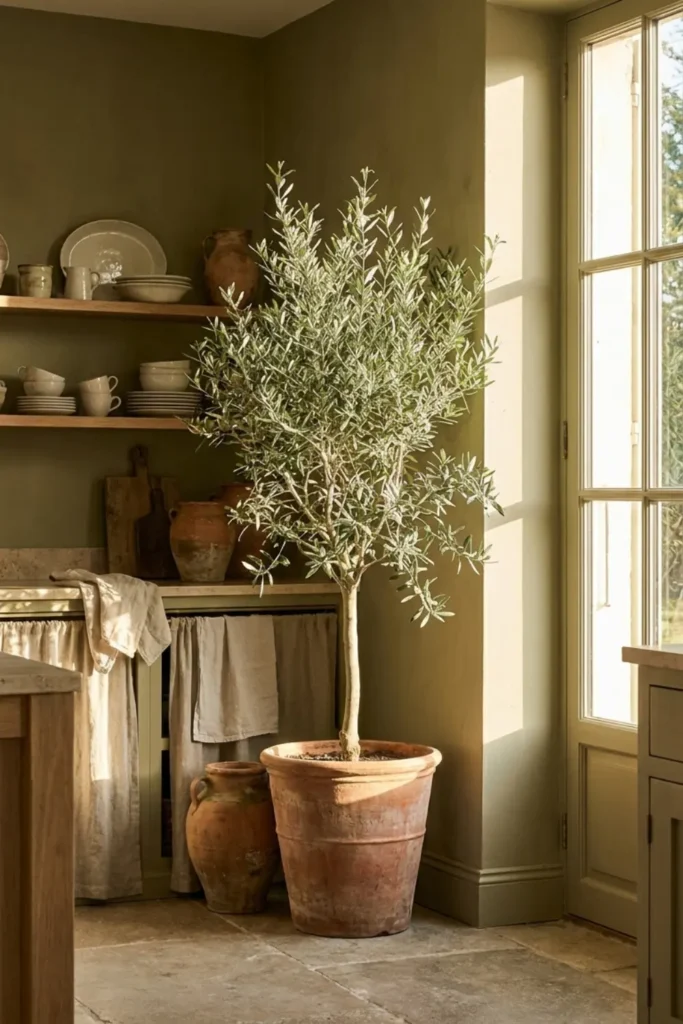
When clients ask me which plants actually survive a solarium kitchen, olive trees and potted citrus are always my first answer. They love the heat, they love the direct sun, and they bring that relaxed Mediterranean quality that makes a kitchen feel like more than just a place to cook. A large terracotta pot in the corner is all you need to completely transform the atmosphere.
Thermal Mass Terracotta Flooring
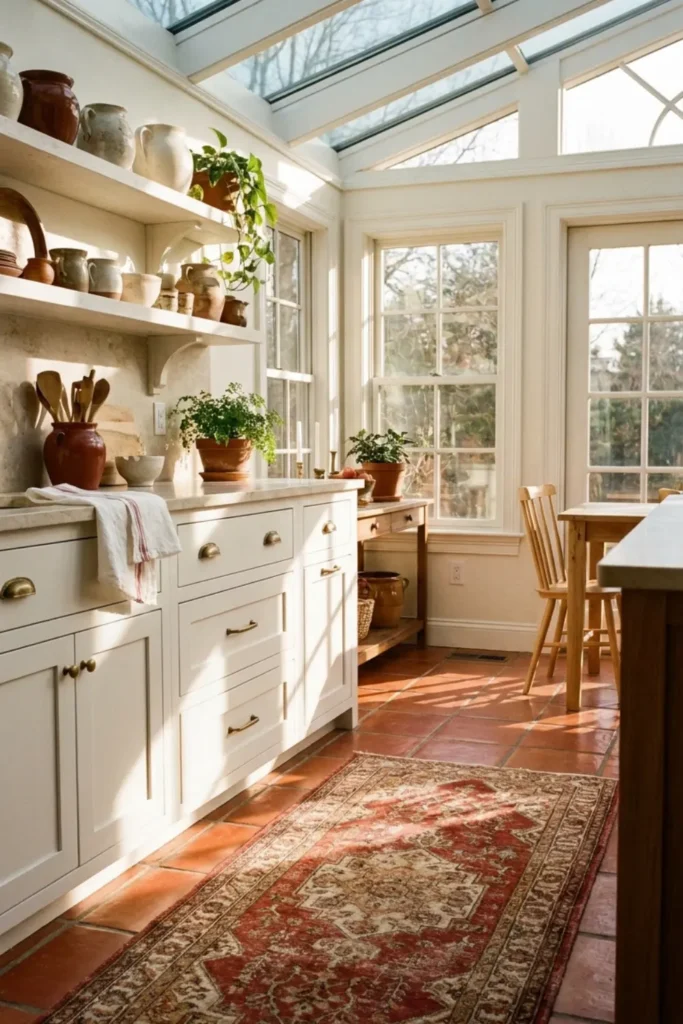
Here is a practical tip most designers skip over. Terracotta floors absorb heat from the sun during the day and slowly release it back into the room at night. This makes your glass kitchen significantly warmer in cooler months without extra heating. Beyond the function, the warm russet tones of authentic terracotta tiles bring a European cottage warmth that feels genuinely grounding in a room made mostly of glass.
Cozy Glass-Enclosed Breakfast Nook
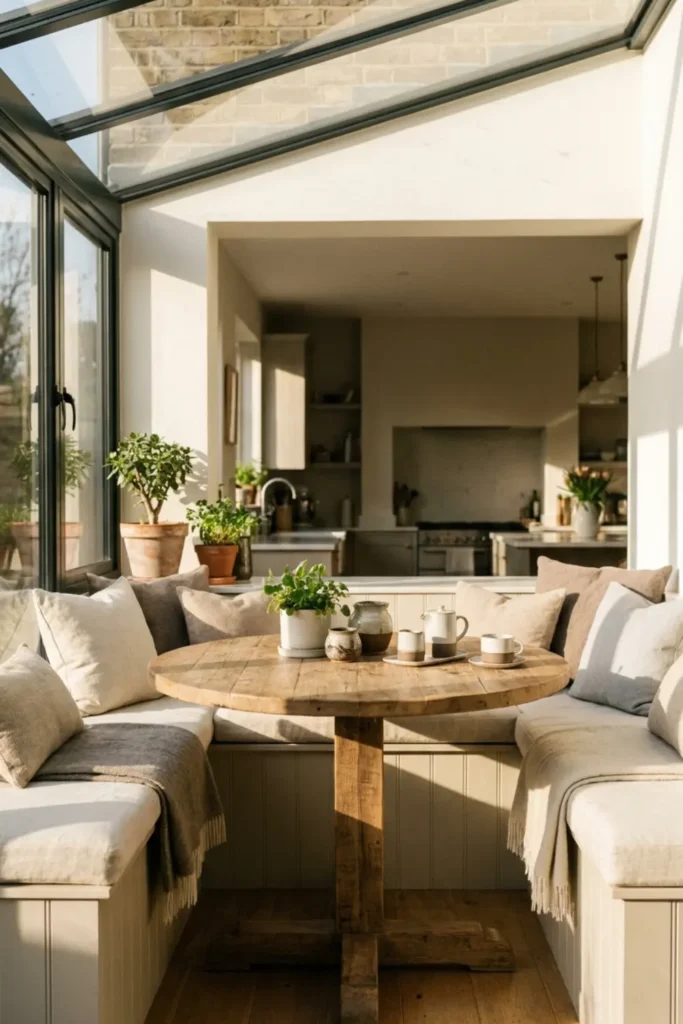
In larger solarium kitchens, I always try to carve out one small human-scaled corner. A glass-enclosed breakfast nook with built-in bench seating and a round wooden table creates a space that feels intimate even inside a room full of windows. Morning light hits differently when you are tucked into a spot designed purely for slowing down. This is the detail clients always end up loving most.
Boho Rattan Pendants in a Sunroom Kitchen
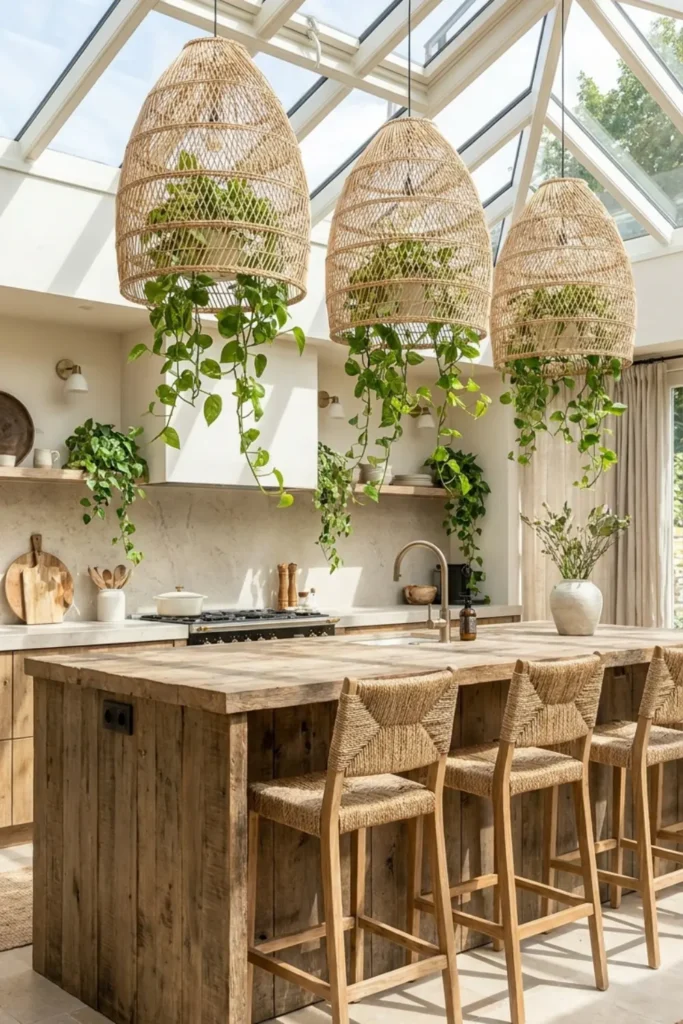
Artificial lighting in a sunlit kitchen is tricky, but the fixture choice matters more than most people realize. Under strong natural light, polished metals and glass pendants can look cold and clinical. Rattan and woven textures do the opposite. They soften the light, add warmth, and bring an organic quality that feels intentional rather than decorated. I always reach for oversized rattan pendants when a solarium kitchen needs personality without noise.
Rustic Exposed Wood Beams with Glass Ceilings
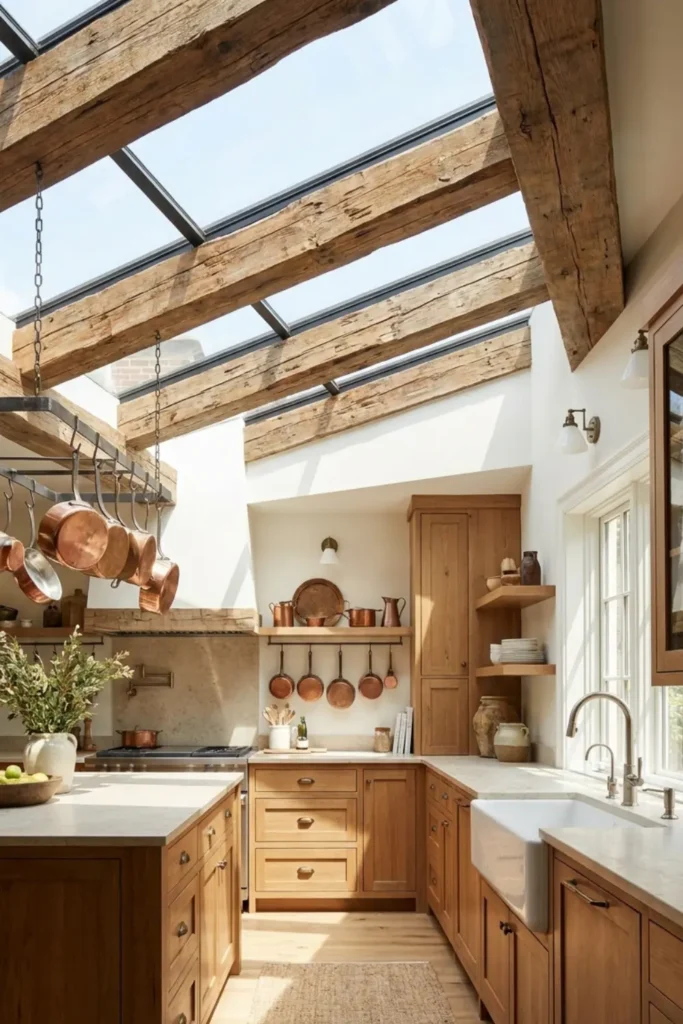
This is one of my favorite combinations in kitchen design. Thick reclaimed wood beams running across a glass ceiling create a tension between old and new that neither material could achieve alone. The glass keeps everything light and open while the beams add weight, history, and warmth. In farmhouse-adjacent homes especially, this pairing feels completely natural and makes the glass roof look intentional rather than added on.
Seamless Indoor-Outdoor Bi-Fold Doors
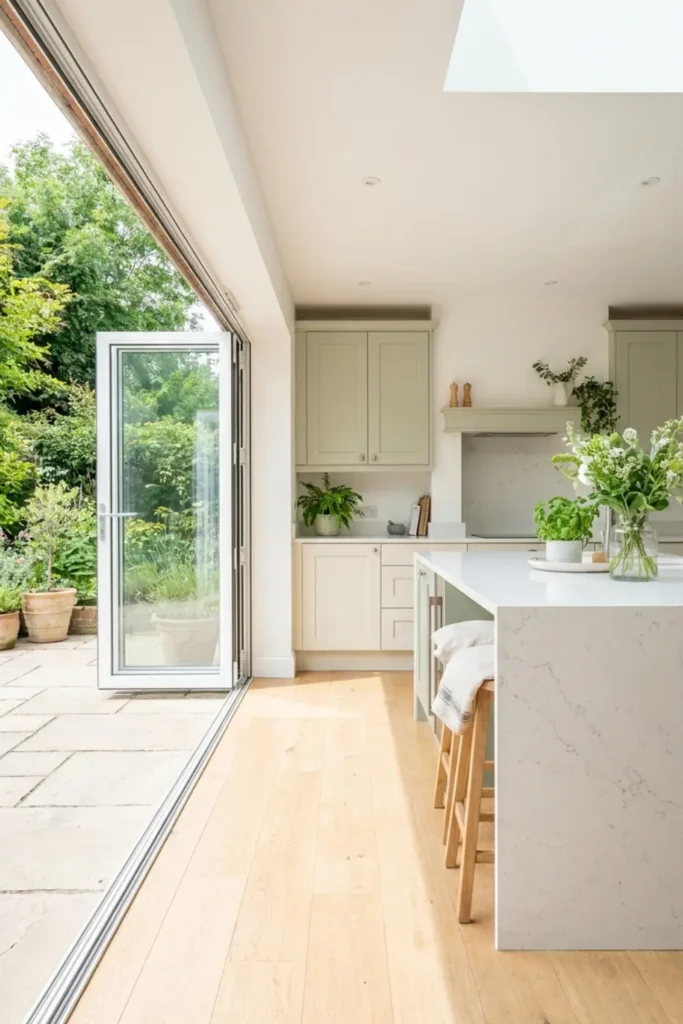
Full bi-fold glass doors change everything about how a kitchen feels in summer. When they fold back completely, the boundary between your cooking space and the garden simply disappears. I love designing around this flow because it turns meal prep into something social and airy. The key is matching your indoor floor material to the outdoor patio surface so the transition reads as one continuous space.
Minimalist All-White Sunlit Kitchen
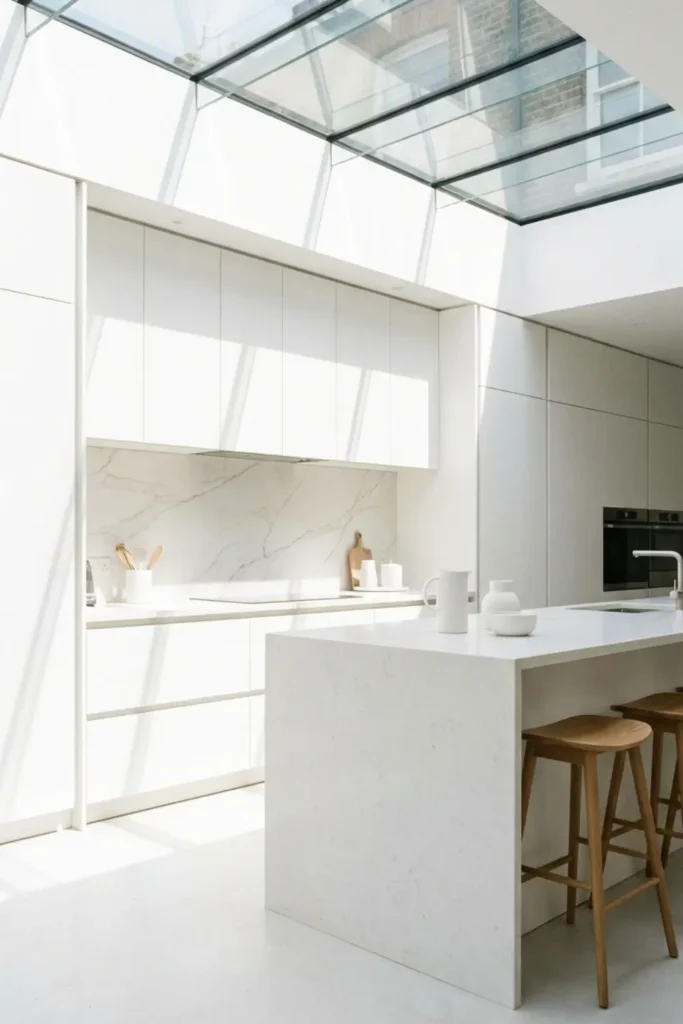
All-white kitchens get a bad reputation for looking sterile, but that only happens when texture is ignored. In a solarium kitchen, brilliant white walls and handleless cabinets work beautifully when you layer in a matte stone backsplash, a linen blind, or a rough ceramic bowl. Benjamin Moore Simply White is my go-to here. It reflects light without feeling harsh and gives the whole room a calm, breathable quality that feels effortless.
Soft Roman Shades for Light Control
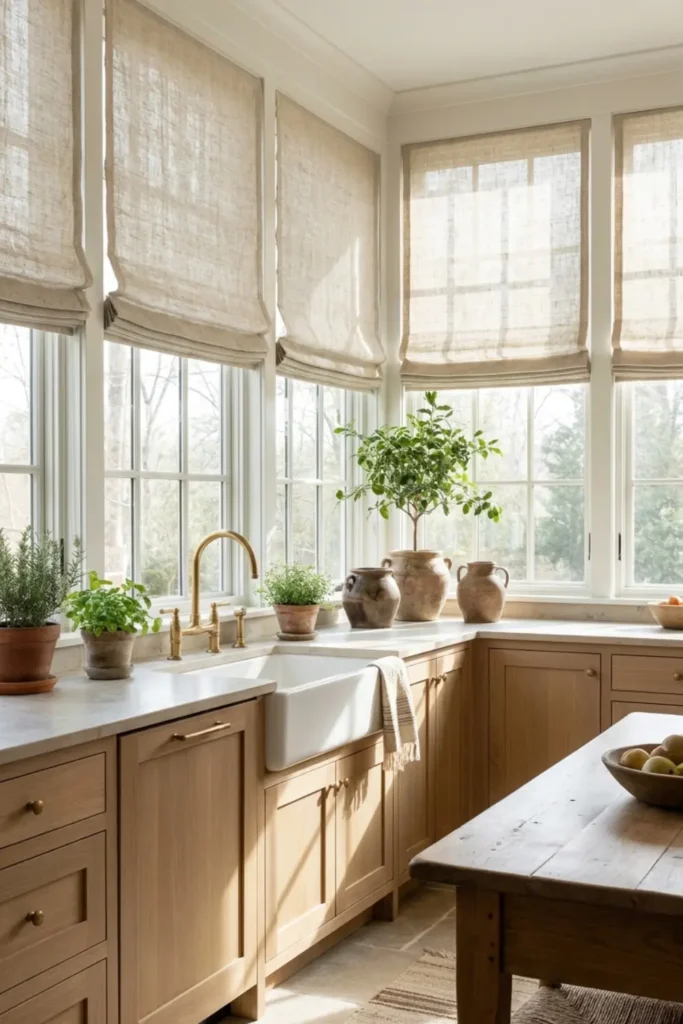
By mid-afternoon, a south-facing solarium kitchen can get genuinely overwhelming without something to soften the sun. Linen Roman shades are my practical answer. They diffuse the light rather than blocking it, keeping the room bright without the glare. Pulled halfway down, they frame the window beautifully and add a relaxed, layered texture. They also give you privacy in the evening without sacrificing the open, airy feeling you worked to create.
Corner Solarium Nook with Banquette Seating
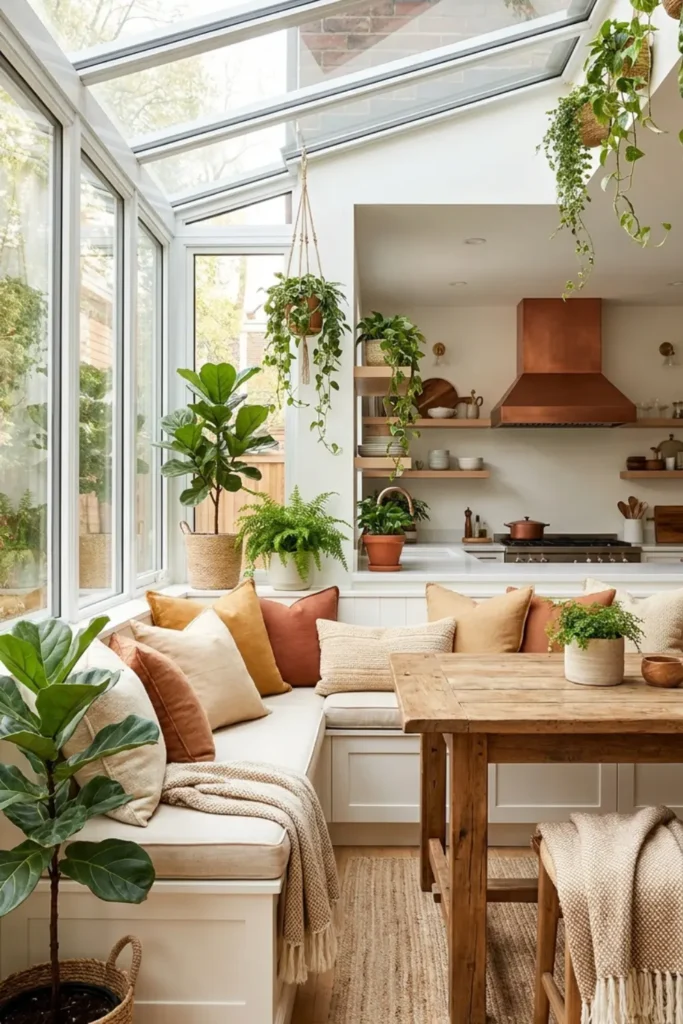
Corners are the most wasted space in any kitchen floor plan. When I work with a tight layout, I look at the corner first. Glass on two sides with a custom banquette tucked underneath creates a reading nook, a breakfast spot, and a social space all in one footprint. Plush cushions and a small round table make it feel intentional and cozy rather than like leftover square footage nobody knew what to do with.
French Country Solarium with Arched Windows
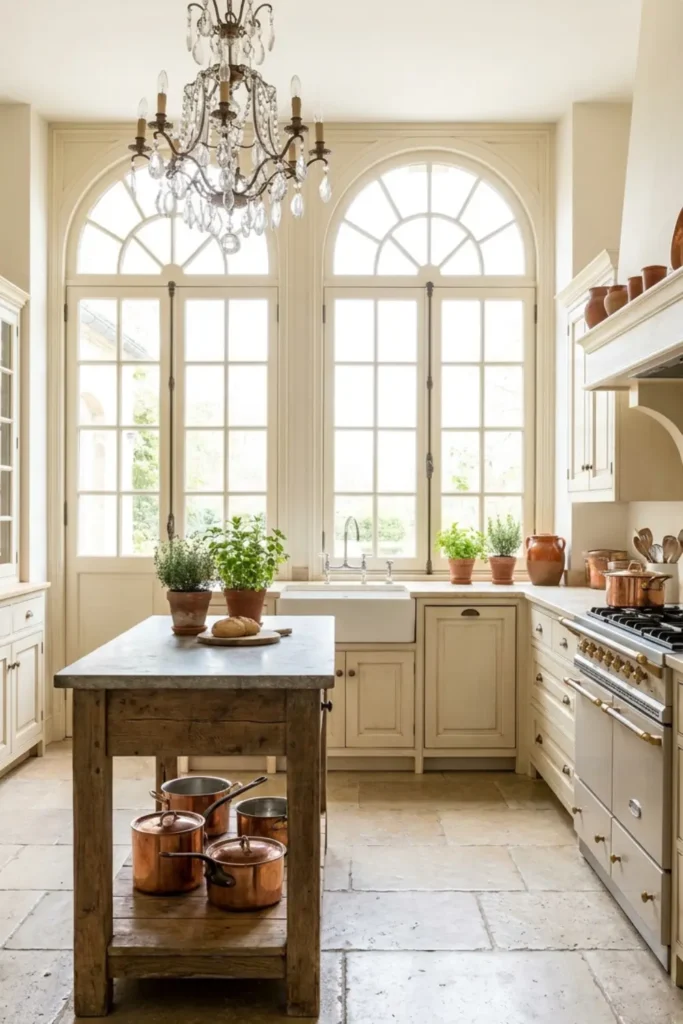
Arched glass windows do something rectangular panes simply cannot. They bring a softness and a quiet grandeur that makes an extension feel like it was always part of the original home. I love using this style in French country kitchens where stone floors and vintage chandeliers are already doing the heavy lifting. The arch frames the garden view like a romantic painting and adds instant architectural credibility to the whole space.
Moody Green Accents in a Bright Solarium
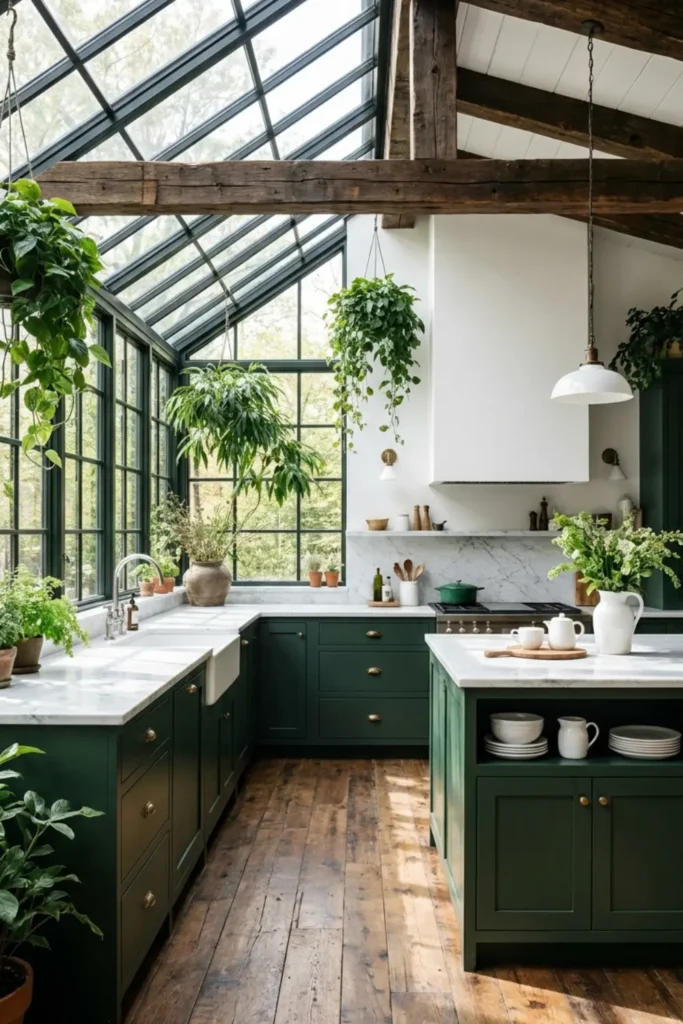
Dark green in a glass kitchen sounds counterintuitive, and that is exactly why it works. The abundance of natural light pouring in from above neutralizes the depth of a moody forest green cabinet, keeping the room bright while giving it real character. I always use green on the lower cabinets only, letting the upper walls and glass stay pale. The contrast feels bold, grounded, and surprisingly easy to live with.
Floating Open Shelves Across Windows
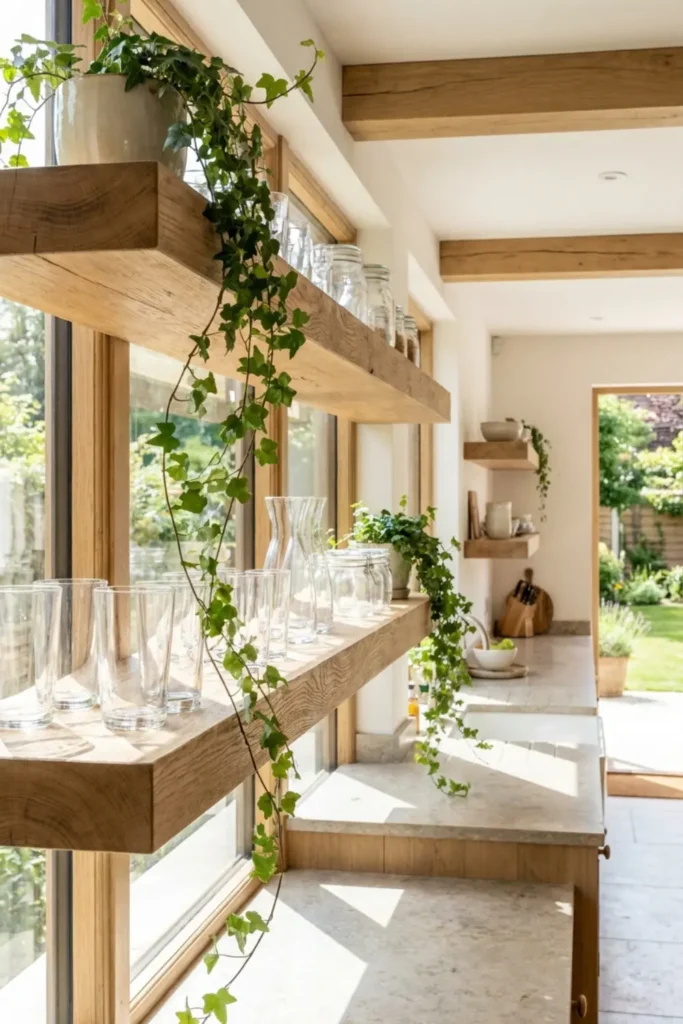
Glass kitchens lose their upper cabinet wall space almost entirely, and that is the first thing clients worry about. My answer is always floating shelves mounted directly across the window. Thick oak shelves with clear glassware and trailing ivy let the light filter through beautifully while still giving you functional storage. The styling opportunities are endless, and they become a focal point that is far more interesting than a standard cabinet door ever could be.
High-End Marble in a Sun-Drenched Kitchen
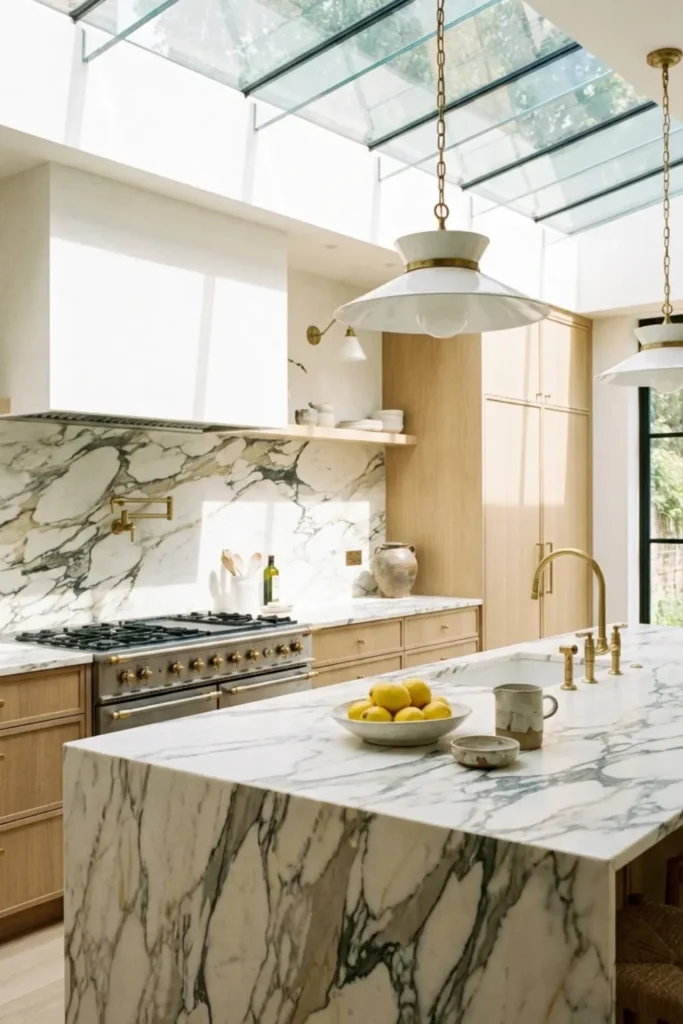
Natural light is the best thing that can happen to real marble. The deep veining in Calacatta stone comes alive under direct sun in a way that no artificial lighting ever replicates. I always recommend honed rather than polished marble in a solarium kitchen to avoid glare, but even with a matte finish, the movement in the stone becomes the room’s quiet showpiece. It is one of those material choices that genuinely improves the longer you look at it.
UV-Tinted Glass for Temperature Control
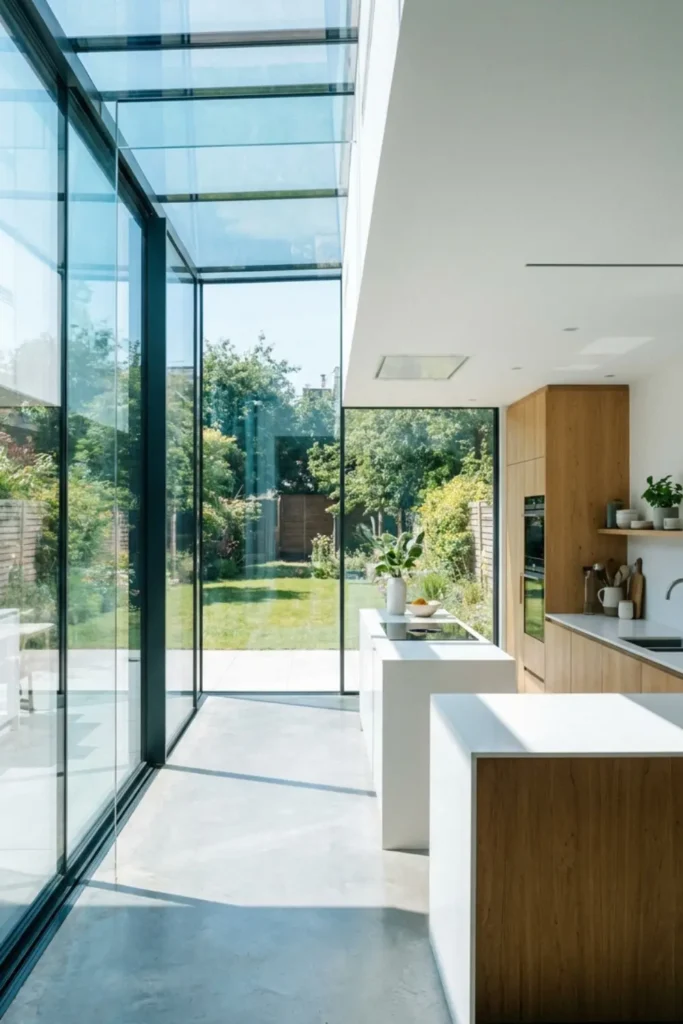
Nobody warns you about this early enough, so I will. A south-facing glass kitchen without UV protection becomes genuinely unbearable by mid-July. The heat builds fast and your cabinets start fading within a few years. UV-blocking glass or applied window film solves both problems at once. It keeps the space comfortable, protects your finishes, and still lets beautiful diffused light pour through. This is the one practical upgrade I consider non-negotiable in any solarium kitchen project.
A Vintage Sunroom Kitchen Revival
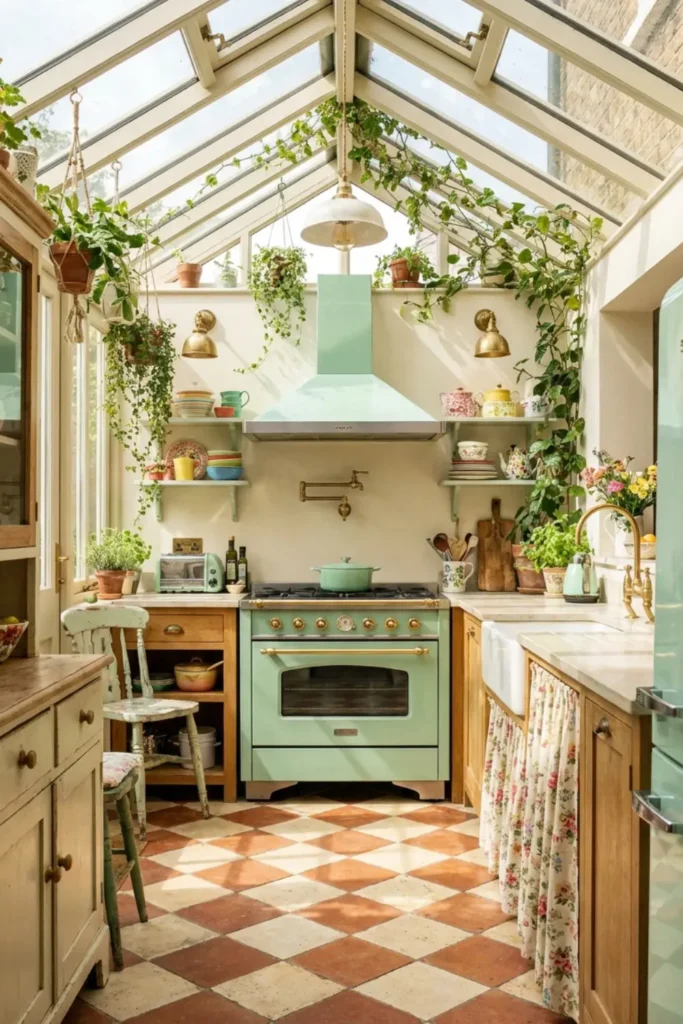
Not every solarium needs to be sleek and new. Some of the most charming kitchens I have worked in were older sunrooms that just needed a confident point of view. Checkerboard floors, a retro colored stove, and antique brass details under a pitched glass roof create something full of personality and warmth. Leaning into the quirks of an existing structure rather than fighting them almost always produces a more interesting result than starting from scratch.
Sleek Scandi-Style Glass Extension
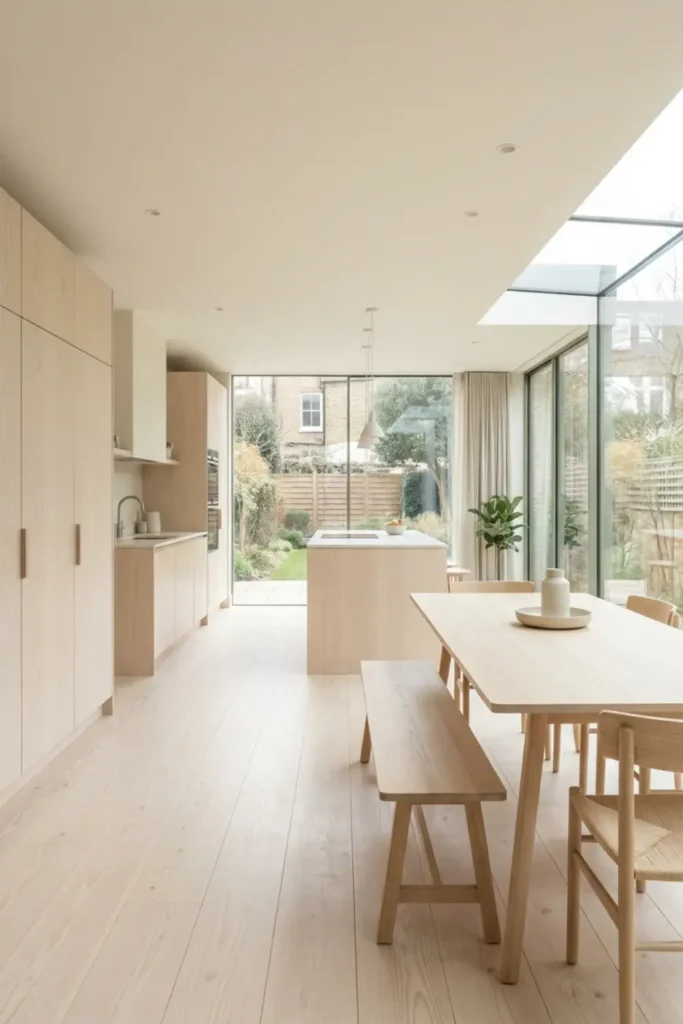
Scandinavian design and glass extensions are a natural pairing because both are built around the same obsession: bringing as much light into daily life as possible. I love using pale ash wood, simple low-profile furniture, and completely bare glass walls with no fussy treatments. The result is calm, breathable, and deeply functional. There is a hygge quality to eating breakfast in a space this uncluttered that genuinely changes how your mornings feel.
Budget-Friendly Faux Solarium Nook
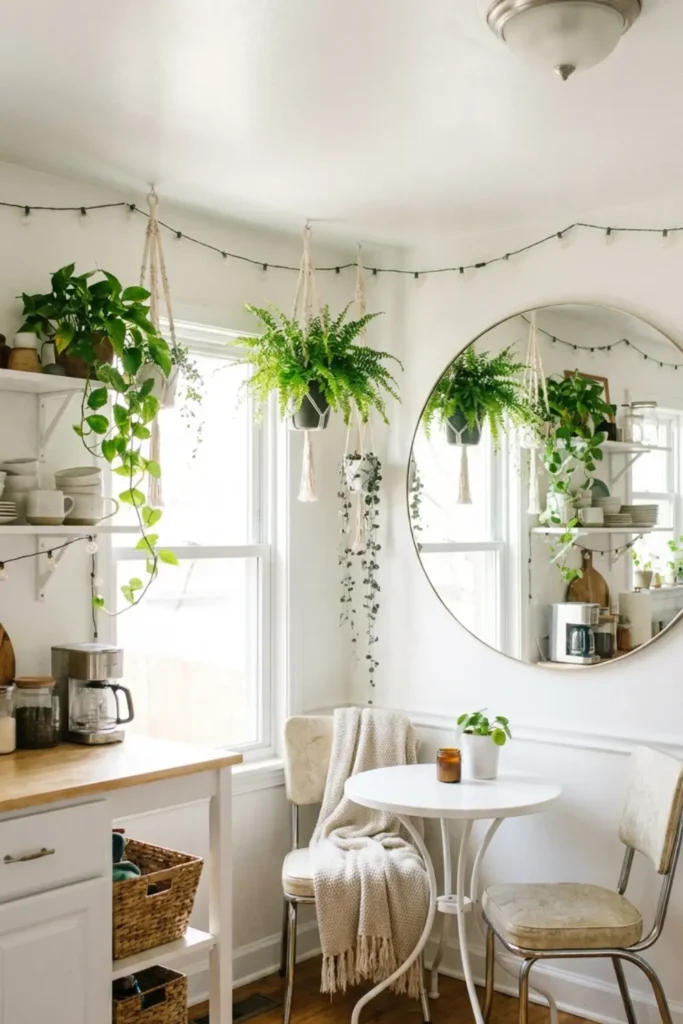
A full glass extension is not the only path to that sunlit kitchen feeling. When budget is the real constraint, I work with what is already there. A large mirror on the wall opposite your main window doubles the perceived light instantly. Fresh white paint, a collection of hanging plants, and a reclaimed wood shelf can transform an ordinary corner into something that feels deliberately designed. The solarium effect is about light and life, and both are achievable without construction.
Mixing Brass Finishes for a Warm Glow
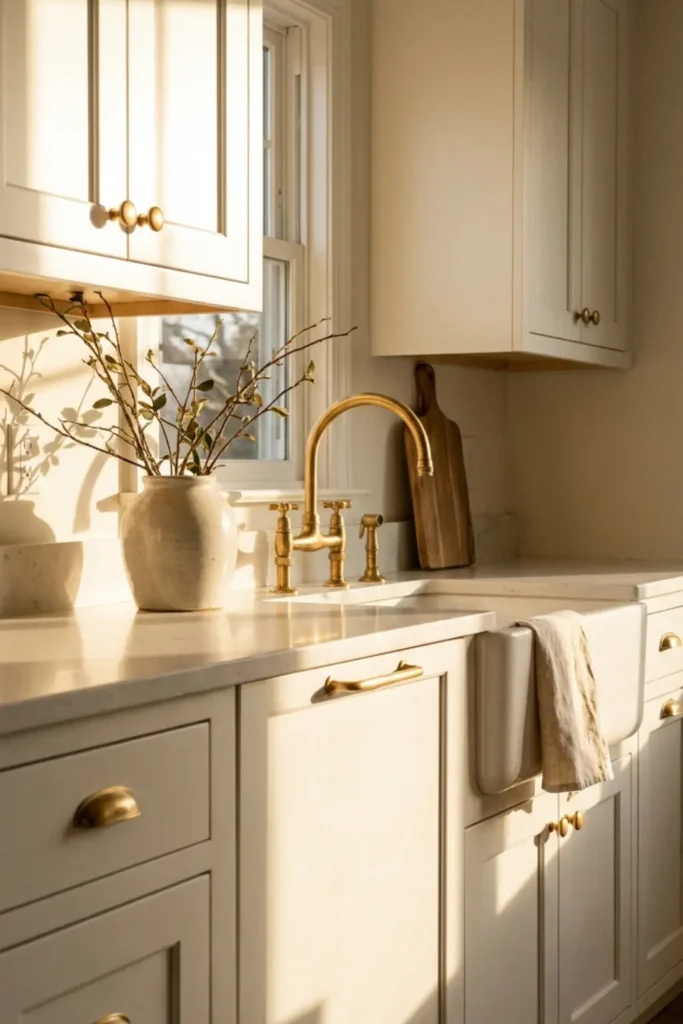
Brass hardware in a solarium kitchen is genuinely one of those details that photographs poorly and lives beautifully. When late afternoon golden light catches an unlacquered brass faucet or cabinet pull, the warmth it throws across the room is impossible to replicate with any other finish. I prefer unlacquered brass specifically because it ages and patinas over time, developing a depth that polished or coated versions never achieve. In a sunlit space, it becomes something close to magical.
Slim Profile Islands to Keep Views Open
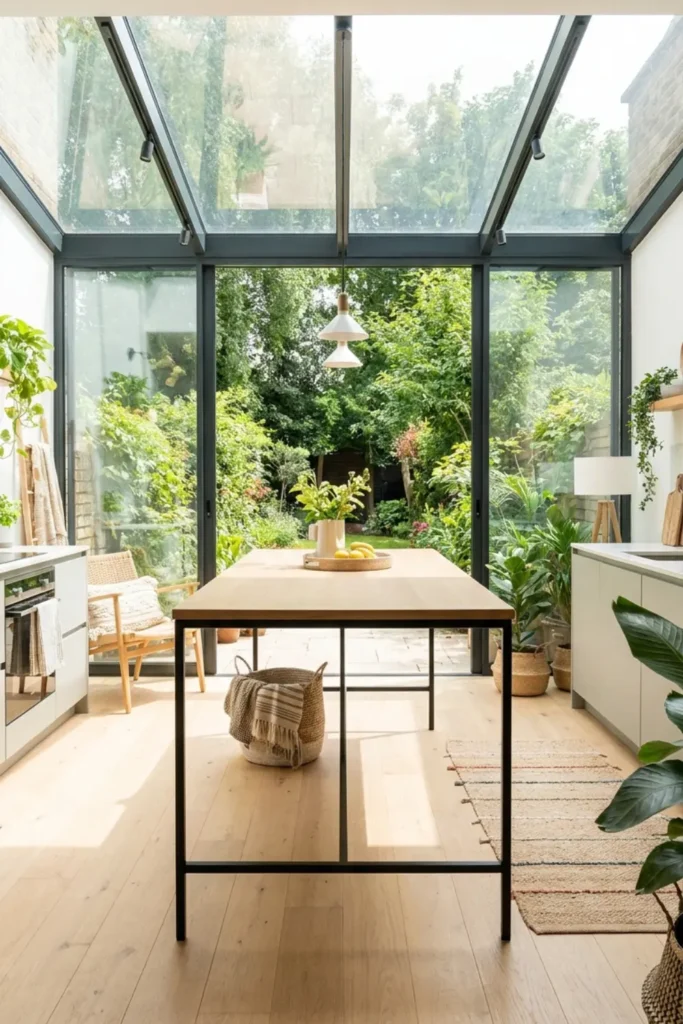
The biggest layout mistake I see in solarium kitchens is a bulky, oversized island that eats up the very views the glass walls were built to frame. A slim island with open legs or a narrow waterfall profile keeps sightlines clear straight through to the garden. It also makes the room feel larger and more connected to the outside. Less mass at floor level means more light, more flow, and a space that actually breathes the way it was designed to.
Integrated Herb Garden Solarium Windows
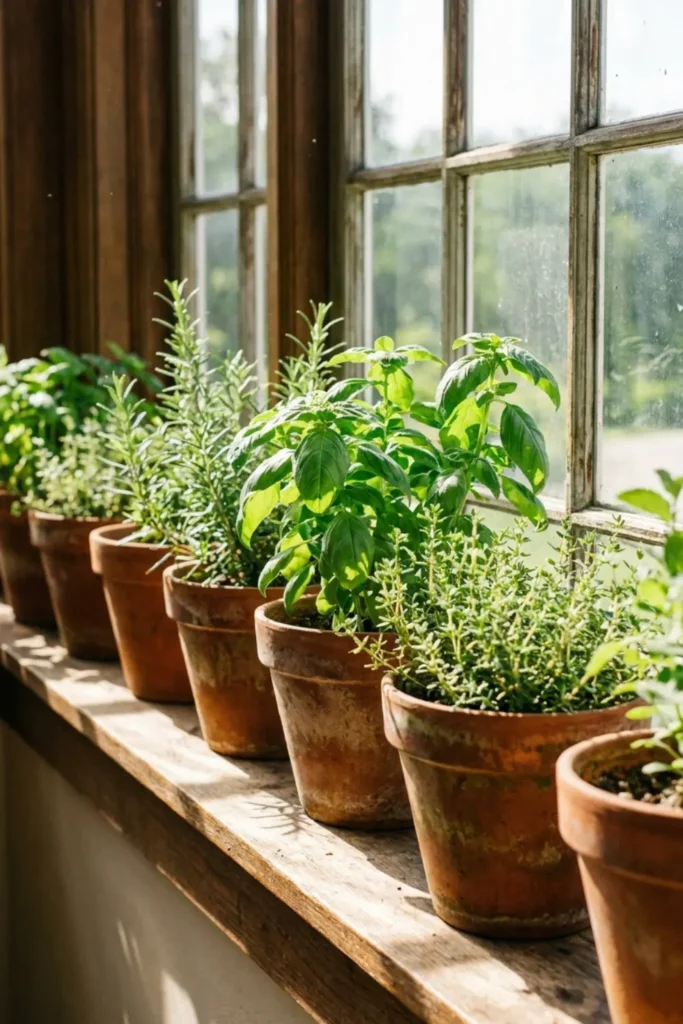
A solarium kitchen has something a standard kitchen will never have: enough consistent direct sunlight to actually grow culinary herbs indoors year-round. I always recommend deepening at least one window sill to accommodate a row of terracotta pots. Fresh basil, rosemary, and thyme thrive in that kind of light and make the kitchen smell extraordinary. It blurs the line between cooking space and growing space in the most satisfying, practical way possible.
Transitioning to Evening: Low Ambient Lighting
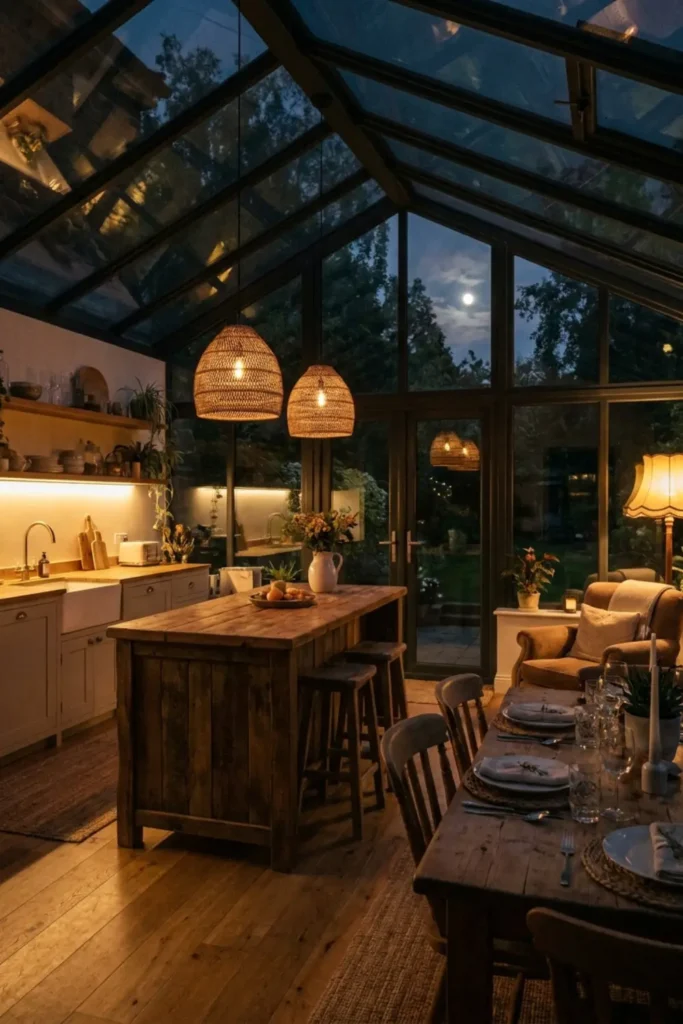
Here is something nobody talks about enough. After dark, an unlit glass solarium becomes a black mirror reflecting everything back at you. It loses all its warmth instantly. The fix is layered low ambient lighting: under-cabinet LED strips, dimmed pendants, and one or two warm floor lamps if the space allows. The light reflects softly off the glass and creates an entirely different kind of beauty, one that feels intimate and cozy rather than open and airy.
Conclusion
Twenty-eight ideas and one consistent truth runs through all of them: a solarium kitchen is not just a design choice, it is a decision about how you want to feel in your home every single day. Whether you start with a greenhouse window over the sink or go all in on a full glass extension, the goal is the same. More light, more life, and a kitchen that earns its place as the best room in the house. Save your favorites, start small, and build toward the space you actually want to cook in.
FAQs
Do solarium kitchens get too hot?
They can, but UV-blocking glass and proper ventilation solve this completely. Bi-fold doors, roof vents, and solar control glazing keep the temperature comfortable even in summer without sacrificing light quality.
Can I add a glass roof to an existing kitchen?
Yes, but it requires a structural assessment first. A qualified architect or builder will check your existing walls and foundations before any glass roof extension can be planned or approved.
What is the best flooring for a sunlit kitchen?
Stone and terracotta are my top choices. Both act as thermal mass, absorbing heat during the day and releasing it slowly at night, which helps regulate the temperature of your glass kitchen naturally through every season.