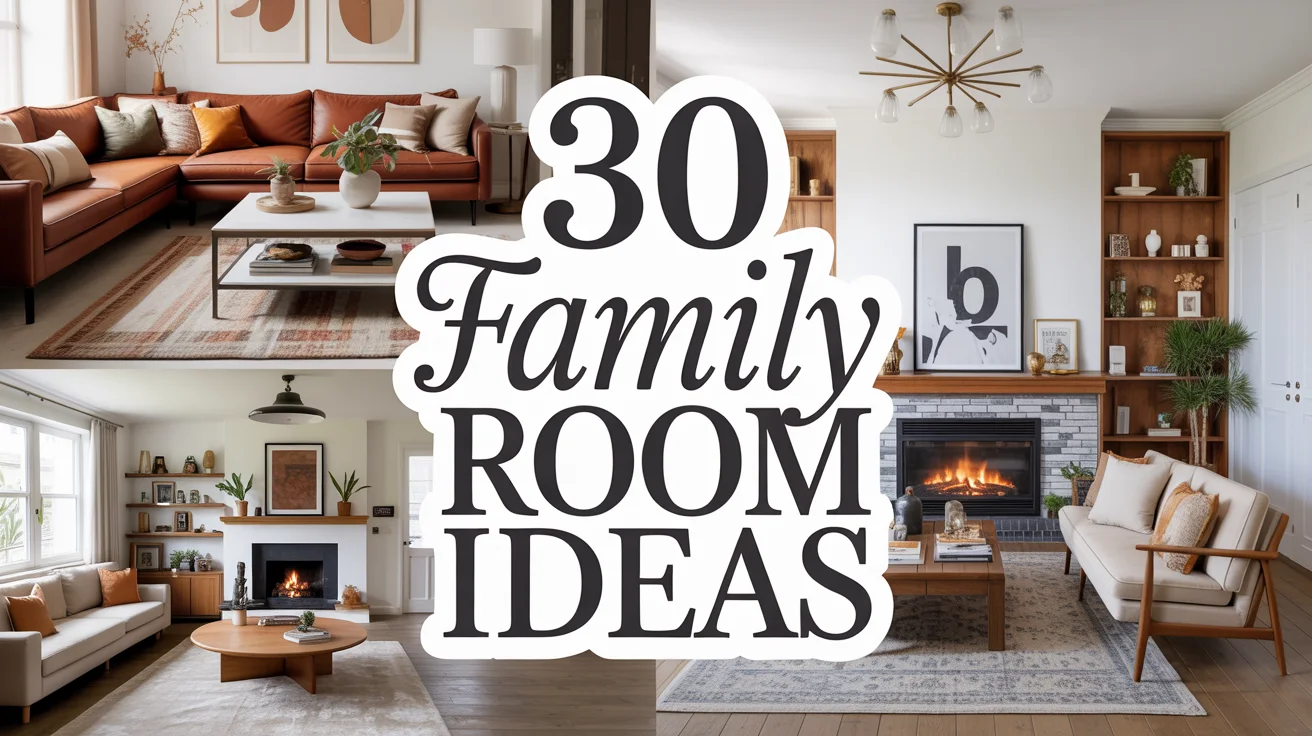
A great family room does three things well: it feels comfortable, looks good, and works for real life. That means enough seating for everyone, storage that actually gets used, and a style that holds up after years of movie nights and morning coffee.
The 30 ideas below cover layout, furniture, color, lighting, and decor, so you can build a space your whole family loves.
Add an Organic Modern Sectional
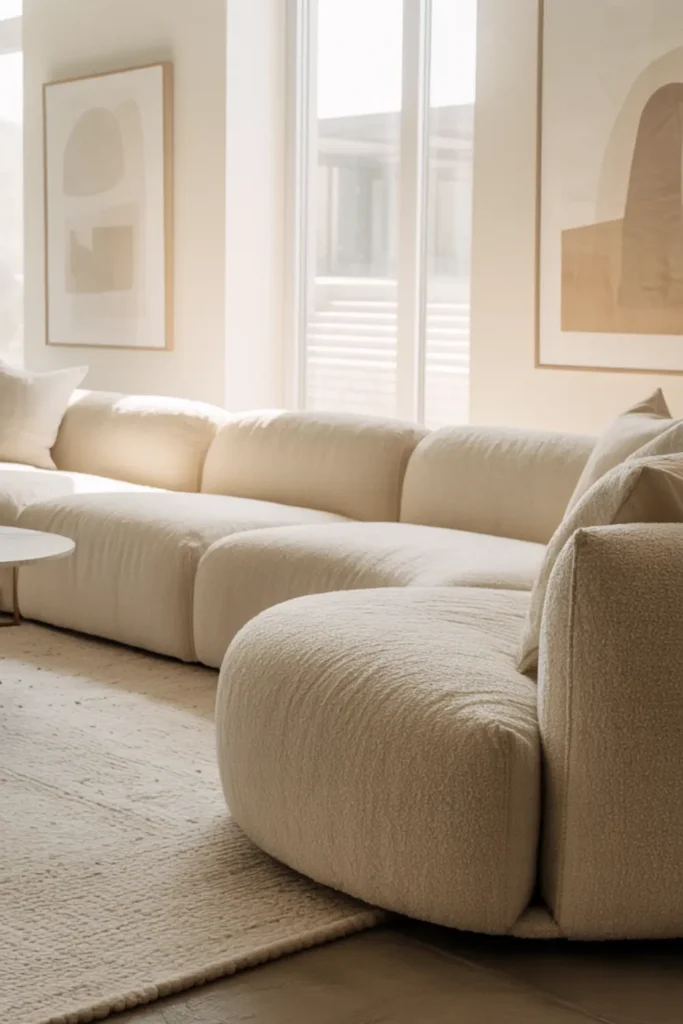
A low-profile, curved sectional does more than just look good. It opens up the room visually, makes traffic flow easier, and feels relaxed without looking sloppy. Boucle or linen fabric in cream or oat tones keeps the palette soft and elevated.
Go for an L-shape or U-shape depending on your room size. Keep the legs short and the silhouette clean. This is the kind of sofa that makes a room feel designed, not just furnished.
Build a Hidden Media Wall
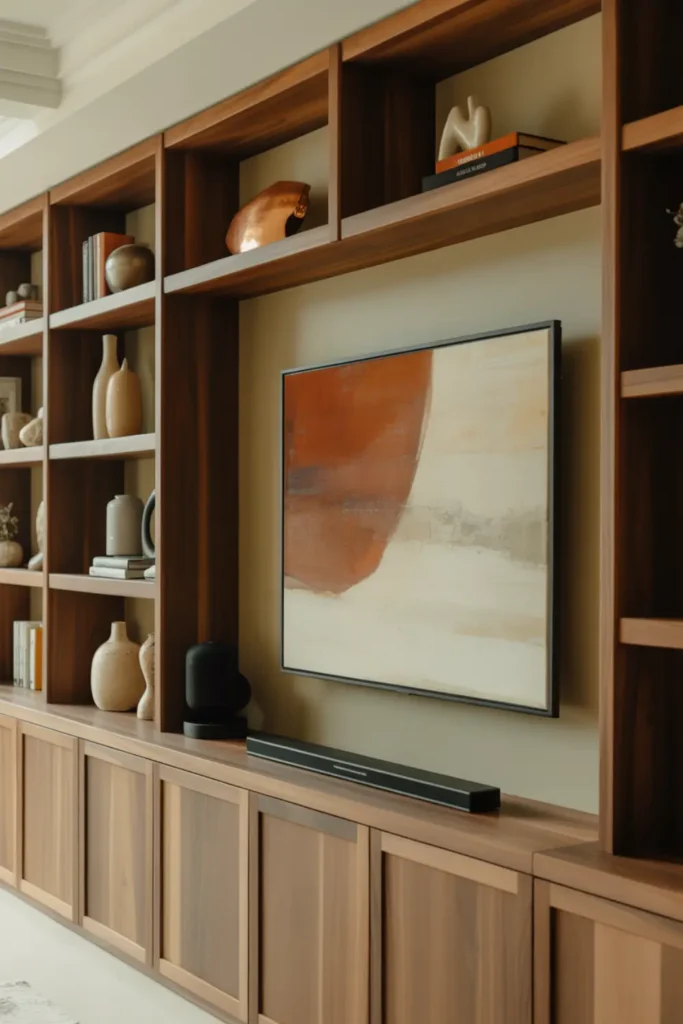
The TV does not have to be the first thing people notice. A built-in media wall with custom cabinets lets you tuck away wires, routers, and consoles completely out of sight.
Use a Samsung Frame TV to display art when nothing is playing. Surround it with open shelves styled with books, ceramic vases, and trailing plants. Paint the entire wall in a deep tone like charcoal or walnut to make the setup feel intentional and architectural.
Maximizing seating is easier when you adopt open-concept living layouts that merge different areas of the house.
Embrace Japandi Minimalism
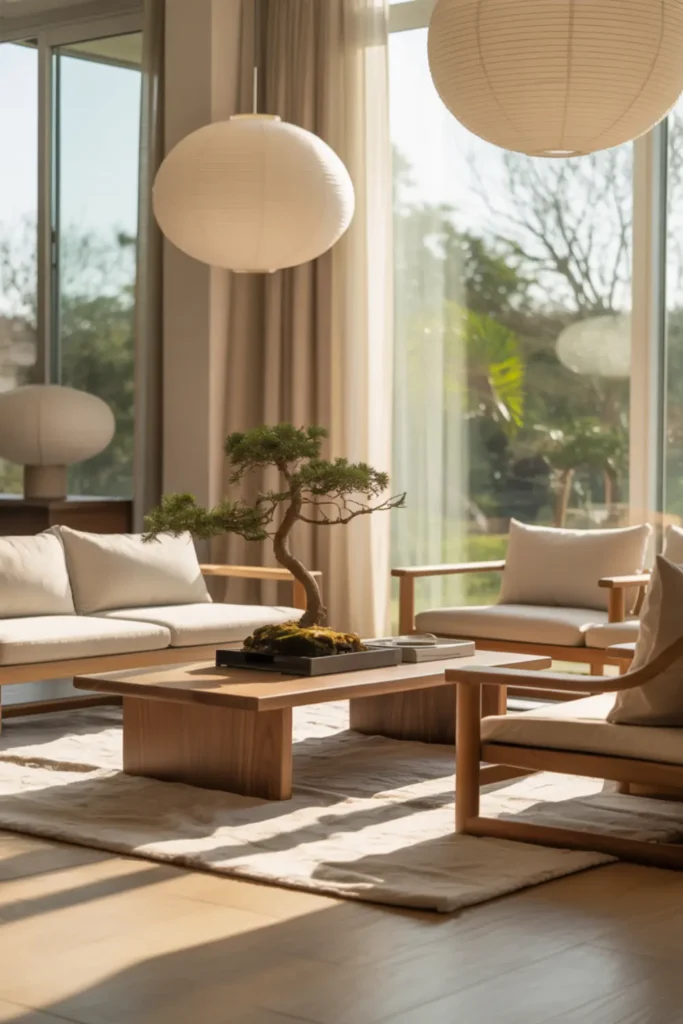
Japandi blends Japanese simplicity with Scandinavian warmth. The result is a calm, clutter-free room that still feels livable and cozy.
Stick to low-slung wooden furniture, neutral linen textiles, and a very edited decor shelf. Add one bonsai or ceramic pot for a natural touch. Nothing is overdone. Every piece has a purpose. This style works especially well for families who want a peaceful space that does not feel sterile or cold.
Hang Floor-to-Ceiling Drapes
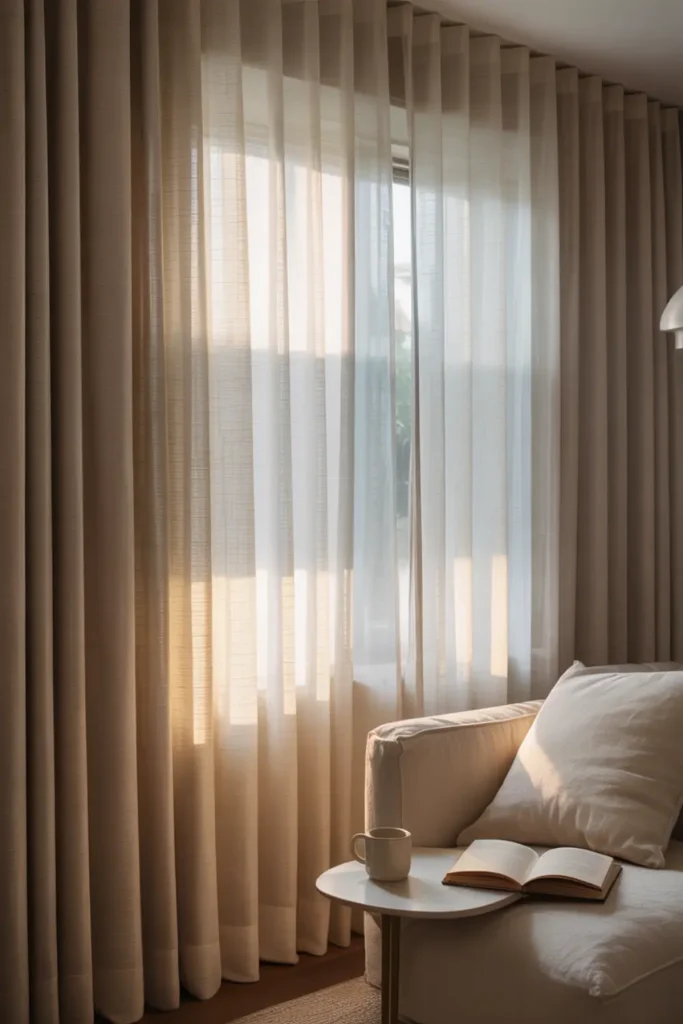
Mount your curtain rod as close to the ceiling as possible, then let the fabric fall all the way to the floor. This single trick makes any room feel taller and more polished.
Choose sheer linen in white, ivory, or warm sand. Wide panels that extend beyond the window frame make the window look bigger too. This works in small family rooms just as well as large ones, and it costs far less than renovating.
Try Color Drenching
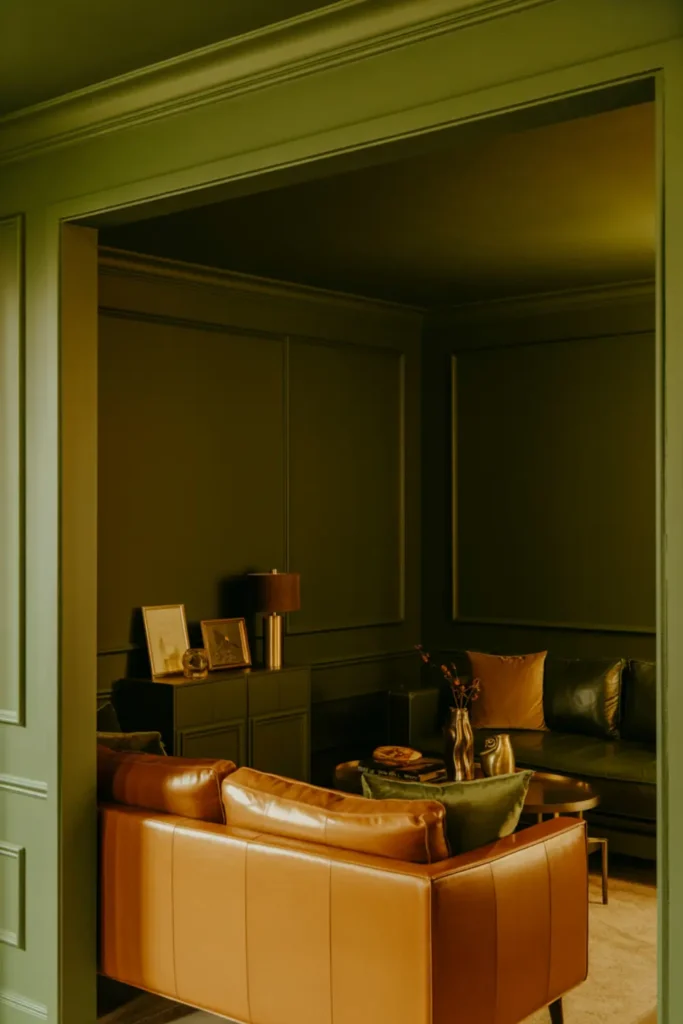
Color drenching means painting the walls, trim, and ceiling all in the same shade. The effect is rich, moody, and surprisingly sophisticated.
Deep olive green, dusty blue, and warm terracotta all work beautifully in a family room. Pair with tan leather seating and brass or matte black hardware. According to Architectural Digest, color drenching is one of the most impactful low-cost changes you can make to a room.
Layer Vintage Rugs
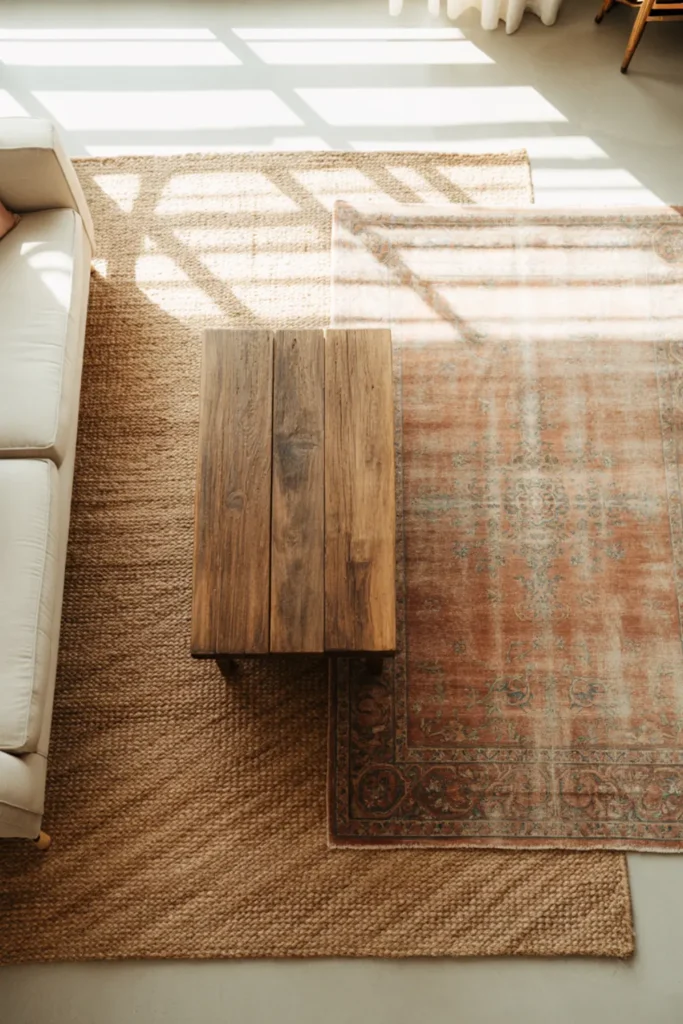
Start with a large jute or sisal rug as your base. Then layer a smaller vintage Persian or Moroccan rug on top, slightly off-center or angled. This adds instant warmth, pattern, and visual depth to the room.
It also helps define zones in an open-plan space. The mix of textures, natural fiber underneath and worn, colorful pattern on top, feels collected and lived-in rather than catalog-perfect. Terracotta, rust, and faded navy all pair well with neutral furniture.
Style with Bouclé Chairs
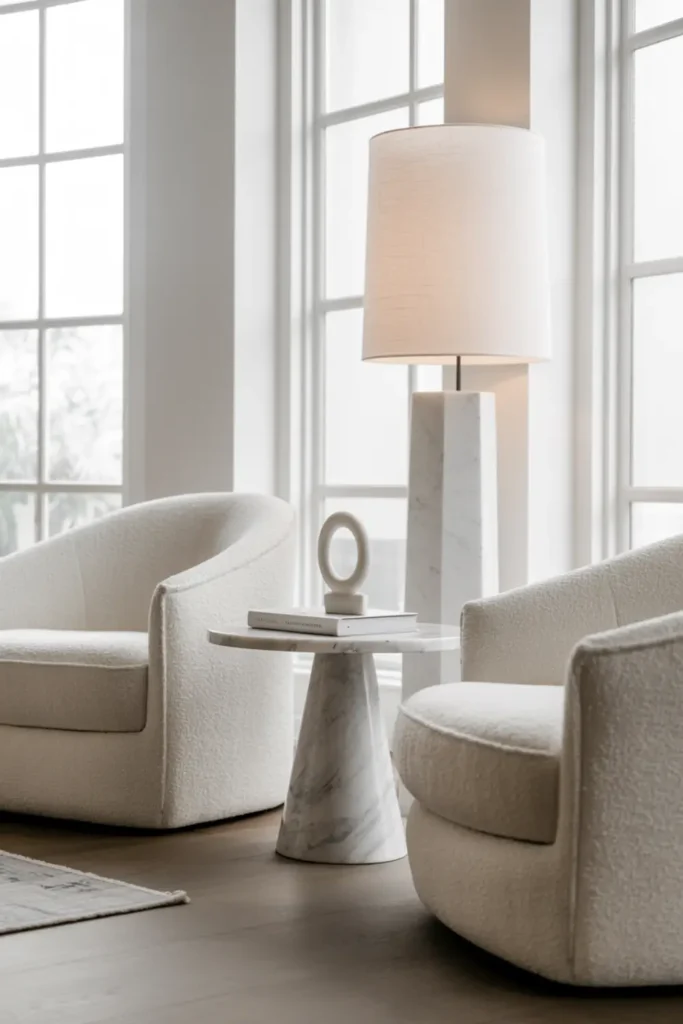
Bouclé fabric has a nubby, looped texture that catches light and feels incredibly soft. Two matching bouclé accent chairs across from a sofa instantly make the seating area feel more complete and cozy.
Pair them with a round marble or travertine side table and a tall arc floor lamp. The contrast of soft fabric against hard stone looks intentional and high-end. Stick to white, cream, or warm grey to keep the palette calm and easy to style around.
Create a Symmetrical Fireplace
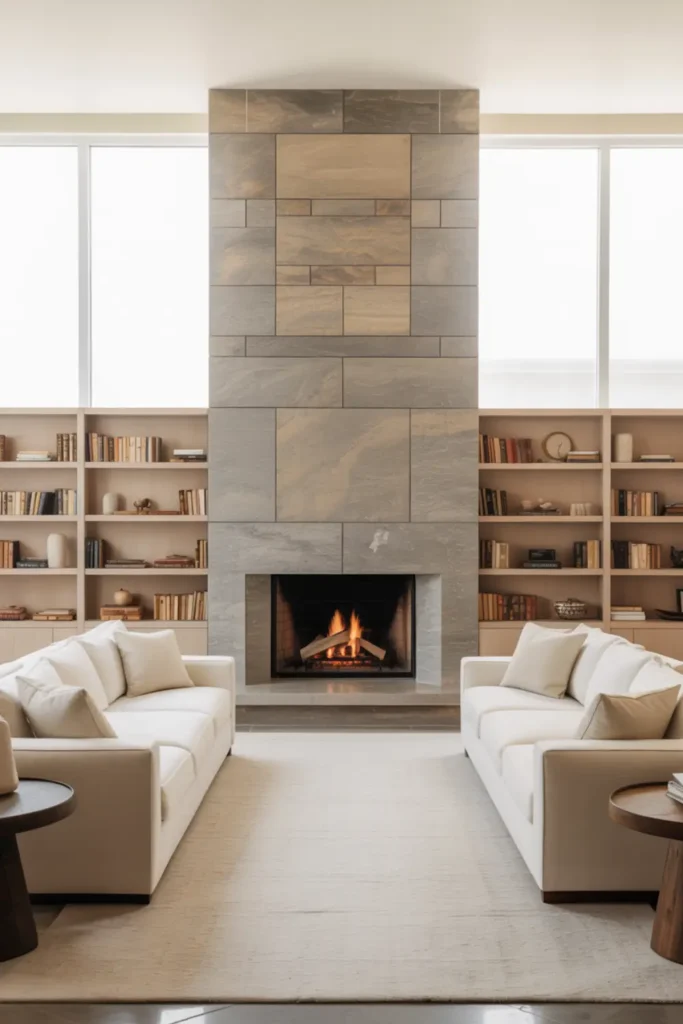
Symmetry is one of the easiest ways to make a room feel polished. Place matching sofas, chairs, or built-in bookshelves on both sides of the fireplace to anchor the space.
This layout draws the eye straight to the fireplace and creates a strong, balanced focal point. It works especially well in rectangular rooms. Add matching table lamps, identical vases, or mirrored sconces on each side to reinforce the effect without overdoing it.
Focus on Biophilic Greenery
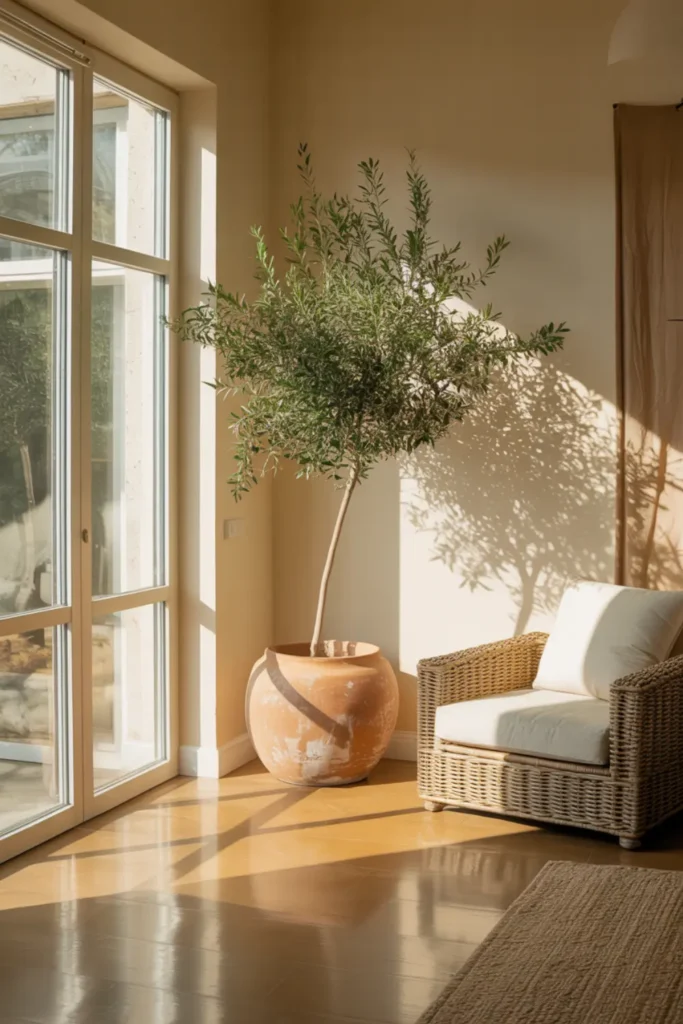
A large indoor tree changes the entire energy of a room. An olive tree, fiddle leaf fig, or tall ficus in a textured terracotta or stone pot acts as living sculpture.
Place it in a bright corner near a window where it gets natural light. The organic shape and movement of the leaves soften hard furniture lines and add color without using paint. As noted by House Beautiful, biophilic design consistently ranks among the top trends for creating calming, livable interiors.
Use an Oversized Ottoman
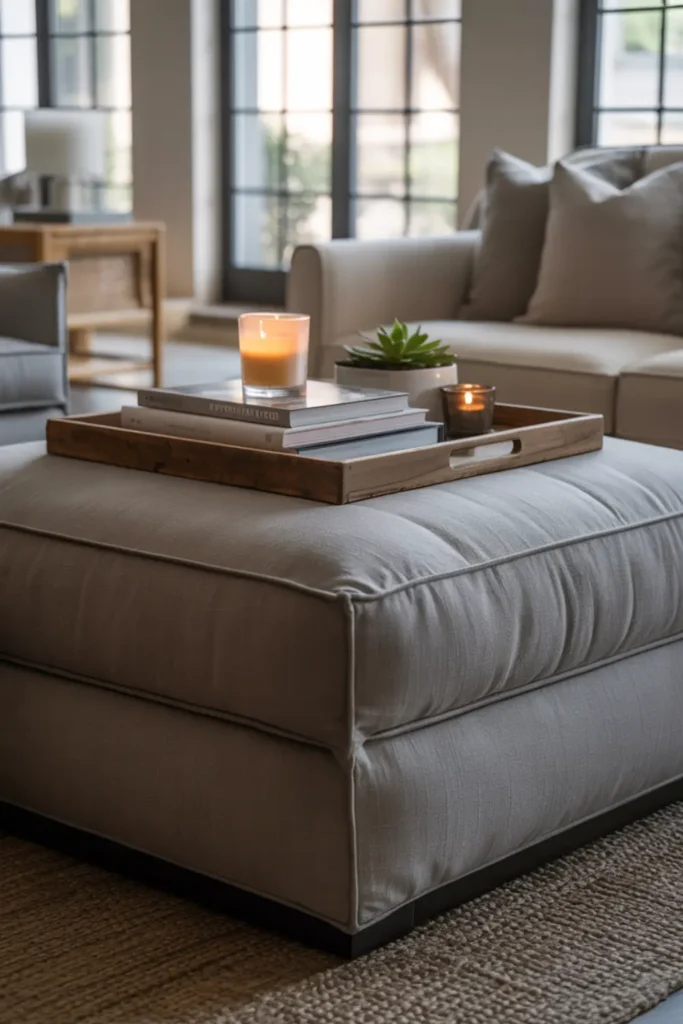
Swap a hard coffee table for a large upholstered ottoman and the whole room feels softer and more family-friendly. Kids can sit on it, rest their feet, or use it for game nights without anyone getting hurt.
Style the top with a wooden tray holding a candle, a few books, and a small plant to keep it looking intentional. Choose a performance fabric in grey, cream, or camel so it holds up to daily use without showing every mark.
Paint a Moody Accent Wall
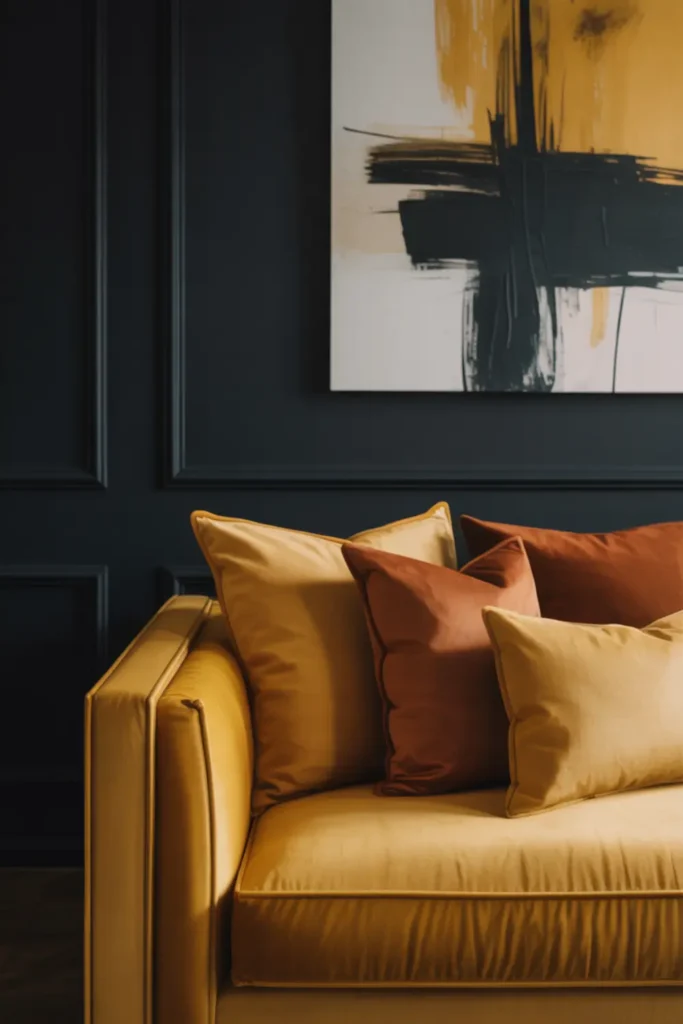
One dark wall can completely transform a flat, boring room. Charcoal, navy, or deep forest green behind the sofa or TV adds depth and makes every piece of furniture pop in front of it.
You do not need to paint the whole room. Just one wall does the job. Add warm lighting, a textured throw, and bold art to lean into the moodiness. The contrast between dark walls and light furniture is one of the most striking looks in modern home design.
Invest in Performance Fabrics
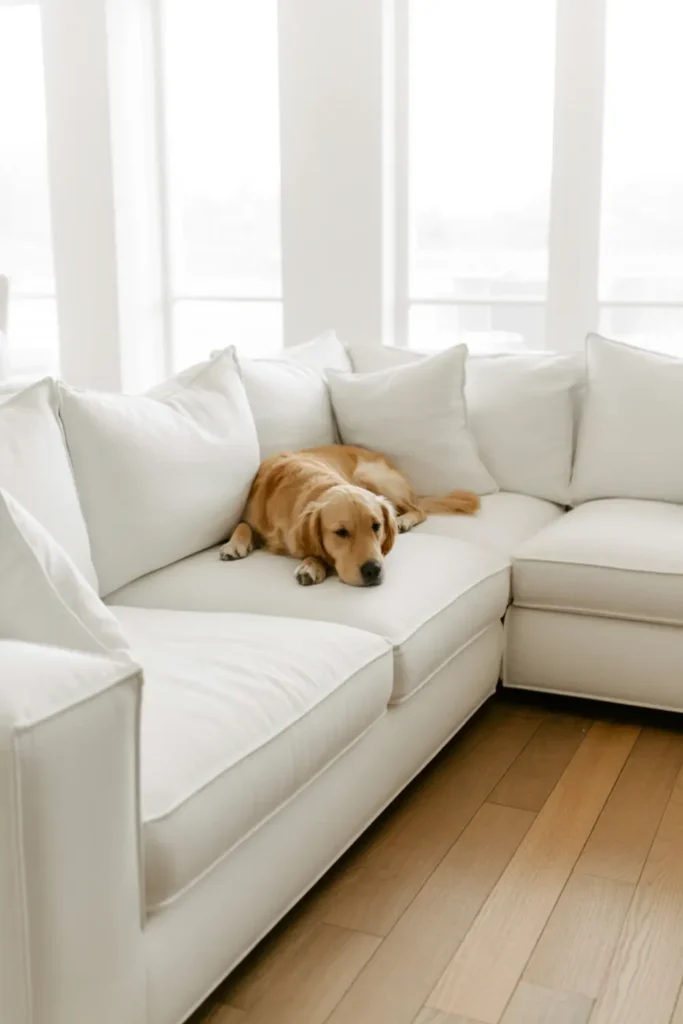
Performance fabrics look just like regular upholstery but resist stains, spills, and pet hair far better. Brands like Crypton and Sunbrella make sofas that wipe clean with a damp cloth, even after juice spills or muddy paws.
This matters most in a family room that gets daily use. You can choose white or cream without the anxiety. The fabric holds its shape and color longer too, which means your sofa stays looking new well past the first year of heavy use.
Curate a Floating Shelf Gallery
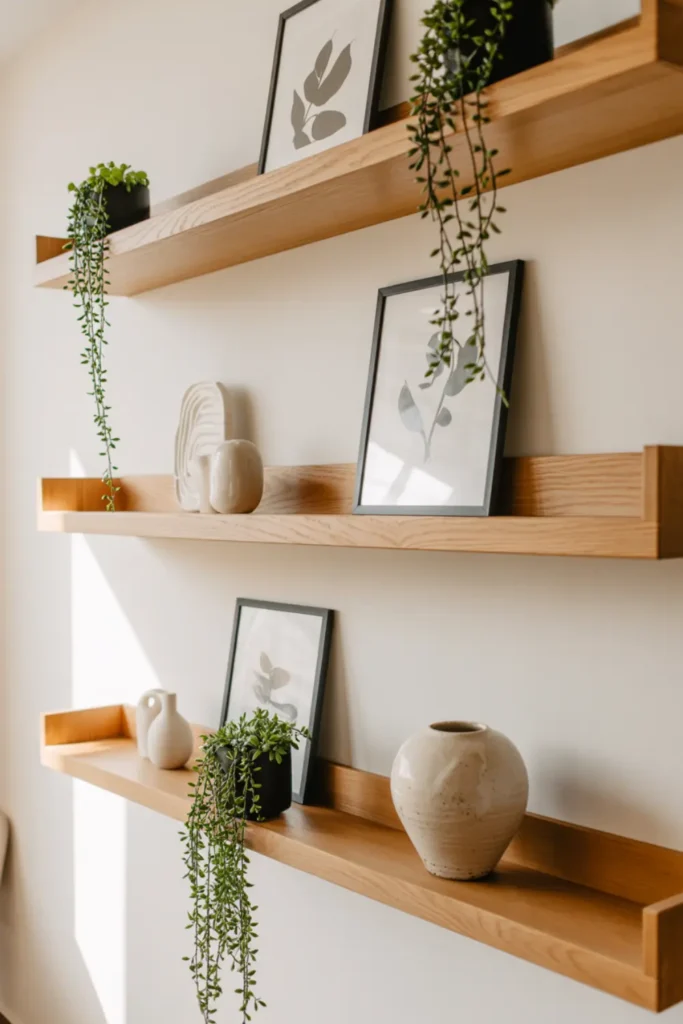
Three long floating shelves stacked vertically on one wall give you a flexible, ever-changing display. Lean framed art instead of hanging it so you can swap pieces easily without new nail holes.
Mix in trailing pothos or ivy, a few ceramic pots, and a stack of design books. Keep roughly 60% of the shelf space filled and leave the rest open. Overcrowded shelves look cluttered. Edited shelves look curated. The difference is just restraint.
Try a Double Sofa Layout
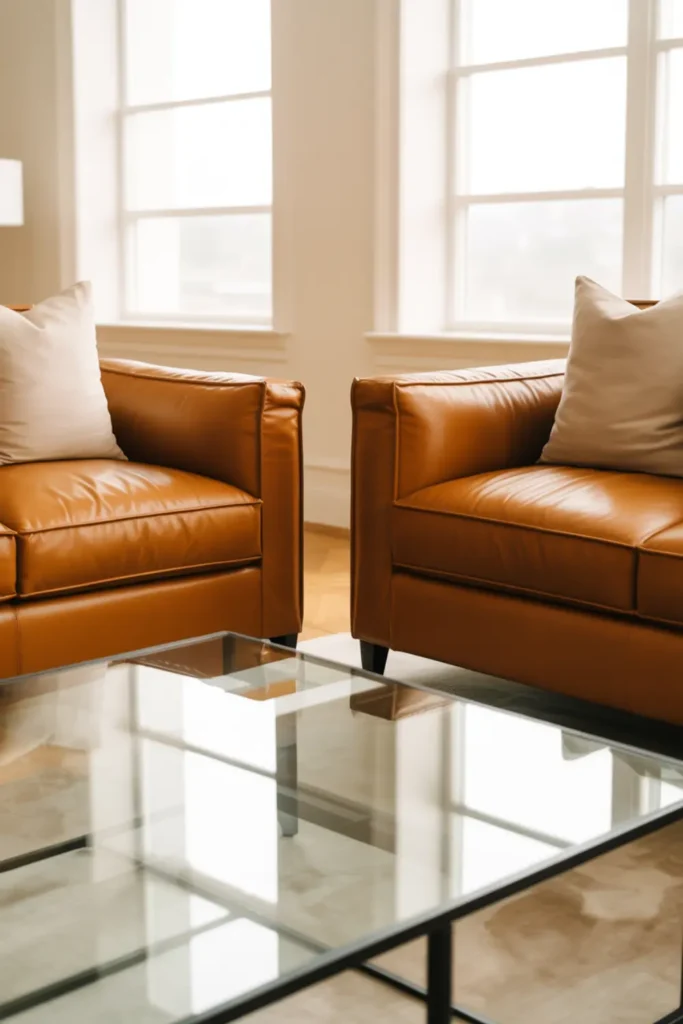
Two matching sofas facing each other is a classic layout that works better than a sectional in many rooms. It creates a natural conversation zone and keeps the room feeling open on all sides.
Place a large rectangular coffee table or ottoman in the middle to anchor the pair. This setup works especially well for bigger families or homes that host often. Matching sofas in leather, linen, or boucle both look polished and make the space feel deliberately designed.
Add Checkerboard Accents
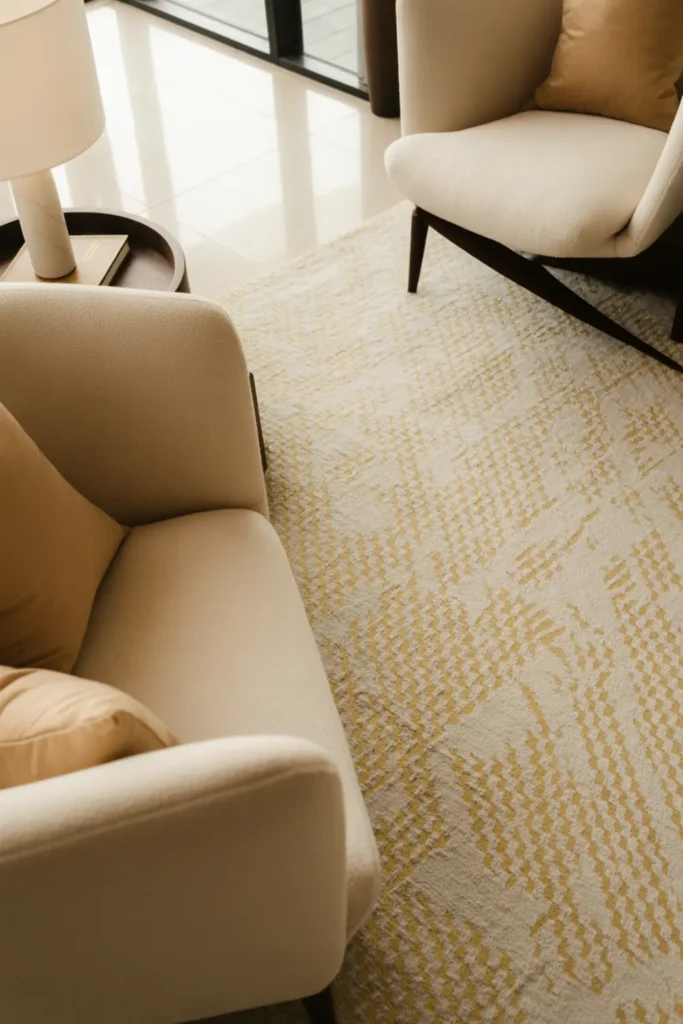
The checkerboard trend does not have to be loud. A subtle beige and cream checkerboard rug, a patterned throw pillow, or even a small side table with a check-print tray brings in the look without overwhelming the room.
It adds graphic energy to an otherwise neutral space. Pair it with solid-colored furniture and simple decor so the pattern has room to breathe. This works especially well in rooms that feel too plain or too safe and need one visual point of interest.
Integrate Hidden Toy Storage
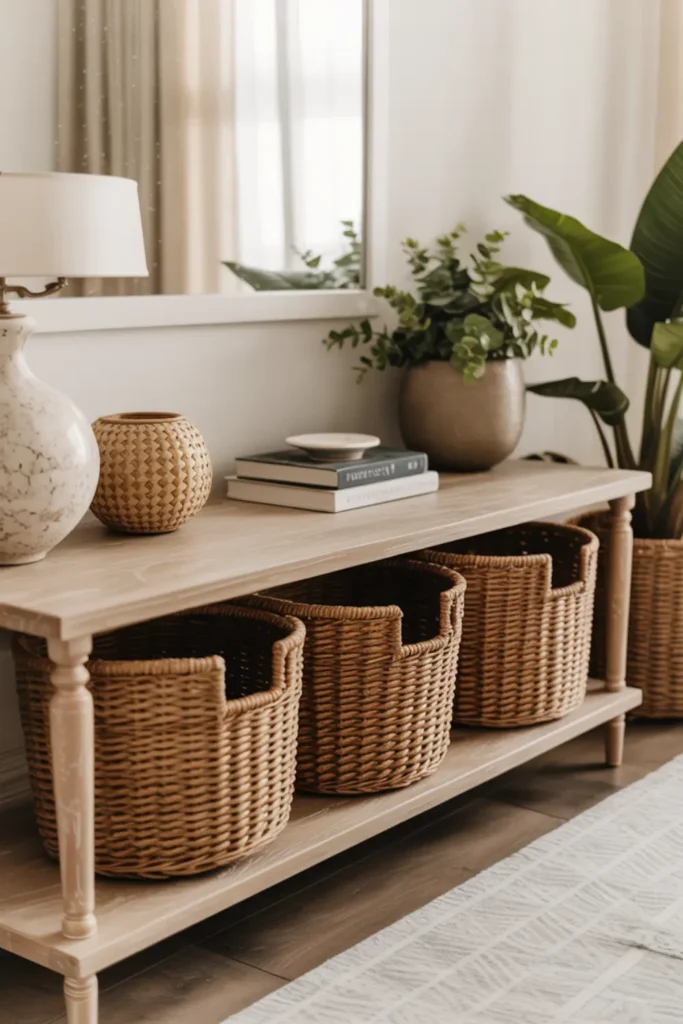
Toys do not have to live on the floor. Large woven seagrass or rattan baskets tucked under a console table or inside a storage bench keep everything off the ground and out of sight.
Label each basket by category so kids can actually put things away themselves. Choose baskets in natural tones that blend with your furniture rather than brightly colored plastic bins. The room stays looking styled even on the messiest days, and cleanup takes minutes instead of half an hour.
Apply Plaster Texture
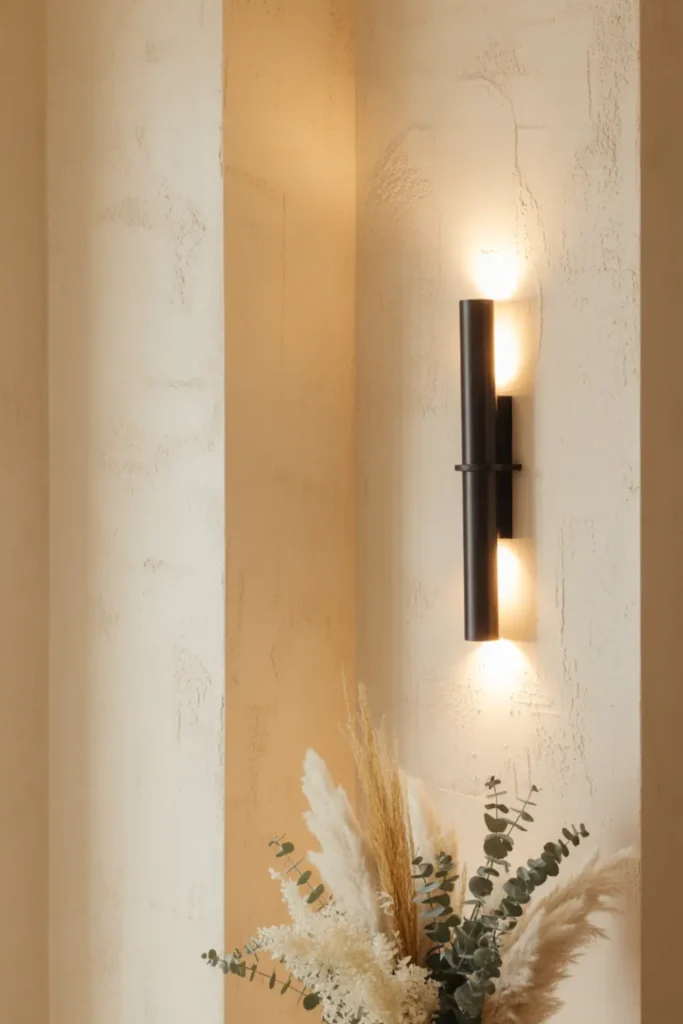
Roman clay and limewash paint both create a soft, layered wall texture that looks expensive but applies like regular paint. The finish catches light differently throughout the day, giving the room an organic, handcrafted quality.
Warm beige, greige, and off-white are the most popular tones for family rooms. You can hire a professional or apply it yourself over a weekend. Either way, the result is a wall that looks far more interesting than flat latex paint without any wallpaper or paneling.
Layer Your Ambient Lighting
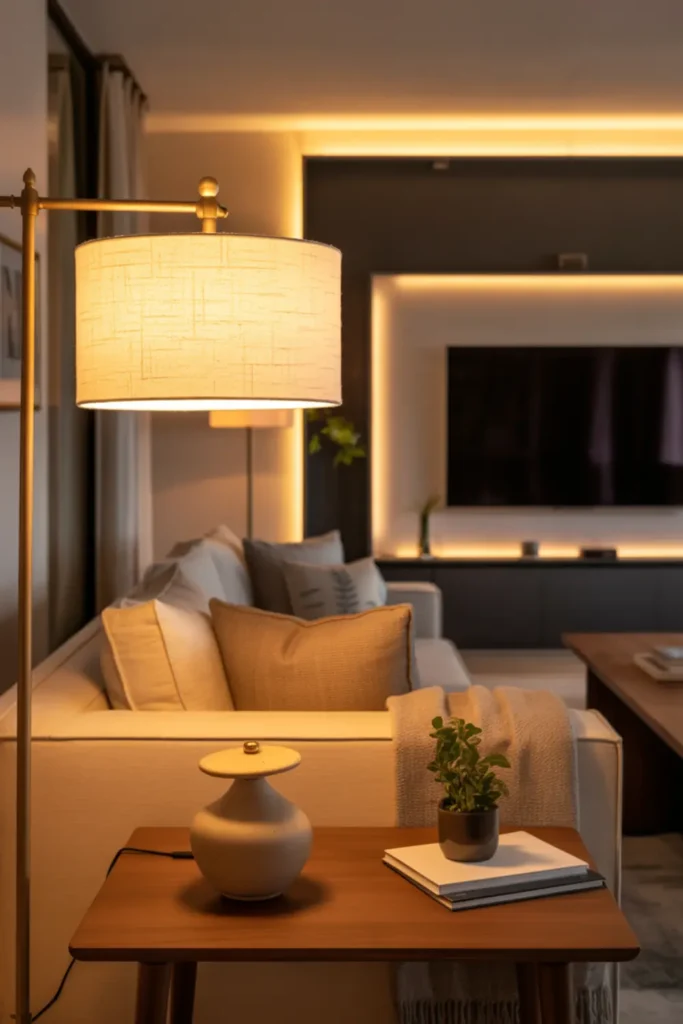
Overhead lighting alone makes a room feel flat and harsh. Replace the single ceiling fixture with a combination of sources: a brass floor lamp in one corner, a table lamp on the side table, and soft backlight behind the TV.
This creates depth, warmth, and a much more relaxing atmosphere for evenings. Use bulbs in the 2700K range for a warm amber glow. Dimmer switches on each source let you adjust the mood from bright and functional during the day to cozy at night.
Incorporate Woven Rattan
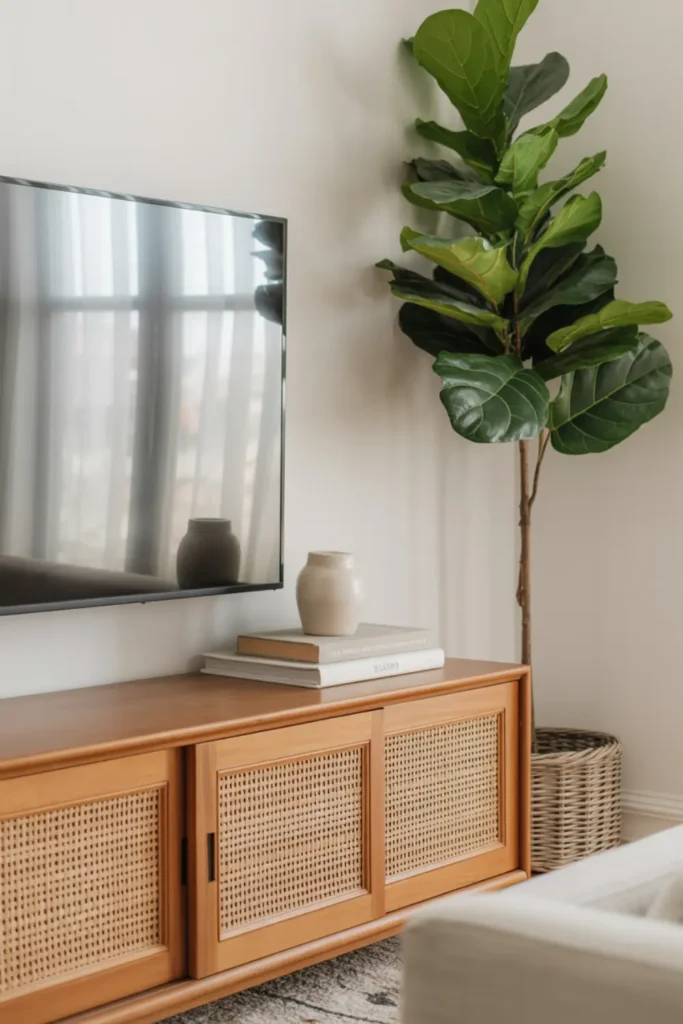
Rattan adds warmth and handcrafted texture to any family room without making it look beachy or overdone. A media console with woven rattan door panels is one of the most practical ways to bring in the material.
It hides clutter behind the doors while still letting air circulate around electronics. Rattan pendant lights work the same way, adding visual interest overhead without the weight of a heavy chandelier. Pair with linen, wood, and greenery to keep the overall feel grounded and natural.
Channel the Coastal Granddaughter Vibe
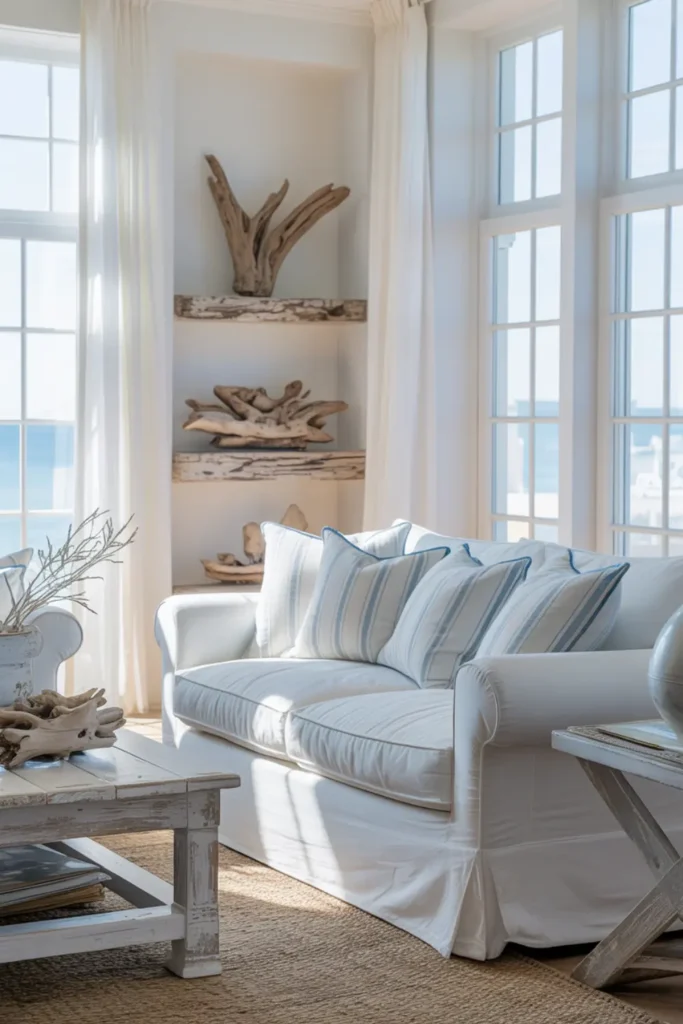
This aesthetic is relaxed, breezy, and full of soft color. Start with a white or oat slipcovered sofa, then layer in light blue and white striped throw pillows, a driftwood or whitewashed wood coffee table, and a jute rug.
Keep the palette tight: soft blue, crisp white, and warm sand. Avoid anything too nautical or themed. The goal is a room that feels like a well-loved beach house rather than a seaside gift shop. Light, airy, and genuinely comfortable.
Carve Out a Workspace
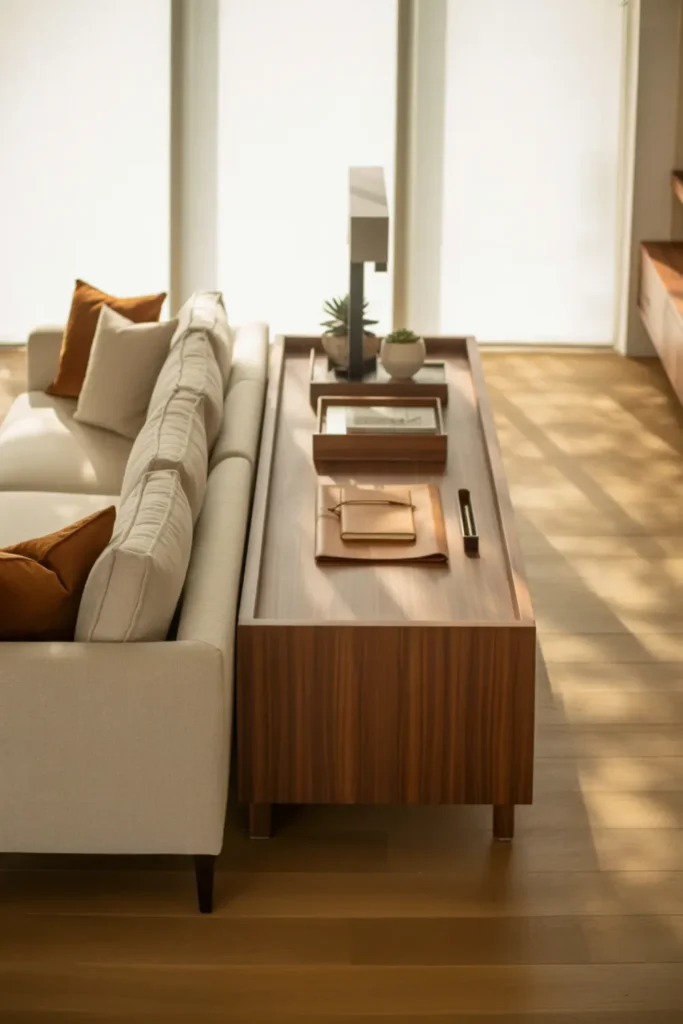
A slim wooden desk placed directly behind a low-profile sofa creates a functional home office without sacrificing any floor space. The sofa acts as a natural visual divider between the work zone and the living area.
Keep the desk simple: a laptop, a small lamp, and one or two organized accessories. Avoid letting it become a dumping ground. When styled well, this setup looks intentional rather than cramped, and it solves the work-from-home problem without needing a separate room.
Hang a Statement Chandelier
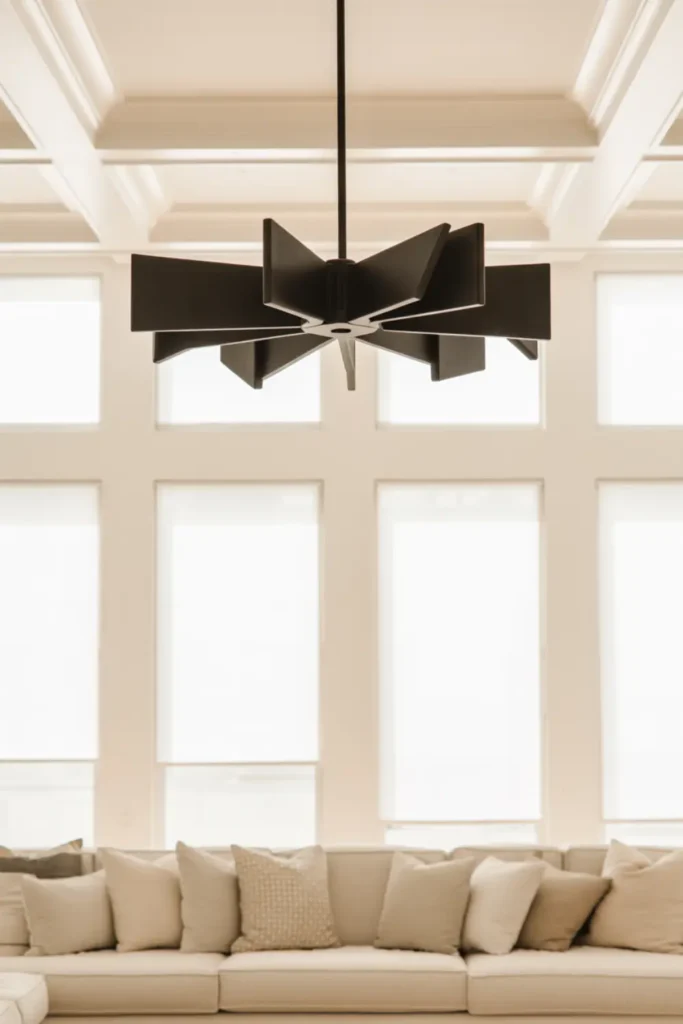
A sculptural chandelier does what no floor lamp or table lamp can: it draws the eye upward and makes the ceiling feel like part of the design. Matte black, brushed brass, and natural rattan are all strong choices for family rooms.
Replace a dated ceiling fan or basic flush mount with something that has real visual weight. You do not need a grand room for this to work. Even in a standard-height room, the right fixture adds a layer of polish the space would otherwise be missing.
Choose Low-Profile Furniture
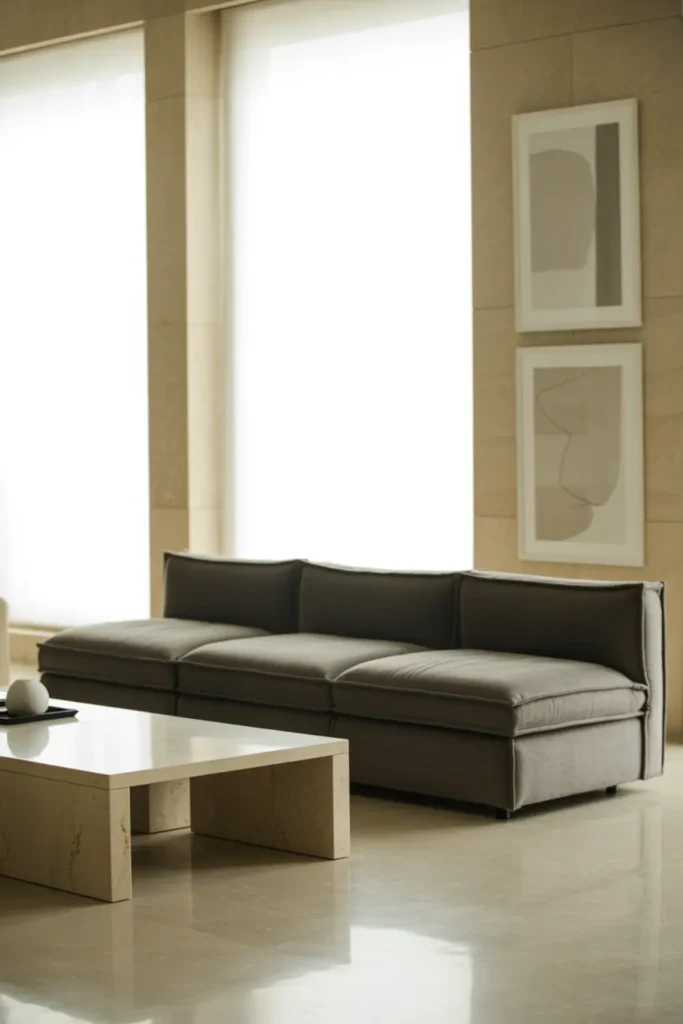
In rooms with low ceilings, tall furniture makes everything feel more cramped. Low-profile sofas, coffee tables, and media consoles keep the sightlines clear and push the eye outward rather than upward.
This creates the feeling of more space even when the square footage has not changed. Pair low furniture with vertical elements like tall floor lamps or a large leaning mirror to reintroduce some height selectively. The contrast between the two makes both feel more deliberate and considered.
Create Indoor-Outdoor Flow
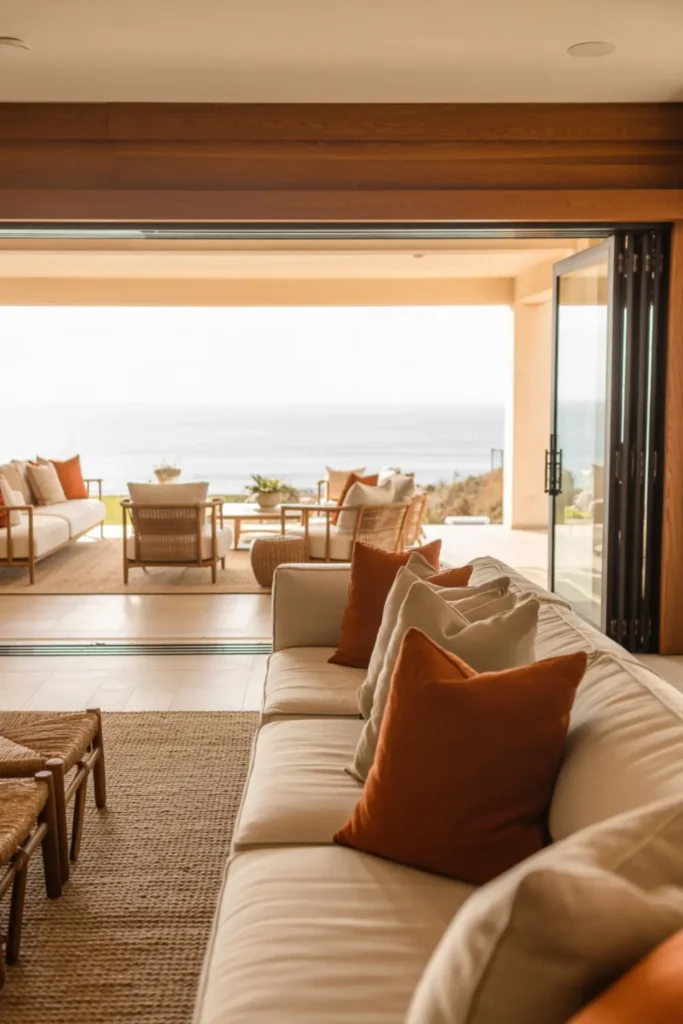
If your family room opens to a patio or backyard through sliding glass doors, treat both spaces as one. Match the indoor and outdoor furniture in color, material, and style so the eye travels seamlessly from inside to outside.
Use the same rug tone indoors as the outdoor tile or wood decking. Keep plants on both sides of the threshold. When the doors are open, the family room feels significantly larger, and the patio feels like a genuine extension of the home rather than a separate afterthought.
Design Built-in Bookshelves
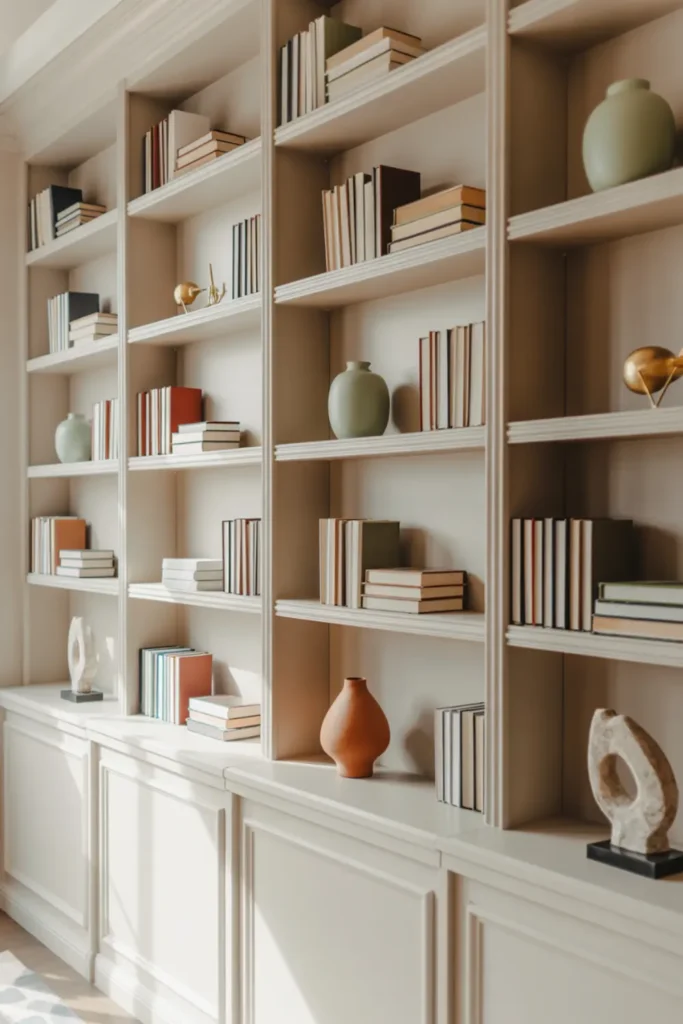
Floor-to-ceiling built-ins give a family room an architectural quality that no freestanding furniture can replicate. They frame the room, add serious storage, and create a natural place to display books, art, and collected objects.
Style them with roughly 60% books and 40% decorative objects. Group books by color for a cleaner look. Leave some shelves partially empty so the arrangement breathes. A mix of horizontal stacks, upright rows, and leaning frames keeps the display from looking too rigid or too retail.
Disguise the TV in a Gallery
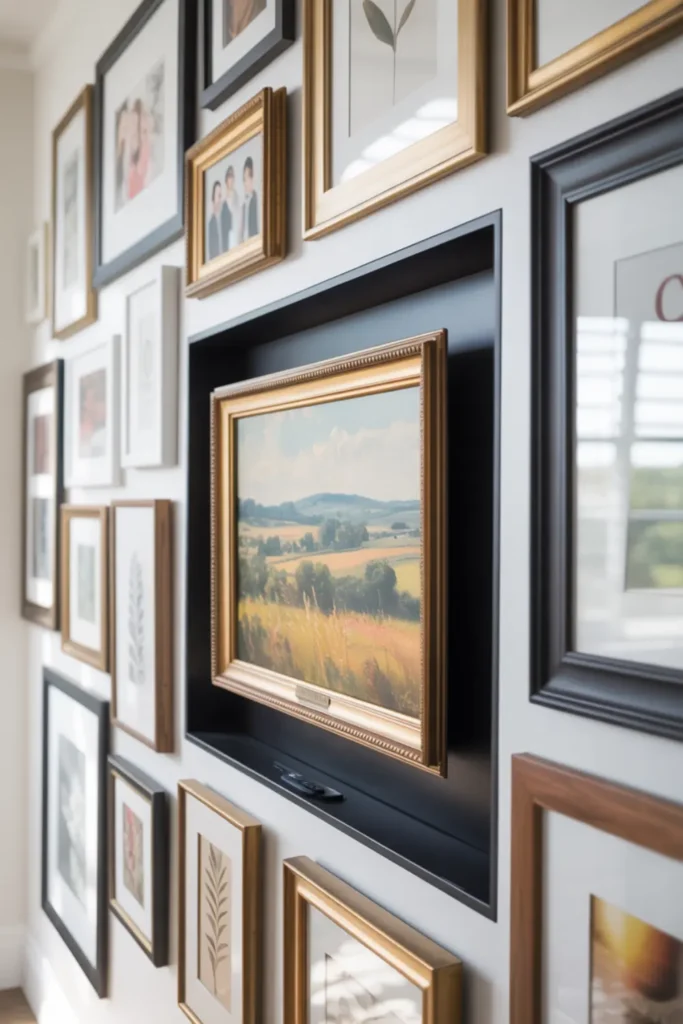
A Samsung Frame TV displaying a vintage landscape or abstract print already looks like art. Surround it with an asymmetrical gallery wall of framed photos, prints, and mirrors in mixed wood and metallic frames to complete the illusion.
The key is treating the TV as just another piece in the arrangement, not the centerpiece. Vary frame sizes and leave uneven spacing between pieces. When the TV is off, most guests will not even register it as a screen.
Warm Up with Earth Tones
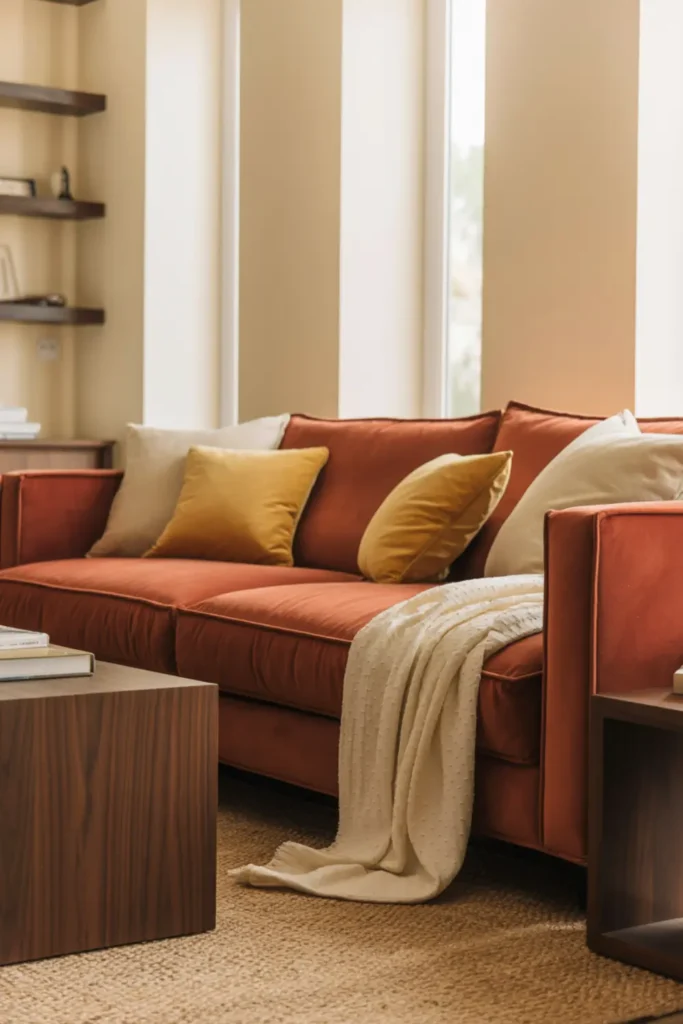
Rust, mustard, terracotta, and warm brown create a family room that feels grounded and genuinely inviting. These colors work because they pull from nature and age well without looking dated.
Start with a rust or burnt orange velvet sofa as the anchor. Layer in mustard throw pillows, a dark brown wood coffee table, and a cream or oat rug underneath. The palette feels rich without being heavy, and it works across every season without needing a refresh.
Mount a Floating Console
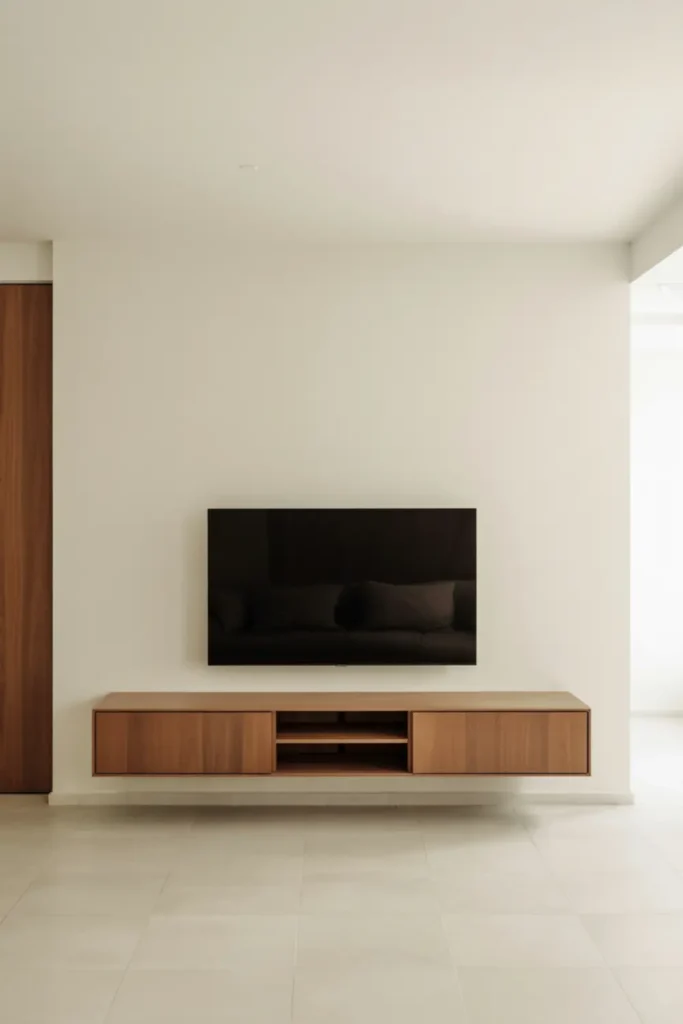
A wall-mounted media console clears the entire floor underneath the TV, which immediately makes the room feel larger and easier to clean. It also eliminates the visual bulk of four legs and a base sitting on the floor.
Choose a slim light oak or walnut finish with one or two drawers for hidden storage. Keep the wall above and below it clean. The negative space is part of the design. This works especially well in smaller family rooms where every inch of visible floor matters.
Lean an Oversized Mirror
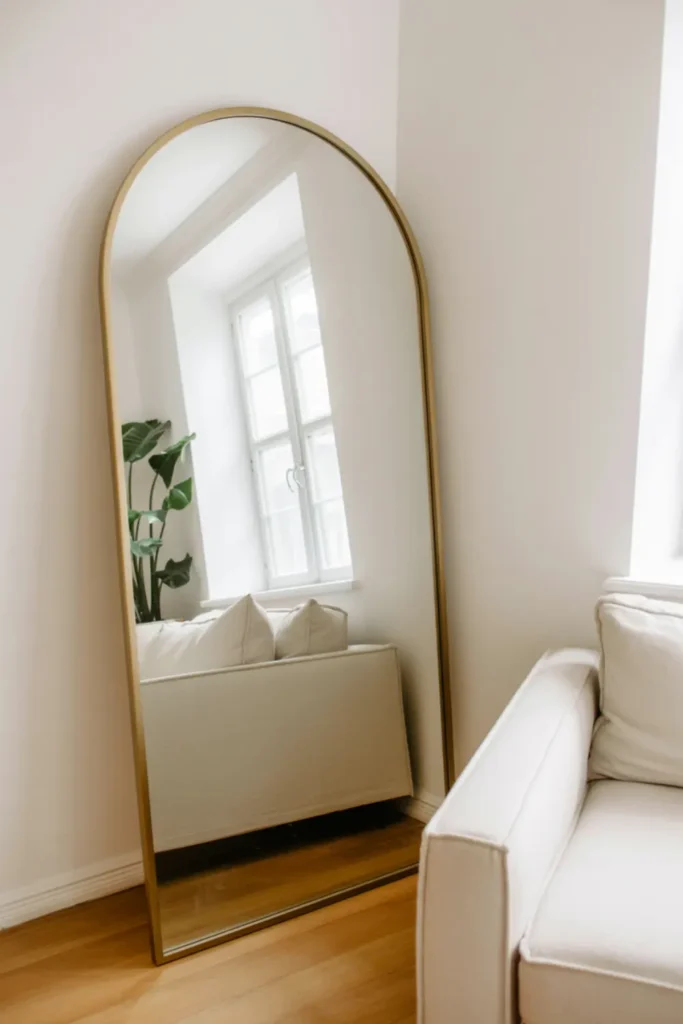
A large arched or rectangular floor mirror leaned against the wall opposite a window reflects natural light back into the room and makes the space feel nearly twice its size.
Brass, black, or raw wood frames all work depending on your existing palette. Position it so it catches the window directly. A 6-foot or taller mirror has the most impact. Style a small plant or stack of books at the base to keep it from looking like it was just moved in.
Install Textured Wood Paneling
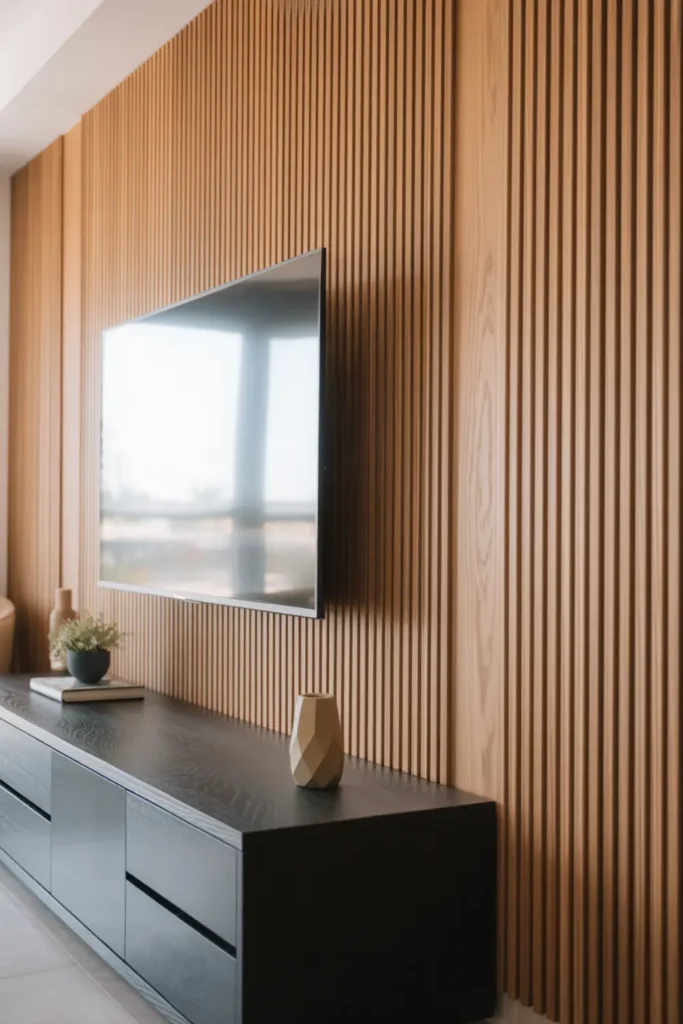
Vertical wood slat panels behind the TV or along one accent wall add architectural character that paint alone cannot achieve. The vertical lines draw the eye upward, the texture catches light beautifully, and the natural material warms the entire room.
Light oak, walnut, and whitewashed finishes are all strong choices. Many slat wall kits are designed for DIY installation and go up over a weekend. Classic wainscoting works just as well in more traditional rooms. Either way, the wall becomes a feature rather than just a background.
Time to Upgrade Your Family Room
You do not need to do all 30. Pick one idea that fits your budget and your room right now, and start there. Small changes build up fast. For even more design inspiration, check out the latest trends at Architectural Digest.
Frequently Asked Questions
What makes a good family room layout?
A good layout puts seating at the center, keeps traffic paths clear, and creates at least one strong focal point like a fireplace or TV wall. Make sure every seat has a clear sightline to the main screen or gathering point, and leave at least 18 inches between the sofa and coffee table for comfortable movement.
How do I make my family room look more expensive?
Focus on a few high-impact changes: layer your lighting, add texture through rugs and throw pillows, and remove visual clutter. Consistent color palettes, matching hardware finishes, and one or two quality anchor pieces like a solid sofa or a real wood coffee table do more than dozens of small decorative purchases.
What is the best color for a family room?
Warm neutrals like greige, soft white, and oat work for almost every style and light condition. If you want more personality, earthy tones like rust, olive, and terracotta add warmth without feeling bold. Avoid cool greys in rooms with limited natural light as they tend to read flat and unwelcoming.
How do I hide toy clutter in a family room?
Use closed storage that looks intentional. Large woven baskets, storage ottomans, and built-in cabinets all keep toys out of sight without looking like a playroom. Assign one basket per category and make it easy enough for kids to put things away on their own after use.
What furniture works best for families with young kids?
Performance fabric sofas, oversized ottomans instead of hard coffee tables, and rounded-edge furniture are all practical choices. Look for washable slipcovers, stain-resistant upholstery, and durable materials like leather or tightly woven linen that hold up to spills, crumbs, and daily wear without showing damage quickly.
How do I make a small family room feel bigger?
Use low-profile furniture to keep sightlines open, mount the TV and console to the wall to free up floor space, and place a large mirror opposite the main window to bounce light. Stick to a light, consistent color palette and avoid blocking natural light with heavy drapes or dark furniture pushed against every wall.