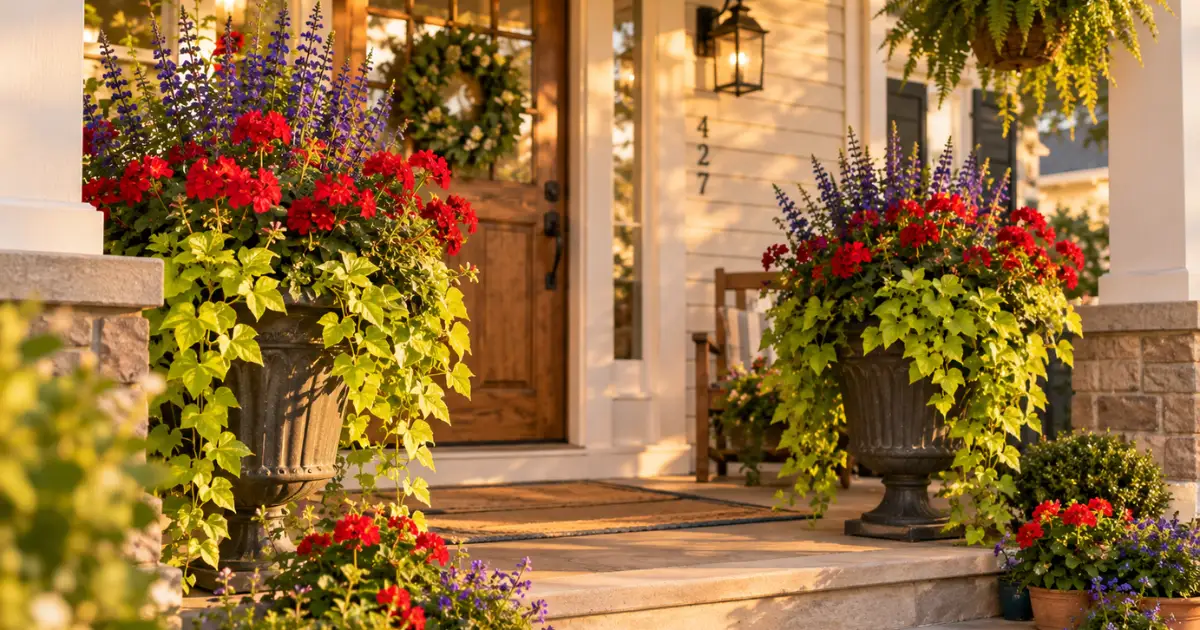
The best front porch flower ideas combine a “thriller, filler, spiller” planting formula (one tall focal plant, medium bushy flowers around it, and trailing vines spilling over the pot edge) with a color scheme that echoes your front door and siding. For an instant upgrade with zero guesswork, pair two matching large planters flanking the door with layered geraniums, petunias, or begonias in a color that contrasts your door, then repeat a smaller version of the same combo on your porch steps.
Most “front porch flower” articles just show you pretty photos and stop there. This guide goes further: it’s organized by the actual decisions you have to make, your light exposure, your porch size, the season, your maintenance tolerance, and how the flowers should coordinate with your existing exterior colors. By the end, you’ll know exactly which flowers to buy, which pots to put them in, and how to arrange them so the whole porch reads as one intentional design instead of a random collection of plants.
The One Rule That Makes Every Front Porch Planter Look Professional
Before you buy a single flat of flowers, learn the thriller filler spiller formula. Professional container gardeners use it because it mimics how plants grow in nature: tall in back, full in the middle, loose at the edges.
Thriller, the height: one upright plant that anchors the pot, such as a canna lily, ornamental grass, dracaena spike, or a small topiary. Filler, the body: mounding, bushy flowers that fill the middle, such as geraniums, petunias, begonias, marigolds, or zinnias. Spiller, the drape: trailing plants that cascade over the pot’s rim, such as sweet potato vine, creeping Jenny, lobelia, or trailing verbena.
Get this ratio right (roughly one thriller to three fillers to two spillers per sixteen to eighteen inch pot) and almost any color combination looks curated. Skip it, and even expensive flowers look flat and accidental.
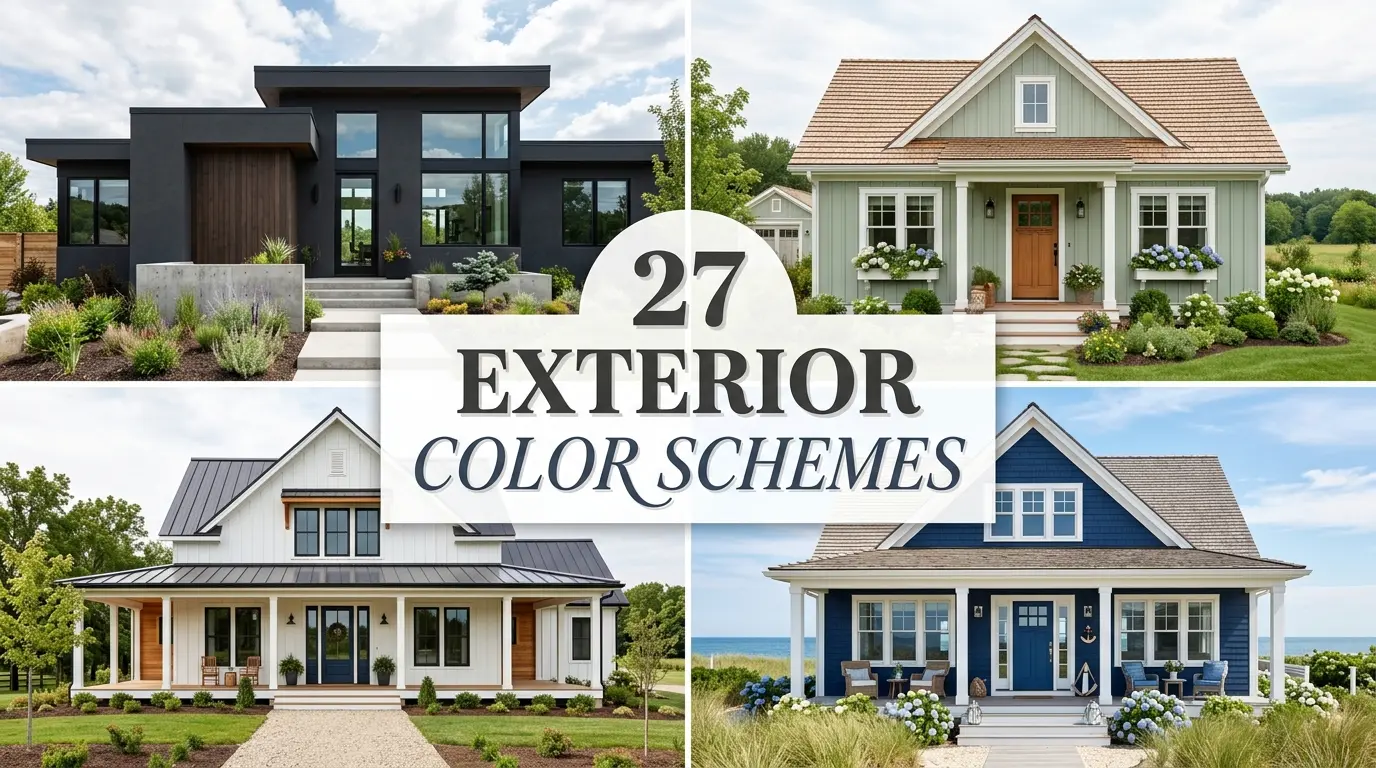
One more thing most homeowners get wrong: flower color needs to work with your exterior paint, not just look nice on its own. A turquoise front door wants purple, white, or hot pink blooms. A black or charcoal exterior wants flowers with real saturation, like coral, magenta, or deep purple, because pastels wash out against dark siding. If you’re also repainting this year, plan your flower colors and your siding, trim, and door colors together instead of picking flowers as an afterthought.
Front Porch Flower Ideas by Season
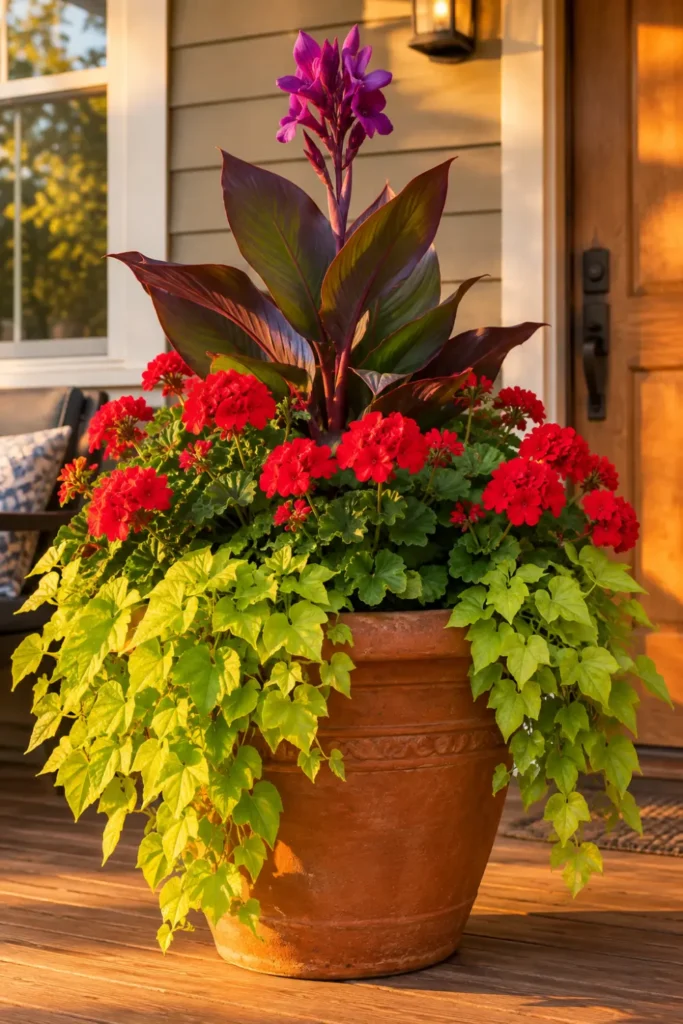
Tulip and Pansy Layered Spring Planters
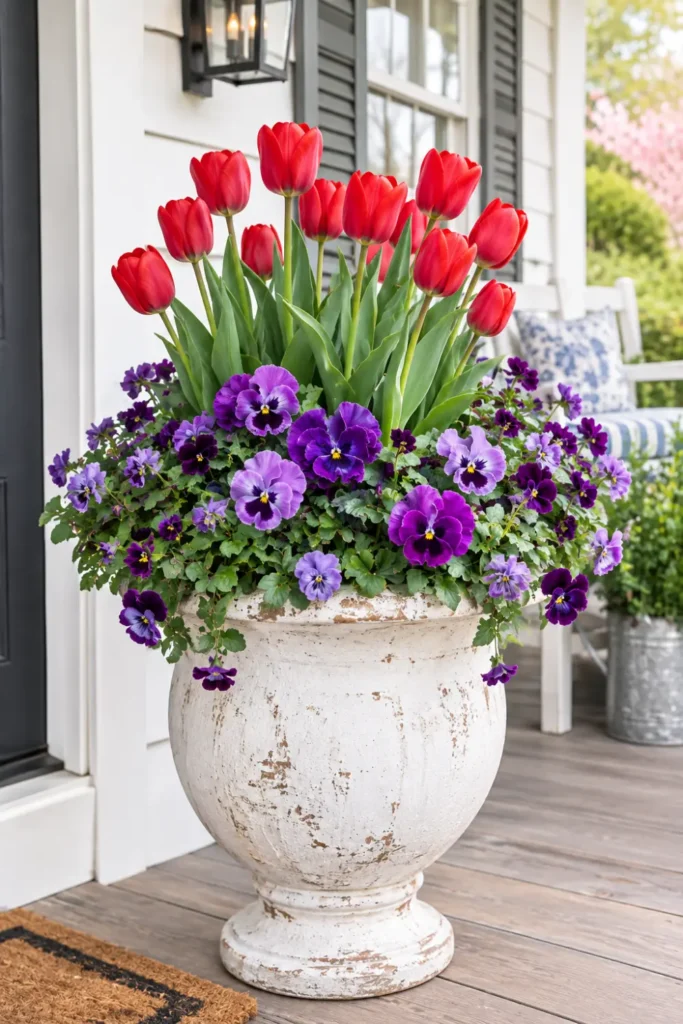
The Look: Tall red or purple tulips rising above a base of ruffled pansies in a contrasting shade, planted in a weathered terracotta or aged white urn. Why It Works: Tulips bloom for only a few weeks, so pansies (which tolerate light frost and bloom for months) keep the pot full before and after the tulips peak. How to Style: Plant tulip bulbs in fall, then tuck pansy starts around them in early spring. Add a few sprigs of trailing ivy for a spiller once the tulips fade.
Hyacinth and Ranunculus in Galvanized Buckets
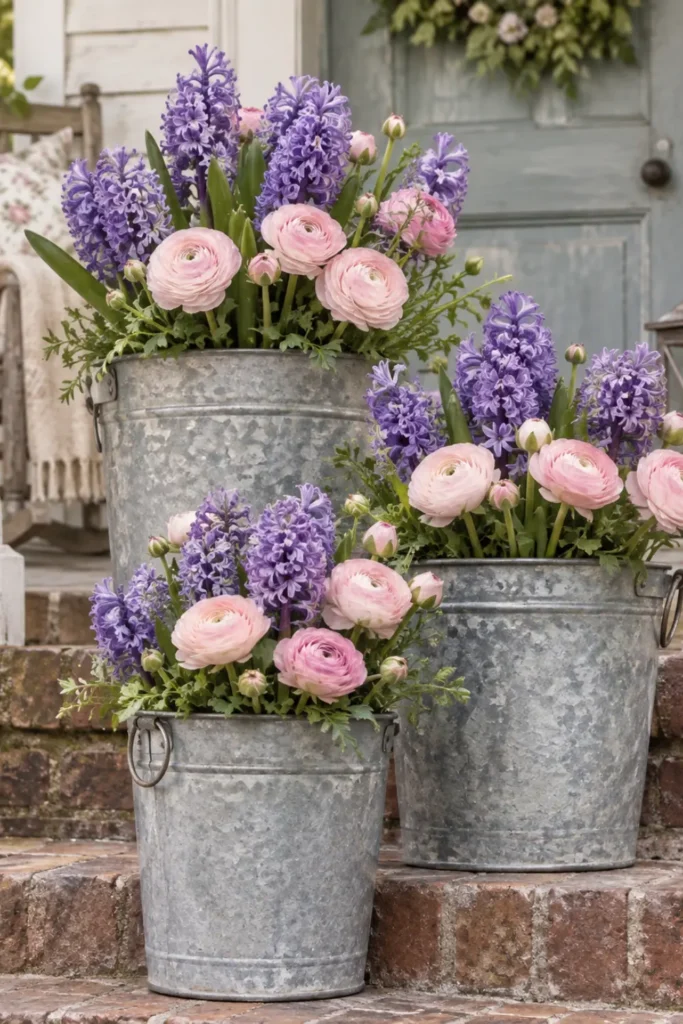
The Look: Fragrant purple and pink hyacinths paired with paper thin, rose like ranunculus blooms in rustic metal buckets on either side of the door. Why It Works: Hyacinths bring scent, which most porch flower combos ignore, so you smell the entrance before you see it. How to Style: Group three buckets of varying heights instead of one large planter for a cottage garden, “just gathered” look.
Boston Fern and Impatiens for Shady Spring Porches
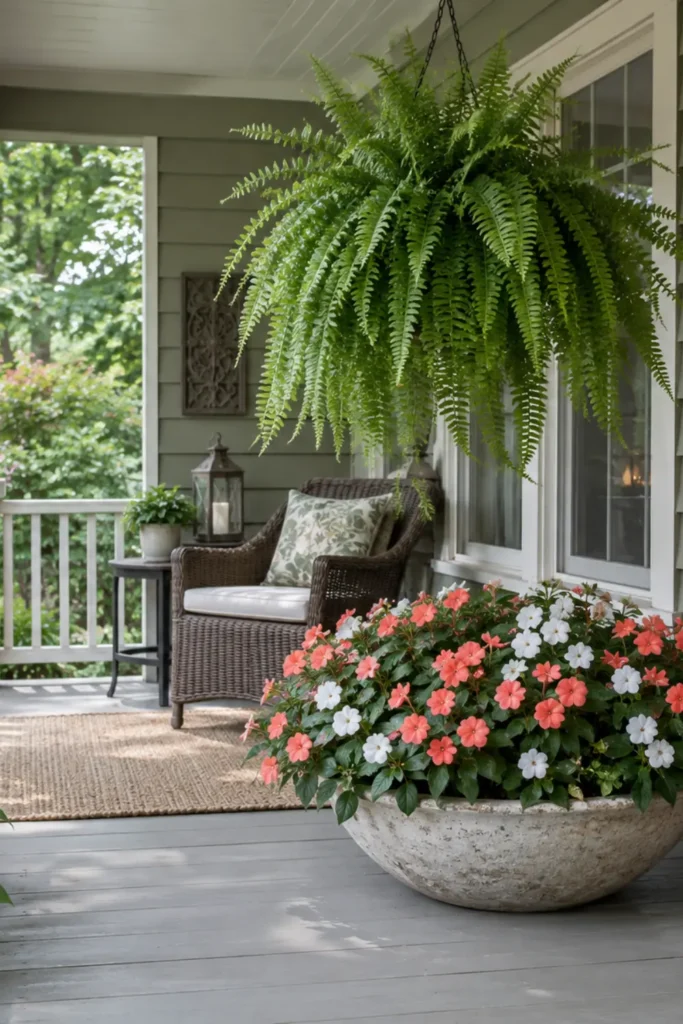
The Look: A lush hanging Boston fern flanked by ground level impatiens in soft coral or white. Why It Works: Both plants thrive in low light, solving the biggest complaint north facing porches have, that nothing colorful will grow there. How to Style: Hang the fern at eye level so it doesn’t block the doorway, and keep impatiens in a shallow, wide bowl planter rather than a tall pot.
Geranium and Sweet Potato Vine Summer Classic
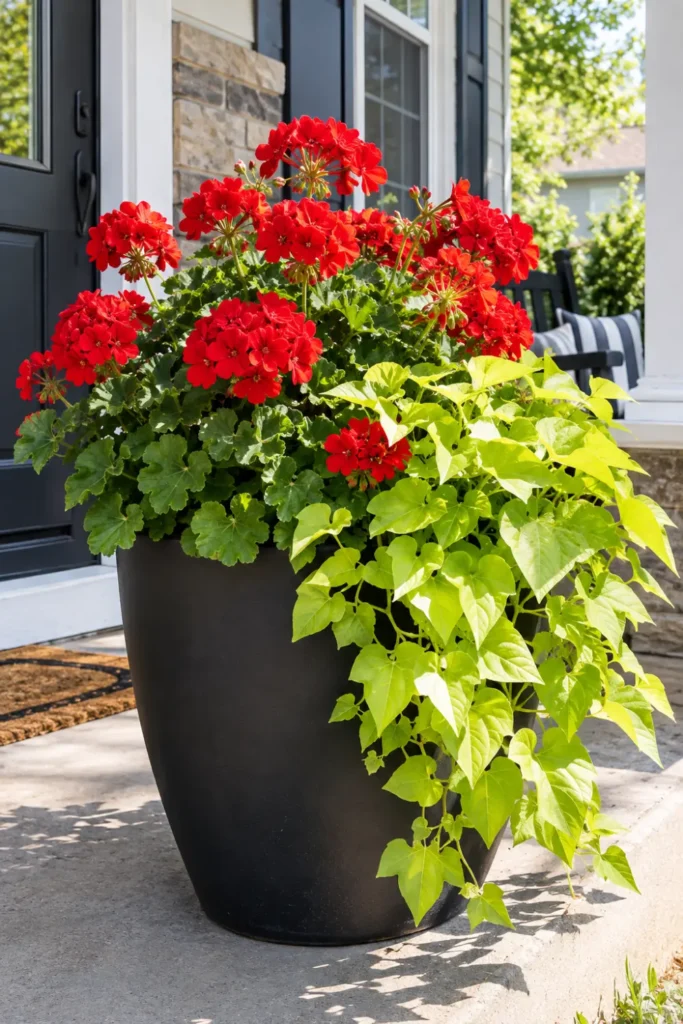
The Look: Bold red or hot pink geraniums with chartreuse sweet potato vine trailing over a black or dark bronze planter. Why It Works: Geraniums handle full sun and heat better than almost any other porch flower, and the lime green vine keeps the combo from feeling one note. How to Style: Deadhead spent geranium blooms weekly. This single habit is the difference between a planter that looks tired by July and one that looks full all summer.
Petunia Wave and Lobelia Cascading Combo
The Look: Trailing petunias in magenta or deep purple mixed with sky blue lobelia, spilling over a light stone or whitewashed planter. Why It Works: The cool blue lobelia keeps hot petunia colors from feeling overwhelming and adds visual depth instead of one flat block of color. How to Style: Use in window boxes as much as ground planters. The cascading habit is made for hanging over a ledge.
Zinnia and Marigold Cutting Garden Porch Pots
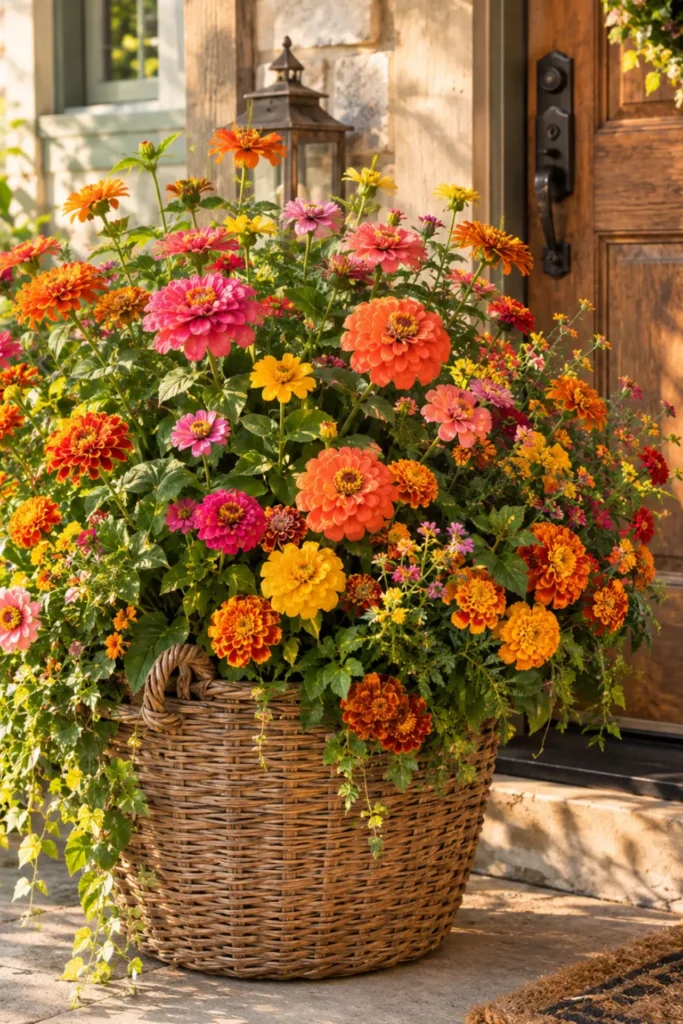
The Look: Cheerful, saturated zinnias in orange, pink, and yellow mixed with marigolds in a large woven or wicker basket planter. Why It Works: Both are workhorse annuals that bloom non stop in full sun and double as cut flowers for a vase inside. How to Style: Plant them slightly looser than other combos. A wilder, meadow like arrangement suits their casual character better than tight symmetry.
Mum and Ornamental Kale Fall Porch Planter
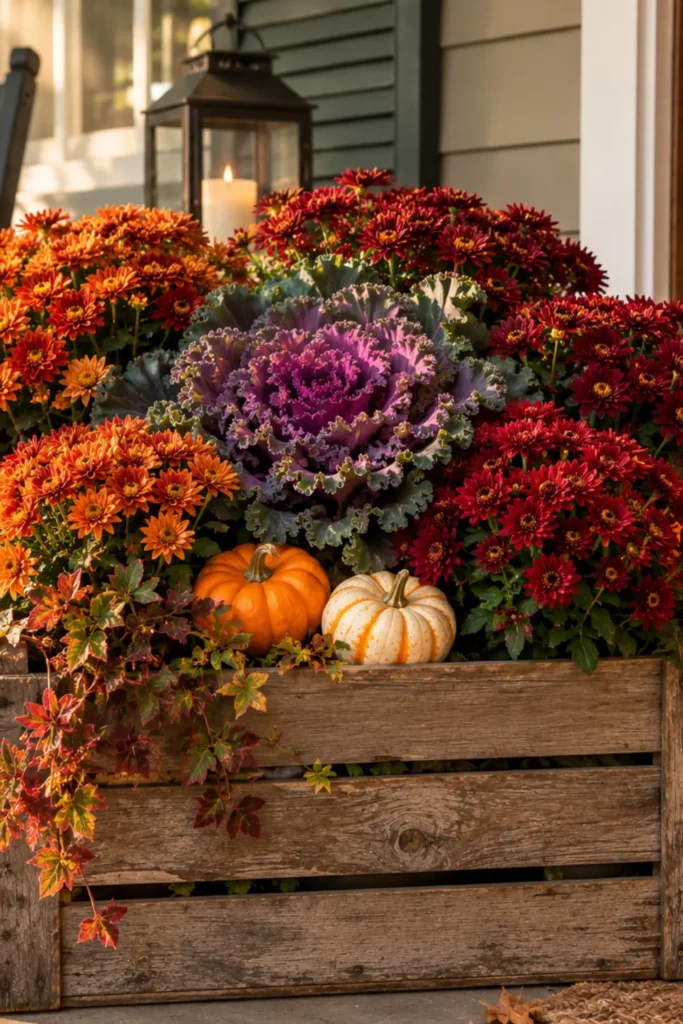
The Look: Rust, burgundy, and gold mums surrounding a center of ruffled purple ornamental kale in a rustic wood crate or aged copper pot. Why It Works: Mums give color, kale gives texture and holds up through the first frosts, so the planter doesn’t collapse the moment temperatures drop. How to Style: Add mini pumpkins or dried wheat bundles tucked into the soil for texture without buying more plants.
Celosia and Ornamental Pepper Autumn Color Pop
The Look: Velvety, flame shaped celosia blooms in deep red or orange paired with glossy ornamental peppers in purple and orange. Why It Works: Both plants genuinely thrive in the cooler, still sunny days of early fall when summer annuals start fading, an underused combo most porch guides skip entirely. How to Style: Use a matte black or dark green planter so the jewel toned colors read as rich rather than Halloween costume bright.
Winter Evergreen and Berry Porch Urn
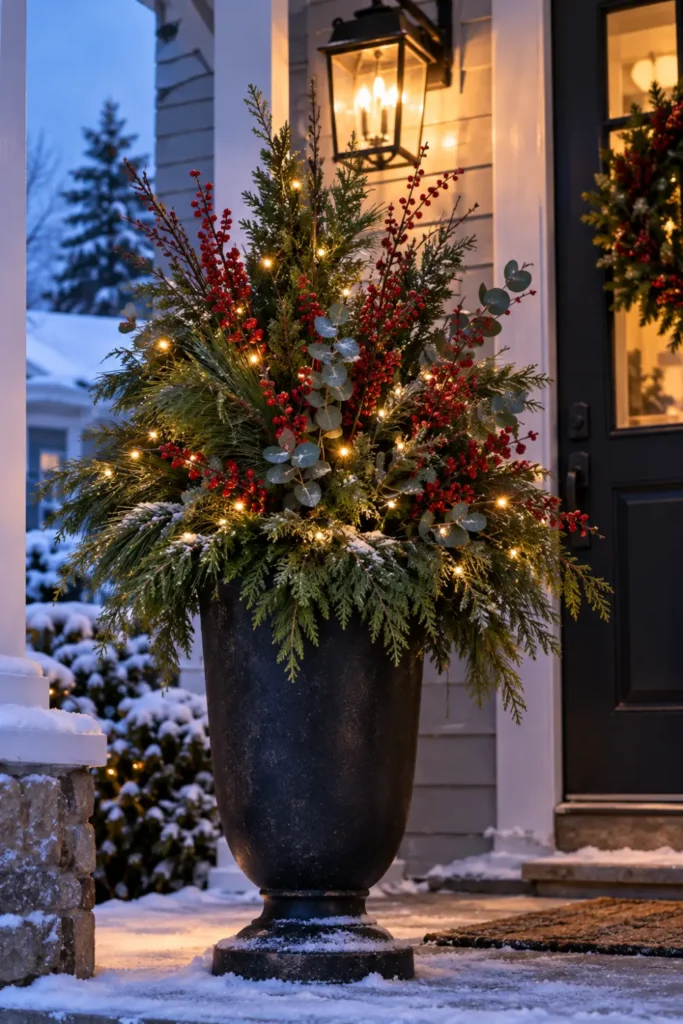
The Look: Fresh cut cedar, pine, and eucalyptus stems arranged upright with clusters of faux or preserved red winterberries, in a tall urn. Why It Works: Flower ideas shouldn’t stop when annuals die back. Greenery and berries carry the same thriller filler spiller logic through the coldest months. How to Style: Anchor the greenery in a block of floral foam or sand inside the urn so it stays upright through wind and snow, and add warm white string lights woven through the branches.
Pansy and Viola Winter Into Spring Bridge Planter
The Look: Cold hardy pansies and smaller violas in deep purple and gold, planted in a weathered stone planter. Why It Works: In zones six and warmer, pansies genuinely survive light snow and keep blooming on mild winter days, giving you color when everything else on the block is bare. How to Style: Plant in late fall so they’re established before the first hard freeze, then let them carry the porch until your spring bulbs take over.
Front Porch Flower Ideas by Light and Growing Conditions
Full Sun Salvia and Verbena Combo
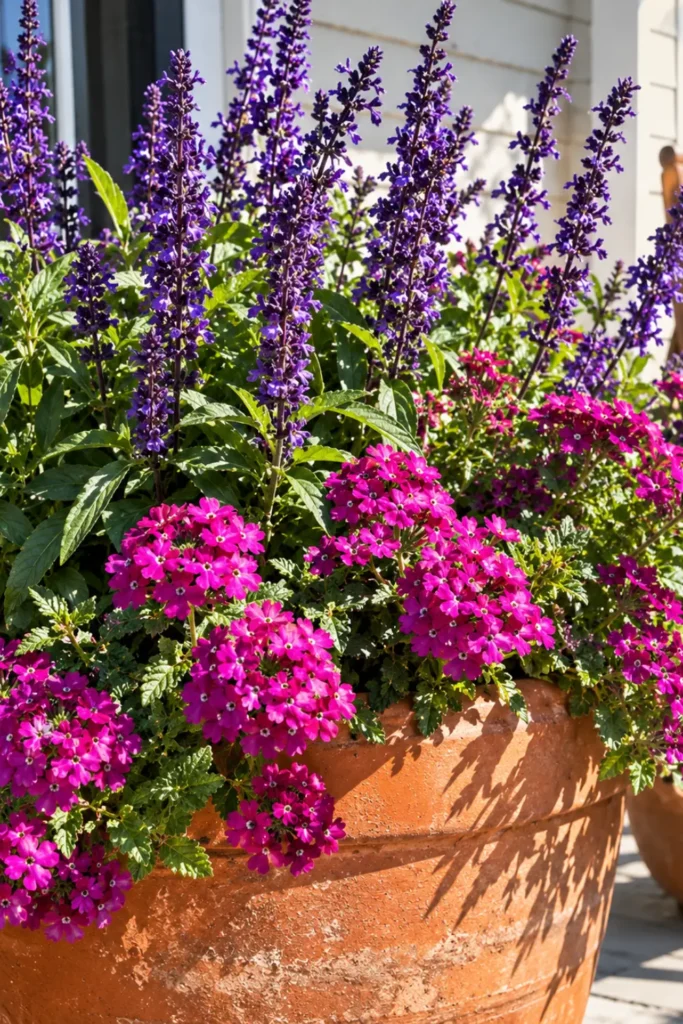
The Look: Spiky purple salvia paired with low, spreading verbena in magenta, in a sun baked terracotta pot. Why It Works: Both are genuinely drought tolerant once established, so a south facing porch that fries other flowers by August keeps this combo looking fresh. How to Style: Water deeply but less often, two to three times a week, rather than a light daily sprinkle. It trains deeper, hardier roots.
Begonia and Coleus Shade Garden Planter
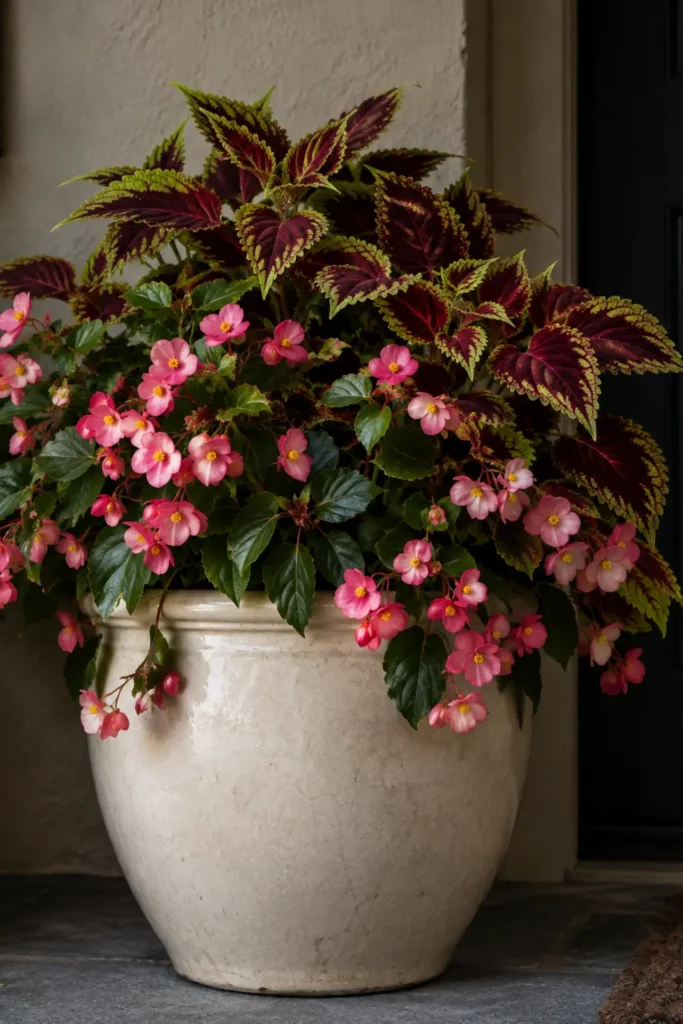
The Look: Waxy, colorful begonias mixed with patterned coleus leaves in burgundy and lime, in a light colored planter to brighten a dim entry. Why It Works: Coleus is grown for its leaves, not flowers, which means the color in this pot never fades, a real advantage over shade flowers that bloom in short bursts. How to Style: Choose a white, cream, or pale gray planter specifically because shaded porches already read darker. A light pot bounces available light back onto the plants.
Caladium and Fern Deep Shade Solution
The Look: Heart shaped caladium leaves in pink and white paired with airy Boston or maidenhair fern, in a simple black urn. Why It Works: This combo is built for porches that get almost no direct sun at all, a gap most flower idea lists ignore because they assume decent light. How to Style: Keep the soil consistently moist, not soggy. Deep shade plants dry out slower, so overwatering is the more common mistake here.
Lantana and Vinca for Hot, Exposed Porches
The Look: Multi colored lantana clusters with glossy green vinca, annual periwinkle, as a low, heat tolerant filler. Why It Works: Lantana and vinca both tolerate reflected heat off brick, stucco, or concrete steps, ideal for porches with little shade or afternoon western sun. How to Style: Skip the saucer under these pots. Both plants prefer to dry out between waterings, and standing water in a saucer causes root rot faster than drought does.
Front Porch Flower Ideas by Porch Size
Small Porch Vertical Tiered Planter Stand
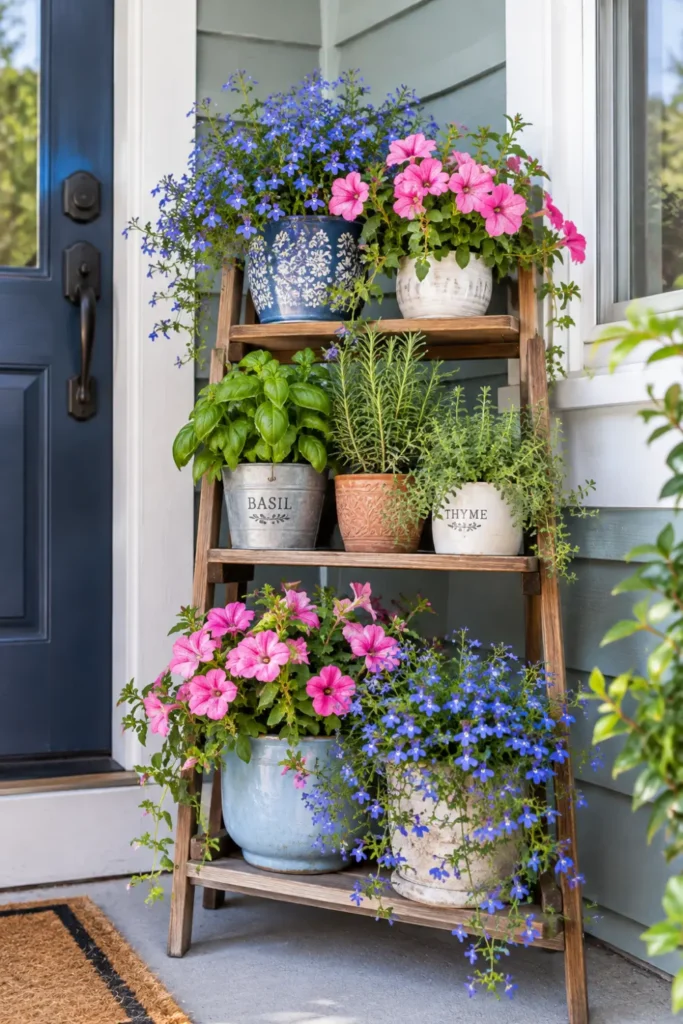
The Look: A three tier metal or wood plant stand loaded with small pots of trailing lobelia, petunias, and herbs, tucked into a corner. Why It Works: Tiering lets a porch with only two to three square feet of floor space display six to eight pots of flowers without blocking the walkway. How to Style: Put the tallest, boldest color on top where it’s most visible from the street, and reserve the bottom tier for trailing plants that soften the stand’s base.
Apartment Style Railing Box Planters
The Look: Long, narrow railing planters filled with trailing petunias and dwarf marigolds, mounted directly on a porch or balcony railing. Why It Works: Railing boxes add flowers without using any floor space at all, essential for townhomes, apartments, and porches too narrow for standing pots. How to Style: Use planters with drainage trays underneath to protect the railing and whatever’s below it, and stick to plants under twelve inches tall so wind doesn’t tip the arrangement.
Large Wraparound Porch Repeating Planter Rhythm
The Look: The identical planter and flower combo repeated every six to eight feet along a long porch, rather than one giant statement pot. Why It Works: Repetition reads as intentional design on a large porch. Scattering different flowers and pot styles along a long wraparound makes it look cluttered instead of curated. How to Style: Pick one hero color, like coral geraniums, and repeat it in every planter, varying only the greenery slightly for subtle texture.
Grand Entry Matching Topiary and Flower Urns
The Look: Tall matching urns with a boxwood or ivy topiary center and a colorful flower skirt planted around its base. Why It Works: The topiary gives year round structure so the porch never looks bare, while the flower ring at the base changes with the seasons. How to Style: Keep the topiary the same year round and simply swap the flower ring, pansies in spring, petunias in summer, mums in fall, for a low effort seasonal refresh.
Color Coordinated Front Porch Flower Ideas
White and Navy Flowers for a Coastal Front Door
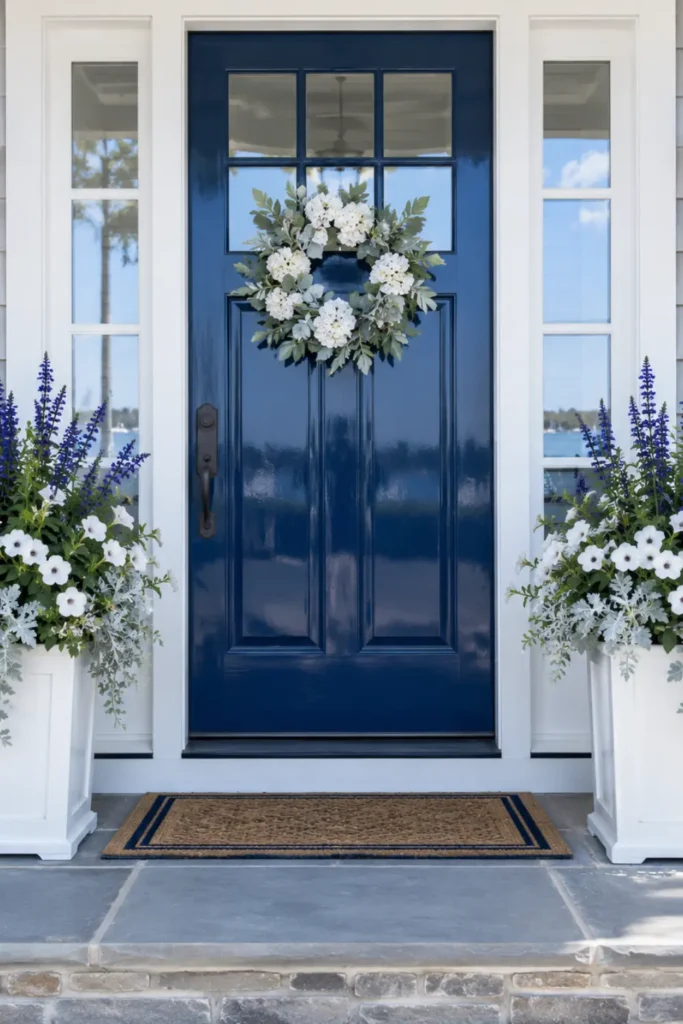
The Look: White petunias and blue salvia planted together, designed specifically to sit beside a navy blue front door. Why It Works: Matching flower color to door color, not just flowers in general, is what makes a porch photograph like a magazine spread instead of a garden center display. How to Style: Add one silvery plant like dusty miller to bridge the white and navy so the combo doesn’t feel like two separate colors fighting each other.
Black and Gold Planters for a Black Front Door
The Look: Deep purple or black petunias, yes, they exist, try Black Velvet petunias, paired with golden marigolds in a matte black planter. Why It Works: Dramatic dark exteriors need flowers with real saturation to register at all. Pale pastels visually disappear against black or charcoal siding and trim. How to Style: Add one metallic gold or brass planter accent, a saucer, plant stake, or lantern nearby, to tie the gold flower tone into the hardware on the door.
Terracotta and Coral Flowers for a Red or Rust Front Door
The Look: Coral geraniums and orange zinnias in classic unglazed terracotta pots beside a barn red or brick red door. Why It Works: Coral and rust sit close together on the color wheel, so the flowers read as an intentional extension of the door color rather than a clash. How to Style: Keep the pot itself unglazed terracotta. A glazed or painted pot in a competing color will fight with both the door and the flowers.
Soft Pink and Cream for a Sage Green Exterior
The Look: Blush pink and cream ranunculus or roses planted in a warm cream or aged brass planter against sage green siding. Why It Works: Sage green has gray undertones, and dusty pink is one of the few colors that softens rather than competes with muted greens. How to Style: Avoid true, bright pink here. It’s too saturated for sage’s muted palette. Stick to blush, dusty rose, or pale mauve tones instead.
Low Maintenance and Budget Friendly Flower Ideas
Drought Tolerant Succulent and Flower Mix
The Look: Hens and chicks or sedum mixed with a single flowering annual like portulaca, in a shallow, wide bowl. Why It Works: Succulents need watering only every one to two weeks, which drastically cuts the maintenance load compared to a full annual planter. How to Style: Use a bowl at least three inches deep with excellent drainage holes. Succulents rot faster from wet feet than they suffer from neglect.
One Gallon Nursery Pot Budget Planter Hack
The Look: Full, mature flowers still in their plain plastic nursery pots, slipped inside a decorative outer basket or pot cover. Why It Works: You get an instantly full planter for the price of the plants alone, without buying an expensive ceramic or resin pot at the same time. How to Style: Choose a basket or cachepot slightly larger than the nursery pot and tuck sphagnum moss around the rim to hide the plastic edge.
Perennial Only Plant Once Porch Bed
The Look: Coneflower, black eyed Susan, and daylilies planted directly in a small bed beside the porch steps instead of in pots. Why It Works: Perennials come back every year without replanting, making this the lowest effort, lowest cost long term option on this entire list. How to Style: Stagger bloom times, coneflower in summer, daylilies in early summer, asters in fall, so something is always flowering without any single plant doing all the work.
Faux Flower Porch Arrangement for Zero Maintenance
The Look: High quality faux lavender, faux boxwood, and faux trailing greenery arranged with the same thriller filler spiller logic as real flowers. Why It Works: Faux arrangements survive extreme heat, freezing cold, and weeks of vacation neglect with zero watering, a real solution for rental porches or frequent travelers. How to Style: Choose UV resistant, outdoor rated faux stems specifically. Indoor faux flowers fade and turn brittle within one summer outside.
Hanging Baskets, Window Boxes, and Step Details
Fuchsia Hanging Baskets for Covered Porches
The Look: Deep pink and purple fuchsia blooms cascading from a hanging basket, hung just under the porch roofline. Why It Works: Fuchsia needs protection from direct hot sun and heavy rain, so a covered porch ceiling is actually the ideal spot for it, a pairing most flower lists miss entirely. How to Style: Hang at a height where the trailing blooms sit at eye level for someone walking up the steps, not up near the ceiling where they go unnoticed.
Window Box Eucalyptus and Trailing Petunia Combo
The Look: Silvery eucalyptus stems mixed with cascading petunias in a wood or metal window box under the front window. Why It Works: Window boxes extend the flower display beyond the door itself, framing the whole facade rather than just the entryway. How to Style: Mount boxes at the base of the window, not above it. Set below the sill, they read as part of the house’s architecture rather than an add on.
Layered Flower Pots on Porch Steps
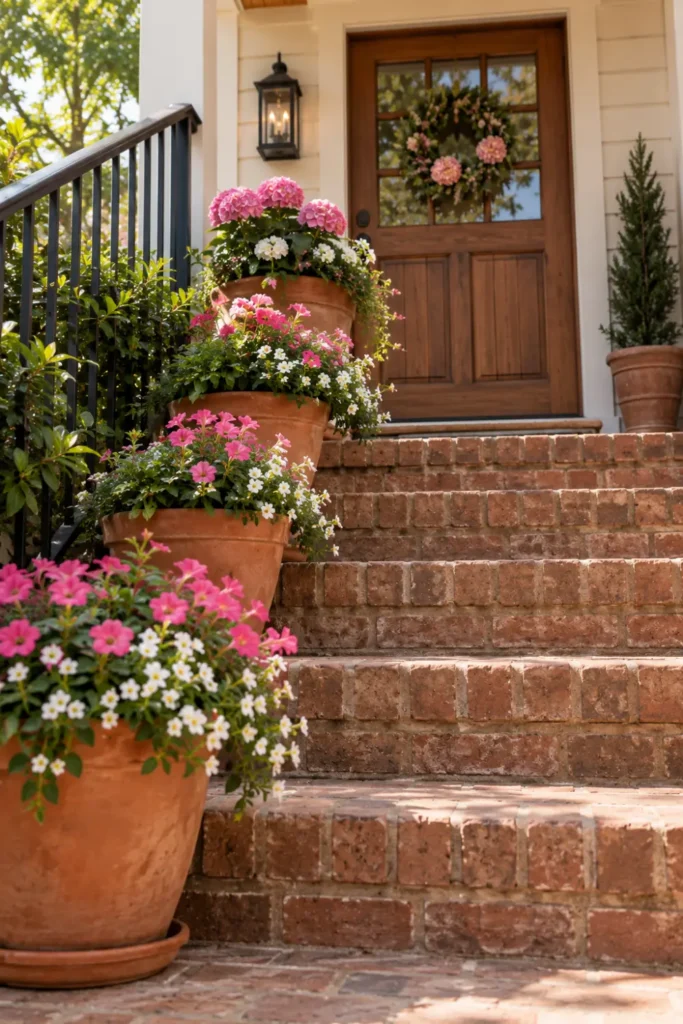
The Look: Identical or coordinating small pots placed on alternating stair steps leading up to the porch, filled with the same flower in graduating pot sizes. Why It Works: This creates a visual path that draws the eye, and guests, straight up to the front door, genuinely functional design, not just decoration. How to Style: Keep pots to one side of each step only, leaving a clear, safe walking path on the other side.
Vintage Wheelbarrow or Crate Flower Display
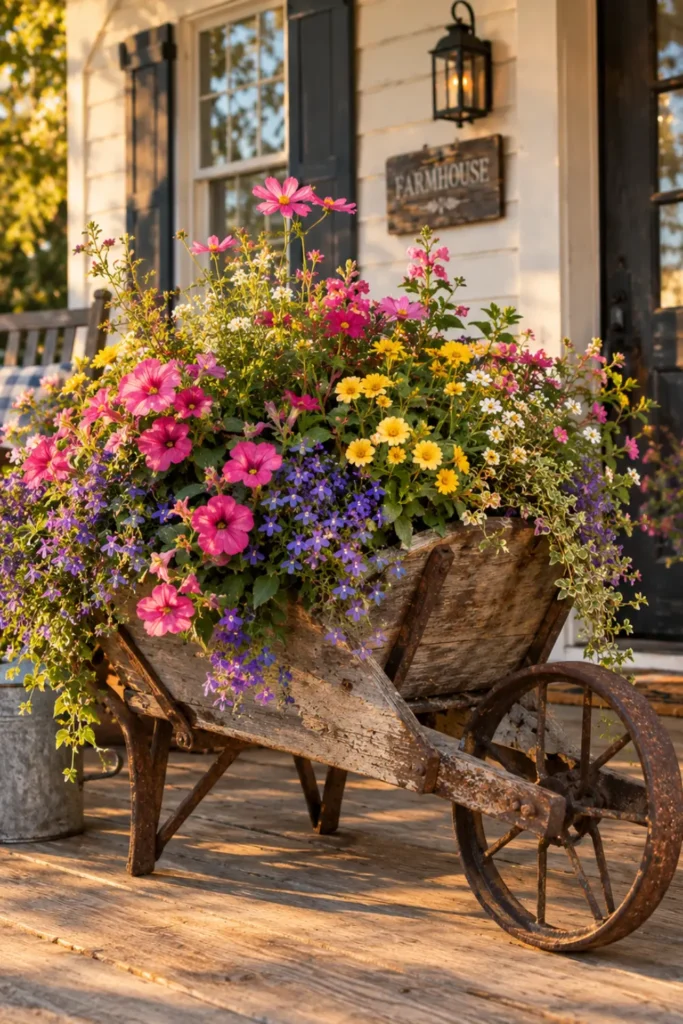
The Look: An old wheelbarrow, wagon, or wooden crate repurposed as an oversized planter, overflowing with mixed cottage garden annuals. Why It Works: A repurposed vessel adds a story and a farmhouse or cottage character that a standard nursery pot can’t replicate. How to Style: Drill drainage holes in the bottom before planting, and line with landscape fabric to keep soil from washing out through gaps.
Front Porch Flowers That Also Solve a Problem
Pollinator Friendly Porch Planter, Bees and Butterflies
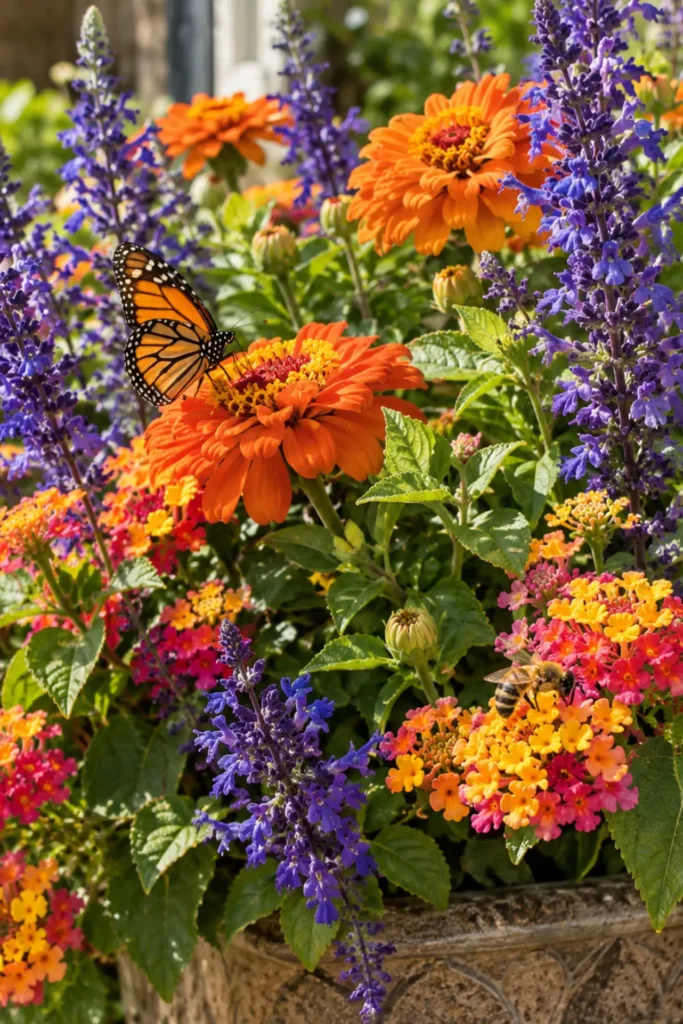
The Look: Zinnias, salvia, and lantana planted together specifically to attract bees, butterflies, and hummingbirds to the entryway. Why It Works: These three plants rank among the highest nectar producers for common porch annuals, turning your entrance into a genuine mini pollinator stop, a functional angle almost no porch flower article addresses. How to Style: Avoid pesticide sprays on these pots entirely. Treat any pest issues with insecticidal soap so you don’t undo the pollinator benefit.
Fragrant Flower Combo for a Smell Good Entry
The Look: Sweet alyssum, jasmine, in a large pot, trained on a small trellis, and heliotrope planted together near the front door. Why It Works: Most porch flower guides optimize purely for how things look in photos. This combo is chosen specifically for scent, so guests notice the porch before they even see it. How to Style: Place fragrant pots within three to four feet of the door itself. Scent doesn’t project far, so distance matters more than most people expect.
Deer and Rabbit Resistant Porch Flowers
The Look: Marigolds, salvia, and ageratum, all plants that deer and rabbits typically avoid, arranged in a standard thriller filler spiller pot. Why It Works: In suburban and rural areas, deer stripping a porch planter overnight is one of the most common, and most frustrating, reasons flowers “don’t work.” This combo sidesteps the problem at the plant selection stage. How to Style: Marigold’s strong scent is doing the repelling work here, so don’t substitute it out even though it’s the least trendy flower in the mix.
Essential Rules for Front Porch Flowers That Actually Last
Getting a front porch flower display right comes down to matching the plant to the actual conditions of your porch, not just picking what looked good at the garden center.
Match sun exposure honestly. Watch your porch for a full day before buying anything. Full sun annuals like geraniums and zinnias need six or more hours of direct light. If your porch gets less, you’ll get leggy, sparse growth no matter how well you care for them.
Choose pot size relative to plant size. A general rule is to use a pot at least fourteen to sixteen inches in diameter for a mixed thriller filler spiller combo. Undersized pots dry out within hours in summer heat and stunt root growth.
Water at the soil line, not overhead. Wetting the flowers themselves, not just the soil, in full sun can scorch petals and invites fungal issues like powdery mildew, especially on petunias and zinnias.
Deadhead weekly during peak bloom. Removing spent flowers redirects the plant’s energy into producing new blooms instead of seed pods, the single highest impact five minute task for keeping a porch planter full all season.
Feed every two to three weeks. Container plants exhaust the nutrients in their potting soil faster than garden beds. A balanced, water soluble fertilizer every two to three weeks keeps blooms coming instead of tapering off by midsummer.
Frequently Asked Questions About Front Porch Flower Ideas
What flowers are best for a front porch that gets full sun all day?
Geraniums, petunias, zinnias, lantana, and salvia handle full, direct sun best and actually bloom more heavily the more light they get, as long as they’re watered consistently.
What flowers work on a front porch that gets little to no sun?
Begonias, impatiens, caladiums, and ferns are the most reliable shade performers. Coleus is also a strong pick since its colorful leaves don’t depend on blooming at all.
How do I choose flower colors that match my front door?
Match undertones rather than exact shades. Cool toned doors, navy, black, gray, pair best with saturated, jewel toned flowers, while warm toned doors, red, terracotta, wood stain, pair best with coral, gold, and orange blooms.
What’s the easiest low maintenance flower for a front porch?
Marigolds, zinnias, and lantana are the most forgiving annual flowers, tolerating missed waterings and heat far better than petunias or fuchsias, which need more consistent attention.
How often should I water front porch flower pots?
Most annual flower planters in full sun need water every one to two days in summer heat, while shade planters and drought tolerant combos, succulents, lantana, salvia, typically only need watering every three to five days.
Can I use fake flowers on my front porch year round?
Yes, as long as they’re labeled UV resistant or outdoor rated faux flowers. Indoor only faux stems will fade and become brittle after just one season of sun and rain exposure.
Final Thoughts on Front Porch Flower Ideas
The porches that stop people on the sidewalk are almost never the ones with the most expensive flowers. They’re the ones where the flower colors, pot style, and porch conditions were all considered together instead of picked separately. Start by being honest about your light exposure and maintenance tolerance, apply the thriller filler spiller formula to whatever pots you choose, and coordinate your bloom colors with your door and siding rather than treating flowers as an afterthought.
Pick two or three combinations from this list that match your actual porch, not your Pinterest board, plant them properly spaced with room to fill in, and give the deadheading and feeding routine a real chance over a full season before judging the results.