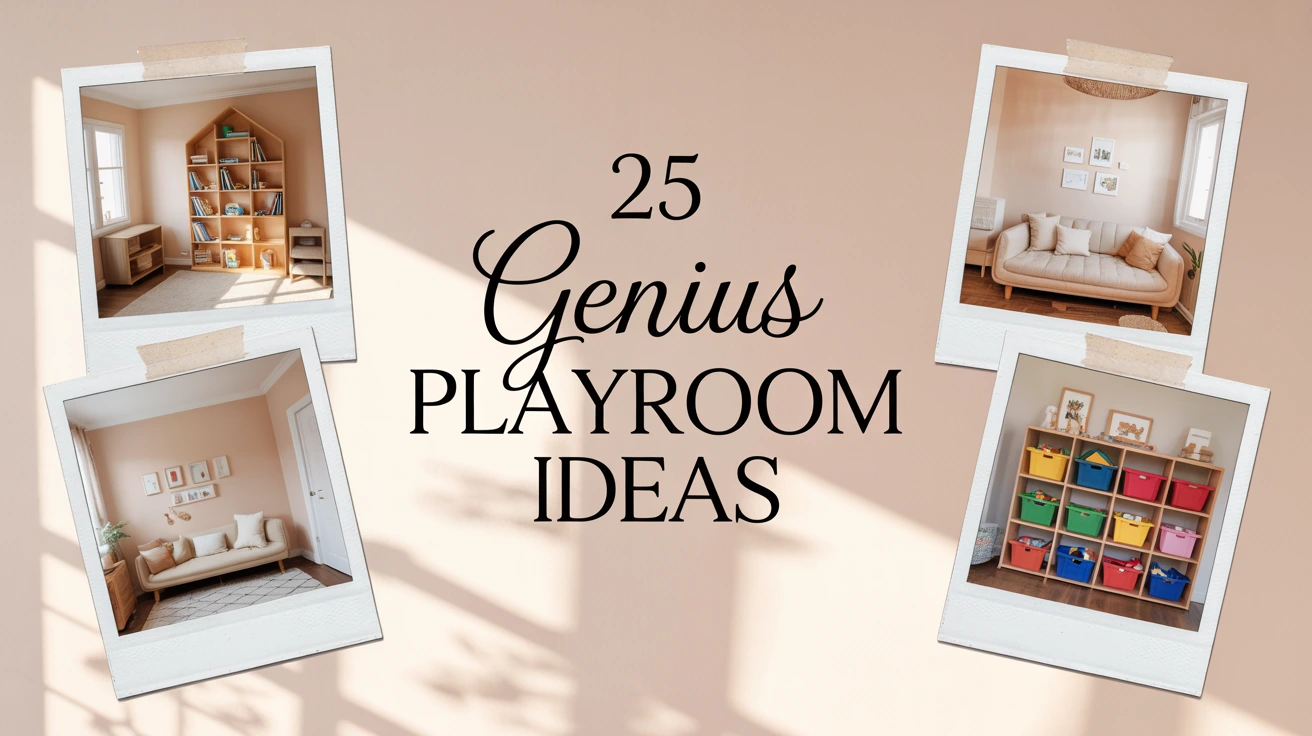
A great playroom does not need a big budget or extra space. The best playrooms are safe, organized, and fun all at once. You can turn any spare corner, basement, or small room into a space kids will love. Here is what works best:
- Use vertical wall space for storage
- Pick furniture that does double duty
- Create separate zones for play, art, and reading
- Choose easy-to-clean, durable materials
- Keep the color palette simple and calming
These five principles are the backbone of every genius playroom idea in this guide.
The IKEA Trofast Wall Hack
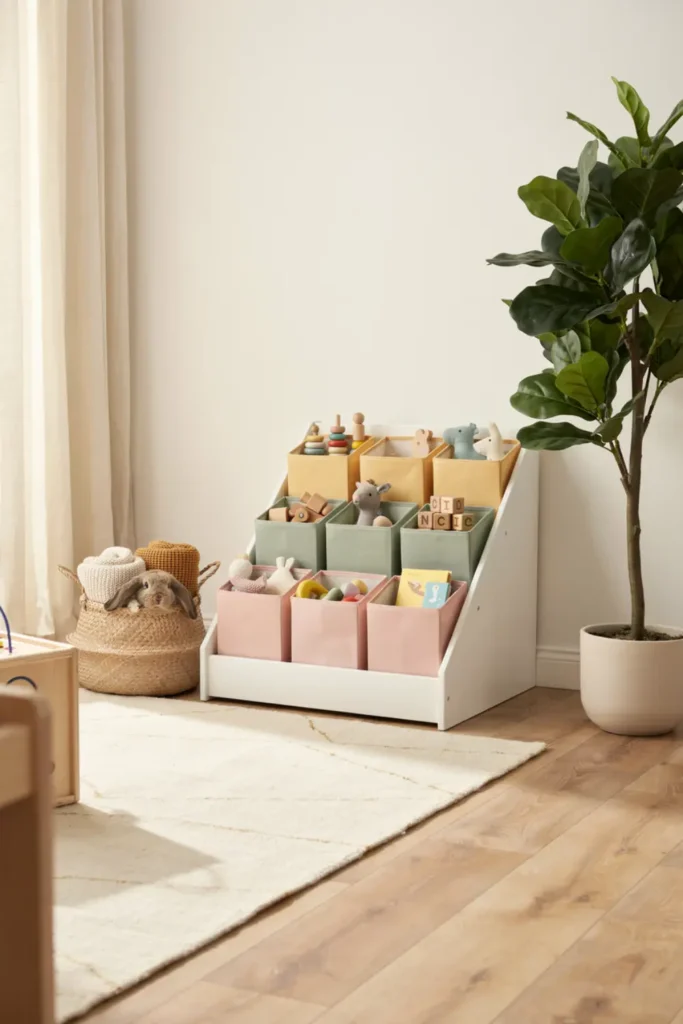
The IKEA Trofast system is one of the best toy storage solutions money can buy. It is affordable, modular, and built to handle the chaos of real kids. The step-stair style lets you stack bins at different heights so even toddlers can reach their toys independently.
- Use shallow bins for puzzles and art supplies
- Use deep bins for stuffed animals and building blocks
- Rotate toys weekly to keep the playroom feeling fresh and exciting
Toy rotation with Trofast bins cuts down on clutter fast. Kids play better when they have fewer choices in front of them at one time.
Under-Stairs Secret Hideout
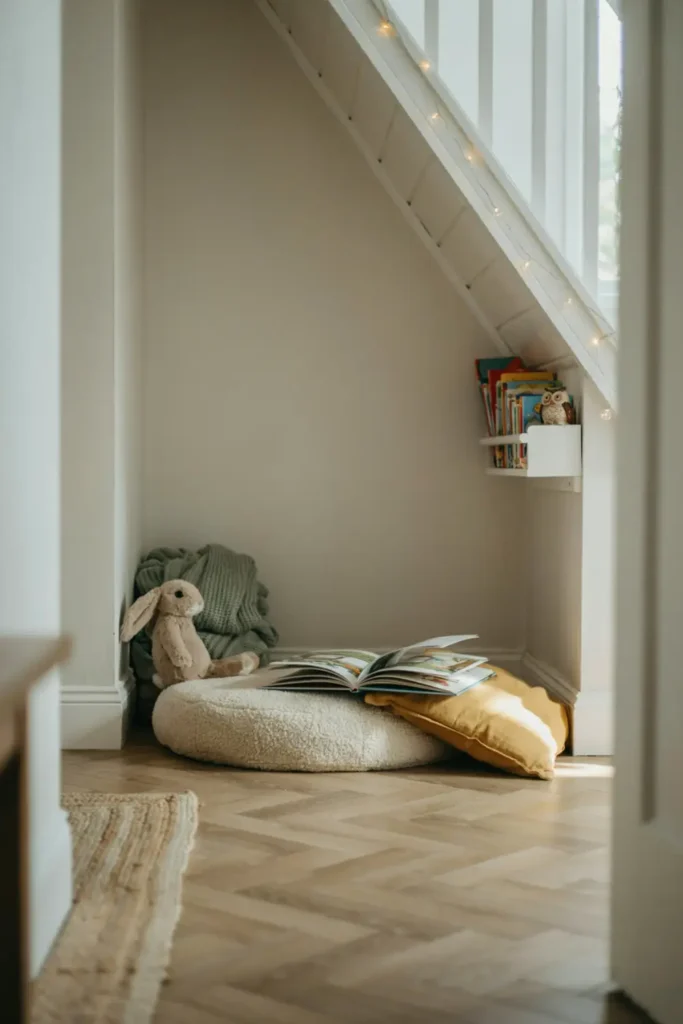
The space under your stairs is wasted in most homes. With a little planning, it becomes the coziest reading nook or mini playroom a kid could want.
Add a soft floor cushion, a few floating book ledges, and a string of warm fairy lights. That is all it takes to build a hideout kids will beg to use every single day.
- Keep the entrance low and kid-sized for extra magic
- Add a small curtain for a private, cozy feel
- Use the back wall for chalkboard paint or a pegboard
This idea costs very little and uses space that was doing nothing before.
Floor-to-Ceiling Chalkboard Wall
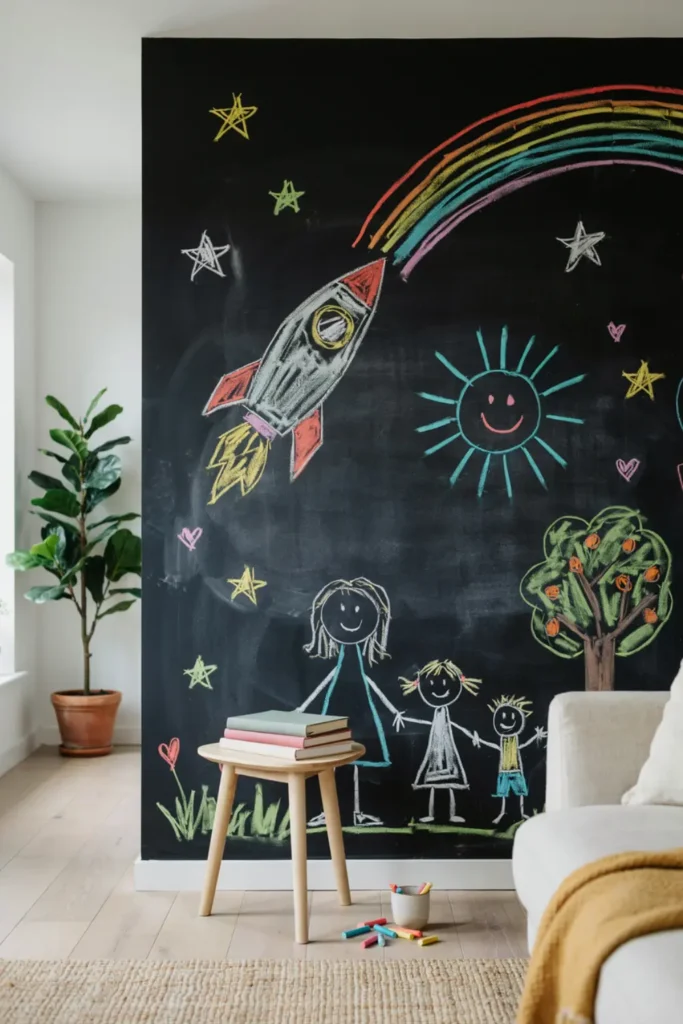
One can of chalkboard paint and one free wall is all you need to create an art station kids will never get bored of. No table required. No art supplies scattered on the floor.
A full chalkboard wall gives kids total creative freedom without eating into your floor space. It wipes clean in seconds and works for every age group.
- Use chalk markers for bolder, more colorful drawings
- Add a small wooden stool so younger kids can reach the top
- Frame the wall with simple wood trim for a polished look
It is functional, beautiful, and saves you from buying an art easel.
Modular Play Couches (Nugget Style)
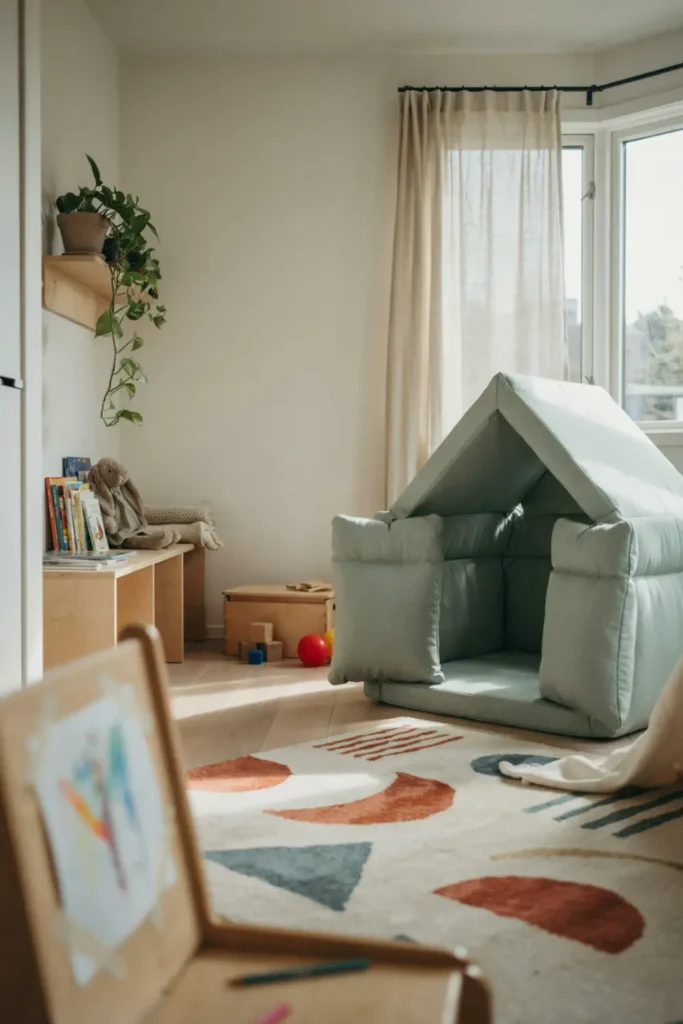
The Nugget Comfort couch is one of the most popular kids furniture pieces on the market right now. It is a foam couch that folds, flips, and reshapes into forts, slides, and loungers within minutes.
Kids use it for climbing, building, and napping. Parents love it because the covers are machine washable and it replaces three or four separate toy items in one.
- Great for small playrooms because it serves multiple purposes
- Covers come in dozens of colors to match any room style
- Safe, soft foam with no sharp edges for younger children
If budget is a concern, look for similar modular foam couch brands at a lower price point.
When your child starts walking, transitioning from a baby room into a functional play space requires smart storage solutions.
Floating Acrylic Book Ledges
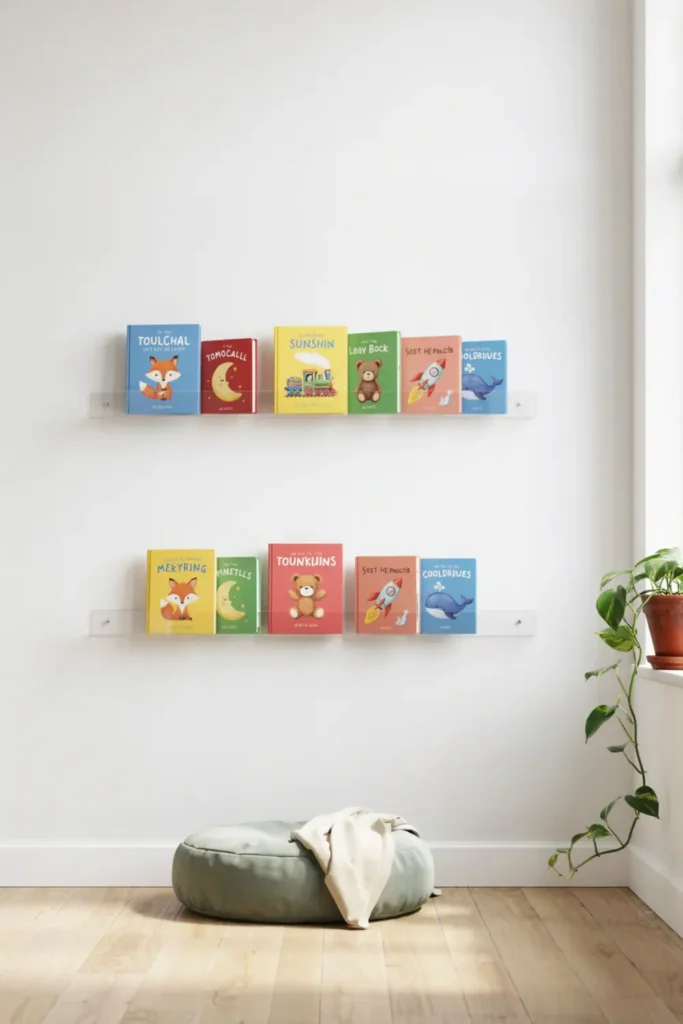
Clear acrylic shelves are a simple trick that makes a big visual difference. Books face forward on the shelf, so kids can see the covers clearly. That one small change makes children three times more likely to pick up a book on their own.
Mount them at kid height on any blank wall and you have an instant reading display that looks clean and modern.
- Space ledges at different heights for different book sizes
- Add a small beanbag below to create a complete reading corner
- Mix in a few small plants or framed prints to break up the wall
Acrylic shelves are affordable, easy to install, and nearly invisible on the wall.
Color-Coded Storage Bins
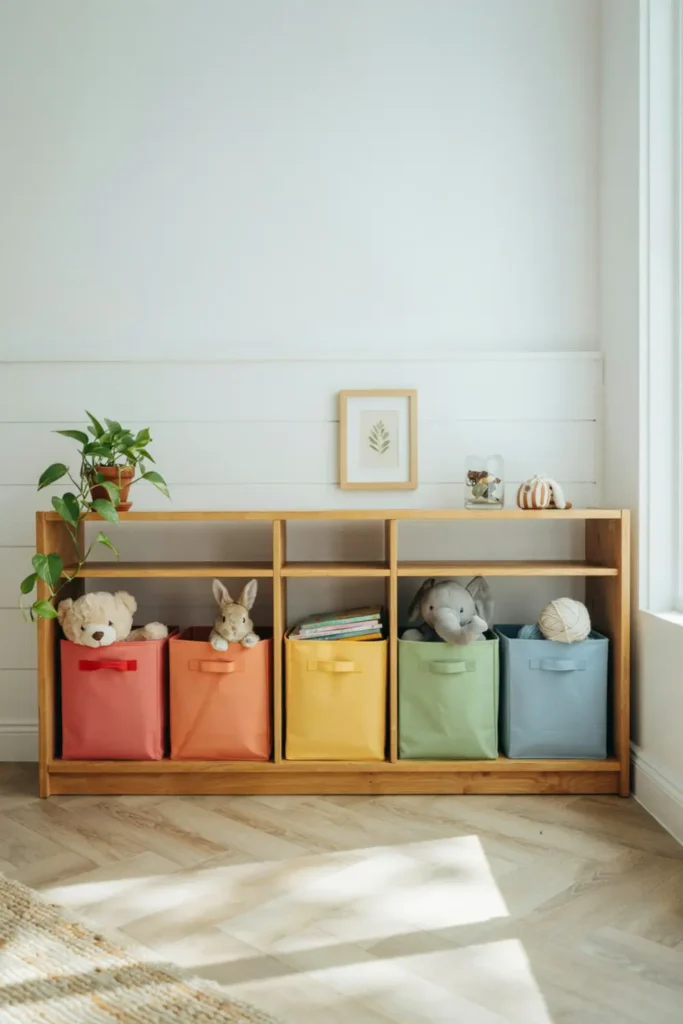
Color-coded bins turn cleanup time into a simple matching game. Every toy has a home, and every kid knows exactly where it goes. No more arguing about who put what where.
Use one color per category and stick to it consistently across the whole room.
- Red bins for cars and vehicles
- Blue bins for building blocks
- Yellow bins for art and craft supplies
- Green bins for outdoor and active toys
Fabric bins from IKEA or Target work perfectly for this system. They are soft, lightweight, and easy for small hands to pull off a shelf without tipping over
Indoor Climbing Wall Corner
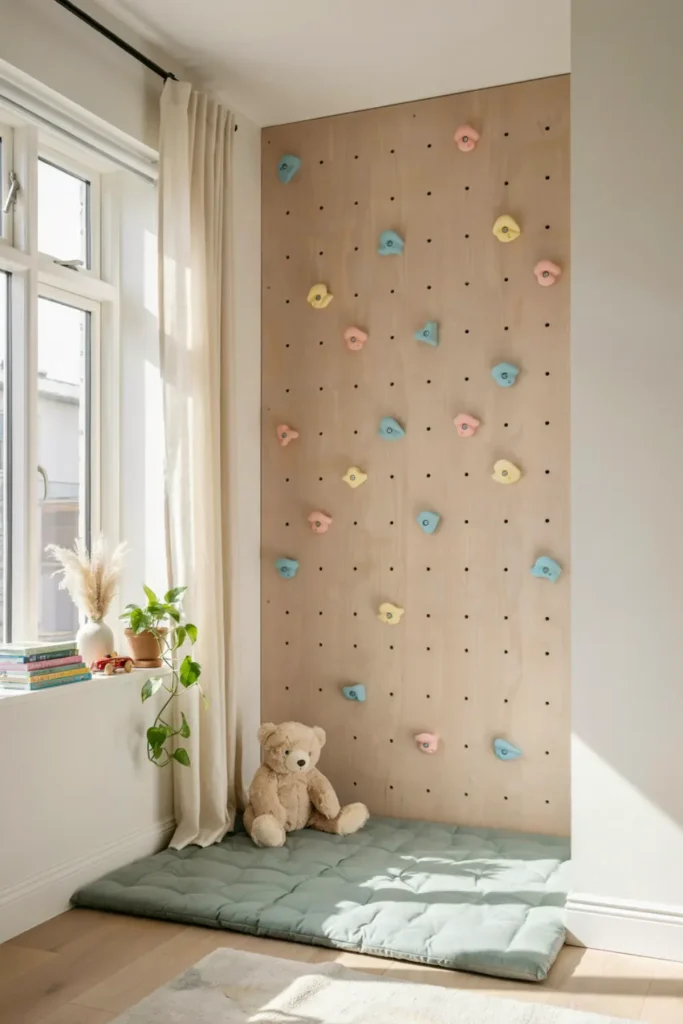
Active kids need to move their bodies, even on rainy days. A small climbing wall built into one playroom corner gives them a safe place to climb, grip, and build strength without leaving the house.
You only need one corner, a sheet of plywood, and a set of colorful rock holds to build a basic version.
- Add a thick foam mat below for safe landings
- Use pastel-colored holds for a modern, Scandinavian look
- Start with easy grips and add harder routes as kids grow stronger
This setup replaces expensive gym memberships and works for kids as young as three years old.
Montessori Forward-Facing Toy Shelf
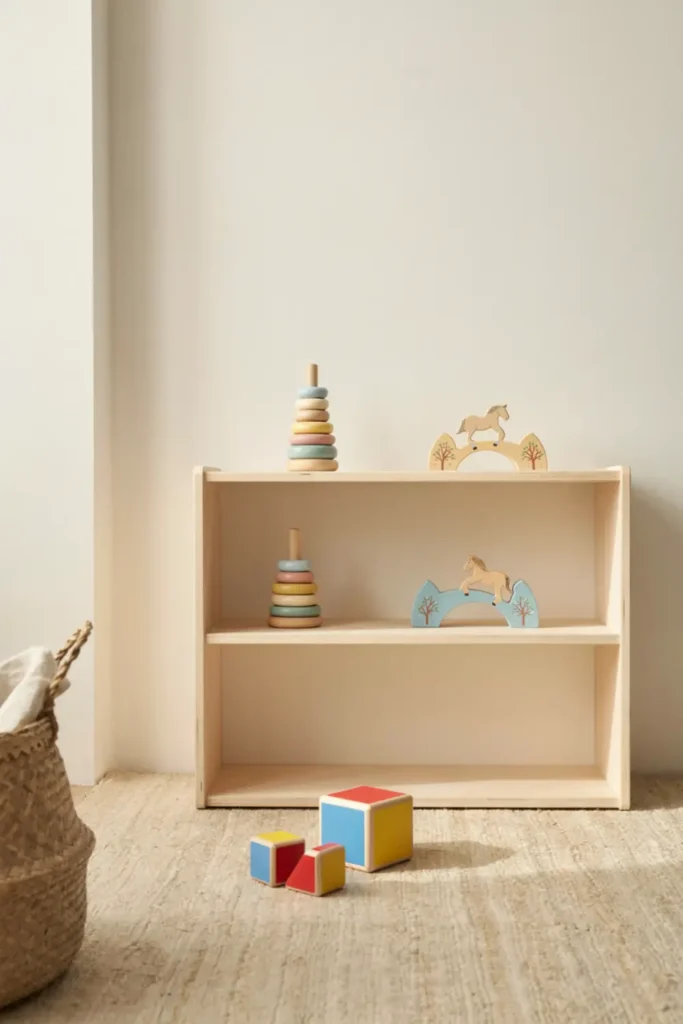
A Montessori shelf displays only three to five toys at a time. That limit is intentional. Fewer toys on display means deeper, longer independent play sessions for kids of every age.
The toys face forward so children can see and choose for themselves without adult help.
- Keep the shelf low enough for kids to reach without climbing
- Rotate toys every one to two weeks to keep interest high
- Choose open-ended toys like wooden blocks, puzzles, and stacking rings
This method is backed by child development research and works incredibly well in small playrooms where floor space is limited.
Roll-Out Lego Table on Casters
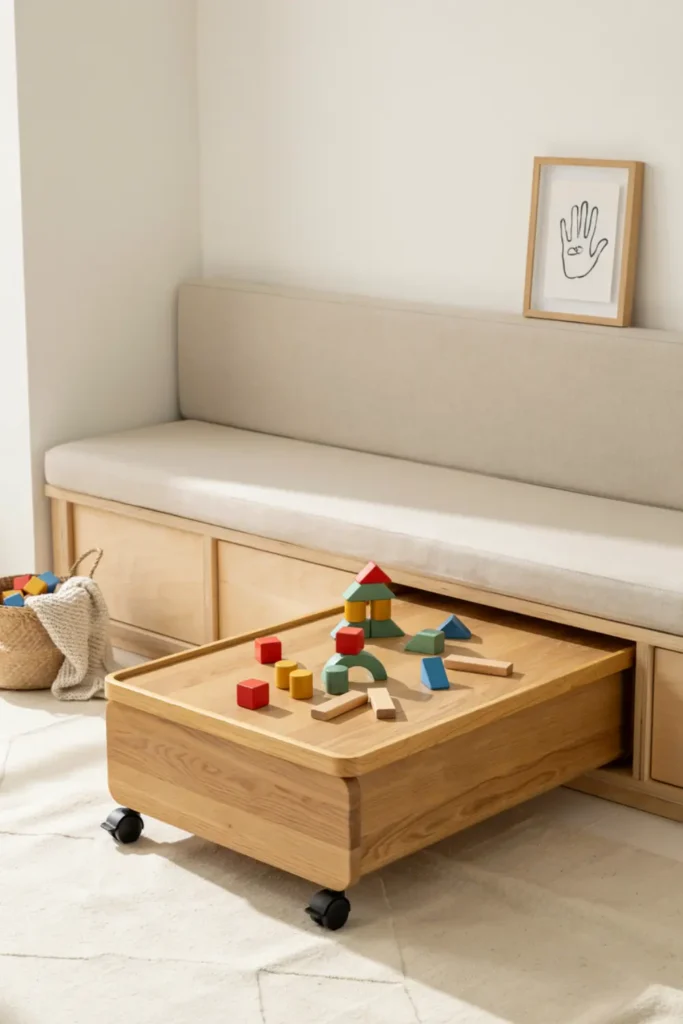
Lego bricks are one of the biggest floor hazards in any home with kids. A low wooden table on locking casters solves the problem completely. It rolls out for building sessions and tucks back under a bench or bed when playtime ends.
The flat top doubles as a display surface for finished Lego builds.
- Add a shallow rim around the table edge to stop bricks from rolling off
- Use a drawer underneath to store sorted brick colors
- Locking casters keep the table still during active building sessions
This is one of the most practical DIY playroom builds you can tackle in a single weekend.
Washable Layered Rugs
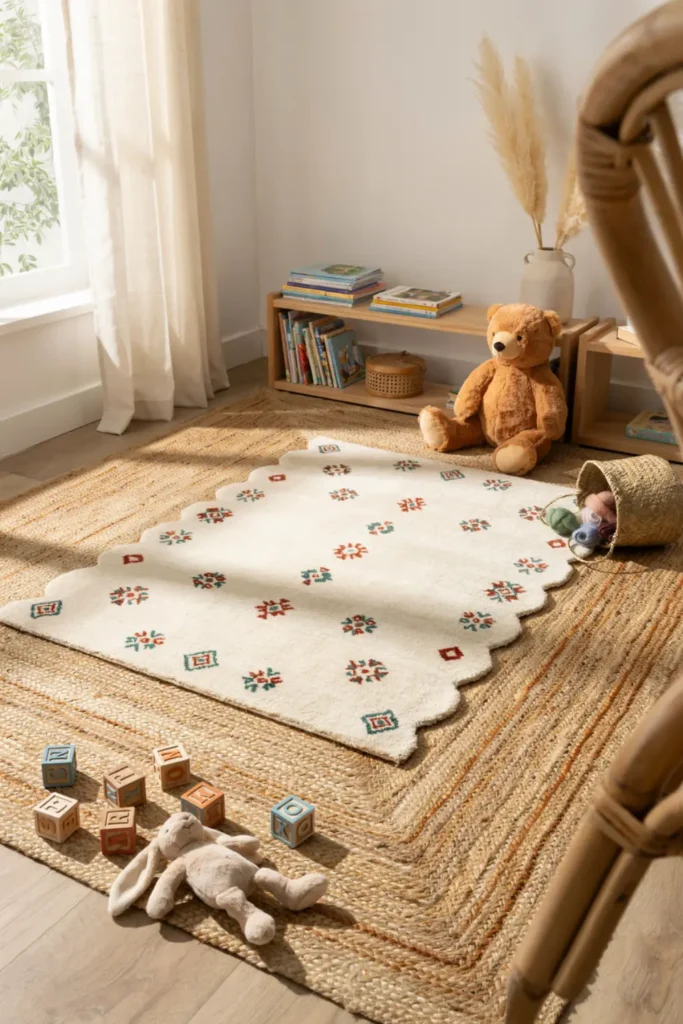
Playroom floors take a beating every single day. Layering a soft washable rug on top of a large jute base rug gives you a look that is cozy, stylish, and completely practical for messy kids.
The top rug takes all the spills and goes straight into the washing machine when needed.
- Choose a jute or natural fiber rug as the base layer
- Pick a machine-washable printed rug for the top layer
- Avoid rugs with high pile as they trap small toy pieces underneath
Brands like Ruggable make washable rugs designed specifically for high-traffic family spaces. The layered look also adds texture and warmth to any neutral playroom.
Pegboard Art Supply Station
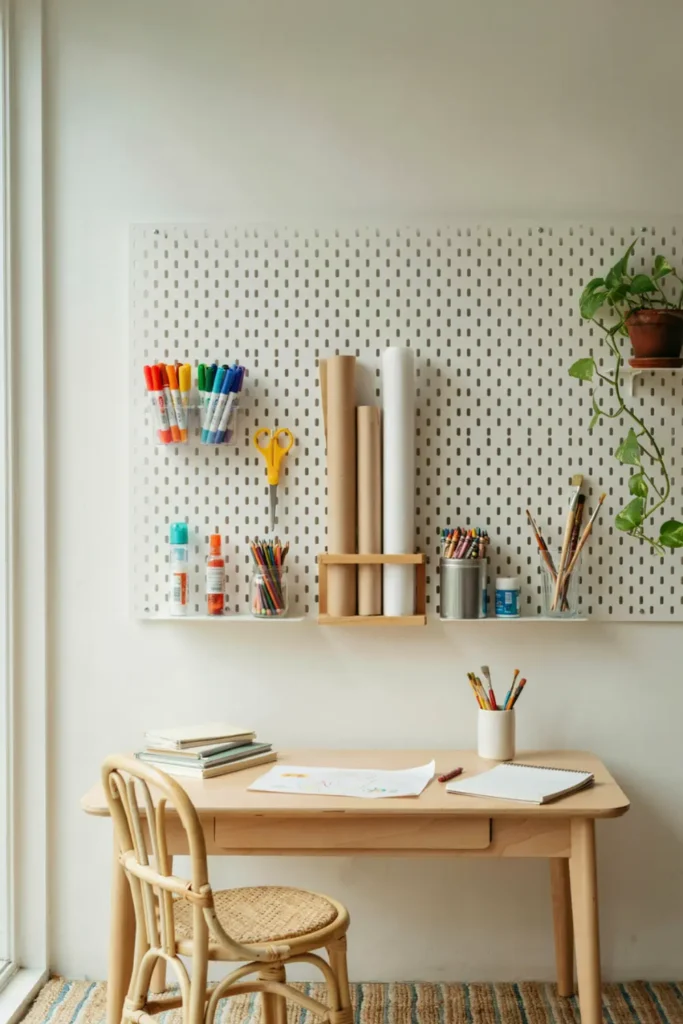
A pegboard mounted above a small desk turns a blank wall into a fully functional art station. Every supply has a hook, cup, or ledge to live on. Nothing gets lost in a drawer and nothing ends up on the floor.
This setup works perfectly in small playrooms where counter space is limited.
- Hang cups for markers, crayons, and brushes
- Add a paper roll holder on one side for easy tearing
- Use small shelves for paint bottles and glue sticks
White pegboards from IKEA are affordable and fit almost any wall size. Kids can see every supply at a glance and clean up takes under two minutes.
Ceiling-Mounted Sensory Swing
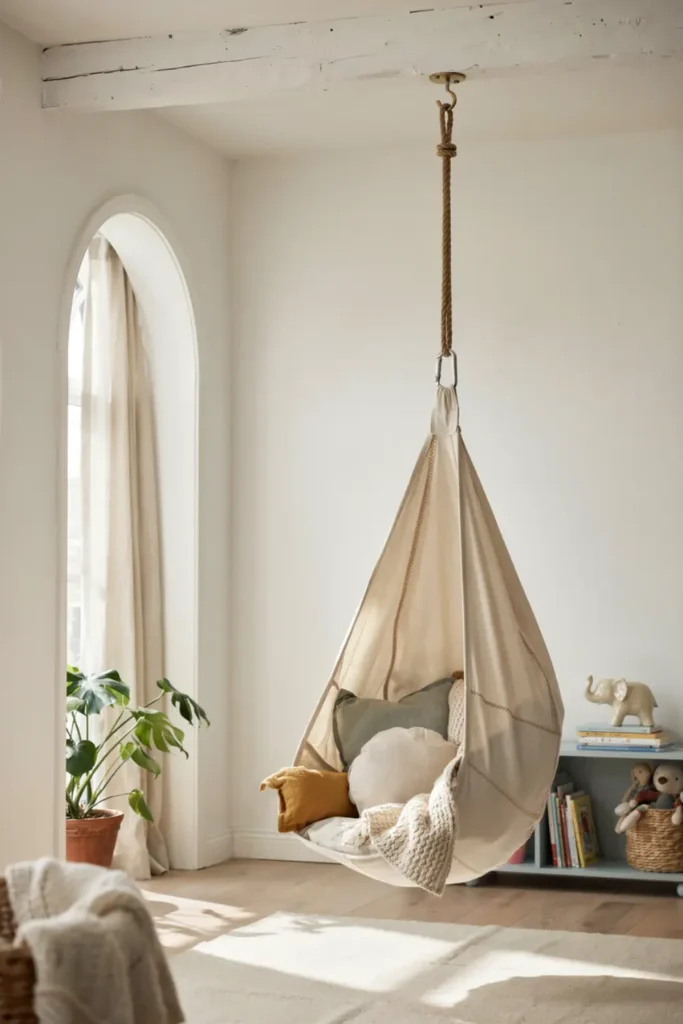
A sensory swing is not just for kids with sensory needs. Any child benefits from having a cozy, contained spot to swing gently, read quietly, or calm down after a big feeling.
A canvas teardrop swing mounted to a ceiling joist takes up almost no floor space at all.
- Fill the inside with two or three soft plush pillows
- Keep it in a low-traffic corner so kids can swing freely
- Use a proper ceiling anchor rated for dynamic weight loads
Many occupational therapists recommend sensory swings for focus and emotional regulation. It is one of the most used playroom features in homes that have one.
Window Seat with Hidden Toy Box
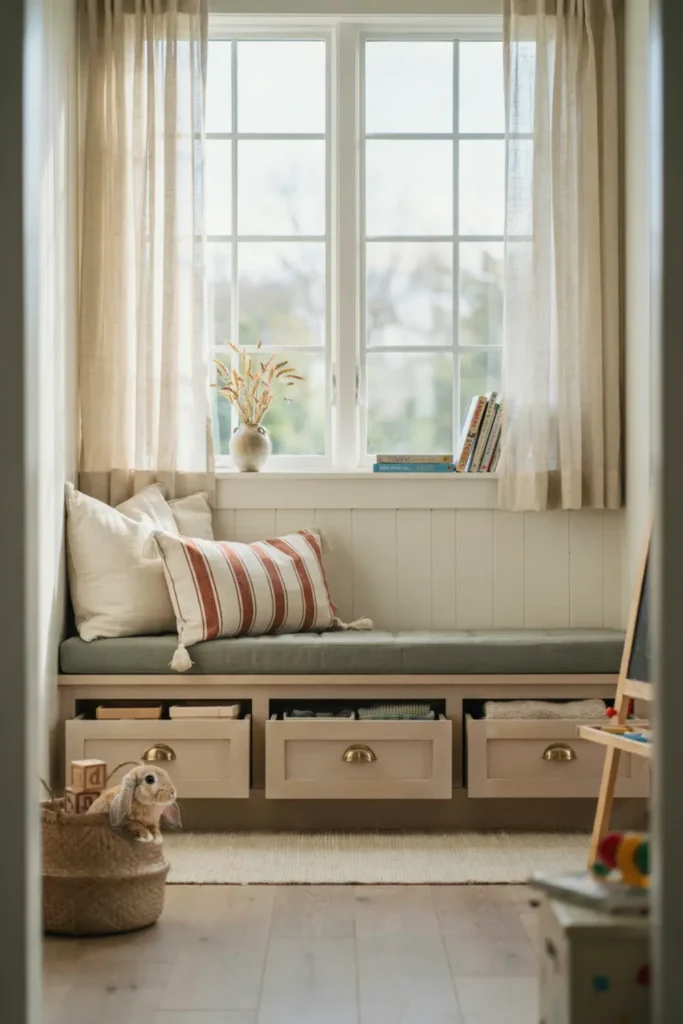
A built-in window seat pulls double duty better than almost any other playroom feature. Kids get a cozy spot to sit and read. Parents get a massive hidden storage compartment underneath the cushion.
The clean top surface makes the room look tidy even when the inside is packed full of toys.
- Use lift-up lid hinges for easy access to deep storage below
- Add pull-out drawers underneath for sorted toy categories
- Choose a washable cushion cover that wipes clean easily
This is a great weekend DIY build using basic plywood and store-bought cushions. It works in any room with a low window.
Fold-Down Wall Desk
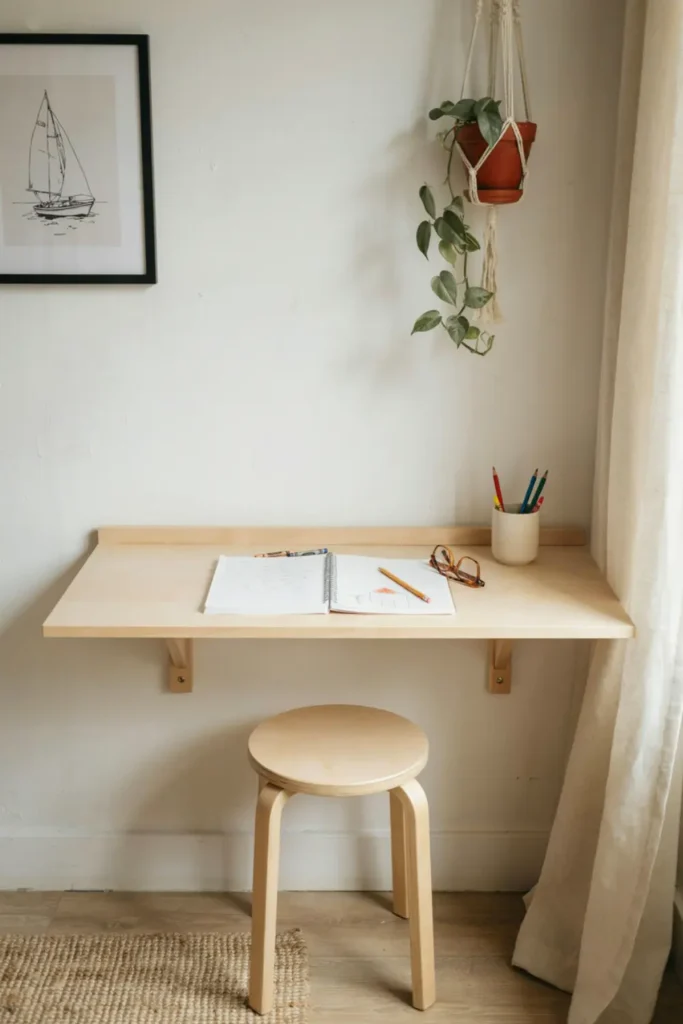
A fold-down desk mounts flat against the wall and drops down only when your child needs a workspace. When homework or art time is over, it folds back up and disappears completely.
This is one of the best hacks for small playrooms that need to serve multiple purposes.
- Mount it at the right height for your child’s current age
- Add a small pegboard or shelf directly above for supplies
- Choose a desk with a lip edge so papers and pencils do not slide off
Fold-down desks are widely available at IKEA and Amazon at very reasonable price points. Install takes about one hour with basic tools.
Dress-Up Wardrobe Corner
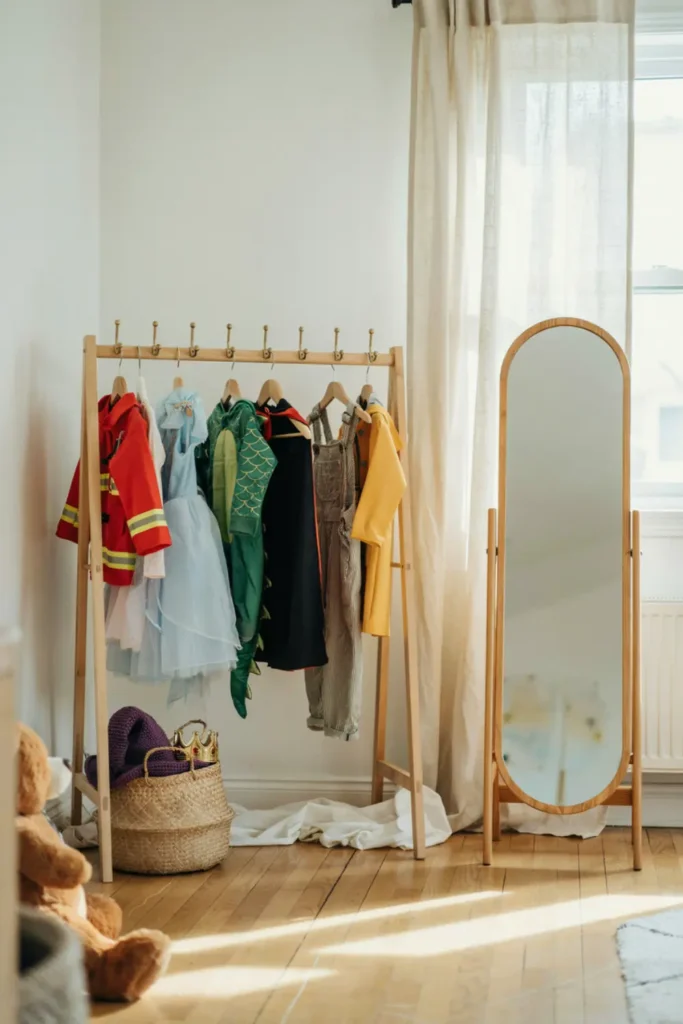
Costumes stuffed into a bin never get used. When kids can see every costume clearly on a rack, they play dress-up far more often. A small open clothing rail with a floor mirror next to it is all you need.
This corner takes up very little space and adds enormous play value.
- Use matching velvet hangers to keep costumes wrinkle-free and neat
- Add a small basket below the rack for crowns, wands, and accessories
- Place the mirror at child height so kids can see their full outfit
An open clothing rack from IKEA costs under thirty dollars and assembles in minutes.
Magnetic Wall Map
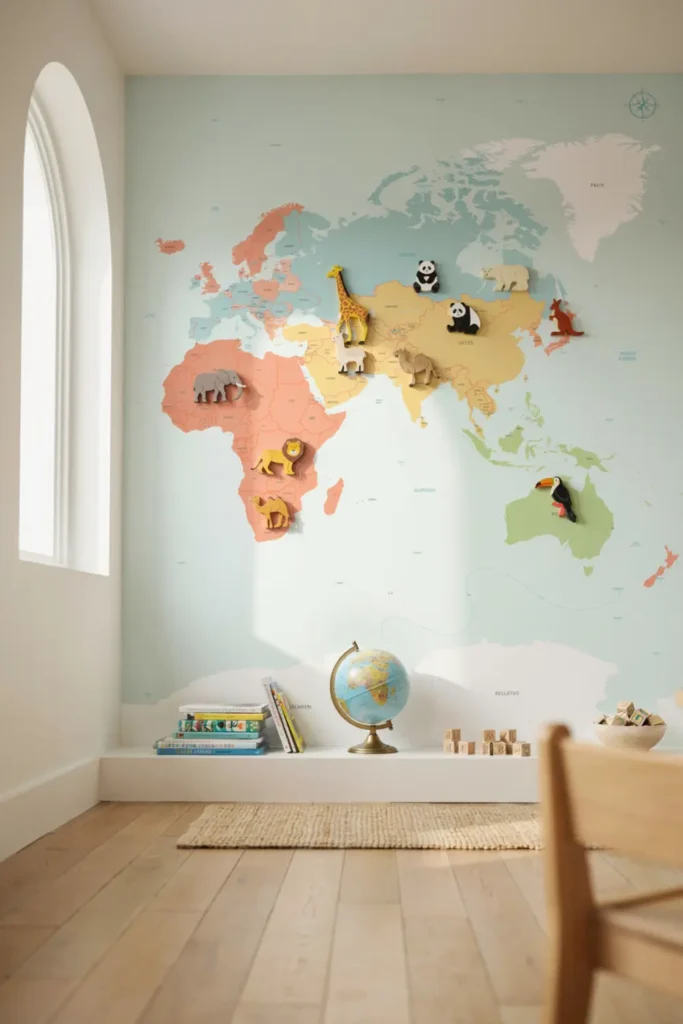
A large magnetic world map does two jobs at once. It decorates the playroom wall and teaches kids geography through hands-on play. Magnetic animal figures, vehicles, and country flags stick directly onto the surface for hours of quiet, screen-free learning.
Kids absorb geography naturally when they play with it daily.
- Mount it at child height so kids can reach every continent
- Use magnetic letters to spell out country names during play
- Swap out themed magnet sets by season to keep it fresh
This is one of the easiest educational upgrades you can make to any playroom wall without painting or major installation work.
Indoor Play Tent or Canopy
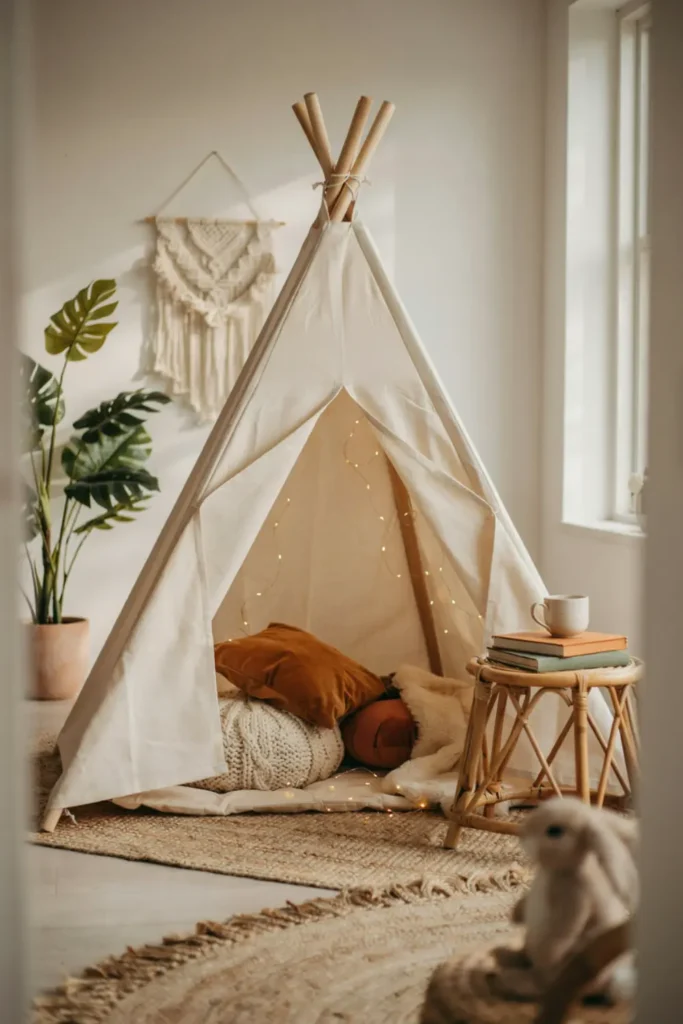
Every playroom needs a quiet zone. A canvas teepee tent in the corner gives kids a private, calm space to decompress, read, or play solo without distractions.
It creates a room within a room without any construction at all.
- String warm fairy lights inside the tent for a cozy glow
- Add three to four fluffy pillows and a small blanket
- Choose a neutral canvas color that blends with your room palette
Play tents also work as a calm-down corner for kids who need a sensory break during the day. Most fold flat for easy storage when not in use and set up again in under five minutes.
Foam Mat Checkerboard Floor
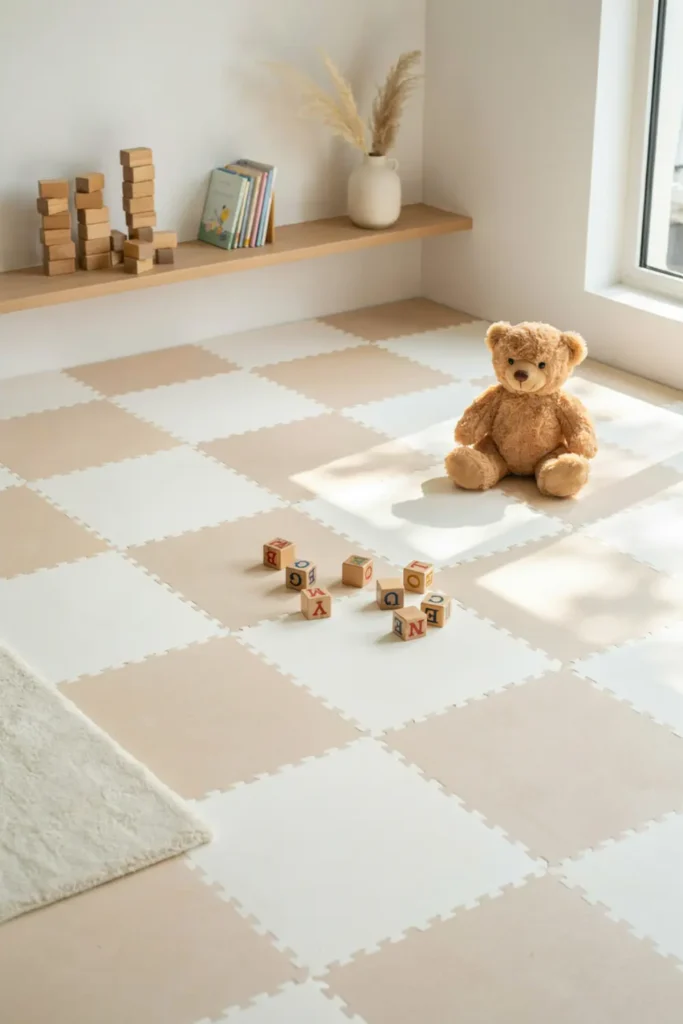
Standard foam mats look like a daycare floor. Checkerboard foam mats in beige and white look like intentional, high-end design. The difference is just the color choice.
Thick interlocking foam tiles protect little knees and muffle sound at the same time.
- Choose mats that are at least half an inch thick for real cushioning
- Wipe clean instantly with a damp cloth after spills
- Cut edge pieces with scissors for a clean, fitted finish
These mats are widely available online and cost a fraction of installing real soft flooring. They are one of the fastest playroom upgrades you can complete in a single afternoon.
The “Car Garage” PVC Pipe Hack
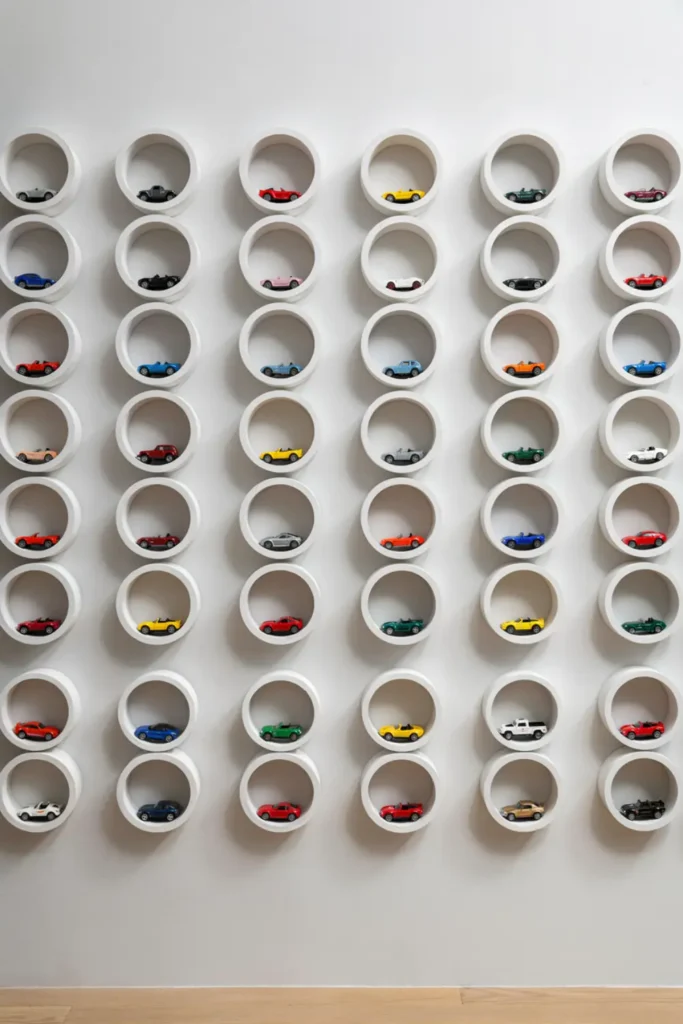
Toy cars are almost impossible to store neatly in a bin. They pile up, get scratched, and become impossible to sort. Short sections of PVC pipe mounted to a board solve this completely.
Each pipe section holds one car upright and visible at all times.
- Cut PVC pipes into four-inch sections using a basic hand saw
- Mount the board at child height for easy grab-and-go access
- Paint the board and pipes in a matching color for a clean finish
This is a simple DIY project that costs under fifteen dollars in materials. It works for Hot Wheels, Matchbox cars, and any similar small toy vehicle collection.
Dedicated “Art Display” Wire
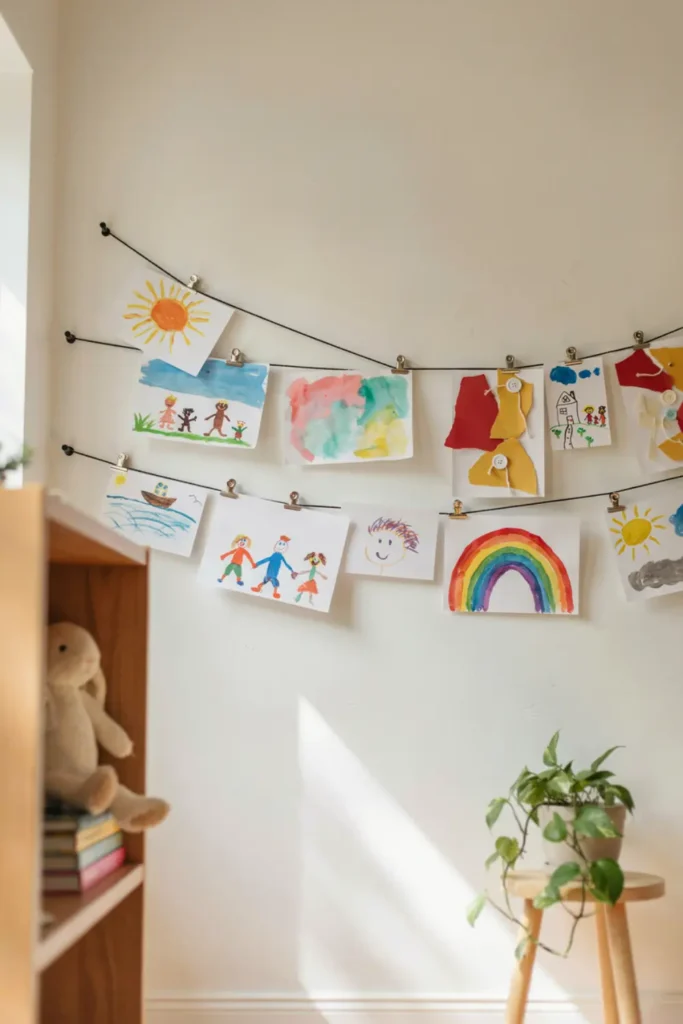
Kids make dozens of drawings every week. Sticking them all on the fridge creates clutter fast. A simple wire display system mounted across one wall turns artwork into a rotating gallery that kids feel proud of every single day.
Metal clips hold paintings flat without damaging the paper.
- Use two or three horizontal wires spaced evenly down the wall
- Swap out old pieces weekly to keep the display feeling current
- Take a photo of each piece before rotating it out to save memories
This setup costs under twenty dollars using basic picture wire and binder clips from any hardware store.
Pull-Out Puzzles and Board Game Shelves
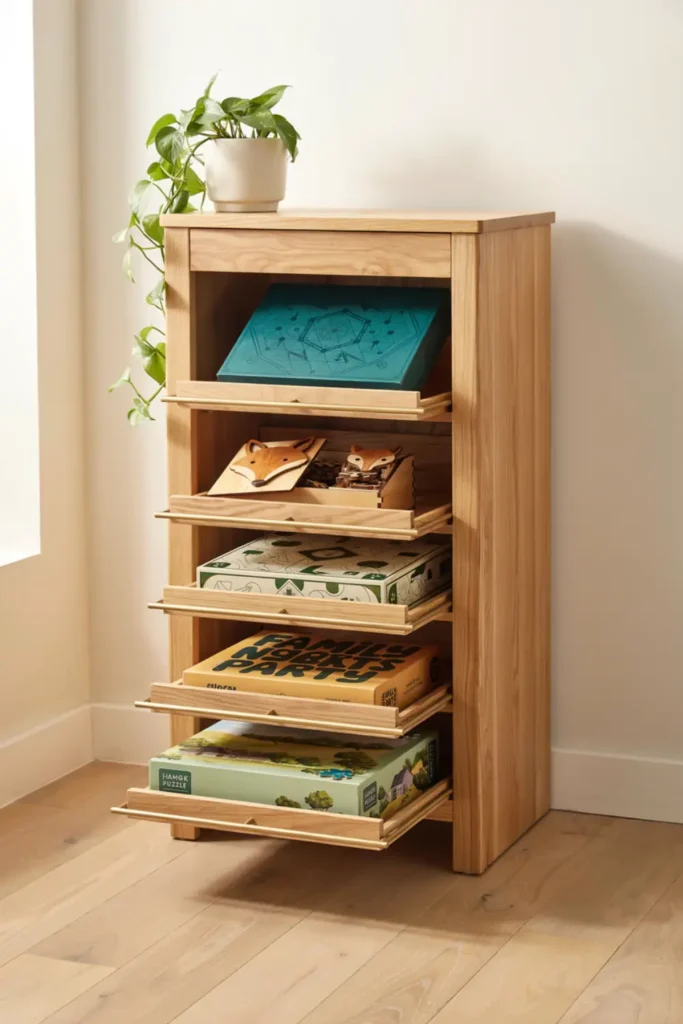
Stacking board game boxes on top of each other is a guaranteed way to lose pieces and damage boxes. Shallow pull-out trays solve this completely. Each tray holds one game or puzzle lying flat, fully visible, and easy to grab without disturbing anything else on the shelf.
This system works inside any standard cabinet with a little DIY modification.
- Build trays from thin plywood cut to cabinet width
- Space each tray about three inches apart for standard box depths
- Label the front edge of each tray with the game name
This is one of the most satisfying playroom organization builds you can complete in a single weekend.
Label Maker Bins with Picture Tags
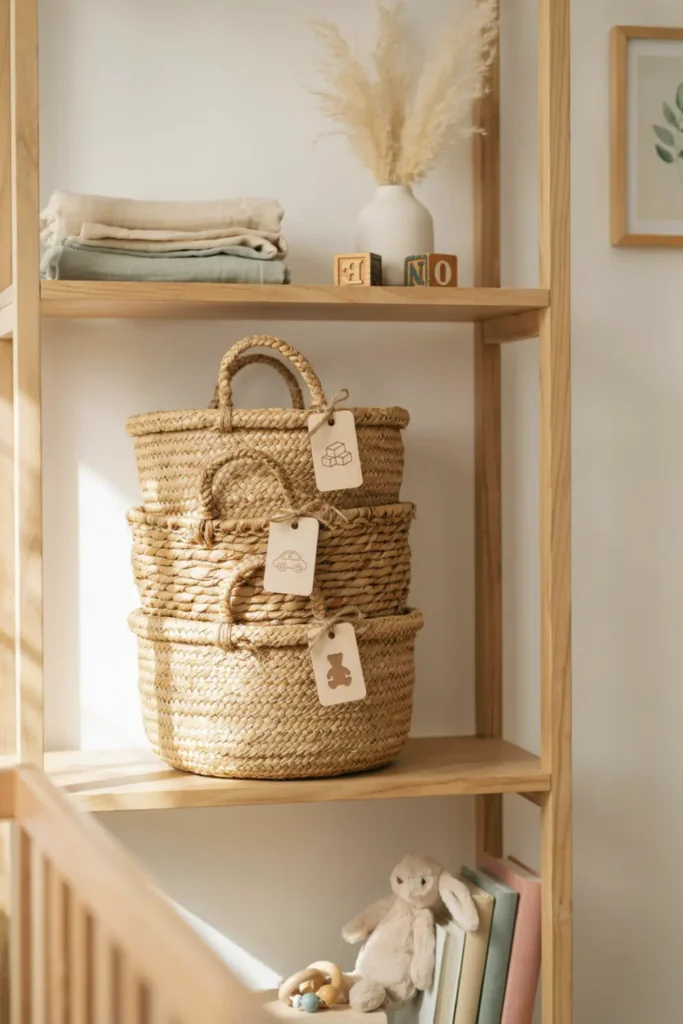
Toddlers cannot read labels yet, but they can match pictures perfectly. Swapping text labels for small picture tags on every storage bin teaches cleanup habits years before kids start school.
Use a simple icon that matches exactly what lives inside each bin.
- Engrave wooden tags with a basic toy icon for a polished look
- Laminate printed paper tags as a fast and free alternative
- Keep the tag style consistent across every bin in the room
This system works with any bin type including IKEA Trofast inserts, woven baskets, and fabric cubes. Kids as young as eighteen months can successfully use picture-tagged storage with very little adult guidance.
DIY Puppet Theater Doorway
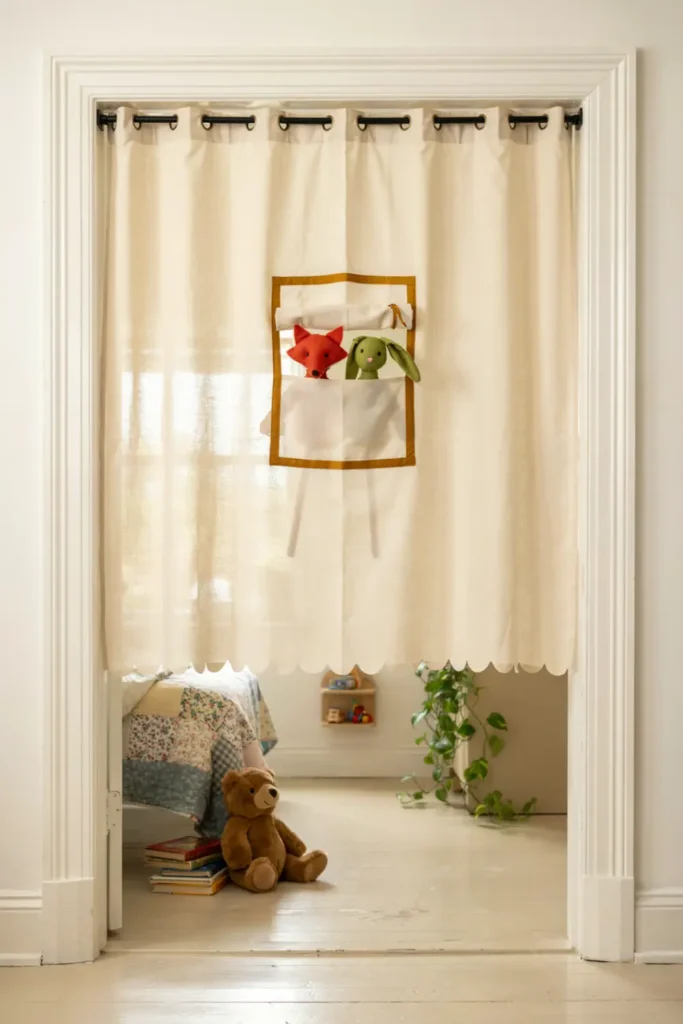
A puppet theater built into a doorway uses zero floor space and zero wall space. A tension rod holds a simple fabric panel with a cutout window at child height. The whole setup installs in under ten minutes and comes down just as fast.
Kids use it for puppet shows, pretend play, and storytelling sessions.
- Use a standard tension rod that fits any door frame without drilling
- Sew or cut a rectangular window opening in the center of the fabric
- Choose a bold striped or patterned fabric for a classic theater look
This is one of the most creative zero-cost playroom ideas that works in any home regardless of room size.
Rotating Toy Display Cart
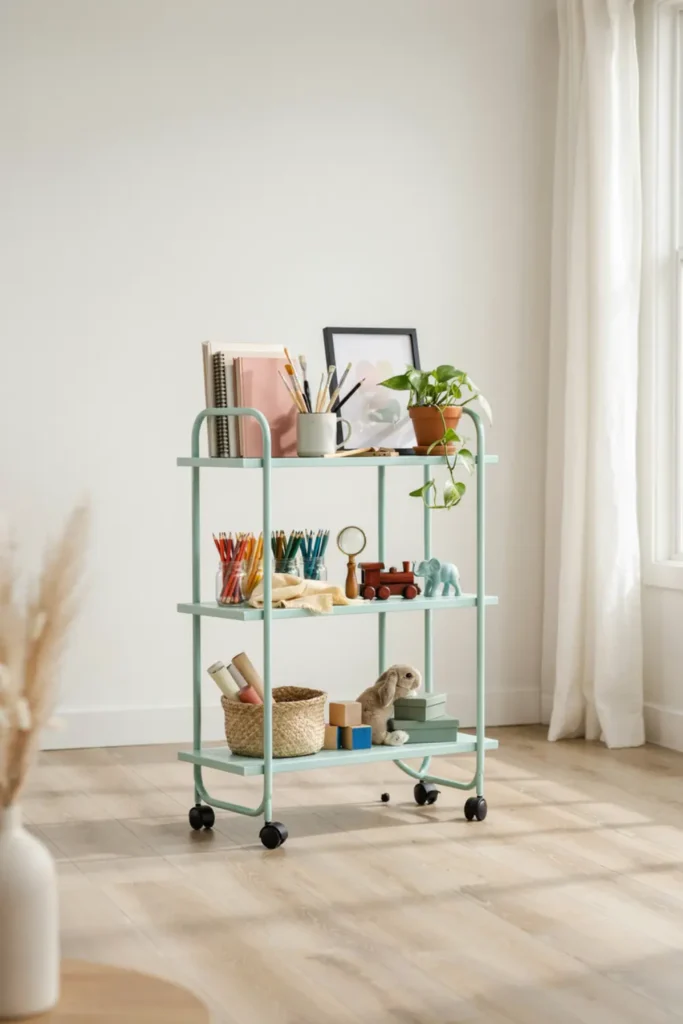
A three-tier rolling cart is one of the most flexible storage tools in any playroom. It holds current toys, art supplies, or activity sets on its shelves and rolls wherever it is needed in seconds.
When playtime moves to the kitchen or living room, the cart moves too.
- Use the top tier for active projects and current favorites
- Keep the bottom tier for heavier items like clay or paint sets
- Choose a pastel-colored metal cart for a modern, aesthetic look
The IKEA RASKOG cart is a popular, affordable option that fits neatly beside most furniture. It is easy to wipe clean and holds a surprising amount for its small footprint.
Under-Bed Train Table Pullout
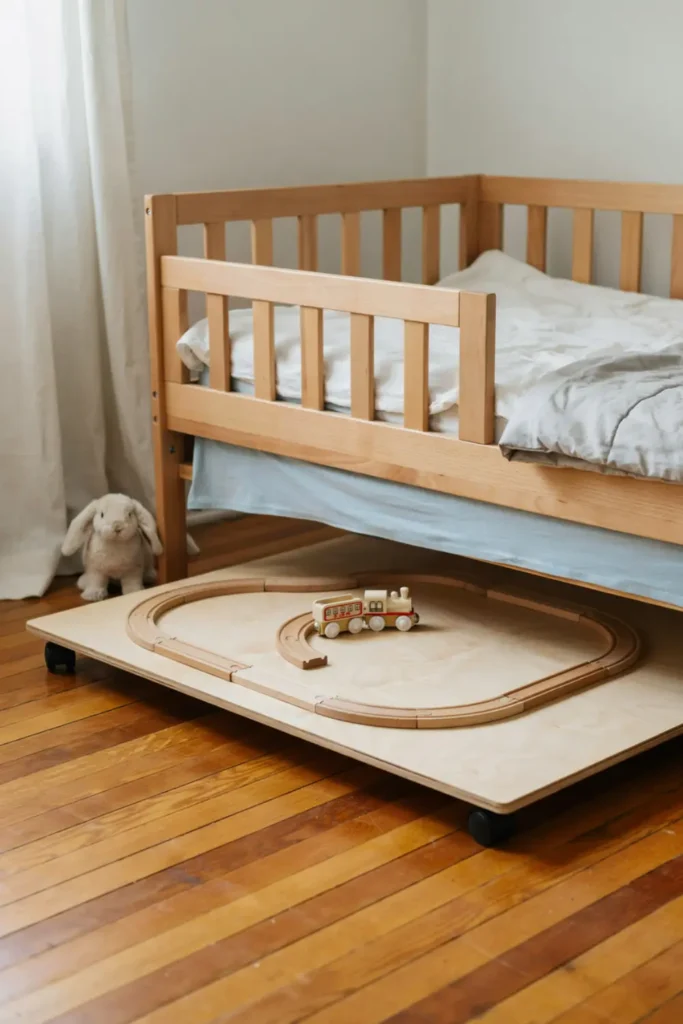
A full train table takes up enormous floor space when left out permanently. Mounting the entire track layout onto a flat board with locking casters solves the problem instantly. The whole setup rolls out for play and slides back under the bed when it is done.
The track stays assembled and ready to use every single time.
- Use a half-inch plywood board cut to fit your under-bed clearance
- Attach four locking casters to the corners of the board
- Build low wooden border edges to stop trains from rolling off during play
This DIY build takes one afternoon and completely transforms how much floor space your playroom has on a daily basis.
Bring Your Dream Playroom to Life
These 25 ideas cover every budget, every room size, and every type of kid. You do not need to do all of them. Pick two or three that fit your space right now and start there. Small changes add up to a playroom your kids will actually use and love every day. If one of these ideas caught your eye, save it to your Pinterest board so you can find it again when you are ready to build.
Frequently Asked Questions
What is the best playroom storage for small spaces?
The IKEA Trofast system and wall-mounted pegboards are the top choices for small playrooms. Both use vertical space instead of floor space. Floating shelves and fold-down desks also free up significant room without sacrificing function.
How do I keep a playroom organized with toddlers?
Use picture-tagged bins so toddlers know exactly where every toy belongs. Keep only a small number of toys visible at one time using a Montessori-style open shelf. Rotate toys every one to two weeks to maintain interest without adding more clutter.
What flooring is best for a playroom?
Interlocking foam tiles are the most practical choice. They are soft, affordable, easy to clean, and protect kids during falls. For a more stylish look, layer a washable rug on top of a jute base rug to get both comfort and aesthetics.
How do I create a playroom on a tight budget?
Start with a chalkboard wall, a tension rod puppet theater, and color-coded fabric bins. All three cost very little and deliver a big impact. DIY builds like the PVC car garage and roll-out train table use basic materials available at any hardware store for under twenty dollars.
What age is a sensory swing good for?
Sensory swings are generally safe and beneficial for children from around two years old and up. Always check the weight limit on the specific swing you purchase. Ceiling-mounted swings must be anchored into a solid joist, not just drywall, for safe daily use.
How many toys should be in a playroom at one time?
Child development research suggests that fewer toys on display leads to longer and more creative play sessions. A Montessori-style shelf with three to five toys at a time is a strong starting point. Store the rest in rotation bins and swap them out regularly.