A modern farmhouse kitchen does one thing really well: it makes a space feel both polished and lived-in at the same time. That balance of clean lines and rustic warmth is exactly what defines this style, and it’s why my clients keep requesting it.
I’ve spent years helping homeowners pull this look together without it feeling overdone or generic. The secret isn’t a single cabinet color or a trendy sink. It’s about layering the right textures, finishes, and fixtures so everything feels intentional.
In this guide, I’m walking you through every element that makes a modern farmhouse kitchen work. From cabinetry and hardware to lighting and color, these are the same choices I use in my own client projects.
Whether you’re doing a full renovation or a simple refresh, this is your starting point.
The Perfect Balance of White and Wood
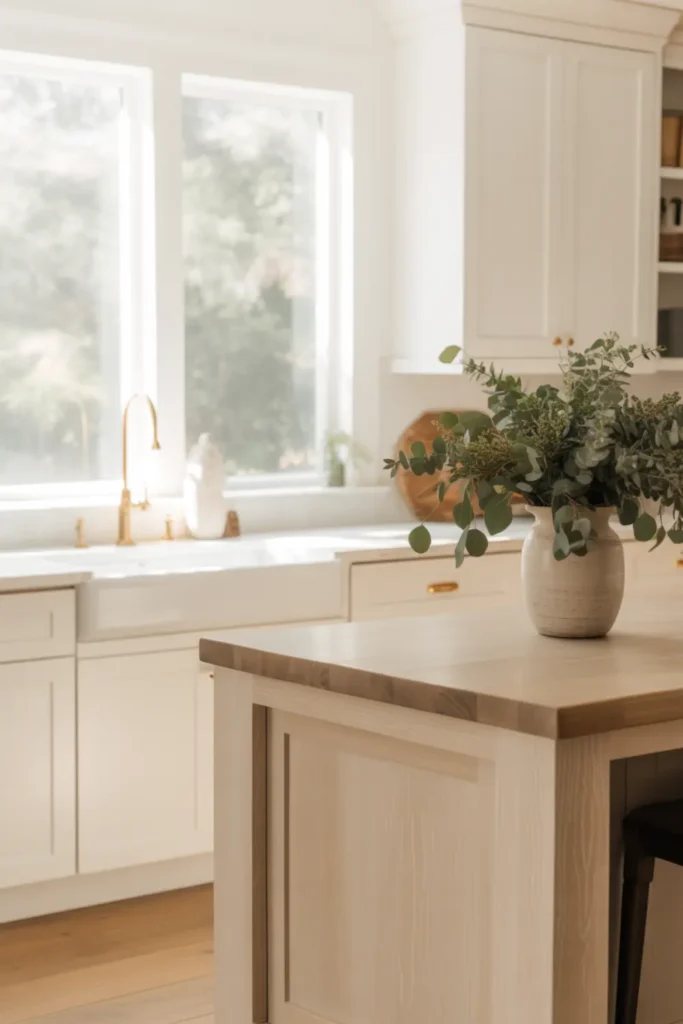
White and wood is the foundation of every modern farmhouse kitchen I design. The combination works because it brings brightness and warmth into the same space without either one taking over.
The key is getting the white right. A stark, cool white will make your kitchen feel more like a lab than a home. I always point clients toward a warm white with soft undertow, something like Benjamin Moore White Dove, which reads clean but never cold.
Pair that with white oak on the island or open shelving and you get a natural contrast that feels grounded. The wood grain adds texture, the white adds light, and together they create that effortless, airy look the style is known for.
Statement Farmhouse Apron Sinks
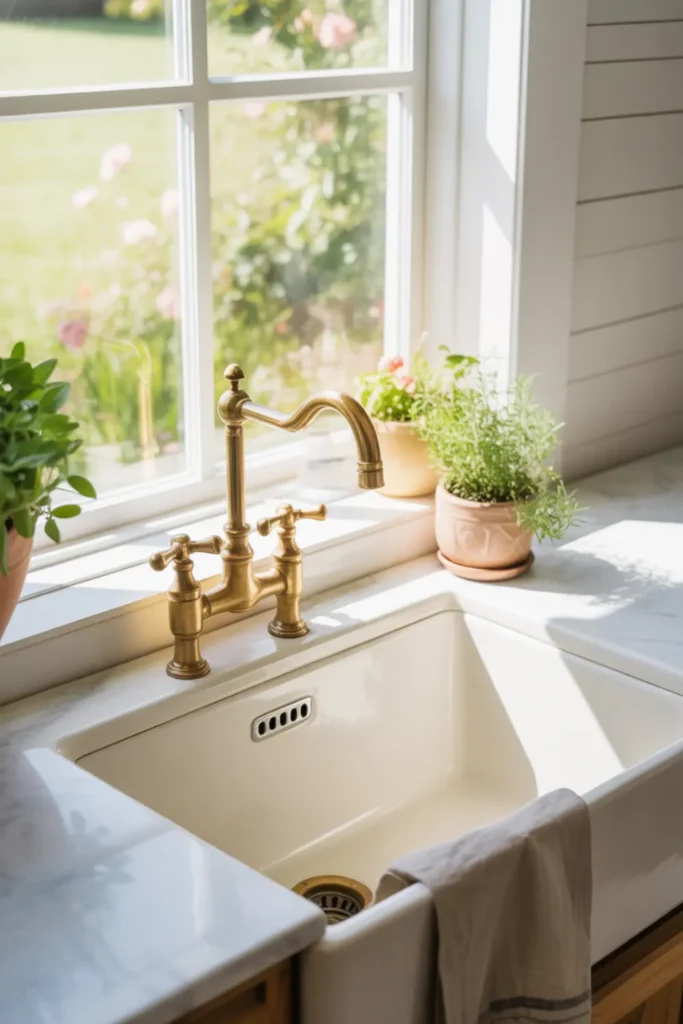
The apron-front sink is the most recognized feature of a modern farmhouse kitchen, and for good reason. It’s as functional as it is beautiful.
Fireclay is my top pick for most clients. It holds up to heat, resists staining, and has that thick, substantial look that feels intentional. Stainless steel works well too if you want something slightly more modern and easier to maintain.
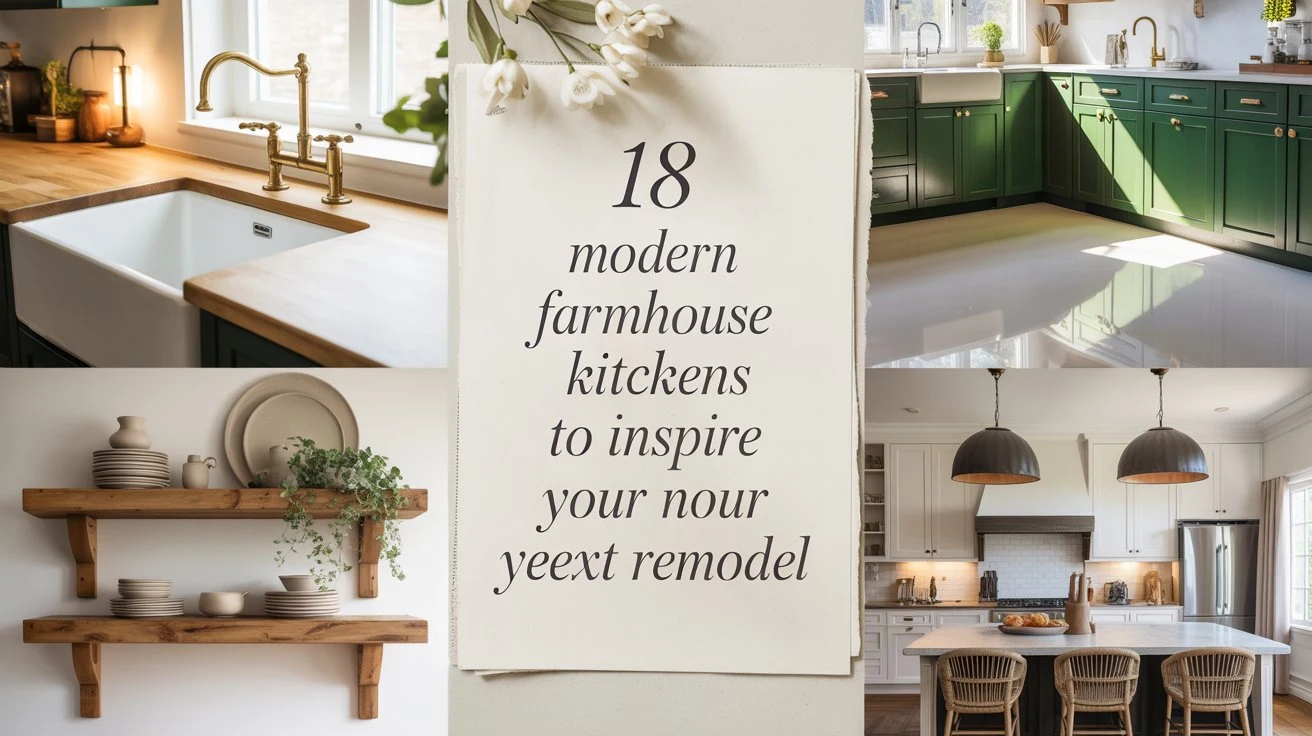
What really makes the sink pop is the faucet pairing. A brass bridge faucet above a white fireclay basin is one of my favorite combinations in any kitchen. It adds vintage character without looking dated. Practically speaking, the wide basin also makes washing large pots and sheet pans so much easier, which clients always appreciate after the first week.
Matte Black Hardware for Modern Contrast
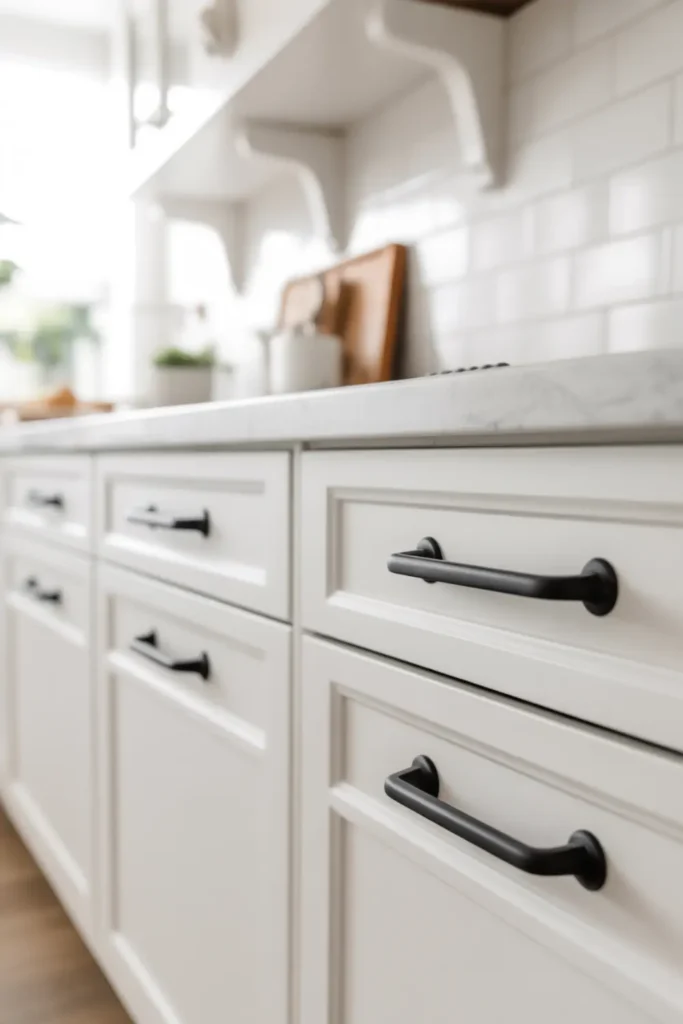
If there’s one update that costs the least and delivers the most, it’s swapping out standard cabinet pulls for matte black hardware.
In a kitchen full of white cabinetry and warm wood tones, black hardware acts as a visual anchor. It sharpens the whole room and keeps it from drifting into overly soft territory.
Bar pulls work beautifully on drawers. Simple round knobs on upper cabinets keep things clean. The finish doesn’t need to match perfectly across every fixture either. A mix of matte black pulls with a slightly warmer black faucet still reads cohesive because the tone is consistent.
This is one of the first things I recommend to clients who want a modern farmhouse feel without touching the cabinets themselves.
Moody Farmhouse with Deep Green Cabinets
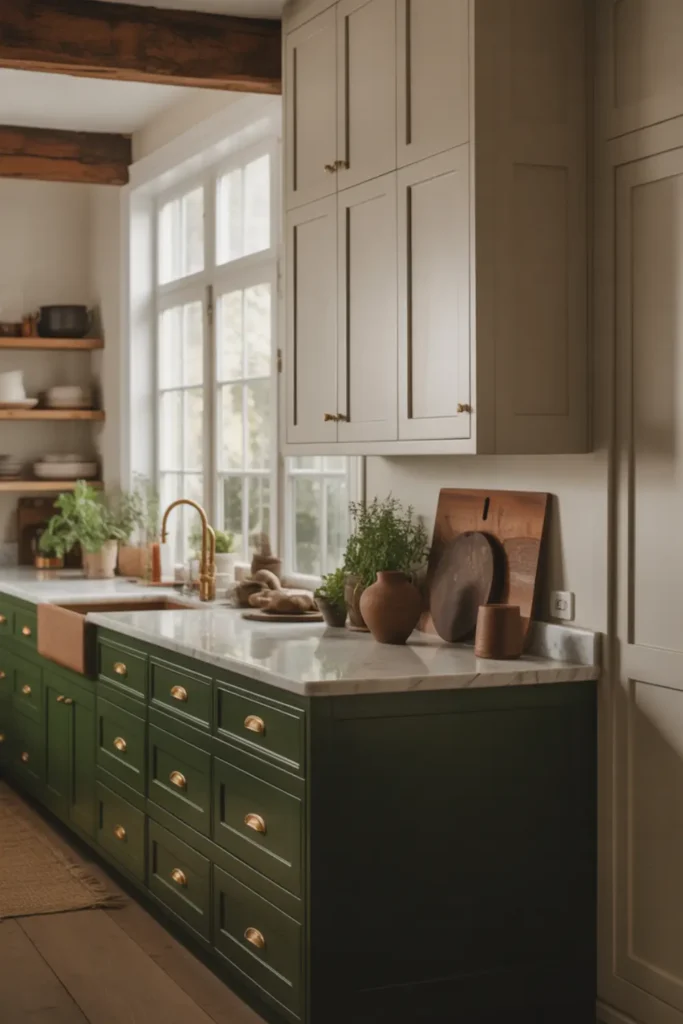
Not every modern farmhouse kitchen needs to be white from wall to wall. Deep green is one of the best ways to bring richness and personality into the space.
I’ve used sage green, olive, and forest green on lower cabinets and islands, and each one brings something different. Sage feels soft and organic. Forest green feels grounded and almost editorial.
Pairing green lowers with white uppers is a classic split that keeps the room feeling open while still making a statement. Add brass hardware and you’ve got a kitchen that feels both earthy and elevated at the same time.
My clients who go green almost always say they wish they had done it sooner. It photographs beautifully too, which never hurts.
High-End Polished Floors and Rustic Beams
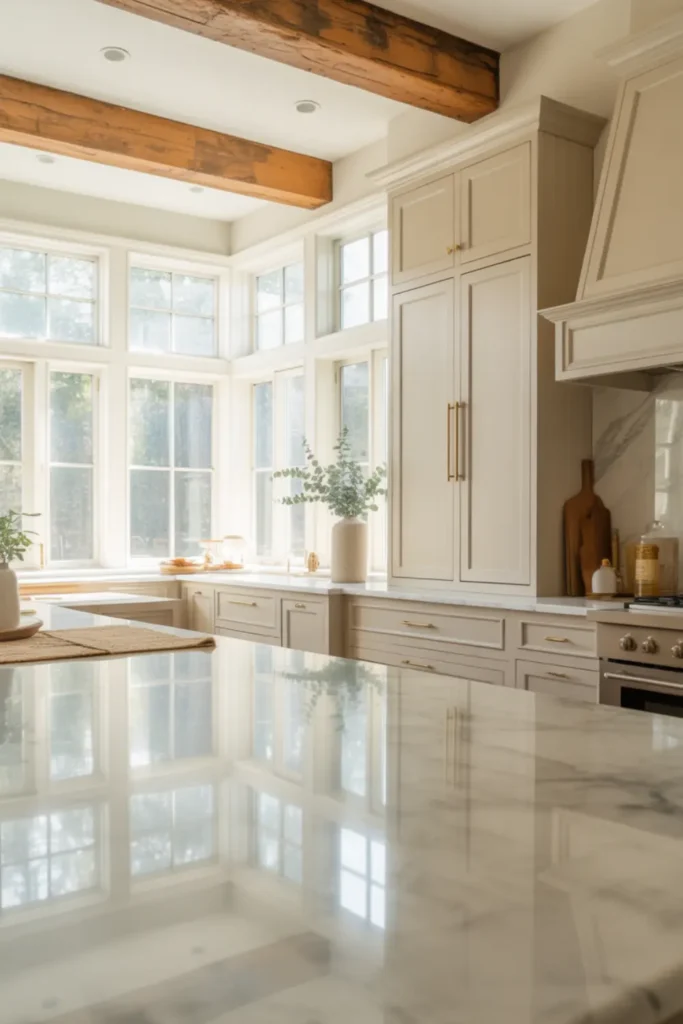
Raw wooden ceiling beams and a polished floor shouldn’t work together on paper, but in a modern farmhouse kitchen, that contrast is exactly what makes the room feel special.
The beams bring in the rustic, handcrafted element. The floor brings the luxury. I’ve been recommending a mirror-finish epoxy marble floor to clients who want something that truly elevates the space. It reflects natural light back into the room, making even a modest-sized kitchen feel much larger and more open.
The key is keeping everything else relatively simple when you use both of these elements. Let the beams and the floor do the talking. White cabinetry, minimal clutter, and a few well-placed plants are all you need around them.
While the classic barn look is timeless, integrating elements from popular contemporary cooking spaces keeps your home feeling updated.
Open Shelving for Everyday Decor
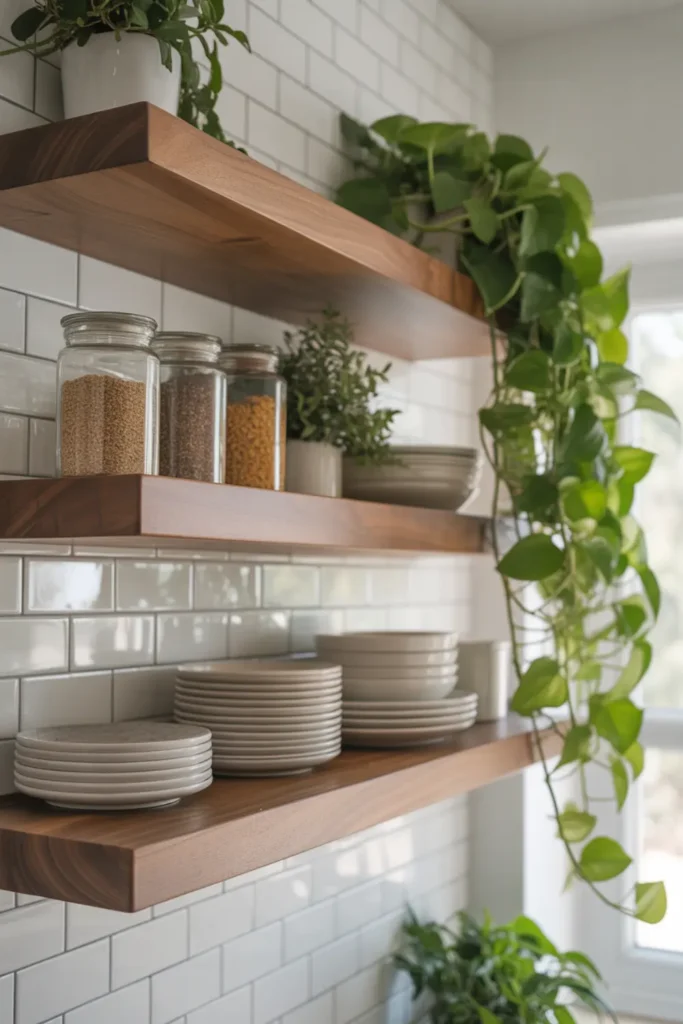
Swapping out a few upper cabinets for thick floating wood shelves is one of the easiest ways to open up a modern farmhouse kitchen and give it that relaxed, curated feel.
The shelves themselves should have weight to them. Thin shelves look cheap. Go for solid wood, at least two inches thick, in white oak or walnut.
Styling them is where most people get stuck. My go-to approach: stack white ceramic plates on one end, line up a few clear glass jars in the middle, and let a trailing plant drape over the edge. That combination of practical and organic is what makes open shelving feel styled without looking overdone.
Industrial Pendant Lighting
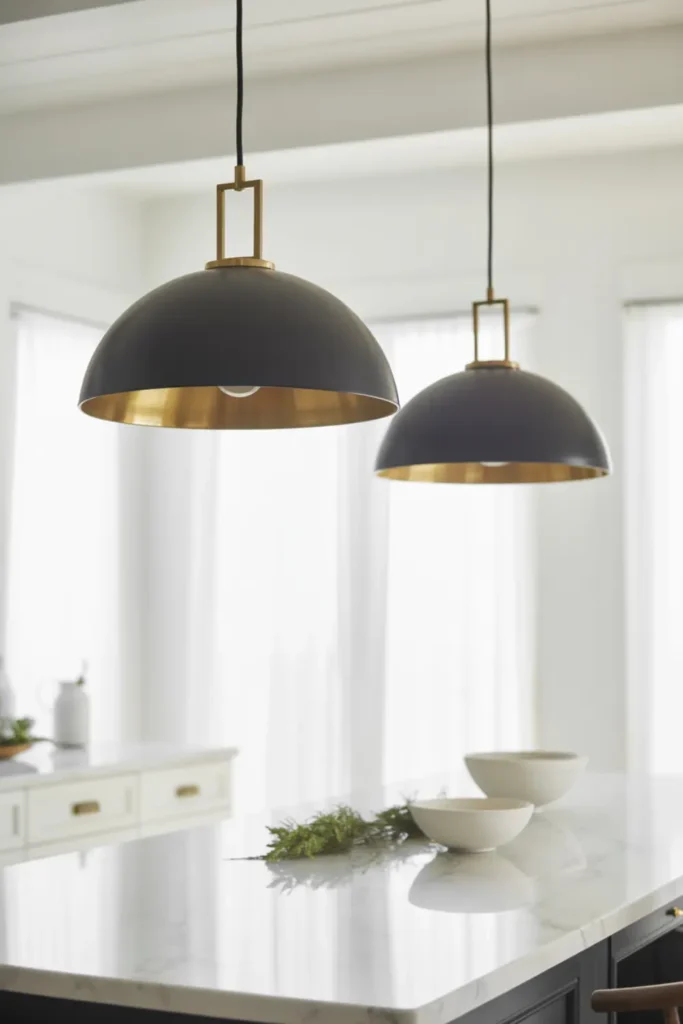
Lighting is the jewelry of a kitchen, and nothing makes an island feel more finished than a pair of oversized pendants hung at the right height.
For a modern farmhouse space, I lean toward matte black dome pendants or brass-and-glass lantern styles. Both work well because they bring in that industrial or vintage character without competing with the rest of the room.
Scale matters more than most people realize. Pendants that are too small over a wide island look timid. Go bigger than you think you need. Hang them around 30 to 36 inches above the countertop surface for the best light distribution and proportion. Two pendants almost always look better than one, even on a smaller island.
Warm Butcher Block Countertops
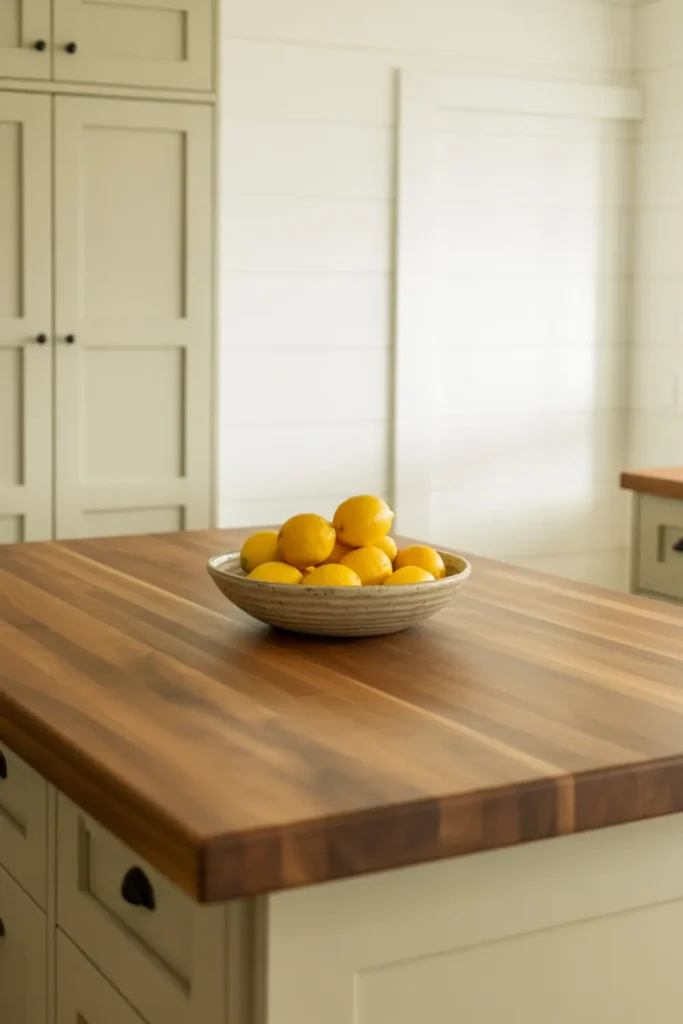
If you want warmth on your island without the cost of stone, butcher block is the move. Walnut is my personal favorite because of the rich, dark grain. White oak butcher block is a softer option that works especially well in kitchens already leaning into that natural wood palette.
The key is maintenance, and it’s simpler than people think. Oil it with food-grade mineral oil when it starts to look dry, and it’ll stay beautiful for years. Avoid letting standing water sit on it for too long.
I often recommend butcher block on the island paired with a quartz or marble perimeter countertop. You get the warmth where it counts, and the durability where you need it. Check out Lowe’s butcher block buying guide for solid options at every budget.
Classic Subway Tile with Dark Grout
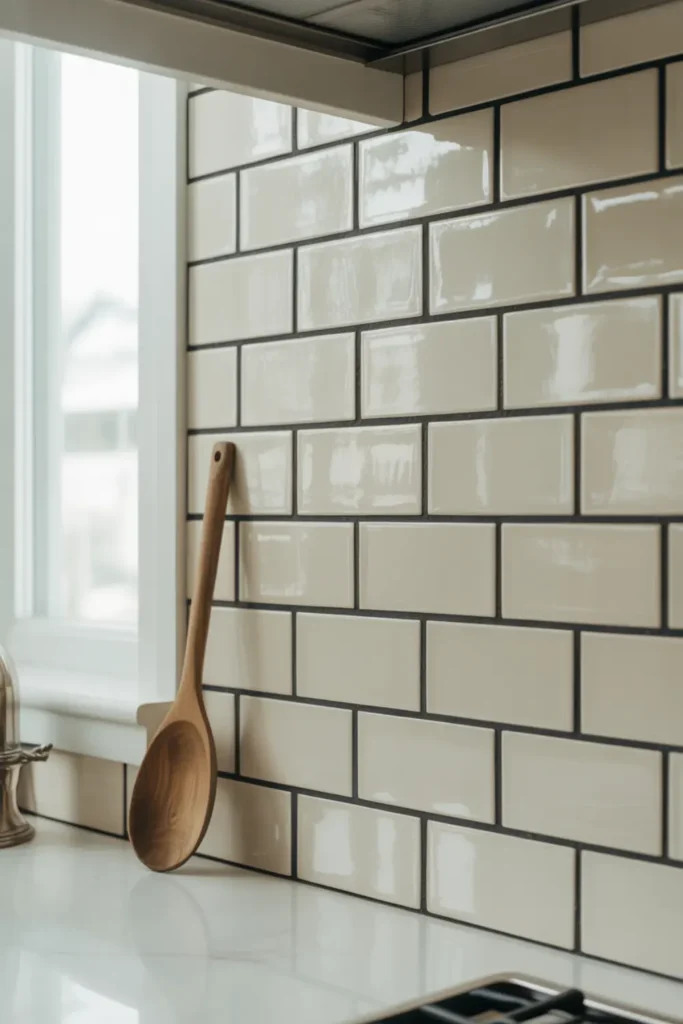
White subway tile has been a kitchen staple for decades, and it’s not going anywhere. What makes it feel fresh in a modern farmhouse kitchen is the grout choice.
Swap the standard white grout for charcoal or dark gray, and the whole backsplash changes character. The grid becomes visible, the tile gets definition, and the wall suddenly looks intentional rather than default.
It also happens to be one of the most practical backsplash choices you can make. Subway tile is easy to wipe down, widely available, and budget-friendly. The dark grout hides everyday grime far better than white grout ever does. It’s one of those decisions that looks high-end and makes your life easier at the same time.
The Cozy Breakfast Nook
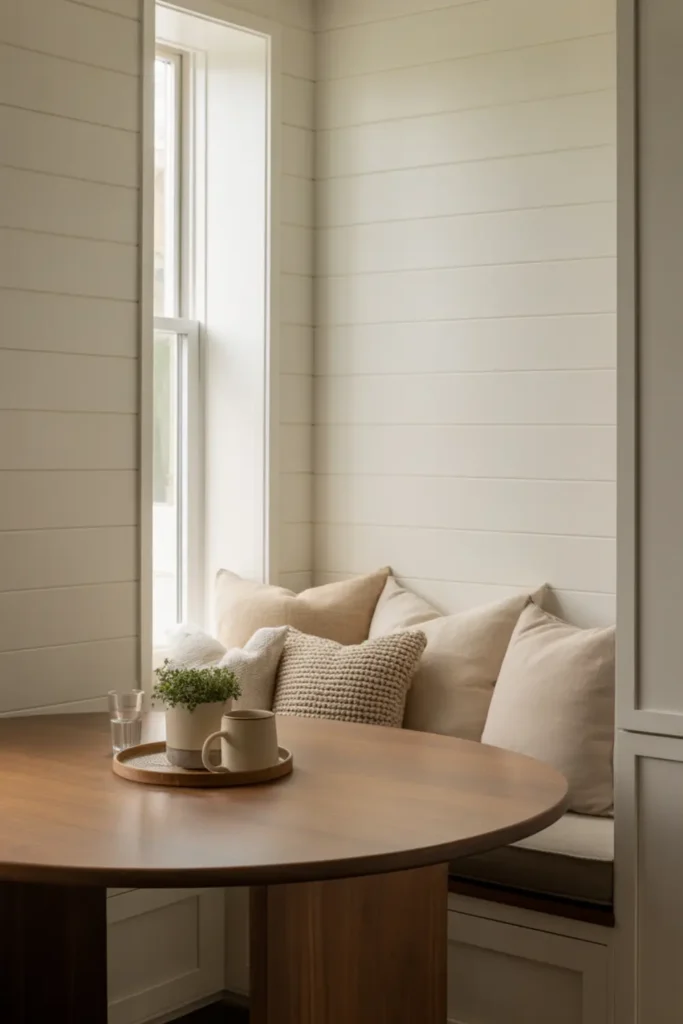
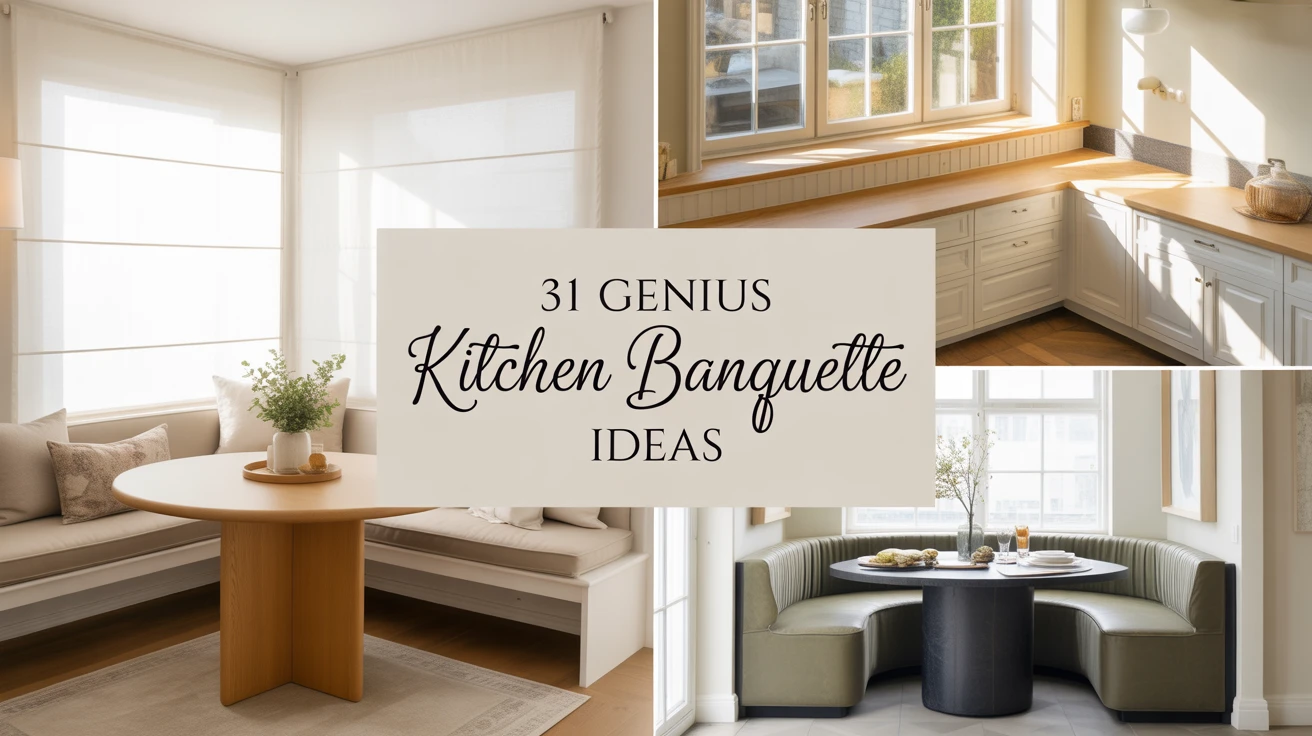
A built-in banquette tucked into a kitchen corner does something that a standard dining table and chairs simply can’t: it makes the space feel like it was designed for that exact spot.
Shiplap on the backing wall ties it directly into the farmhouse aesthetic. Keep the bench cushion in a neutral linen or textured fabric, then layer in a couple of throw pillows to soften the whole setup.
A round wood table works best here because it keeps the flow easy and removes any hard corners from a usually tight space. Families with kids especially love this setup since everyone is tucked in together. It’s functional, it’s cozy, and it photographs beautifully for anyone who loves a good kitchen shot.
Mixed Metal Fixtures
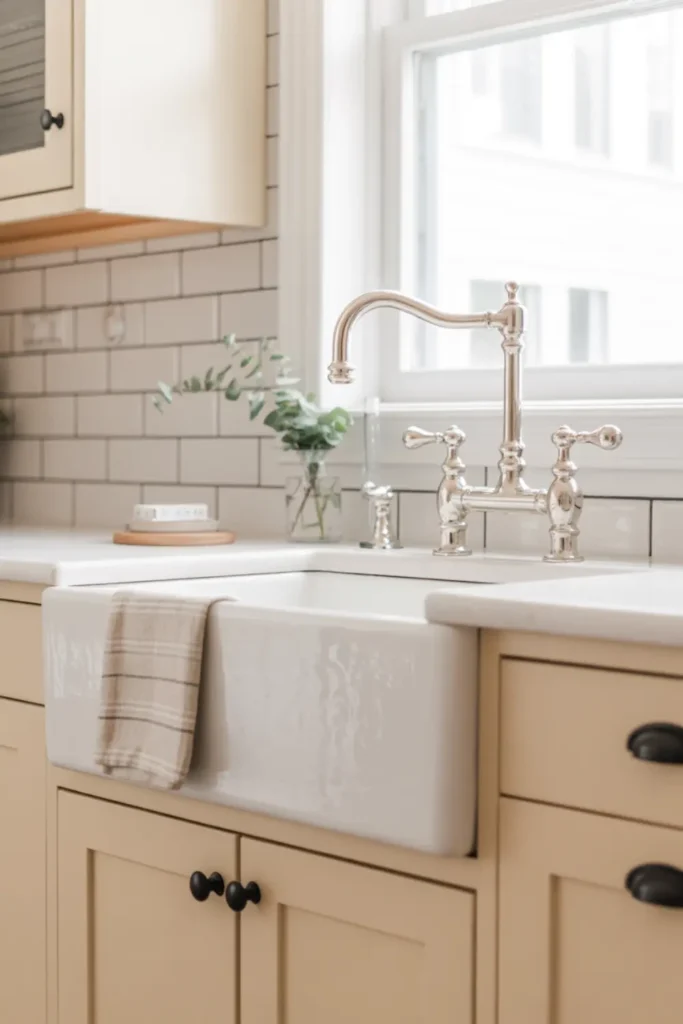
One of the biggest myths in kitchen design is that all your metals need to match. They don’t. In fact, a kitchen where every finish is identical tends to feel like it came straight out of a showroom display, not a real home.
My rule of two: pick two metal finishes and let them play off each other. Unlacquered brass paired with matte black is one of my favorites right now. Polished nickel with warm bronze works just as well. The trick is distribution. If brass is on the faucet, echo it in the light fixture overhead. Let the black show up in the hardware. That repetition is what makes the mix feel curated rather than accidental.
Woven and Natural Textures
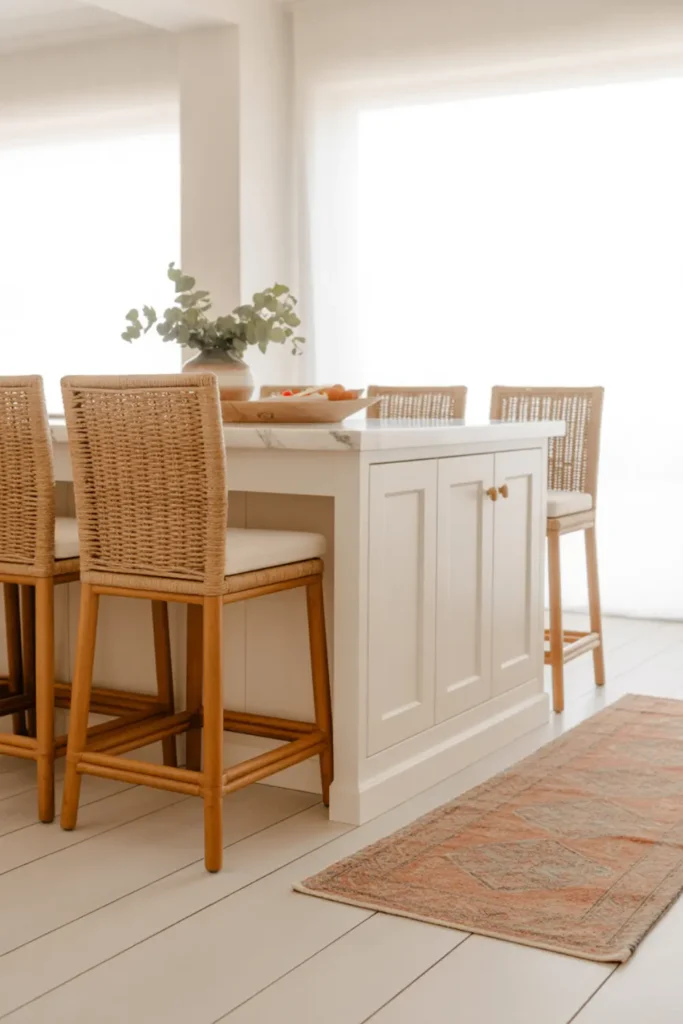
A kitchen that’s mostly white and wood needs texture to keep it from feeling flat. That’s where natural materials come in, and they make a bigger difference than most people expect.
Rattan bar stools at the island are one of the easiest swaps you can make. They bring warmth and visual softness without adding color. A jute or woven runner rug underfoot adds another layer of organic texture that grounds the whole space.
Woven baskets on open shelves pull double duty. They look good and keep clutter hidden. In a mostly neutral kitchen, texture is what creates depth and makes the space feel layered and lived-in rather than staged. Don’t skip it.
Hidden Pantries and Shaker Doors
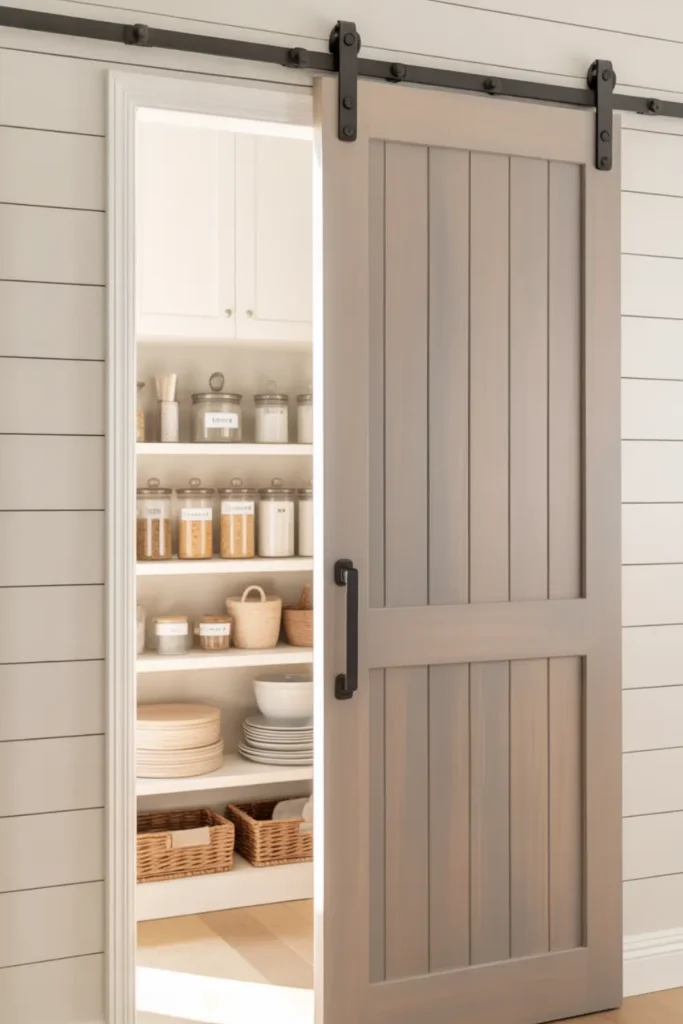
Counter clutter is one of the fastest ways to kill the look of a modern farmhouse kitchen. The fix isn’t buying more organizers. It’s giving everything a proper home behind a beautiful door.
A walk-in pantry hidden behind a sliding barn door is one of the most functional design moves I recommend. The barn door itself becomes a feature of the kitchen rather than just a utility element. Soft greige or a muted sage finish works beautifully.
If a walk-in isn’t possible, tall floor-to-ceiling shaker cabinets do the same job. They keep the visual lines clean, store far more than standard upper cabinets, and stay completely on-brand with the farmhouse aesthetic without any extra effort.
Vertical Shiplap Accents
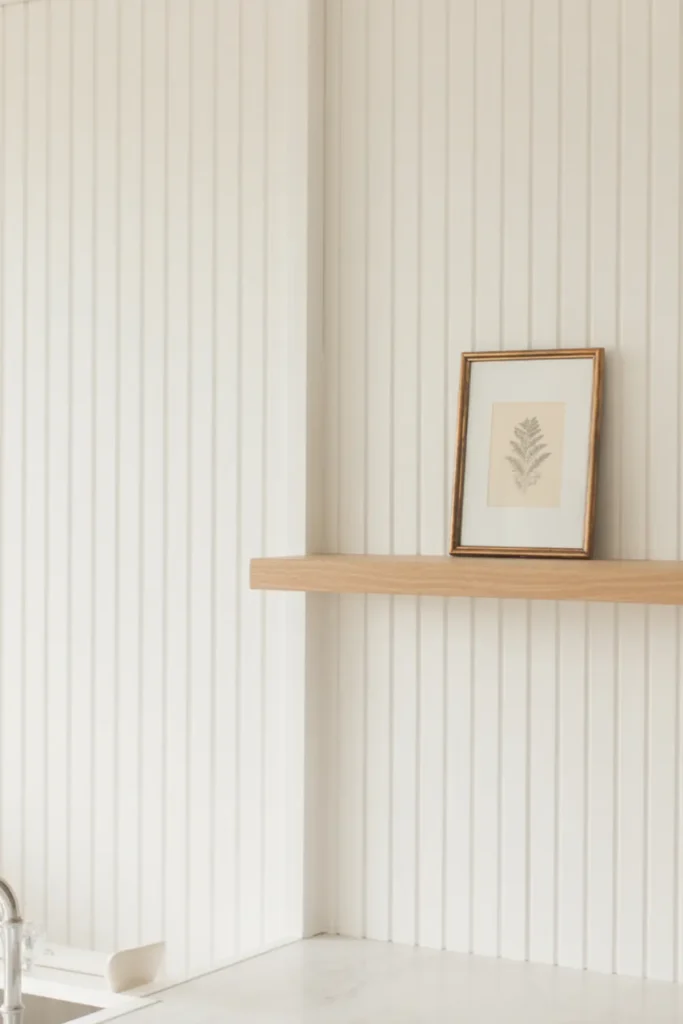
Most people think of shiplap as horizontal planks, and that’s exactly why flipping it vertical is such an effective design move. It’s familiar enough to feel at home in a farmhouse kitchen but different enough to make people stop and notice.
Vertical shiplap draws the eye upward. In a kitchen with standard ceiling height, that vertical line creates the illusion of more room above. It makes the space feel taller without touching a single structural element.
I typically use it on one accent wall rather than the whole kitchen. Behind open shelving or along a short entry wall into the kitchen are both great spots. Paint it the same white as your cabinets and it reads as an architectural detail, not a trend.
Vintage Runner Rugs
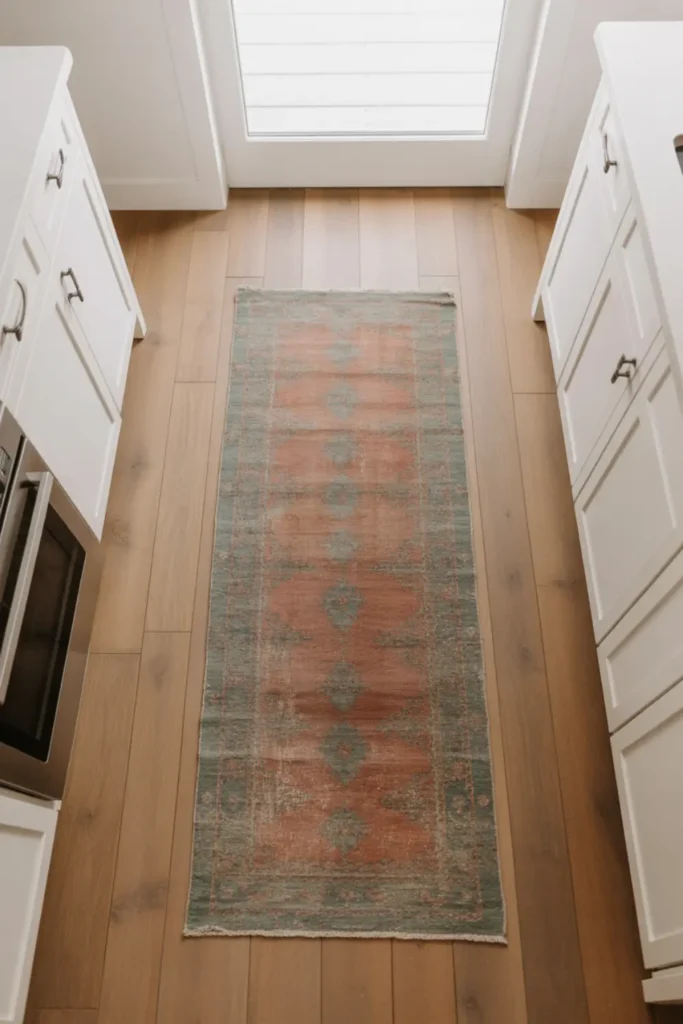
The finishing touch that most kitchen designs are missing is a rug. Specifically, a faded vintage runner placed between the island and the sink run.
A Turkish-style rug in muted rust, blue, or terracotta tones adds a quiet pop of color without disrupting the neutral palette. More importantly, it adds softness underfoot in a space where you spend a lot of time standing.
The faded quality is key. A bright, brand-new patterned rug can feel out of place in a farmhouse kitchen. Something worn and worn-in feels like it belongs. Layer it over wide-plank oak flooring and the whole kitchen suddenly feels warmer, more personal, and completely pulled together.
Displaying Copper Cookware
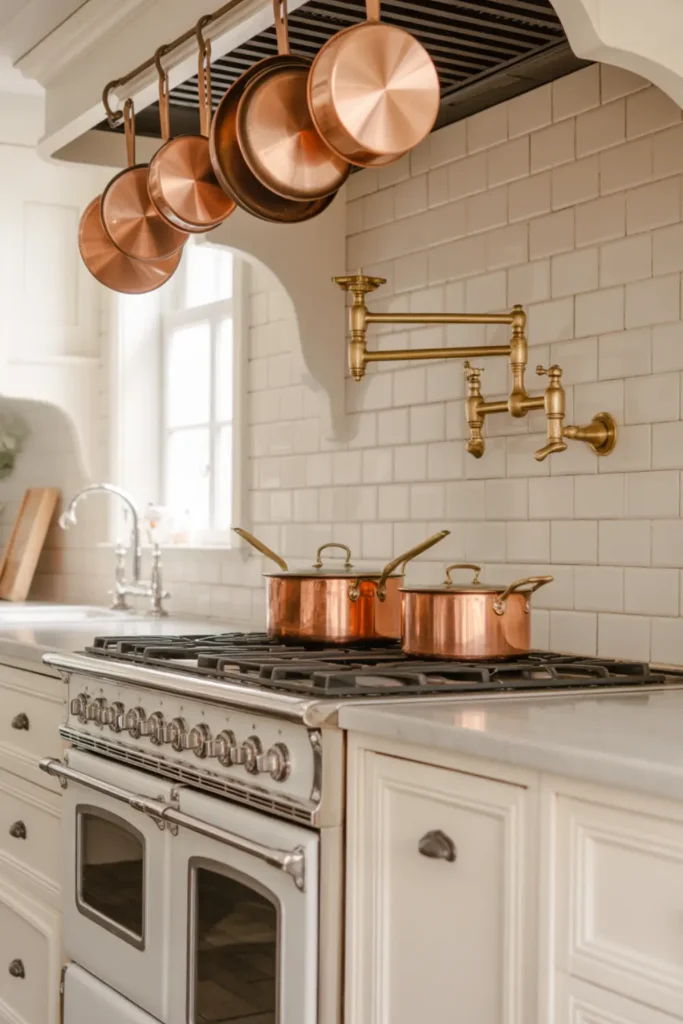
Copper cookware is one of those things that looks just as good on display as it does on the stove. In a modern farmhouse kitchen, it acts like functional jewelry, warm, reflective, and full of character.
A ceiling-mounted pot rack above the island or stove is the most classic approach. It keeps your most-used pans within reach and fills vertical space in a way that feels intentional rather than cluttered.
If a rack isn’t your style, even two or three copper pots resting on the back burners of a white farmhouse range make a strong visual statement. The warm reddish tone of copper against white cabinetry and subway tile is one of those combinations that never gets old.
Bringing the Outdoors In
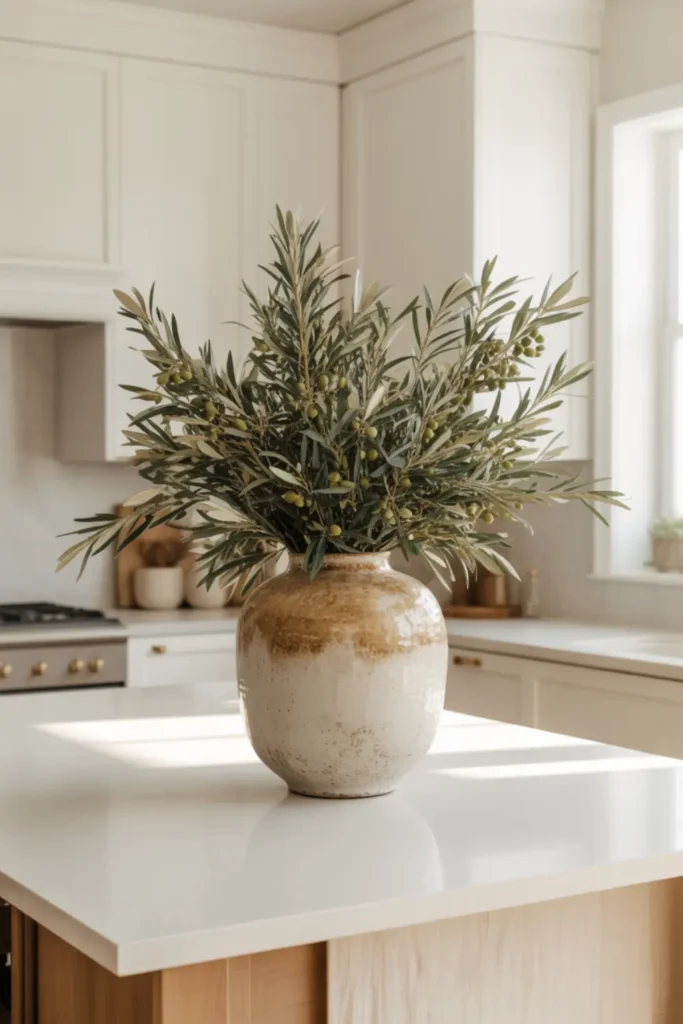
Fresh greenery is the quickest way to make a kitchen feel alive. It doesn’t need to be complicated or expensive to make a real impact.
A large ceramic vase with olive branches on the island is my go-to. Olive branches have a sculptural quality that works in almost any season. Eucalyptus is another favorite, especially near the sink where the scent carries. Seasonal blooms in a simple vessel on the open shelf keep things feeling current without requiring a total refresh.
My tip: keep it to one or two statement arrangements rather than scattering small plants everywhere. One generous, well-placed vase reads as intentional. Five tiny pots scattered around just looks busy.
Statement Range Hoods
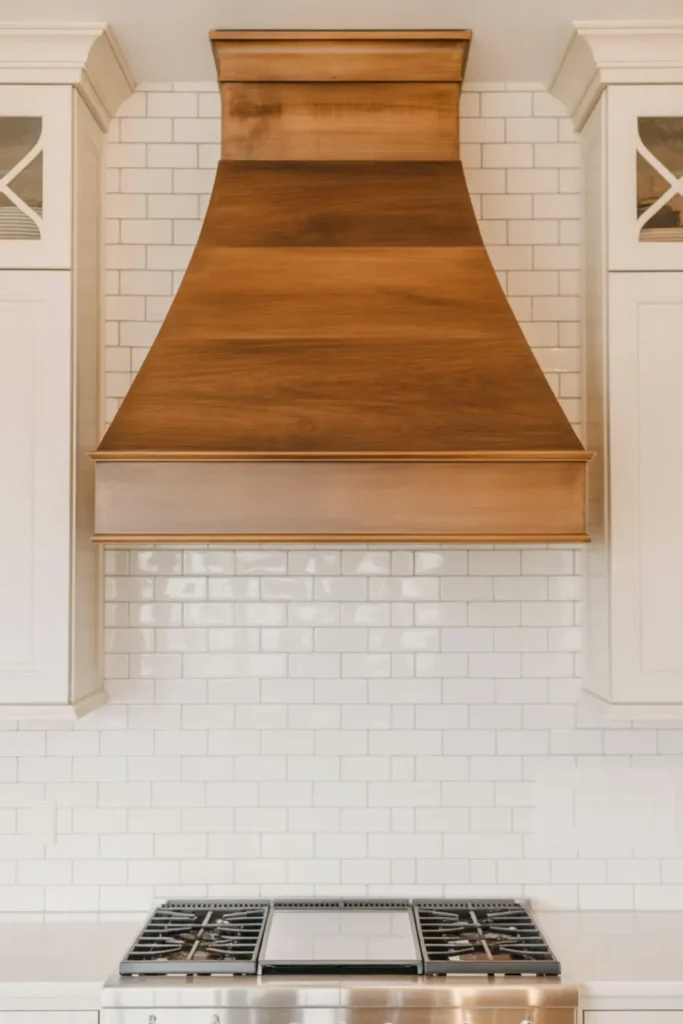
The range hood is one of the most underutilized design opportunities in a kitchen. Most people treat it as an appliance. I treat it as a focal point.
A hood wrapped in natural warm wood instantly draws the eye and anchors the cooking area. It brings in another layer of organic texture that connects the space back to the farmhouse roots of the design. Plaster hoods are another strong option, especially when finished in the same tone as the surrounding wall so the whole stove area reads as one seamless composition.
Either way, going custom here pays off. It’s the kind of detail that makes a kitchen look designed from the ground up rather than assembled from a showroom.
Bringing Your Dream Kitchen to Life
A modern farmhouse kitchen isn’t about following a checklist. It’s about layering the right elements until the space feels both polished and genuinely comfortable to live in.
Start with your foundation: warm whites, natural wood tones, and clean-lined cabinetry. Build from there with the details that matter most to you, whether that’s a statement sink, copper cookware on display, or a vintage runner underfoot. Every choice adds up.
If any of these ideas spoke to you, save them to your Pinterest boards so you can come back when you’re ready to plan. I’d also love to see how you bring these ideas into your own home.
FAQ
What defines a modern farmhouse kitchen?
It’s the blend of clean contemporary lines with warm, rustic elements like natural wood, apron sinks, and shaker cabinetry.
What colors work best?
Warm whites, soft taupe, sage green, and natural white oak tones are the most reliable palette for this style.
Are farmhouse sinks still in style?
Absolutely. Fireclay apron-front sinks remain one of the most sought-after features in kitchen design and show no signs of fading.